Removing a big tree stump – especially a mature hardwood with a sprawling root system – is one of the tougher jobs in land clearing, site prep, and vegetation management. Large stumps can weigh hundreds of pounds, have roots that spread several meters in every direction, and dig deep into hard, compacted, or rocky ground. If you go at it with the wrong gear or a sloppy technique, you'll end up with broken equipment, wasted hours, an incomplete removal, and maybe even a safety incident. But with the right excavator attachment and a solid game plan, you can get even the nastiest stumps out efficiently and safely.
Start by sizing up the stump and the site before you fire up the machine. Figure out what species you're dealing with – hardwoods like oak, maple, and ash are denser and have bigger root systems than softwoods like pine or spruce. Check the diameter and get a sense of how far the roots reach; for a mature tree, they can extend two to three times the canopy width. Soil type matters too – hard-packed or rocky ground makes cutting and pulling way harder than loose, sandy loam. Look around for obstacles – buildings, fences, power lines, underground utilities. Call in a utility locate before you start digging, and keep a safe distance from any marked lines. Once you've done your homework, pick the removal method and attachment that fits the stump, the site, and what you need as a finished result.
Method 1: Stump Grinding
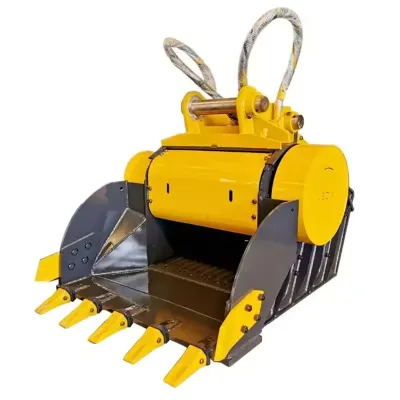
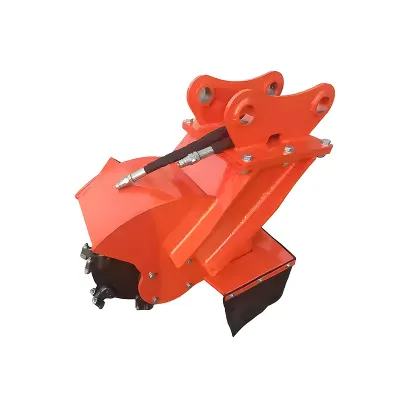
Grinding is the go-to for residential, commercial, and municipal jobs where you need the stump gone below grade and the site restored to a smooth surface. A rotating drum or disc with carbide teeth chews the stump into fine wood chips, working from the top down until it's below ground level. For a big stump, start at the outer edge and take shallow, overlapping passes – usually 25 to 50 mm deep at a time. Don't get greedy and try to hog off too much in one pass; that'll overload the motor, rattle the machine, and chew up your teeth. Multiple light passes grind faster in the long run with less strain on the equipment.
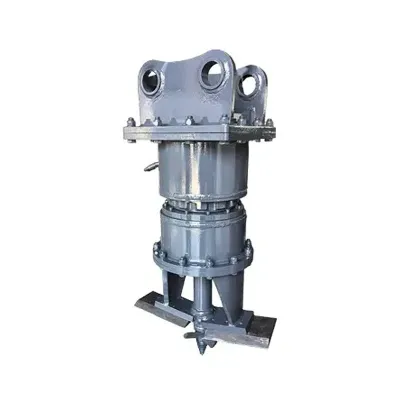
For big stumps with far-reaching roots, grind beyond the stump crown to take out the major surface roots, especially where they encroach on your work zone. The TGEC excavator stump grinder TG-SG08, built for 14 to 30 ton excavators, gives you an 850 mm cutting diameter and 900 mm depth – plenty for large stumps and deep root work. If the stump is wider than the drum, work from the outside in, and reposition the excavator around the stump to hit it from all angles. You'll wind up with a big pile of wood chips – leave them as mulch, haul them off, or use them for biomass. After grinding, backfill the hole with chips mixed with soil, or use clean topsoil if you're planning to seed or sod. The big upside of grinding is that it gets the stump below grade without a ton of excavation, and it works in tight spots or near structures where pulling or digging won't fly. The downside: deeper roots stay in the ground and may settle over time, and it's slower than shearing or pulling for really big stumps.
Method 2: Stump Shearing
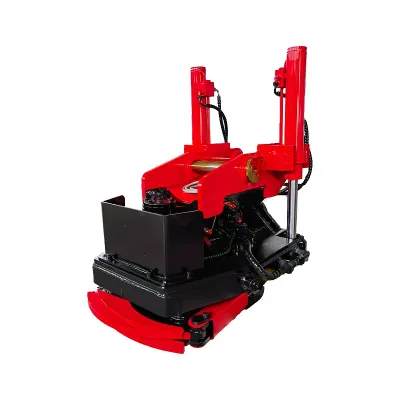
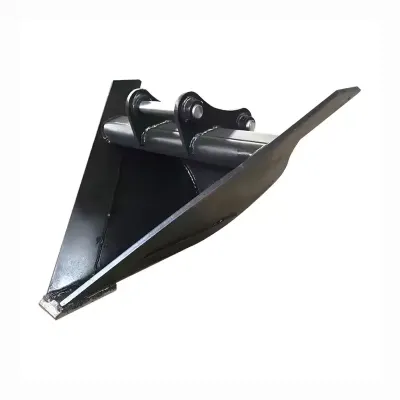
Shearing is the speed king for land clearing, right-of-way maintenance, storm cleanup, and site development where you need volume and pace, and below-grade removal isn't critical. A powerful hydraulic shear with opposing jaws slices through the stump at ground level in one clean bite. For a big stump, position the excavator so the jaws surround the base of the stump, cutting edges level with the ground. Make sure the jaws are wide open before you start, then apply steady hydraulic pressure to close them – let the cutting edges do the work without slamming or overloading the system.
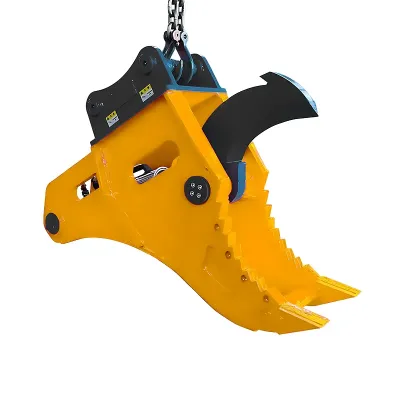
If the stump is too big for the jaw opening, make multiple cuts – take one side, reposition, take another, and work it down until you can pull the whole thing. The TGEC excavator stump shear TG-SS04, designed for 25 to 40 ton excavators, has a 750 mm jaw opening and tips the scales at 1350 kg – that's the heavy artillery for the biggest stumps in land clearing and ROW work. After the cut, use the shear jaws to grab the stump section and load it onto a truck, stack it for burning, or move it to a staging area. The roots stay in the ground and will decompose on their own; the cut surface can be covered with soil or left exposed depending on the site plan. The main appeal of shearing is raw speed – you can cut and move a large stump in seconds, not minutes. Plus, the shear handles small trees and brush too, so it's a versatile tool for vegetation management. The trade-off: roots stay put, which could mean regrowth or future settlement, and you don't get that smooth, grade-level finish that grinding gives you.
Method 3: Stump Pulling
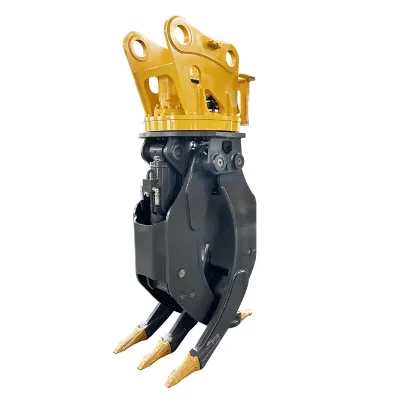
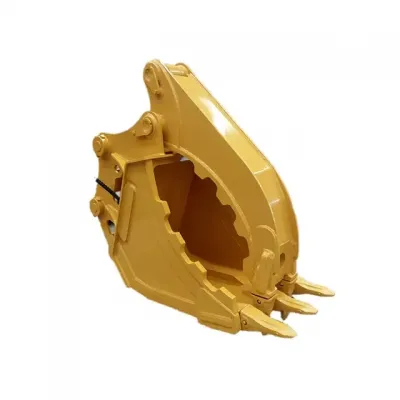
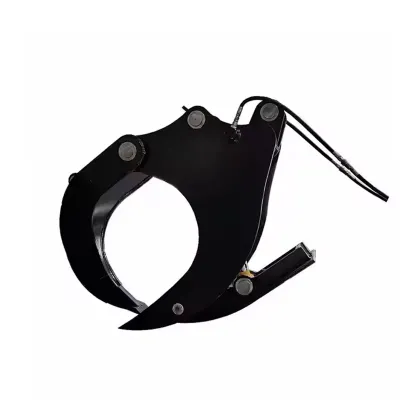
Pulling is the most thorough approach – it yanks the whole stump and root ball out of the ground in one shot, leaving a clean hole ready to backfill. A hydraulic grapple-style puller with serrated jaws clamps down on the stump at the base, then the excavator's boom and arm lift it straight up, roots and all. Start by clearing loose dirt and debris from around the stump to expose the root flare – you want the jaws to grab below that flare, not on the narrower trunk above. Lower the puller over the stump, open the jaws, let them surround the base, then clamp down so the serrated teeth bite into the bark and wood for a no-slip grip.
Once you're clamped, apply steady upward lift. For big, deep-rooted stumps, you may need to rock the stump back and forth a bit to break the root suction before it lets go. If it doesn't budge, don't just keep reefing on it – that can overload the hydraulics or tip the machine. Let it down, reposition the grip, rock it some more, and try again. For stumps with massive root systems, you might want to cut some of the big surface roots with a shear before pulling to reduce the load. The TGEC excavator stump puller TG-SP08, made for 17 to 23 ton excavators, gives you a 1700 mm jaw opening and 20 tons of pulling muscle – that'll handle big stumps and serious root balls. After extraction, move the stump to a pile, open the jaws, and backfill the hole with compacted soil. The big win with pulling is total root removal – no regrowth, no settlement, and a clean, stable hole ready for whatever comes next. The catch: you need a big enough excavator with the lift capacity and stability to handle it, and you've got a hole to fill, so it's not ideal for residential landscaping where you want to grind and restore in one pass.
Selecting the Right Method
Picking the right method comes down to what you're trying to accomplish, the site conditions, the stump size and root system, the gear you've got, and your timeline. For residential tree work, landscaping, and municipal park jobs where below-grade removal and a clean finish are what you need, grinding is usually the call – it takes the stump down below grade, leaves chips you can use or haul, and lets you backfill, seed, or sod right away. For land clearing, ROW maintenance, storm cleanup, and big site development where speed and volume rule, shearing is the play – it cuts through big stumps in seconds, the pieces are easy to move, and it's the most productive option for high-volume work. For utility trenches, fence lines, construction prep, and any job that demands complete root removal and a stable base, pulling is the way to go – it gets the whole root ball out, no regrowth, no settlement, and a hole you can backfill and compact immediately.
Sometimes a combo approach works best. For a really big stump with heavy surface roots, cut the major roots with a shear first to lighten the load, then grind the rest or pull it. Or, in a residential setting, shear the stump down to ground level to reduce grinding volume, then grind the remainder below grade for a smooth finish. Contractors who handle a mix of residential, commercial, and industrial jobs benefit from having all three attachments – grinder, shear, and puller – so they can match the tool to the job every time. Knowing what each method can and can't do, and matching it to the project, keeps jobs moving fast, equipment lasting longer, and costs in check. TGEC offers a full line of excavator stump removal attachments – grinders, shears, and pullers – for machines from 1.5 to 40 tons, and our tech team can help you pick the right one for your work.