Product Overview
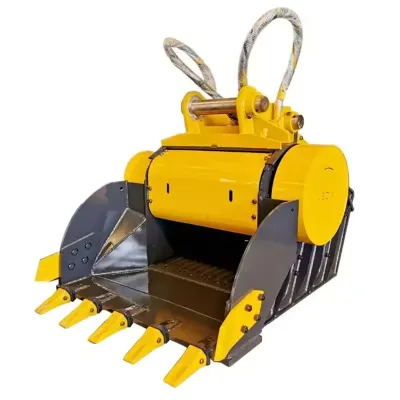
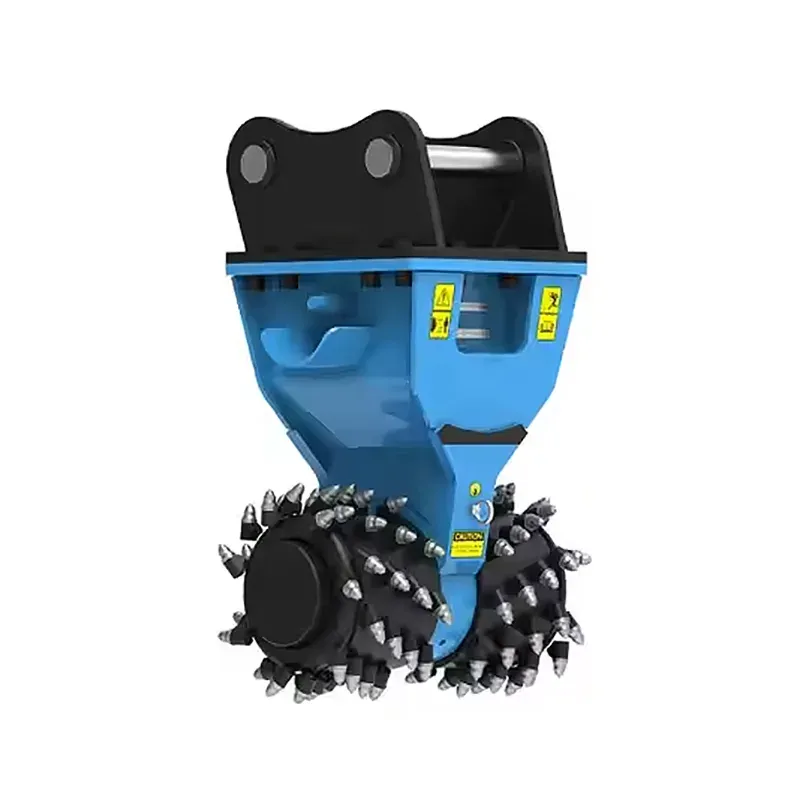
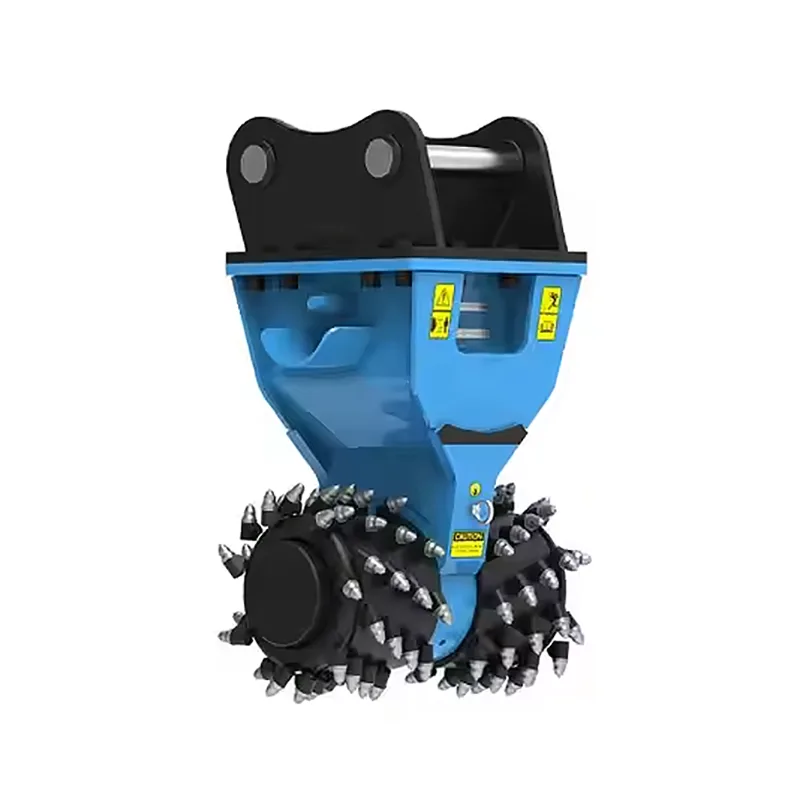
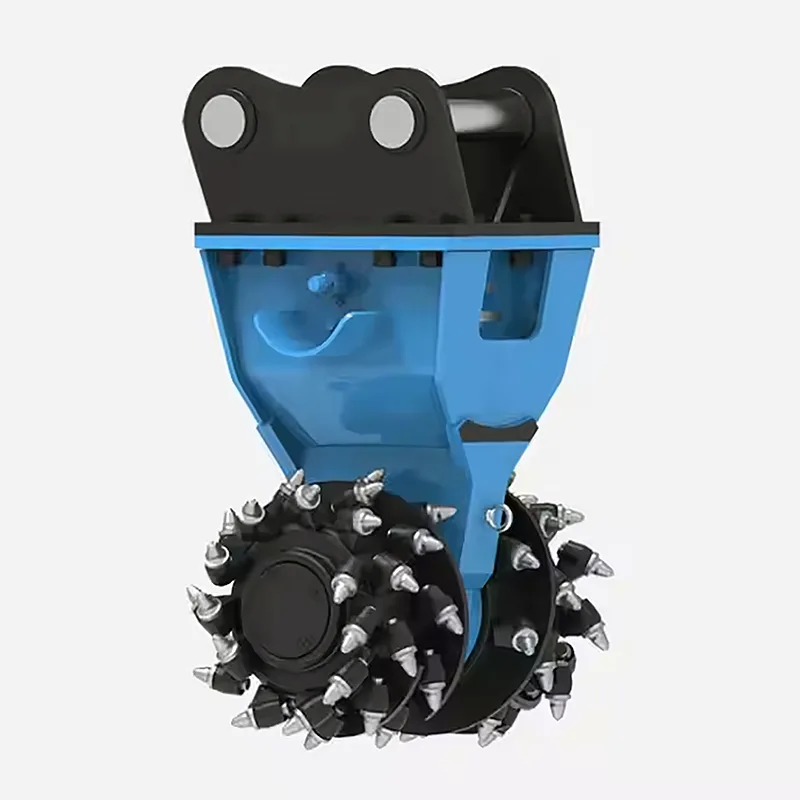
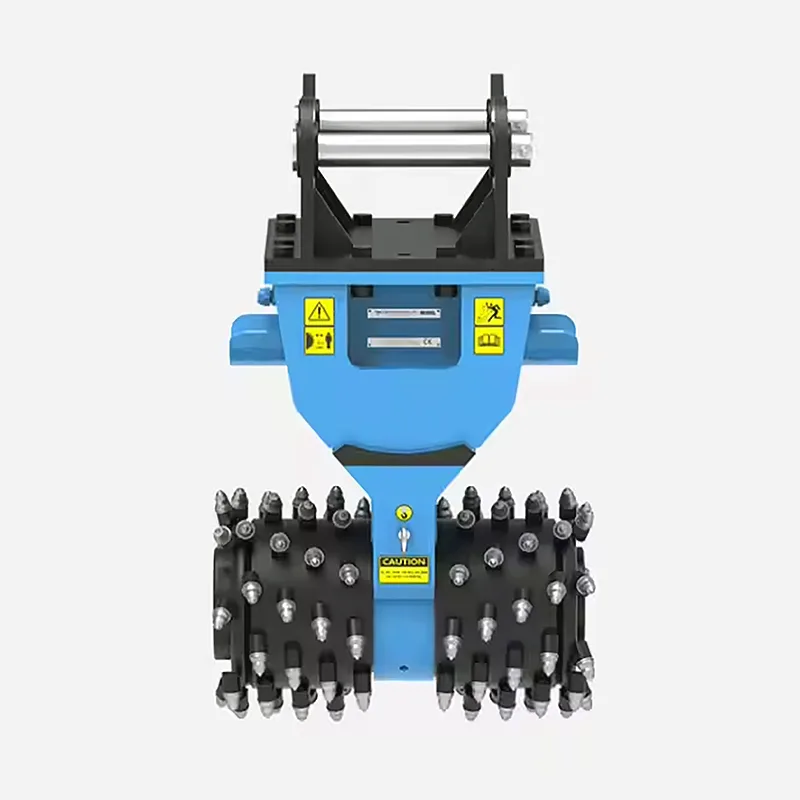
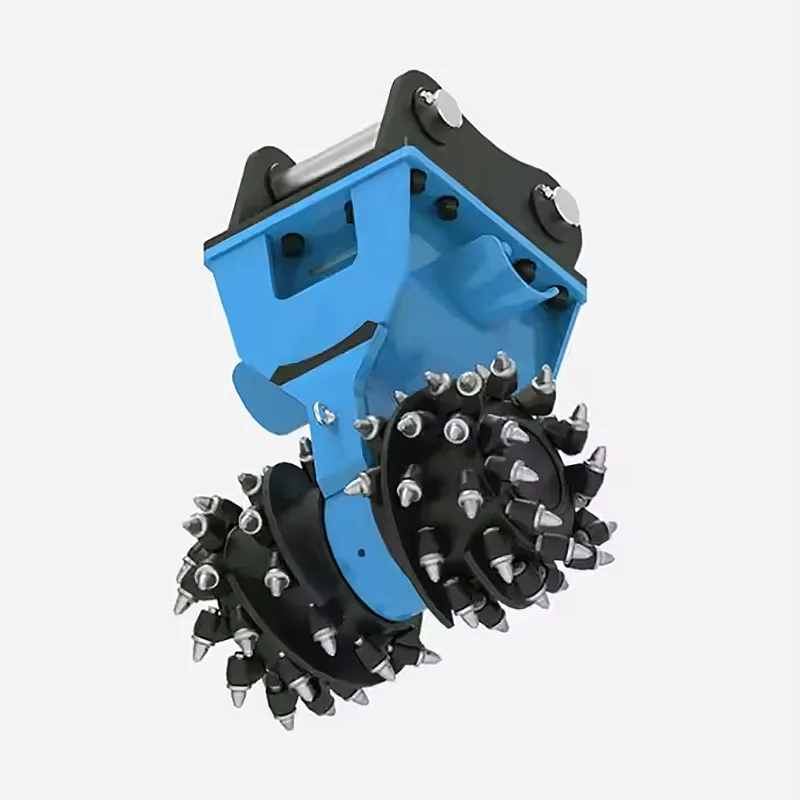
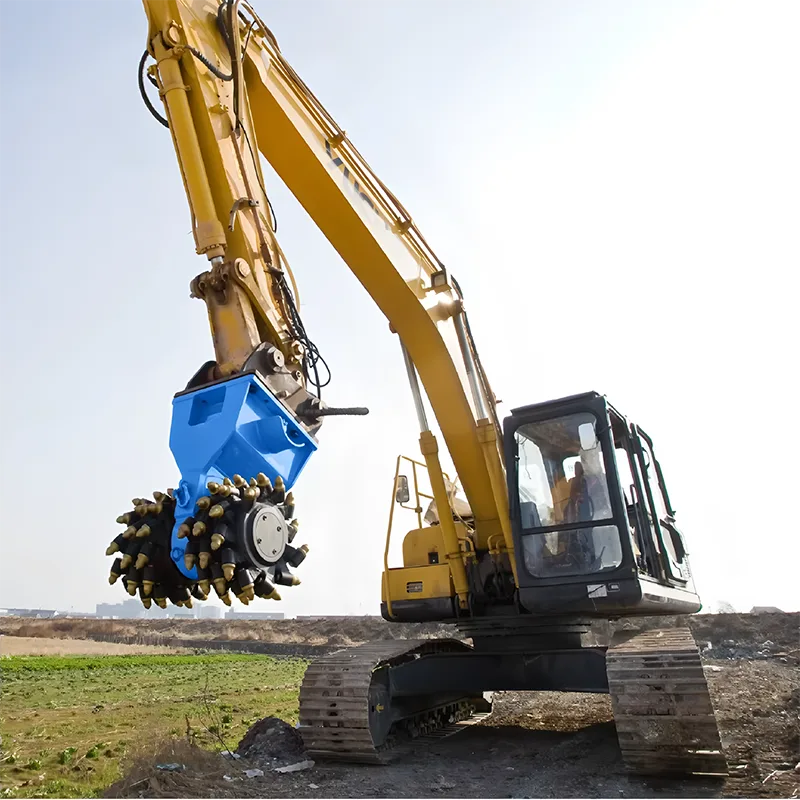
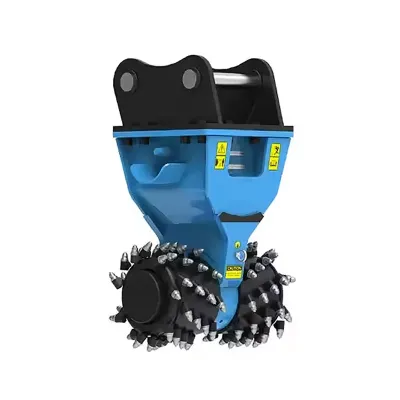
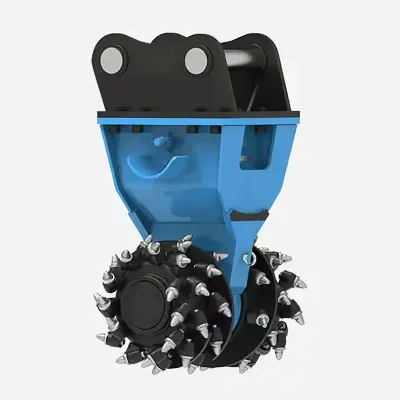
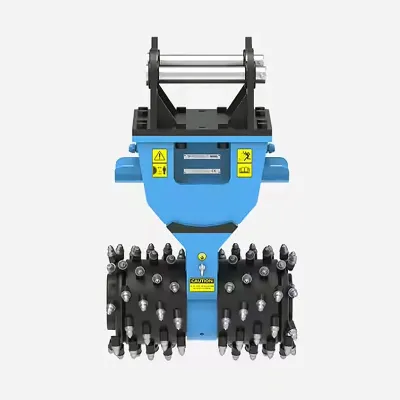
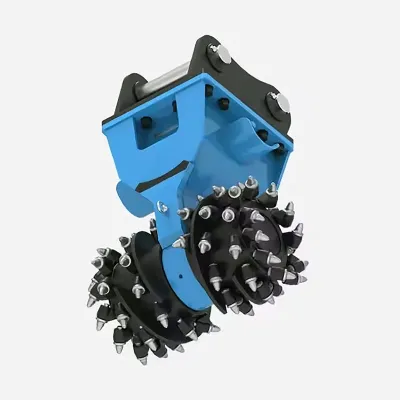
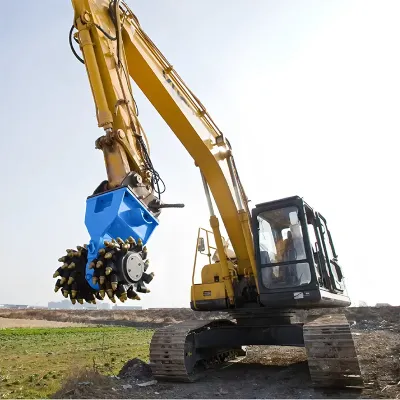
The TGEC excavator drum cutter is a hydraulic milling attachment that uses a rotating cutting drum fitted with carbide-tipped teeth to shear and mill rock, concrete and compacted material with precision and control. Unlike hydraulic breakers that deliver percussive impact, the drum cutter produces a continuous cutting action that generates less noise, lower vibration and a more uniform finished surface, making it suitable for urban environments, structural work and applications where controlled material removal is required. The attachment connects to the excavator's auxiliary hydraulic circuit and mounts to the bucket linkage, allowing the operator to position and guide the cutting drum across rock faces, concrete surfaces and trench profiles. It is widely used in quarry work, concrete demolition, precision trenching, road-header-style tunneling, foundation underpinning and controlled material removal projects.

The product line includes eight models covering excavators from 0.7 to 70 tons, with output torque ranging from 1592 Nm on the compact TG-02DC to 50495 Nm on the heavy-duty TG-50DC, and drum speeds from 50 to 100 rpm depending on model. Each model is calibrated to match the hydraulic flow and pressure of its target excavator class, with recommended flow ranges from 20–40 L/min for mini excavators to 400–500 L/min for large quarry-class machines. As part of the TGEC excavator drum cutters line, this product family is known in the market by several terms including rock grinders, drum grinders and hydraulic milling drums — for an explanation of these terminology differences, see our drum cutter vs rock grinder article. For detailed application guidance, see our excavator drum cutter applications guide.
Technical Specifications
| Parameter | TG-02DC | TG-05DC | TG-10DC | TG-15DC | TG-20DC | TG-30DC | TG-40DC | TG-50DC |
|---|---|---|---|---|---|---|---|---|
| Recommended Excavator Class | 0.7–2.5 t (0.8–2.8 ton) | 2.5–6 t (2.8–6.6 ton) | 5–10 t (5.5–11 ton) | 10–15 t (11–16.5 ton) | 15–20 t (16.5–22 ton) | 20–30 t (22–33 ton) | 30–50 t (33–55 ton) | 50–70 t (55–77 ton) |
| Max Power | 16 kW (21.5 hp) | 22 kW (29.5 hp) | 36 kW (48.3 hp) | 50 kW (67.1 hp) | 80 kW (107.3 hp) | 110 kW (147.5 hp) | 140 kW (187.7 hp) | 175 kW (234.7 hp) |
| Max Hydraulic Flow | 45 L/min (11.9 GPM) | 65 L/min (17.2 GPM) | 112 L/min (29.6 GPM) | 150 L/min (39.6 GPM) | 250 L/min (66.0 GPM) | 350 L/min (92.5 GPM) | 450 L/min (118.9 GPM) | 550 L/min (145.3 GPM) |
| Recommended Hydraulic Flow | 20–40 L/min (5.3–10.6 GPM) | 40–60 L/min (10.6–15.9 GPM) | 60–100 L/min (15.9–26.4 GPM) | 60–140 L/min (15.9–37.0 GPM) | 140–220 L/min (37.0–58.1 GPM) | 200–300 L/min (52.8–79.3 GPM) | 300–400 L/min (79.3–105.7 GPM) | 400–500 L/min (105.7–132.1 GPM) |
| Working Pressure | 315 bar (4568 psi) | 315 bar (4568 psi) | 315 bar (4568 psi) | 315 bar (4568 psi) | 315 bar (4568 psi) | 315 bar (4568 psi) | 315 bar (4568 psi) | 315 bar (4568 psi) |
| Output Torque | 1592 Nm (1174 lb-ft) | 3780 Nm (2788 lb-ft) | 6440 Nm (4750 lb-ft) | 8455 Nm (6236 lb-ft) | 14170 Nm (10451 lb-ft) | 21155 Nm (15603 lb-ft) | 30300 Nm (22350 lb-ft) | 50495 Nm (37243 lb-ft) |
| Output Speed | 100 rpm | 80 rpm | 80 rpm | 82 rpm | 78 rpm | 71 rpm | 66 rpm | 50 rpm |
| Attachment Weight | 145 kg (320 lb) | 215 kg (474 lb) | 381 kg (840 lb) | 720 kg (1587 lb) | 1370 kg (3020 lb) | 1800 kg (3968 lb) | 2400 kg (5291 lb) | 5200 kg (11464 lb) |
| Number of Cutting Teeth | 44 | 56 | 64 | 68 | 80 | 64 | 72 | 68 |
Table data is for reference only. Actual specifications may vary based on the final configuration. Please contact the TianGe technical team for details.
How It Works
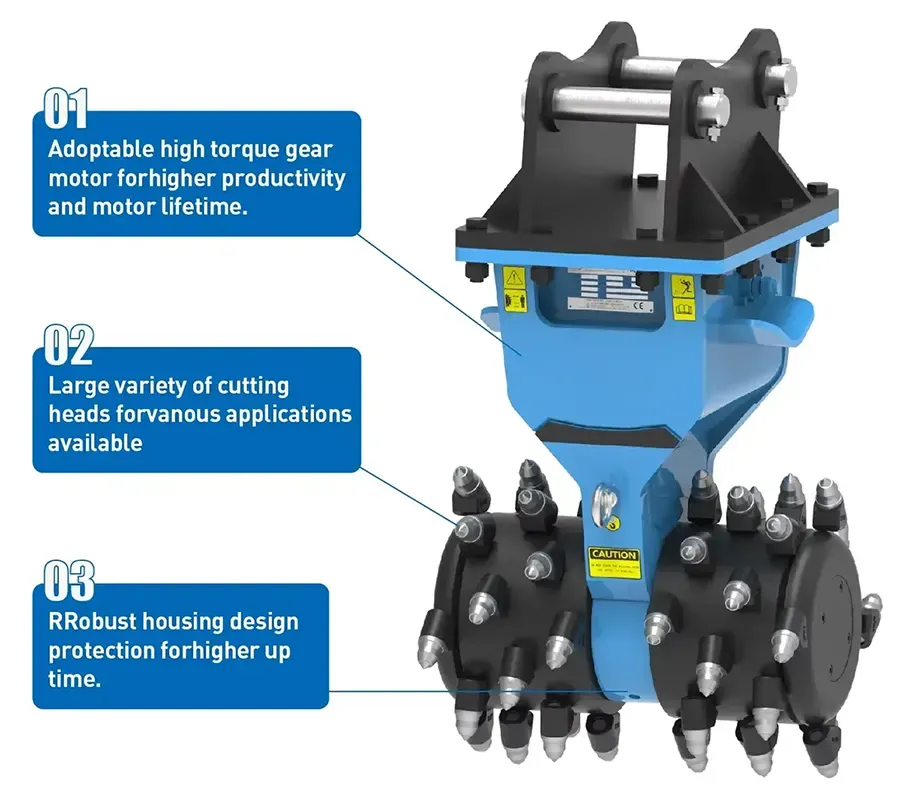
The excavator drum cutter runs on a straightforward hydraulic and mechanical setup. Pressurized oil from the excavator's auxiliary circuit feeds a high-torque hydraulic motor mounted on the cutter housing. That motor spins a gear reduction that turns the cutting drum—fitted with carbide-tipped teeth arranged around its circumference—at speeds from 50 to 100 rpm depending on the model. As the drum rotates, the teeth shear and mill the material in a continuous action, throwing off a controlled stream of spoil rather than the shattered chunks you'd get from a breaker. The excavator's boom and arm supply the downforce and positioning, so the operator can steer the drum precisely across rock faces, concrete slabs, or trench profiles. A pressure relief valve built into the circuit protects the motor if the drum hits material harder than it can handle.
Application Scenarios
Rock excavation and profiling: Mill and shape rock faces in quarry, mining and civil construction projects requiring controlled excavation and uniform finishes.
Concrete milling and demolition: Remove concrete structures, road surfaces and bridge decks with low noise and vibration, suitable for urban and residential areas.
Precision trenching: Cut narrow, dimensionally accurate trenches in rock and compacted soil for utility, pipeline and cable installation.
Road-header-style tunneling: Perform controlled cutting in underground and tunneling applications where road-header-style material removal is required.
Foundation underpinning: Mill rock and concrete around existing foundations for underpinning, basement excavation and structural modification.
Coating and overlay removal: Remove asphalt overlays, surface coatings and damaged concrete from roads, bridges and industrial floors with minimal substrate damage.
Confined-area cutting: Work in limited-access environments such as inside buildings, under structures and in narrow excavations where larger equipment cannot operate.
Installation & Mounting
The drum cutter pins onto the excavator's bucket linkage using the existing bucket pins and ties into the auxiliary hydraulic circuit with high-pressure hoses. Before you mount it, double-check that your machine's hydraulic flow falls within the recommended range for the model you're using and that the auxiliary circuit is set within the attachment's specified pressure range and does not exceed 315 bar. Excessive pressure can damage the hydraulic motor. Get your pin spacing, pin diameter, and coupler type right so the bracket fits properly. Route the hydraulic hoses with enough slack for full boom and arm articulation, and add abrasion protection anywhere they might rub against the stick or linkage. We recommend a case drain line on all models to manage motor backpressure and cooling—confirm that's available before you start. Also, give the cutting drum a once-over before first use: check tooth tightness and make sure the drum spins freely.
Wear Parts & Service
The main wear items on a drum cutter are the carbide-tipped cutting teeth, tooth holders, drum surface, hydraulic motor, gear reduction bearings, and hydraulic hoses. Check the cutting teeth regularly for wear, chipping, or missing ones—replace them promptly to keep cutting efficiency up and avoid damaging the holders and drum. Look at the tooth holders for cracks or looseness, and swap out any that are damaged so you don't lose teeth mid-job. Inspect the drum surface for cracking or distortion, especially after working in abrasive or fractured rock. Keep an eye on the hydraulic motor for leaks, odd noises, or a drop in torque, and check the gear reduction bearings for play or overheating. Grease all lube points on schedule and inspect hoses for abrasion, cracking, or leaks. TGEC supplies replacement teeth, tooth holders, drum components and hydraulic parts for the model range.
Dealer & Bulk Orders
TGEC supplies excavator drum cutters to equipment dealers, quarry operators, civil contractors and tunneling firms worldwide. TGEC supports equipment dealers and contractors with factory-direct supply, volume orders and OEM/private-label programs based on model selection, order quantity and market requirements. Contact our sales team to discuss bulk ordering, custom configurations and long-term sourcing partnerships.
Request a Quote — Excavator Drum Cutter
Since this attachment runs on your auxiliary hydraulic circuit, we need to confirm your machine's capacity first. To get a quote, send us your excavator make and model, operating weight, auxiliary flow and pressure, pin spacing and diameter, coupler type, and which model you're interested in (TG-02DC through TG-50DC). Tell us what material you'll be cutting and the primary application. We'll verify hydraulic compatibility, check the mounting bracket fit, and get back to you with pricing and lead time. Make sure to specify your coupler type when you order.