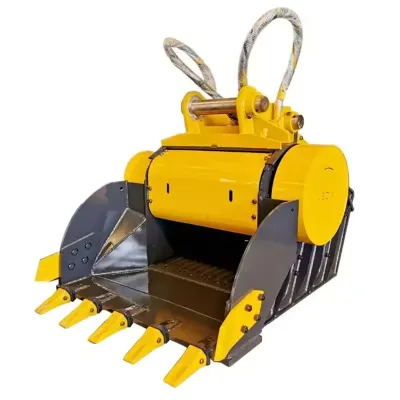
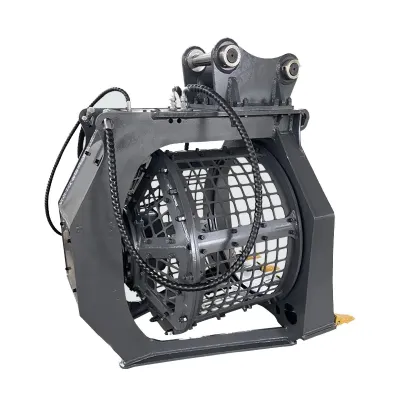
If you've spent any time looking into excavator attachments for rock and concrete work, you've probably run into a confusing mess of terms: drum cutter, rock grinder, drum grinder, hydraulic milling drum, excavator milling attachment, rotary drum cutter—the list goes on. These names show up all over manufacturer sites, equipment forums, and contractor discussions, often used as if they mean the same thing. And the truth is, for the most part, they do. This terminology confusion can make it harder to spec out, price, or buy the right attachment with confidence. The reality is that in today's excavator attachment market, pretty much all of these names point to the same basic tool: a hydraulic-powered attachment with a rotating drum that's studded with carbide-tipped teeth for milling through rock and concrete. This guide breaks down where the terminology comes from, why so many names stick around, how to tell the difference between actual product variations and just naming fluff, and what really matters when you're picking out an attachment—regardless of what the manufacturer decides to call it.
Where the Terminology Comes From
The range of names for this attachment type comes from its varied history and the different industries that adopted it. Drum cutter is the most technically straightforward name—it describes exactly what it is: a hydraulic motor turning a rotating drum that's fitted with cutting teeth. You'll see this term a lot with European manufacturers and in technical spec sheets. Rock grinder focuses on what the tool does—grinding or milling rock—and it's the go-to term in North America, especially in quarrying, mining, and heavy excavation. Drum grinder is a blend of the mechanical setup and the action. Hydraulic milling drum and excavator milling attachment describe it by function rather than form, highlighting the material-removal process. Rotary drum cutter just adds "rotary" to emphasize the spinning action, distinguishing it from static or percussive tools. Road header attachment is a nod to the full-size road header machines used in tunneling and mining, which work on the same basic principle but on a much larger scale. Each term emphasizes a different angle, but none of them inherently points to a different piece of equipment.
Why Different Names Persist in the Market
A few factors keep this terminology soup alive, even though the product underneath is basically the same. Regional preference is a big one—North American contractors and rental outfits tend to say rock grinder, while European and Asian markets lean toward drum cutter or rotary drum cutter. Manufacturer branding plays a role too; some companies deliberately coin their own term to stand out in marketing, even if their hardware is functionally identical to the next guy's. Application-specific naming happens when contractors adopt a term based on their daily work—a quarry operator might call it a rock grinder, while a concrete demo crew calls the same attachment a concrete milling drum. And search behavior keeps the cycle going: contractors search for whatever term they first learned, and manufacturers optimize their sites for all the variants to capture that traffic. The end result is a market where half a dozen or more terms coexist for essentially the same product, with no industry-wide standard to sort it out.
Genuine Product Differences vs Naming Variation
While most of this terminology confusion is just naming noise, there are some real configuration differences that can get mistaken for different product types. The biggest one is drum orientation: most drum cutters have a transverse drum (the drum axis runs perpendicular to the excavator arm), but some specialized setups use a longitudinal or in-line drum (parallel to the arm). Those are genuinely different mechanical arrangements, though both might be called drum cutters or rock grinders depending on the brand. Another difference is the number of drums—standard models have one cutting drum, while some heavy-duty or specialty versions use dual drums for a wider cutting path. Tooth configuration varies too: some use conical bullet teeth for general rock work, others use chisel-shaped teeth for concrete, and some use specialized pick teeth for specific materials. These are configuration options within the same product family, not totally different product categories. The key takeaway is that when you're comparing something called a drum cutter versus something called a rock grinder, the name alone doesn't tell you anything about the configuration—you have to dig into the actual specs, drum orientation, tooth type, and hydraulic requirements to know if you're looking at the same thing or something genuinely different.
What to Look for When Selecting an Attachment
No matter what the manufacturer calls it, the selection criteria are the same. First, make sure your excavator's auxiliary hydraulic flow and pressure match the attachment's requirements—each model has a recommended flow range and a maximum limit, and running outside those ranges means poor performance or a fried motor. Second, match the output torque and drum speed to your primary material: harder rock needs higher torque and lower speed, while softer concrete or asphalt can be milled faster with lower torque. Third, check the attachment weight against your excavator's lift capacity at working reach—some of the larger models weigh thousands of kilograms and need a stable machine to handle them. Fourth, think about the cutting drum width and tooth configuration for your application—narrower drums for precision trenching, wider drums for surface milling, and the right tooth type for your material. Fifth, look at the availability and cost of replacement teeth and wear parts—consumable tooth costs are a major ongoing expense. The Excavator Drum Cutter product page has detailed specs on all eight TGEC models to help with this. And for more on where these attachments really shine, check out our excavator drum cutter applications guide.
Summary
In today's excavator attachment market, drum cutter, rock grinder, drum grinder, hydraulic milling drum, and excavator milling attachment are overwhelmingly just different names for the same core tool: a hydraulic attachment with a rotating carbide-tipped cutting drum for milling rock and concrete. The variety of terms comes down to regional habits, manufacturer branding, application-specific lingo, and search behavior—not any real product differences. When you're choosing an attachment, focus on the technical specs—hydraulic flow and pressure, output torque, drum speed, weight, drum width, and tooth configuration—rather than what the manufacturer decided to call it. The TGEC excavator drum cutters line has eight models covering 0.7 to 70 ton excavators, and our team can help you find the right one for your machine and job, no matter what term you use to describe it.