Picking the right excavator size for stump removal isn't as simple as grabbing the biggest machine you can find. It's a balancing act between attachment requirements, job site access, productivity, and operating costs. The machine has to be big enough to supply the hydraulic flow and lifting muscle your chosen attachment needs, but small enough to fit through gates, work around obstacles, and stay economical to run. This guide breaks down the key factors that determine the right fit, so you can match your excavator to the job without overspending or coming up short.
Here's the golden rule: the attachment dictates the minimum machine size, not the other way around. Every grinder, shear, or puller comes with specific requirements for carrier weight, hydraulic flow, operating pressure, and lift capacity. If your excavator doesn't meet those specs, the attachment won't perform – plain and simple. Too small and you'll get sluggish operation, stalling, or even safety issues. Too big and you're burning extra fuel, struggling to maneuver in tight spots, and paying for capacity you don't need. The sweet spot is a machine that meets the attachment's needs while still being nimble enough for the sites you work on and versatile enough for other tasks like digging, loading, or grading.
Key Compatibility Factors
Hydraulic flow is the #1 thing to check. Every attachment needs a specific flow range – measured in liters or gallons per minute – to run at its designed speed and power. Grinders range from 30 L/min for compact models up to 220 L/min for big ones; shears and pullers have their own flow requirements too. Your excavator's auxiliary circuit has to deliver flow within that window. If it's adjustable, set it to the middle of the attachment's range for best results. Too little flow means slow operation and stalling; too much causes overspeeding, overheating, and premature wear. Always verify your machine's auxiliary flow spec before you buy an attachment.
Next up: weight and lift capacity. Attachments aren't light – they range from 180 kg for a compact disc grinder to 1350 kg for a big shear, and pullers are even heavier. That weight hangs off the end of your boom, eating into your effective lift capacity and affecting stability. Your excavator needs to handle that weight plus whatever you're lifting, at the reach you typically work at, with a safety margin. This matters most on mini excavators, where attachment weight can be a big chunk of the machine's total weight, and on pullers, which put serious extraction forces into the boom. Check your machine's lift capacity chart against the attachment weight at your typical working reach. You also need to match operating pressure – make sure your machine's auxiliary pressure range fits the attachment's specs, and set the relief valve accordingly. Finally, mounting compatibility: the attachment needs a custom bracket that matches your excavator's pin spacing, pin diameter, and stick width, or it has to work with your quick coupler. Get all four of these right, and you're in business.
Mini Excavators (1.5 to 7 Tons)
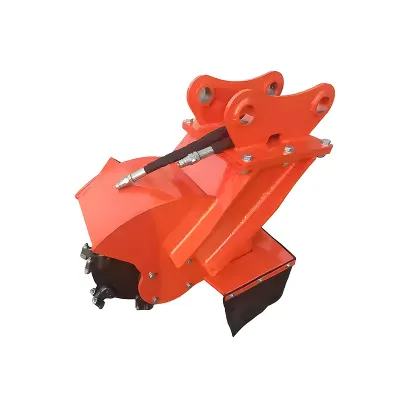
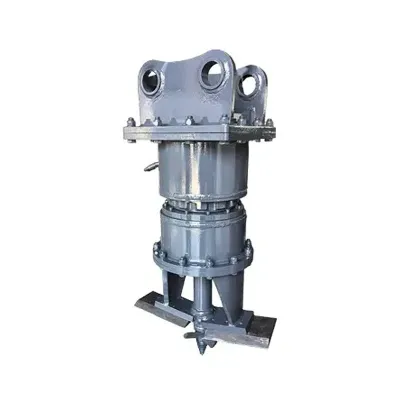
These are the workhorses of residential stump removal – backyard jobs, fence lines, foundation cleanups, and small landscaping projects where access is tight and stumps are small to medium. For machines in this class, the stump grinder is the primary attachment. Compact grinder models are purpose-built to match the flow and lift capacity of mini excavators. The TGEC excavator stump grinder TG-SG04 fits 1.5 to 5 ton machines with its 195 kg weight and 30 to 130 L/min flow range. The excavator disc stump grinder models, TG-DSG360 and TG-DSG450, are even more compact at 180 to 192 kg with 30 to 70 L/min flow – perfect for the smallest machines and the tightest spots.
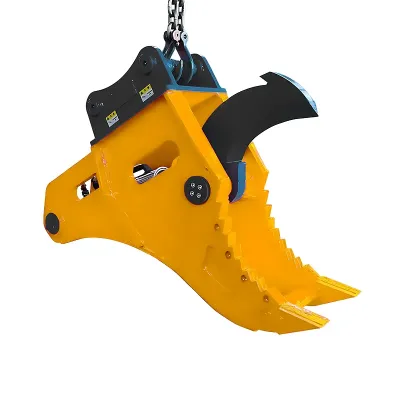
If you're running a 5 to 7 ton machine, the TG-SS01 stump shear becomes a viable option. At 420 kg and 180 to 220 bar pressure, it fits machines in this size range and gives you fast cutting for land clearing and ROW work. Below 5 tons, shears are generally not recommended – the cutting force and jaw size are just too much for smaller hydraulics. Pullers? Not available for mini excavators under 7 tons – the clamping and pulling forces needed are beyond what compact machines can deliver. For most residential and light commercial contractors running 1.5 to 7 ton machines, the stump grinder is the most versatile and useful attachment – it does the below-grade removal you need for landscape restoration and fits the machine's capabilities. If you also do land clearing or ROW work with a 5 to 7 ton machine, adding a shear can boost your productivity and open up new revenue streams.
Mid-Size Excavators (7 to 25 Tons)
This is the sweet spot for stump removal versatility. Machines in this range can run all three attachment types – grinder, shear, and puller – giving you the flexibility to handle everything from residential jobs to commercial land clearing. The full TGEC lineup is available here. The stump grinder TG-SG06 fits 6 to 14 ton machines with its 600 mm cutting diameter, 700 mm depth, 285 kg weight, and 65 to 150 L/min flow. The TG-SG08 steps up to 14 to 30 ton machines with 850 mm cutting diameter, 900 mm depth, 575 kg, and 110 to 220 L/min flow for heavy-duty grinding.
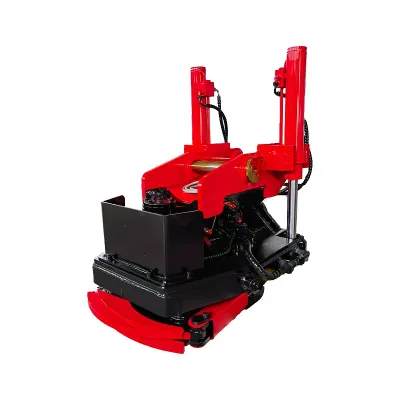
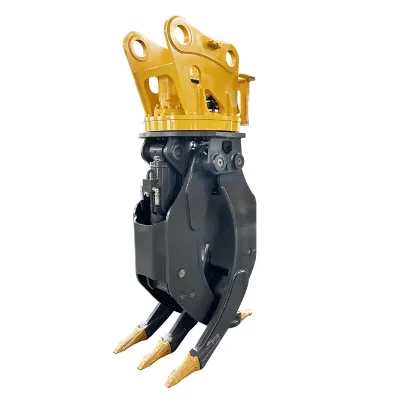
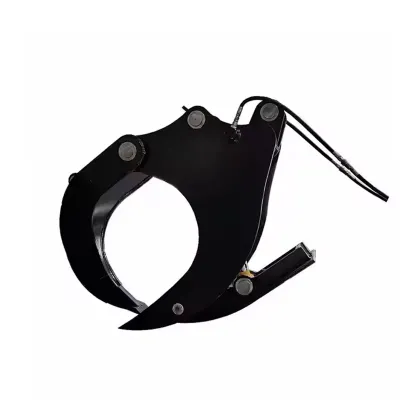
On the shear side, the TG-SS02 fits 10 to 18 ton excavators with 520 mm jaw opening, 680 kg weight, and 200 to 250 bar pressure. The TG-SS03 fits 18 to 25 ton machines with 620 mm jaw opening, 950 kg weight, and 220 to 300 bar pressure. And for pulling, the TG-SP06 fits 7 to 15 ton excavators with 1500 mm jaw opening, 10 ton operating weight, and solenoid control – perfect for utility work, fence lines, and construction prep. If your work spans residential, commercial, and light industrial stump removal, having multiple attachments for a mid-size machine gives you the ability to match the method to the job every time. This size range offers the best balance of power and maneuverability – enough muscle for big stumps and high-volume work, but still nimble enough for residential access. For contractors who specialize in one type of work – say, utility installation needing root extraction, or land clearing needing fast cutting – a mid-size machine with the right attachment delivers a productive, cost-effective solution for most jobs out there.
Large Excavators (25 to 40 Tons)
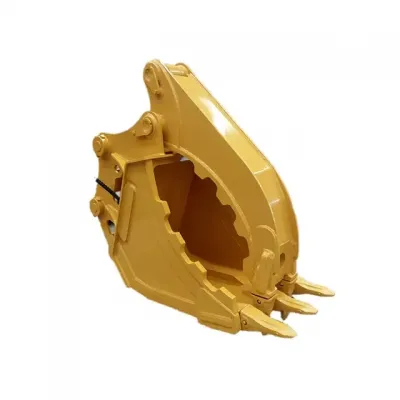
These are the heavy hitters for large-scale land clearing, major utility corridors, highway ROW, commercial development, and municipal forestry – anywhere you're dealing with mature hardwood stumps and high volumes. For these machines, the biggest TGEC attachments are the play. The TG-SS04 stump shear fits 25 to 40 ton machines with a 750 mm jaw opening, 1350 kg weight, and 250 to 350 bar pressure – that's extreme cutting power for the largest stumps and trees. The TG-SP08 stump puller fits 17 to 23 ton machines with 1700 mm jaw opening, 20 ton operating weight, and solenoid control – high-capacity root extraction for big utility and construction projects.
For operators in this class, the stump shear is often the primary tool – it clears stumps and brush fast, making quick work of large land clearing projects. It also handles small trees and brush, so it's a versatile vegetation management tool. For utility projects and site prep where complete root removal is mandatory, the puller gives you efficient extraction with clean holes ready for backfill. Grinders aren't usually the go-to for large excavators in heavy-duty applications – shear speed or puller completeness are more productive. That said, a large grinder might still be useful for specific jobs where below-grade grinding is called for. For contractors who do both land clearing and utility work, having both a shear and a puller gives you maximum flexibility. Large excavators are the domain of specialized stump removal contractors tackling the biggest, most demanding projects, and your attachment choice should match the project specs, stump sizes, and removal method needed to maximize productivity and ROI.
Making the Right Choice
Finding the right excavator size for stump removal is about balancing attachment requirements, job site realities, and your business needs. Start with the primary attachment you plan to use – grinder, shear, or puller – and get its specs for carrier weight, hydraulic flow, pressure, and lift capacity. Then look at your typical job sites: access constraints, terrain, stump sizes, and volume. Does the job call for a compact machine that can slip through a backyard gate, or a big machine that can clear acres of land? Next, think about the other work your excavator does – digging, loading, grading – and make sure the size you choose is versatile enough for your full range of tasks. Finally, run the numbers: purchase price, fuel burn, maintenance, and transport costs. The right size should be economically viable for the workload you expect.
For most residential and light commercial stump removal contractors, a 1.5 to 7 ton mini excavator with a stump grinder is the sweet spot – it handles the majority of residential jobs, fits tight spaces, and is economical to run and haul. If you also do land clearing, ROW, or utility work, a 7 to 25 ton mid-size machine with a combination of grinder, shear, and puller attachments gives you the most versatility, covering a wide range of stump sizes and removal methods while staying productive enough for commercial work. For specialized heavy land clearing, major utility corridors, or large-scale development, a 25 to 40 ton machine with a heavy-duty shear or puller delivers the power and capacity you need for the biggest stumps and highest volumes. Match the machine to the attachments, the sites, and your business, and you'll maximize productivity, minimize costs, and handle whatever stump removal work comes your way. Our technical sales team can help you dial in the right combination for your specific applications and business goals.