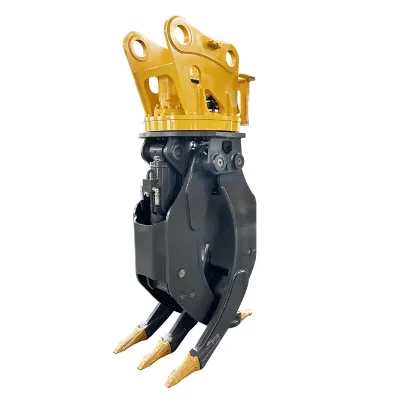
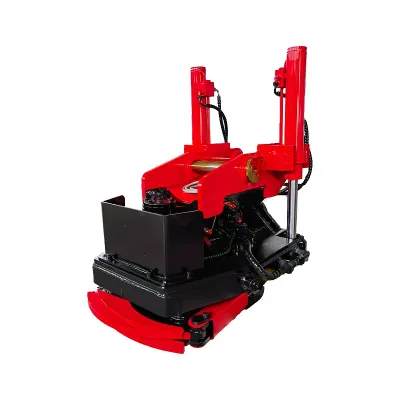
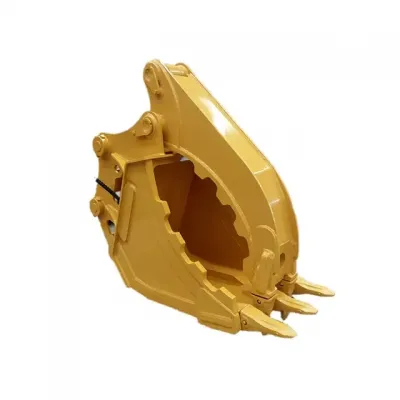
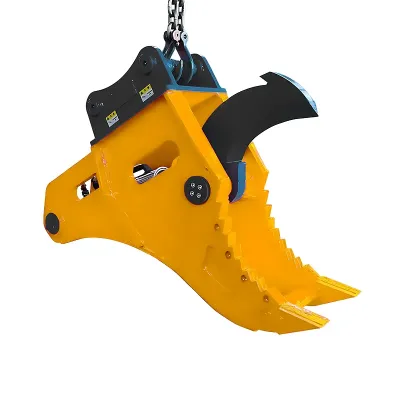
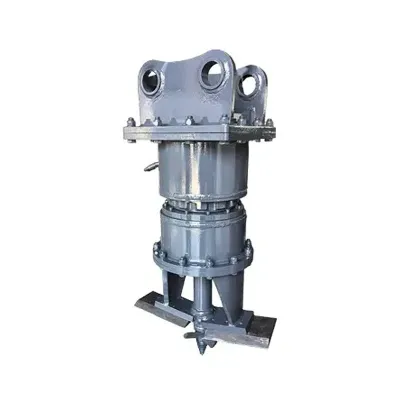
A rotating tree shear comes with a 360-degree hydraulic rotator sandwiched between the excavator boom and the cutting head, letting the operator swing the shear to any angle without moving the machine. That changes the game, especially in tight spots or whenever you need precise cutting and material placement. Fixed shears are simpler, lighter, and cheaper—no argument there—but rotation brings real advantages to a lot of forestry, land-clearing, and tree-service jobs. This guide covers when rotation is worth the extra spend and how to pick the right rotating tree shear for your machine.
How a Rotating Tree Shear Works
You can think of a rotating tree shear as three main pieces: the cutting head (cylinder and jaw), the rotator assembly, and the mounting bracket that hooks to the boom. The rotator is a hydraulic motor-driven gear unit that spins the cutting head a full 360 degrees. You run it from the cab with a separate auxiliary hydraulic circuit—usually a foot pedal or a proportional joystick. The cutting function is independent of the rotation, so you can turn the shear to the perfect angle while opening or closing the jaw at the same time.
The rotator has a specific torque and load rating that has to match the shear's weight and the cutting forces it'll see. Undersize the rotator for the shear or the work, and it'll fail early under the combined stress of cutting, rotating, and handling material. TGEC rotating tree shears come with rotators that are sized for each model, so the rotation system can handle the loads without premature wear or failure. The rotator also has a slew bearing that takes the radial and axial loads—grease it regularly, per the maintenance schedule.
Applications Where Rotation Makes a Difference
Rotation pays off most when the excavator can't easily reposition to face the tree the way you want. Take residential tree service: the excavator might be stuck in a tiny backyard or a narrow side yard with barely room to turn around. A rotating shear lets you work from whatever position the machine can reach, then spin the cutting head to get the right angle. That saves a ton of time and lowers the risk of damaging landscaping, hardscaping, or buried utilities.
Right-of-way maintenance—utility lines, pipelines, roads—is another spot where rotation shines. The excavator usually works along the corridor, and the vegetation can be on either side or at different distances. A rotating shear lets you cut trees and brush on both sides of the right-of-way without swinging the whole machine around, which is a big plus on slopes or in areas with limited access. In storm cleanup, being able to rotate the shear helps you deal with fallen trees that are lying at weird angles among structures and debris.
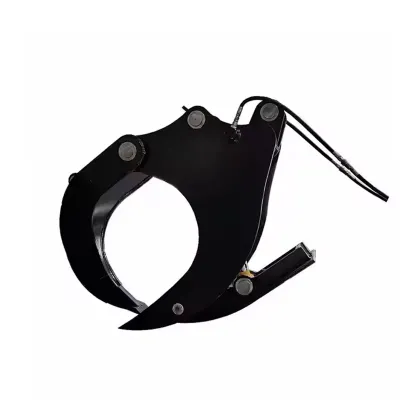
When you're loading cut timber onto trucks or piles, rotation lets you orient the log so it sits right on the bed or in the stack. That's especially handy with a grapple jaw shear—cut the log, rotate it to the right orientation, and place it exactly where you want it. Without rotation, you're stuck using the excavator's swing and boom to orient the material, which is slower and less precise.
When a Fixed Shear May Be Sufficient
For all the benefits of rotation, there are still plenty of cases where a fixed tree shear is the smarter move. In open land clearing or large-scale forestry where the excavator has room to maneuver, you can just reposition the machine to face each tree. In those settings, the extra complexity, weight, and cost of a rotator don't buy you enough to justify the investment. Fixed shears are lighter too, which matters on smaller excavators where lift capacity is tight.
Maintenance is another factor. A rotating shear has more moving parts—the rotator motor, slew bearing, hydraulic hoses, and seals—that all need regular inspection and upkeep. The rotator is another potential failure point, and repairing or replacing it adds to the total cost of ownership. If your priority is simplicity and low maintenance, a fixed shear is the more practical call. Also, fixed shears typically cost less upfront, which can be a deciding factor for contractors just adding a tree shear to the fleet.
Hydraulic Requirements for Rotating Models
A rotating tree shear needs at least two auxiliary hydraulic circuits: one for the cutting cylinder and one for the rotator. Some excavators only have one auxiliary circuit, and in that case you can use a diverter valve to switch flow between cutting and rotation. But that means you can't rotate and open/close the jaw at the same time, which can be awkward in some situations. For the best experience, a two-circuit auxiliary system is the way to go—it gives you independent control of both functions.
The rotator has its own flow and pressure specs that need to match your excavator's auxiliary circuit. Too little flow and the rotator turns slowly, killing productivity. Too much and it spins too fast, making precise positioning tough and potentially causing premature wear. Pressure should be set within the rotator's specified range, with a relief valve to protect against overpressure. When you order a rotating tree shear, give the excavator's auxiliary hydraulic specs to the manufacturer so they can confirm compatibility and recommend flow control or pressure reduction options if needed.
Cost and Value Considerations
The fixed versus rotating decision ultimately comes down to whether the productivity gains and application flexibility of rotation are worth the extra cost and complexity. For contractors working mostly in tight spaces, along rights-of-way, or in residential settings, the time saved by not repositioning the excavator can quickly pay for the higher purchase price of a rotating shear. The ability to precisely control cut angles and material placement also lowers the risk of property damage, which is a big cost-saving in residential and commercial tree service.
For operations that work mostly in open areas or only use the tree shear occasionally, a fixed shear may be the better value. Lower purchase price, simpler maintenance, and lighter weight make fixed shears attractive for budget-conscious contractors or those with smaller excavators. You can also start with a fixed shear and upgrade to a rotating model later if the work evolves to need more maneuverability. Some manufacturers offer rotator kits that can be added to existing fixed shears, though that's not always possible depending on the shear design.
Selecting the Right Rotating Tree Shear
When you're picking a rotating tree shear, start by matching the model to your excavator size and hydraulic capacity. TGEC offers rotating configurations on the TG-TS05 through TG-TS30 models, covering excavators from 5 to 50 tons. The compact TG-TS03 is fixed-only, which makes sense for its primary use in light brush work where rotation isn't as critical. For each model, make sure the rotator flow and pressure requirements match your excavator's auxiliary circuits, and that the combined weight of the shear, rotator, and expected log load stays within your excavator's lift capacity at working reach.
Also think about whether you need a grapple jaw along with rotation. The combo of rotation and grapple gives you maximum control over both the cutting angle and the cut material—it's the most versatile setup for tree service, land clearing, and timber processing. But the grapple adds another hydraulic circuit and more weight, so it might not be suitable for smaller excavators. For a full look at rotating tree shear models and specs, visit the excavator tree shear product page, or reach out to the TGEC technical team with your excavator details for a personalized recommendation.