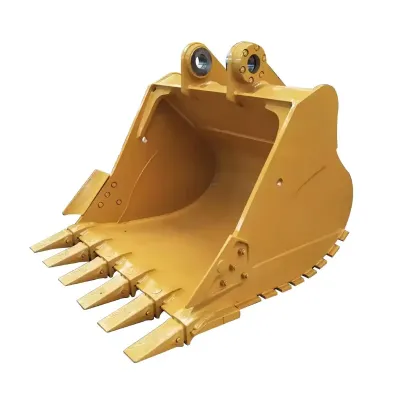
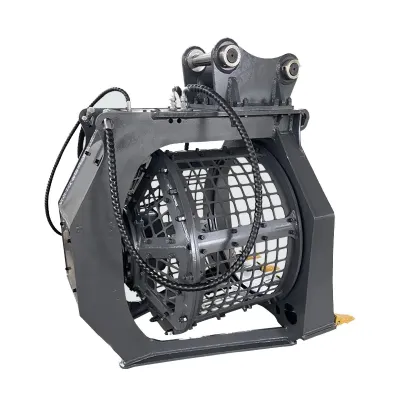
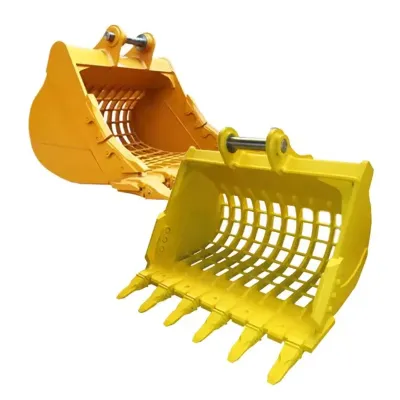
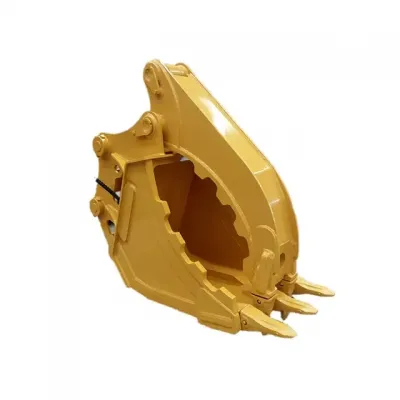
Bucket width is one of those specs that gets a lot of attention—and plenty of debate. Operators often lean toward the widest bucket they can get, figuring more width means more dirt per pass. But in reality, the best width depends on your machine, the material you're digging, the job you're doing, and the specific dimensions of the work itself. This guide breaks down how width affects excavator performance and gives you a practical way to pick the right width for different types of work.
How Bucket Width Affects Excavator Performance
Stability and Lift Capacity
A wider bucket increases the load moment out at the end of the stick—that's the force that wants to tip the machine forward or to the side. Even if the total weight of the bucket and load is within the machine's rated lift capacity, that wider bucket creates a bigger overturning moment because the load is farther from the machine's centerline. This really shows up when you're swinging to the side, where the offset load adds a lateral tipping force. If you're working on slopes, soft ground, or near an excavation, that reduced stability can get unsafe fast.
Width also changes how the load is distributed across the cutting edge and bucket body. A wider bucket with the same capacity as a narrower one is shallower, which pushes the load's center of gravity further forward and farther from the machine. That increases the load moment even if the total weight is the same. When you're comparing buckets of different widths, always think about the load moment, not just the weight, and verify stability in all operating positions, including side swing.
Breakout Force and Penetration
Breakout force comes from the bucket curl cylinder, and for any given excavator and linkage setup, that force is fixed. When you spread that force across a wider cutting edge, the force per unit of edge length drops. For example, if you've got 50 kN of breakout force on a 600 mm bucket, you're getting about 83 N per mm of edge. Put that same force on a 1200 mm bucket, and you're down to 42 N per mm. That lower force per millimeter makes it a lot harder for a wider bucket to get into compacted or hard material.
In loose soil, you might not even notice the difference because the material gives way easily. But in compacted clay, hardpan, or rock, a wide bucket can just skate across the surface without ever really digging in, even if the machine has plenty of breakout force overall. The operator might try to use the boom to force it down, but that just puts extra strain on the boom and stick cylinders and cuts into efficiency. For hard or compacted ground, a narrower bucket with better force per millimeter will penetrate more easily and give you faster digging cycles.
Production Rate and Cycle Time
The big upside of a wider bucket is more material per cycle, which means fewer cycles to move the same volume. When you're loading trucks or stockpiles, that extra capacity can really boost your hourly production—as long as the machine can handle the load safely and the material is loose enough to fill the bucket completely. But that production gain starts to fade if the wider bucket takes longer to fill, needs more force to get into the ground, or makes the operator slow down because stability feels iffy.
Cycle time matters too. A wider bucket might take a little longer to fill because it has to penetrate a broader swath, and it might take more care to dump because the larger load needs better positioning. Sometimes a narrower bucket that fills fast and cycles quick can actually outproduce a wider bucket that struggles to penetrate and needs careful handling. The sweet spot balances capacity per cycle against cycle time and penetration, and that balance shifts depending on the material and the job.
Bucket Width by Application
General Digging and Excavation
For general digging in normal soil, match the bucket width to the excavator size and material density. A good rule of thumb is to pick a width roughly equal to the excavator's track width—that gives you a solid balance of capacity, stability, and breakout force. For 1‑ to 5‑ton machines, that usually means widths from 300 to 900 mm. For 6‑ to 15‑ton machines, you're looking at 600 to 1500 mm. For larger 16‑ to 40‑ton machines, widths from 900 to 2400 mm are typical.
If you're working in light, loose material like topsoil or sand, you can go wider to push production. In heavy, dense material like wet clay or gravel, you'll want a narrower bucket to keep the load weight safe and maintain enough penetration force. A lot of contractors keep two or three bucket widths for the same machine and swap them out depending on the material on each job.
Trenching
For trenching, the bucket width is dictated by the trench width you need, not by maximum capacity. The trench has to be wide enough for the pipe or utility you're installing, plus any bedding material and working room. Using a bucket that's exactly the right width gives you a clean, vertical‑walled trench with minimal excess excavation—less backfill, less disturbance to the surrounding soil.
Common trench widths run from 150 to 200 mm for small electrical and communication conduits, 300 to 450 mm for residential water and sewer lines, and 600 mm or more for large municipal mains. If your required width doesn't match a standard bucket, you can order a custom width or dig with a narrower bucket and side‑cut to widen the trench. For deep trenches, you might need a narrower bucket to keep the load manageable at extended reach, even if the design calls for a wider opening.
Grading and Finishing
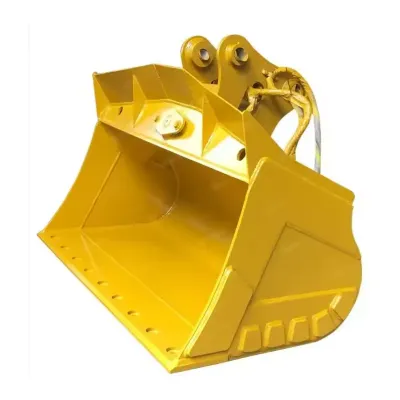
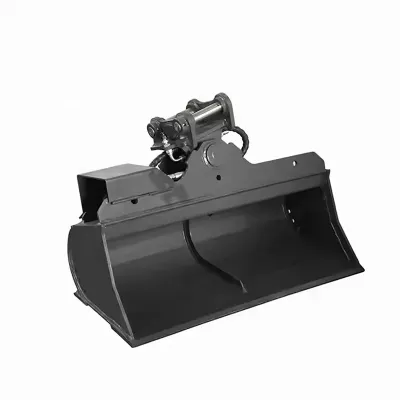
For grading and finishing, wider is usually better—more area per pass and a smoother, more consistent finish. Ditch cleaning buckets and tilt buckets used for grading are often 1.5 to 2 times wider than standard buckets for the same machine. That wide, flat cutting edge gives you a long reference surface that helps you produce even grades with fewer passes.
But there's a limit. A grading bucket that's too wide for the machine can be hard to control, especially at the edges of the cut, and it can leave marks or ridges if you can't keep a consistent angle. The bucket also has to be light enough that you can make fine adjustments without fighting the weight. For precision finish work, a moderately wide bucket that you can control easily will often give you better results than the widest one available.
Loading Trucks and Stockpiles
For loading trucks and building stockpiles, match the bucket width to the truck bed or stockpile size. A bucket wider than the truck bed will spill material over the sides during dumping, wasting material and creating extra cleanup work. A bucket narrower than the bed is less efficient—more cycles to fill the truck. Ideally, the bucket should be just slightly narrower than the truck bed to give you some margin when positioning.
For stockpile work, width affects how fast you can move material from the pile to the truck or processing equipment. A wider bucket takes bigger bites, but it also needs to penetrate the pile effectively. In cohesive or compacted stockpiles, a narrower bucket may bite better, while in loose, free‑flowing material, a wider bucket can boost production. Always consider the material characteristics of the stockpile, not just the truck size, when choosing a loading bucket.
Width Considerations for Specialty Buckets
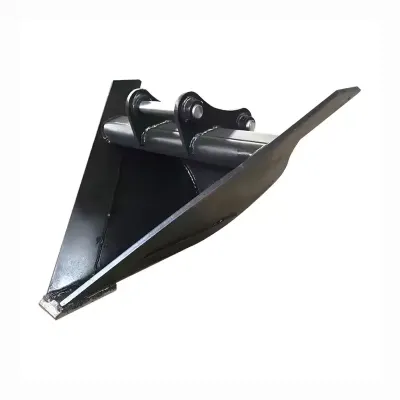
V-ditch buckets have a trapezoidal shape with a defined top and base width, and selection is based on the trench dimensions you need, not just the excavator size. The top width sets the opening, and the base width sets the bottom. You might need multiple V-ditch bucket sizes for projects with different drainage specs.
Skeleton buckets and rotary screening buckets are picked based on the throughput you need and the volume of material you're processing. Wider buckets process more per cycle but need larger machines with enough lift capacity and hydraulic flow. For screening buckets, width also affects screen area, which influences efficiency and output rate.
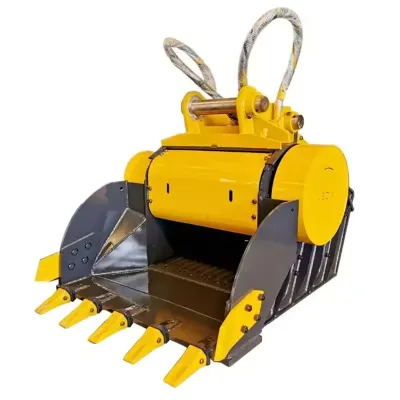
Crusher buckets have a feed opening width that sets the maximum material size they can accept. Width is matched to the excavator size and the typical material dimensions—larger machines can handle wider feed openings for bigger material. Output capacity is also tied to the bucket width and the jaw mechanism size.
Making the Final Selection
Start by pinning down your primary application. For general excavation in normal soil, pick a width that matches your excavator track width and the material density. For trenching, match the width to the trench dimensions you need. For grading, choose the widest bucket you can control precisely. For loading, match the width to the truck bed or stockpile size.
Next, check that the width you're considering, combined with the bucket weight and the expected material load, stays within your excavator's lift capacity at the reach you'll actually be working at. Verify stability in all operating positions, including side swing. Make sure the breakout force per unit of cutting edge is enough for the material conditions. If any of those checks come up short, step down to a narrower width until everything's within safe limits.
Finally, think about whether one bucket width will handle everything you do, or if you'd be better off with two or three. A lot of contractors find that having multiple widths for the same machine lets them optimize for different materials and jobs without switching machines. TGEC excavator buckets come in a broad range of widths, and custom sizes are available for specific project requirements.