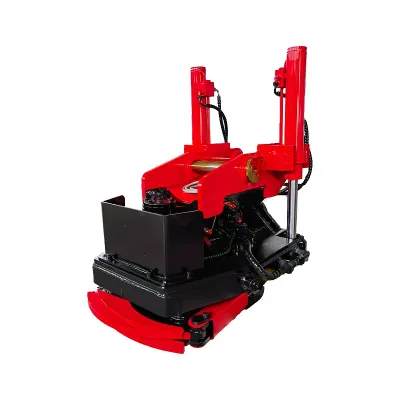
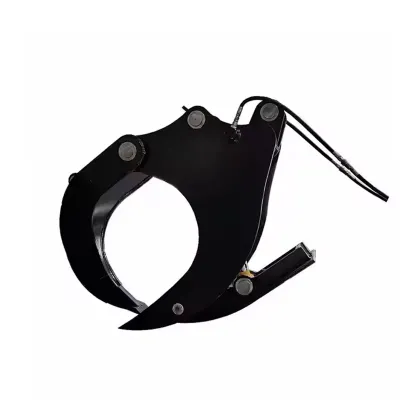
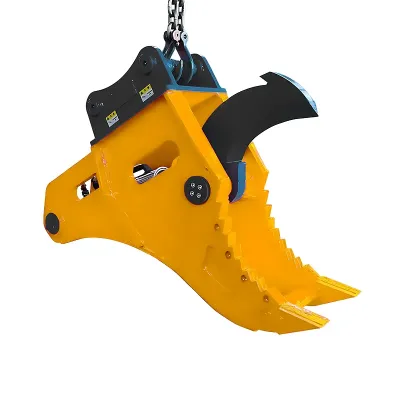
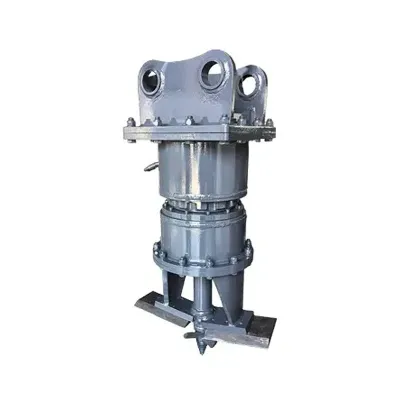
An excavator rock drill and splitter knocks out two jobs that used to take two separate machines: it drills a precise hole into the rock, then uses that same hole to insert a hydraulic wedge and fracture the material along a controlled line. Since both functions are mounted on the same excavator boom, one operator can run the whole drill-and-split cycle without swapping attachments or shuttling between machines. Walking through the sequence makes it easier to see if this method fits your rock type, project timeline, and site constraints.
The Four-Step Operating Sequence
The process runs through a repeatable loop. First, the operator uses the excavator boom to put the drill head against the rock face and fires up the hydraulic drill to sink a hole to the specified depth. Compressed air from the onboard compressor blows the cuttings out of the hole and knocks down dust right at the source. Second, once the hole hits the target depth, the drill pulls back and the main frame rotates to bring the splitter head into line with the drilled hole. Third, the splitter wedge goes into the hole, and hydraulic pressure drives it forward, forcing the counter-wedges outward against the hole walls to generate splitting force. Fourth, the rock fractures along the plane set by the hole position and wedge angle, and the operator clears the broken material before starting the next cycle.
The whole deal typically takes less than a minute per hole in competent rock—drilling time varies with rock hardness and hole depth, while the split itself usually wraps up in eight to ten seconds. Since both steps happen on the same machine, the only delay between drilling and splitting is the few seconds it takes for the main frame to rotate, not the travel time you'd lose moving between separate drill and splitter rigs.
Drilling Phase
During drilling, a hydraulic rotary motor drives a drill steel with a carbide bit into the rock. The feed system applies steady thrust while the rotary turns the steel, and compressed air flows through the center of the drill steel to blow cuttings out of the hole. That air also does double duty as the primary dust control, catching dust at the source instead of relying on external water spray. The hole diameter and depth are sized to match the splitter wedge so the wedge fits cleanly and the counter-wedges can expand fully against the hole walls.
How fast you drill depends on rock hardness, hole diameter, and thrust pressure. In medium-hard rock like limestone or sandstone, a 115 to 155 mm hole typically goes in at about 0.8 meters per minute. In harder granite or basalt, you'll likely drill a bit slower, and the operator may need to tweak feed pressure to avoid bit damage or hole wander. Drilling depth usually lands between 1.4 and 2.0 meters, depending on the model and how deep the fracture needs to run.
Splitting Phase
Once the hole is drilled, the splitter head rotates into position and the wedge assembly slides into the hole. The wedge is a tapered central rod flanked by two counter-wedges—often called feathers—that sit against the hole walls. When hydraulic pressure drives the wedge down, the taper forces the counter-wedges outward against the rock, generating huge lateral pressure in a controlled direction. Since rock is weaker in tension than in compression, that lateral pressure triggers a fracture along the plane perpendicular to the wedge orientation.
The splitting force is applied gradually and controllably—nothing like the impact of a hydraulic breaker. That means the fracture direction is predictable and can be steered by orienting the wedge, which is a big deal in dimension stone quarrying where block shape matters, and in tunneling where the fracture line needs to follow the tunnel profile. An automatic displacement compensation valve keeps splitting pressure steady throughout the wedge stroke, even as the rock fractures and resistance drops. The typical split takes eight to ten seconds, after which the wedge retracts and the unit moves on to the next hole.
Key Components That Make the Process Work
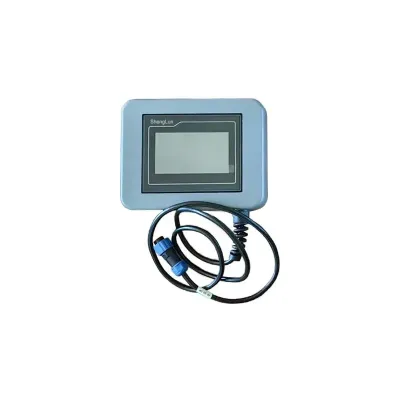
A handful of key components come together to make the integrated drill-and-split process tick. The hydraulic drill motor and feed system supply the rotary power and thrust for drilling, while the onboard full-hydraulic air compressor delivers the compressed air for clearing cuttings and controlling dust. The splitter wedge and counter-wedge assembly convert hydraulic force into controlled lateral splitting pressure. The dual 360-degree rotation system—on both the main frame and the splitter head—lets the operator drill and split on vertical walls, overhead surfaces, and angled faces without repositioning the excavator. The load-sensing electro-hydraulic control system automatically manages drill feed, rotation speed, and splitting force, and the wireless remote lets the operator stand clear of the rock face while running all functions.
For contractors weighing this approach, the big takeaway is that one machine and one operator handle a process that traditionally required a separate drill rig and splitter unit, with all the extra labor, transport, and coordination that comes with that. The controlled fracture direction also makes it a strong fit for jobs where blasting or hydraulic breaking would throw too much vibration, flyrock, or uncontrolled cracking. For a side-by-side comparison with hydraulic breaking, see Rock Drill and Splitter vs. Hydraulic Breaker: Which Method Fits the Job?. For help picking the right configuration, check out How to Choose an Excavator Rock Drill and Splitter for Hard Rock Excavation.