Welcome to the Official Website of TianGe Attachments.

Pallet Forks

Pallet Forks

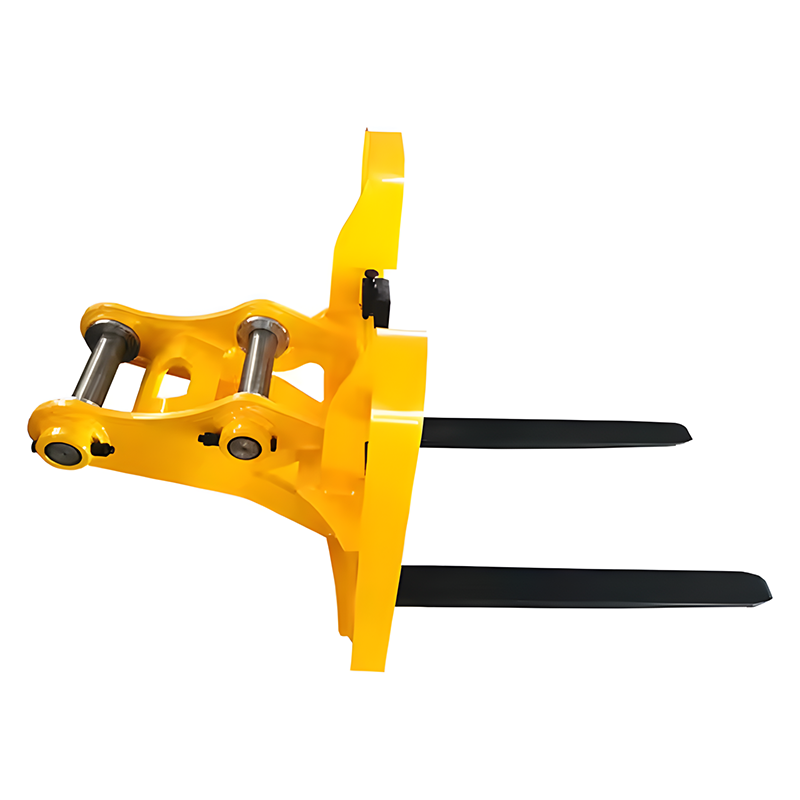
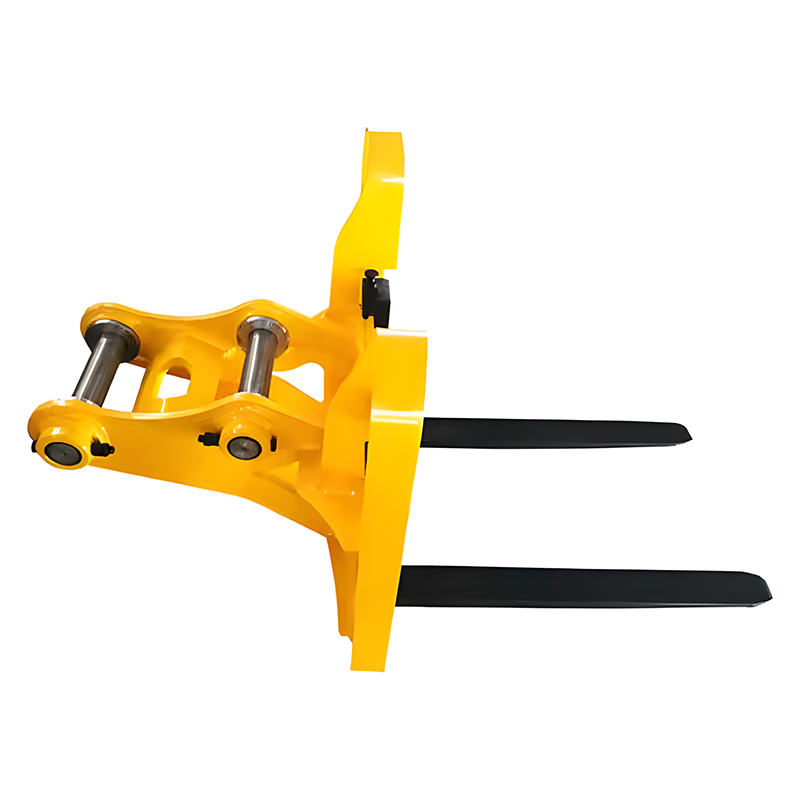
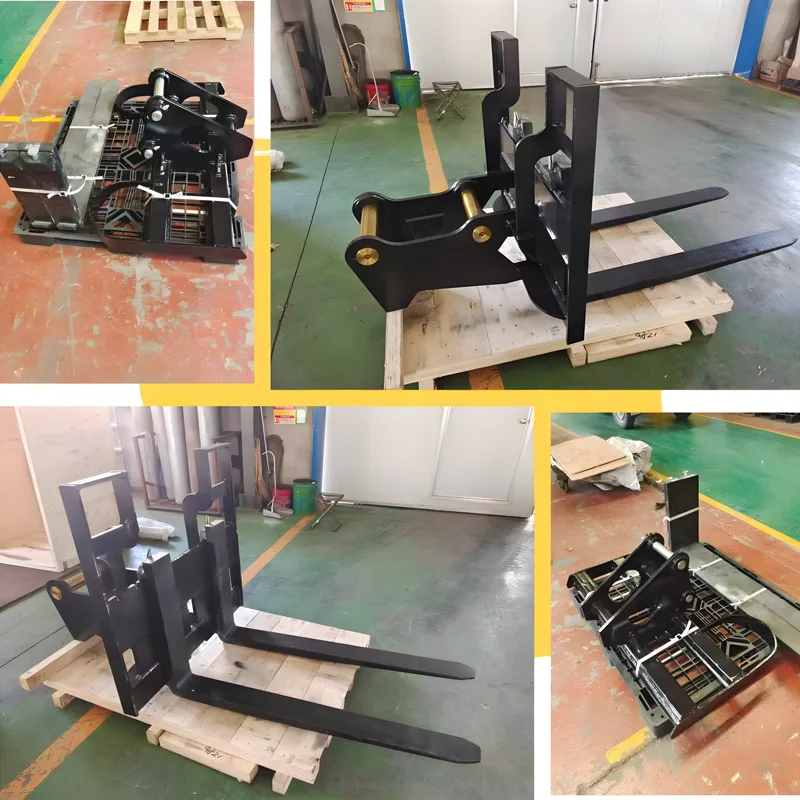
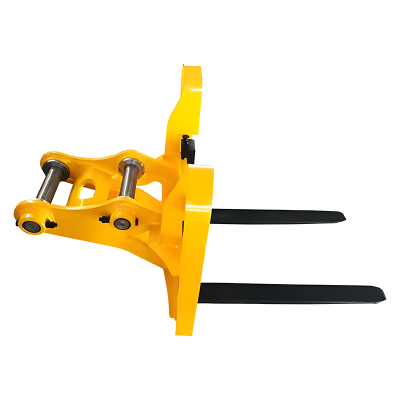
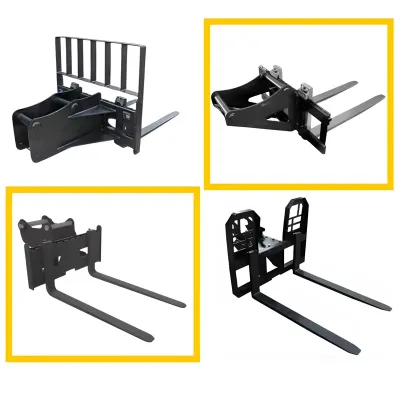
Heavy-duty material handling attachment with a Q355B steel frame and adjustable fork tines that lift and transport pallets, lumber, pipes and construction materials. Six models cover excavators from 1.5 to 20+ tons with fork widths ranging from 800 to 1582 mm.
Product Name: Excavator forks / Pallet fork attachment / Pallet forks / Excavator fork attachment
Type: Pallet Forks
After-sales Service: Provided
Warranty: 1 Year
Customization: Available
Shipping Cost: Negotiate with us about shipping cost and estimated delivery time.
Get a quote
Overview
FAQ

Product Overview

The TGEC excavator pallet forks are rugged material handling attachments built for mini and full-size excavators from 1.5 to 20+ tons. With a Q355B high-strength steel frame and adjustable fork tines, they lift and move palletized loads, lumber, pipes, equipment, and construction materials using the excavator's reach and mobility. You can place loads exactly where you need them—even on uneven terrain, construction sites, and tight spaces where a conventional forklift can't go.

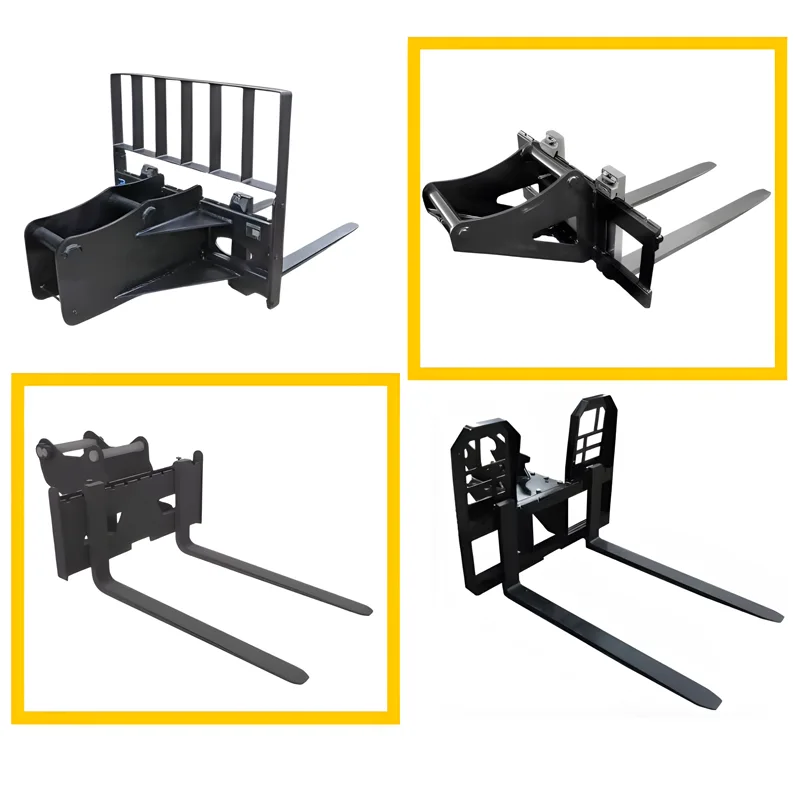
We offer six models with fork widths from 800 to 1582 mm and unit weights from 75 to 750 kg, so you can match the forks to your machine and material handling needs. All TGEC pallet forks are built with Q355B steel frames and durable fork tines for reliable load engagement. Check out the full excavator forks category for a complete overview. For help picking the right model, see our excavator pallet fork selection guide.

Technical Specifications

ParameterTG-PF01TG-PF03TG-PF05TG-PF08TG-PF15TG-PF20
Frame MaterialQ355BQ355BQ355BQ355BQ355BQ355B
Compatible Excavator Class1.5–3 t (1.7–3.3 ton)3–5 t (3.3–5.5 ton)5–8 t (5.5–8.8 ton)8–12 t (8.8–13.2 ton)12–20 t (13.2–22 ton)20+ t (22+ ton)
Fork Width800 mm (31.5 in)1000 mm (39.4 in)1200 mm (47.2 in)1200 mm (47.2 in)1582 mm (62.3 in)1200 mm (47.2 in)
Weight75 kg (165 lb)160 kg (353 lb)255 kg (562 lb)265 kg (584 lb)400 kg (882 lb)750 kg (1653 lb)

Table data is for reference only. Actual specifications may vary based on the final configuration. Please contact the TianGe technical team for details.

How It Works

The pallet forks mount to the excavator's boom and arm in place of the bucket. The two parallel tines slide under a pallet or load from below—just like a forklift. The operator uses the boom and arm controls to lower the forks, position them under the load, and lift. The load sits on the tines, and the backrest keeps it from sliding backward toward the machine.

Application Scenarios

  • Construction site logistics: Move pallets of building materials, cement, tile, insulation, and supplies around job sites without a forklift.

  • Lumber and timber handling: Transport lumber bundles, timber, poles, and long materials at sawmills, yards, and job sites.

  • Pipe and conduit handling: Lift and position PVC, HDPE, concrete, and metal pipes for utility and drainage work.

  • Equipment and machinery transport: Move small generators, compressors, pumps, and tools on pallets or directly on the forks.

  • Landscaping and hardscaping: Carry pallets of pavers, stone, soil, plants, and mulch on landscaping projects.

  • Agricultural and farm use: Move hay bales, feed pallets, fencing, and supplies around farms and ranches.
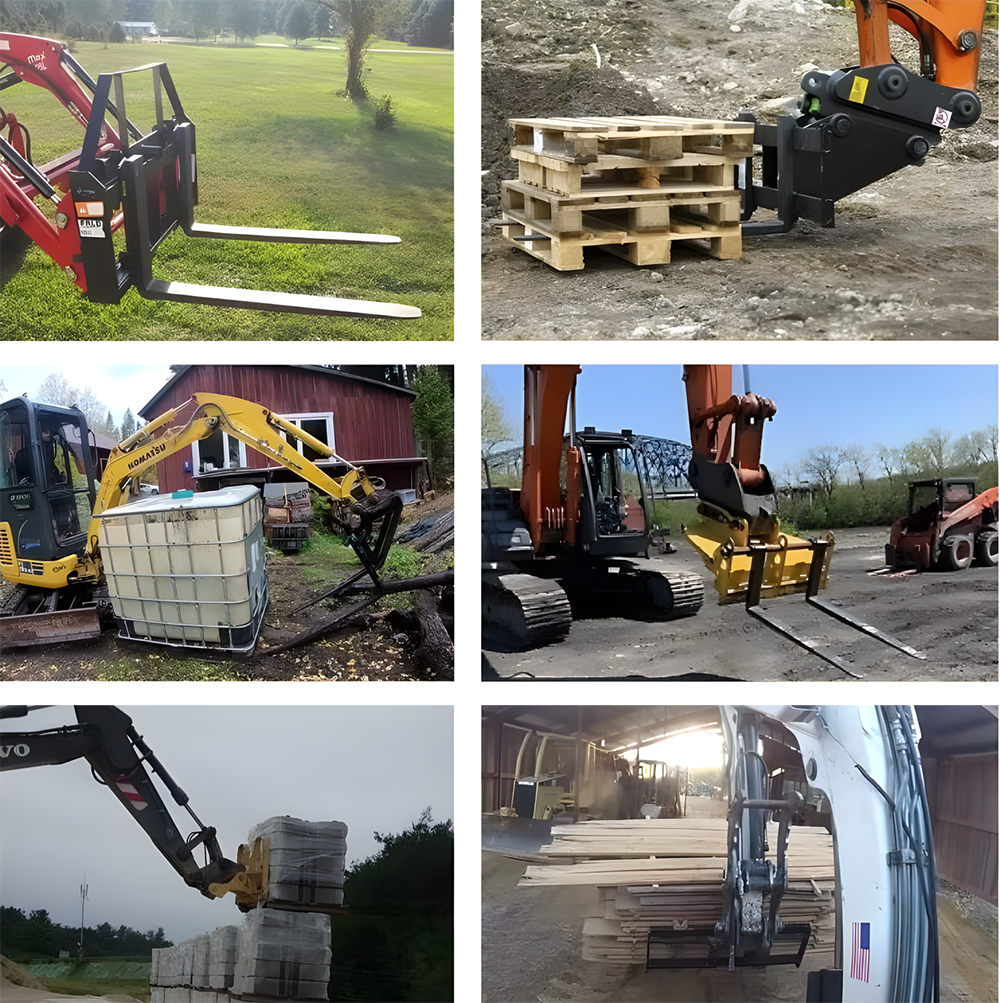
TGEC Quick Attach Excavator Pallet Fork transporting lumber and pallets at landscaping yard

Installation & Mounting

TGEC pallet forks mount with a standard pin-on bracket or a compatible quick coupler system. Make sure the bracket matches your excavator's pin spacing and pin diameter, then pin the forks to the boom and secure with retaining clips or bolts. If you're using a quick coupler, engage the frame and verify the locking mechanism is fully latched. Always do a test lift with a known load to check stability and secure attachment before putting the forks to work.

Wear & Service

The main wear items are the fork tines, tine pins and bushings, mounting pins, frame backrest, and hydraulic hoses (on hydraulic frames). Inspect tines before each use for thinning, bending, cracking, or excessive wear—replace any that are worn past the limit or show structural damage. Check the frame for cracks, deformation, and corrosion at mounting points, the fork carriage, and backrest. On hydraulic frames, inspect hoses for cracks, abrasion, or leaks and replace damaged ones immediately. Genuine replacement parts are available for all models.

Dealer & Bulk Orders

TGEC supplies excavator pallet forks to equipment dealers, construction contractors, material handling firms, and OEM partners worldwide. We offer dealer and bulk-supply programs based on model selection, order volume, machine specs, and project needs. OEM and private-label arrangements can also be explored based on partner requirements and production feasibility.

Request a Quote

To get a quote, send us your excavator make and model, operating weight, lift capacity, pin spacing and diameter, coupler type, and which model you're interested in (TG-PF01, TG-PF03, TG-PF05, TG-PF08, TG-PF15, or TG-PF20). We'll confirm compatibility and get back to you with pricing and lead time.
Frequently Asked Questions

What are excavator pallet forks used for?+

Excavator pallet forks are material handling attachments mounted to an excavator's boom for lifting and transporting palletized and non-palletized loads. They are used for handling pallets of building materials, lumber, pipes, equipment and supplies on construction sites, in yards and at distribution facilities. The excavator's boom and arm provide lifting force and precise positioning, while the fork tines support the load from below, making the attachment versatile for job sites where a forklift is not practical.

What types of materials can excavator pallet forks handle?+

Excavator pallet forks handle palletized loads including building materials, lumber bundles, pipes, equipment and landscaping supplies. Non-palletized loads such as long building materials, steel bars and precast components can be handled by positioning the fork tines appropriately. The maximum load is limited by the allowable load for the selected fork model, the excavator's lift capacity at working reach, and proper load distribution on the tines.

What excavator sizes can use pallet forks?+

TGEC pallet forks cover excavators from 1.5 to 20+ tons, with the TG-PF01 for 1.5–3 ton, TG-PF03 for 3–5 ton, TG-PF05 for 5–8 ton, TG-PF08 for 8–12 ton, TG-PF15 for 12–20 ton, and TG-PF20 for 20+ ton machines. However, operating weight alone is not sufficient — the excavator's lift capacity at working reach and mounting dimensions must also be verified. Larger excavators can typically use smaller fork models if mounting is compatible, but smaller excavators should not use forks designed for larger machines.

Are these pallet forks suitable for mini excavators?+

Yes, the TG-PF01 is specifically designed for 1.5 to 3 ton mini excavators with a compact 800 mm fork width and 75 kg unit weight, and the TG-PF03 fits 3 to 5 ton mini and compact excavators. These models allow mini excavator owners to perform material handling tasks that would otherwise require a separate forklift or manual labor. When using pallet forks on a mini excavator, verify the machine's lift capacity at working reach, as mini excavators have limited capacity compared to larger machines, and loads should be kept close to the machine for stability.

How do you determine the appropriate pallet fork capacity?+

Determine the maximum load weight expected, including the pallet weight, and consider load distribution — a load concentrated at the fork tips reduces effective capacity compared to a centered load. Verify the excavator's lift capacity at the working reach using the machine's load chart, as capacity decreases with boom extension, and ensure the combined attachment and load weight is within the rated capacity. Select a fork model with rated capacity exceeding the maximum expected load by a safety margin, and consider stepping up to a larger model if regularly handling loads near the upper limit.

What fork dimensions should be considered for an excavator pallet fork attachment?+

Fork width (carriage width) should match the typical load dimensions — standard pallets are 1000 to 1200 mm wide, while lumber bundles and pipes may require different widths. Fork tine length determines how far the load is engaged and supported, and adjustable tine spacing allows matching different pallet openings and load dimensions. The mounting bracket dimensions including pin-to-pin spacing and pin diameter must match the excavator's mounting interface, and the overall housing width must fit within the intended working space.

How are pallet forks mounted to an excavator?+

Pallet forks are mounted using either a direct pin-on bracket or a quick coupler system. With pin-on mounting, the fork frame connects directly to the boom and arm using mounting pins secured with retaining clips or bolts, providing a rigid connection with minimal play. With a quick coupler, the operator can engage and disengage the attachment quickly without manually removing pins, allowing fast switching between attachments. Verify the mounting bracket matches the excavator's pin-to-pin spacing and pin diameter, and perform a test lift with a known load to verify stability after installation.

Can excavator pallet forks be used with different coupler configurations?+

Yes, provided the fork frame is equipped with a compatible coupler interface for mechanical, hydraulic or semi-automatic quick coupler types. When using a quick coupler, add the coupler's weight to the total attachment weight when evaluating lift capacity, and verify the coupler is fully engaged and locked before each lift. TGEC can provide fork frames configured for common coupler types and brands, or custom coupler interfaces for specific systems. Inform the supplier of the coupler brand, model and interface dimensions at ordering time to ensure the appropriate frame configuration.

What is the purpose of the pallet fork frame?+

The pallet fork frame is the structural backbone that connects the excavator's boom to the fork tines, transferring lifting force from the machine to the load. It houses the fork carriage mechanism that holds the tines and allows adjustable tine spacing, and typically includes a backrest to prevent loads from sliding backward toward the excavator. The frame incorporates the mounting bracket or coupler interface and may include features such as tie-down anchors or hydraulic cylinder mounts for powered fork adjustment. Regular inspection of the frame for cracks, deformation and wear is essential for safe operation.

What should be inspected on a hydraulic pallet fork frame?+

Inspect hydraulic hoses for cracks, abrasions, bulges or leaks and replace damaged hoses immediately, and check all hydraulic connections and fittings for tightness. Inspect the hydraulic cylinder for leaks around the rod seal and end caps, proper extension and retraction, and any signs of rod bending or corrosion. Inspect the frame structure for cracks, deformation and wear at mounting points, cylinder mounts and fork carriage, and check the fork tines for bending, cracking and proper securement. Hydraulic pallet fork frames should be inspected before each use and serviced according to the manufacturer's maintenance schedule.

What wear or damage should be checked on excavator pallet forks?+

Inspect fork tines for thinning, rounding of tips, bending, twisting or cracking, and replace any tines worn beyond the recommended limit or showing structural damage. Check the frame for abrasion, corrosion, elongated mounting pin holes and cracks at mounting points, fork carriage, backrest and welds, and inspect mounting pins for elongation, grooving or bending. Check coupler interface wear on quick-coupler frames, and inspect backrest components for bending, cracking or missing parts. Any damage affecting structural integrity, load capacity or secure mounting should be repaired before further use, using genuine manufacturer replacement parts.

What should be checked before operating pallet forks with an excavator?+

Verify the pallet fork attachment is properly and securely mounted with all pins inserted and secured, and confirm the quick coupler (if used) is fully engaged and locked. Inspect fork tines for bending, cracking or excessive wear, verify they are properly positioned and secured, and check the frame for cracks, deformation and structural damage. Confirm the excavator's lift capacity is adequate for the expected load at working reach by consulting the load chart, and ensure the work area is clear of bystanders, obstacles and unstable ground. Perform a test lift with the load close to the ground to verify stability and proper load balance before raising to transport height.
Please make sure to include your phone number with the country code (e.g., 86 for China, 1 for USA).