Frequently Asked Questions
What is an excavator rake used for?+
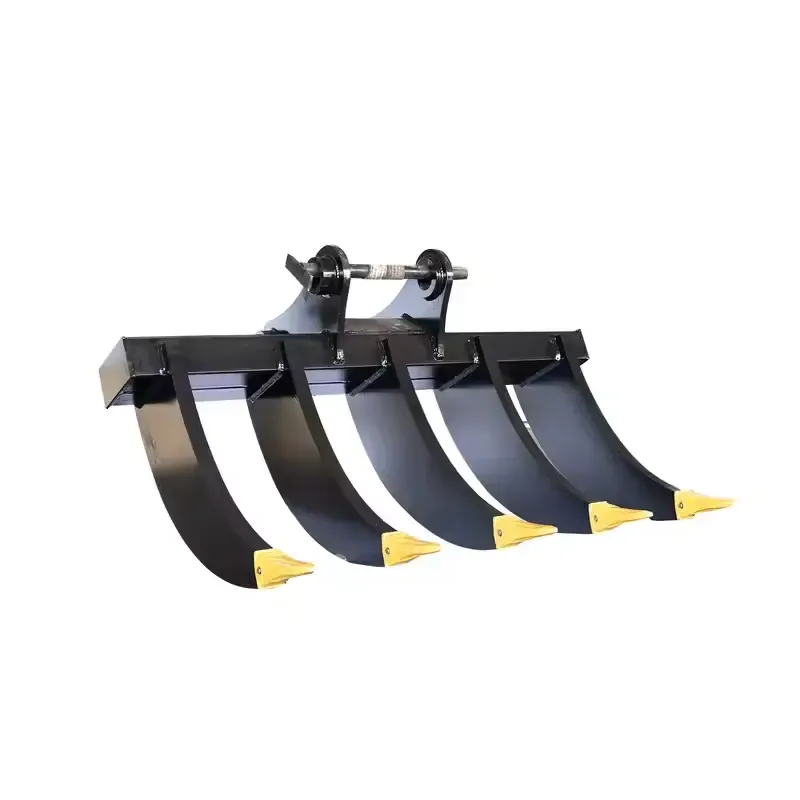
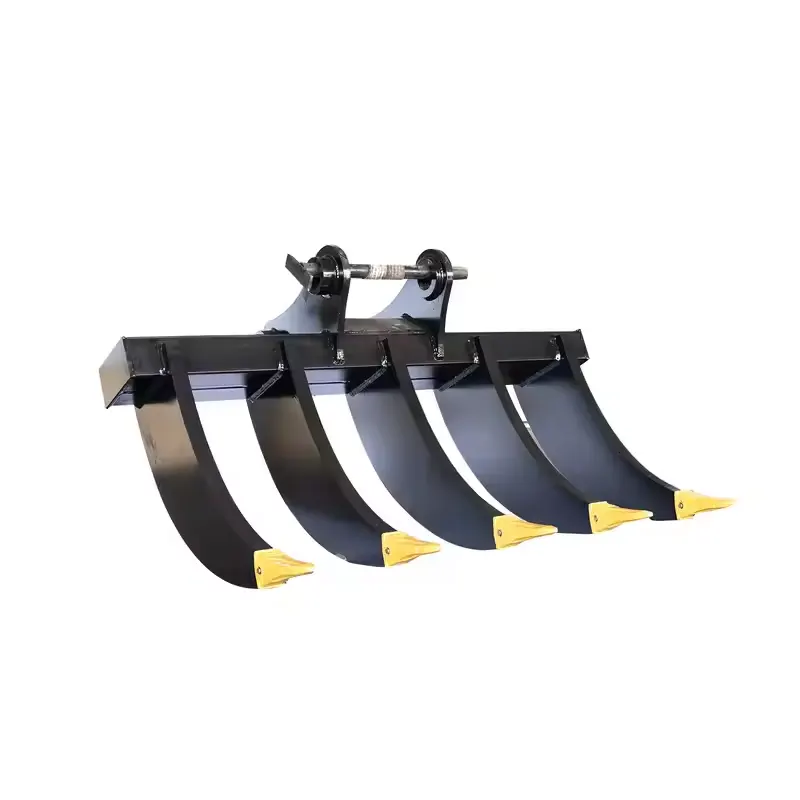
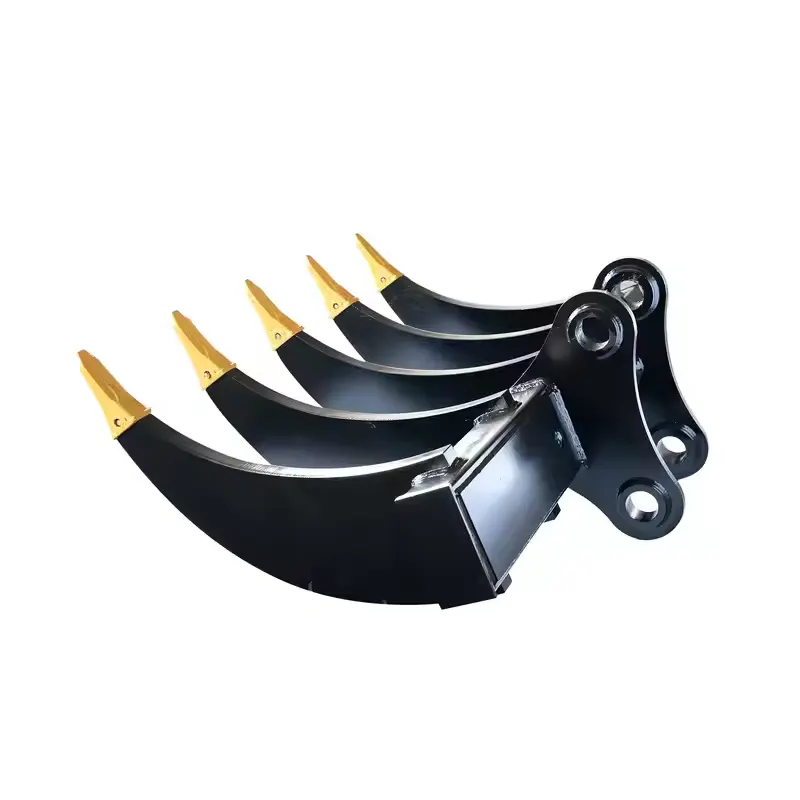
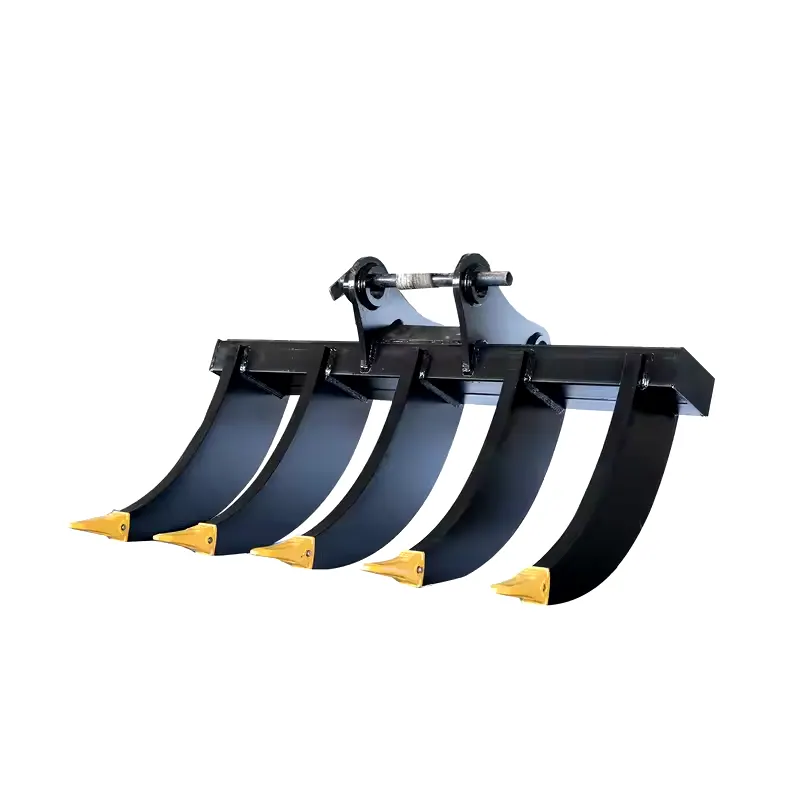
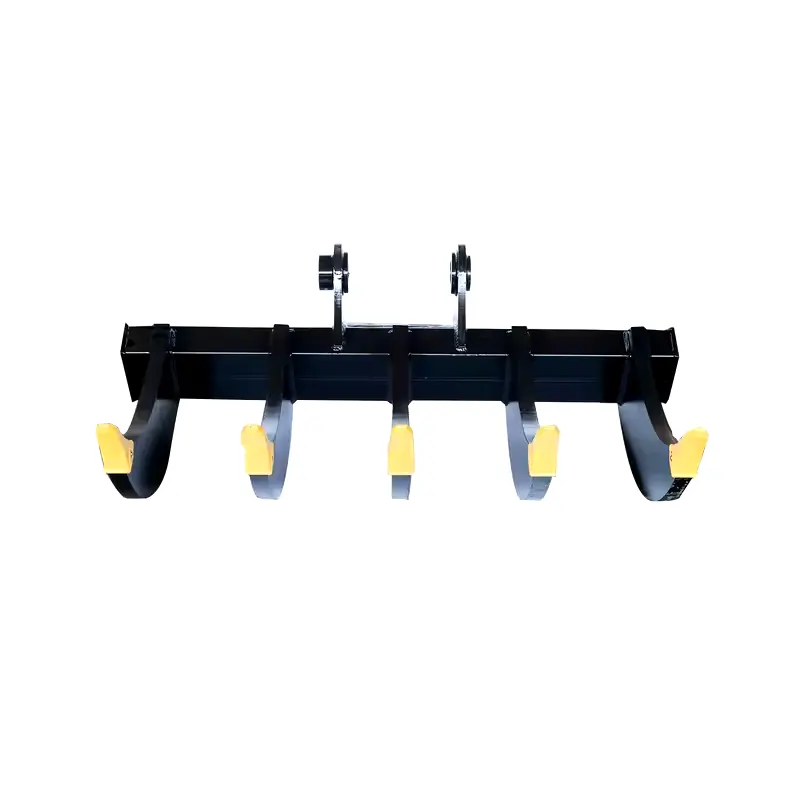
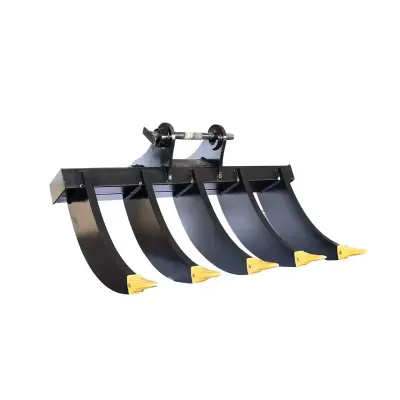
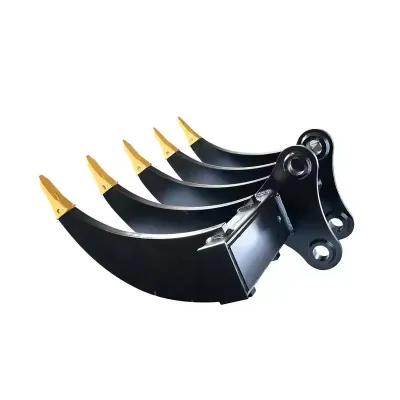
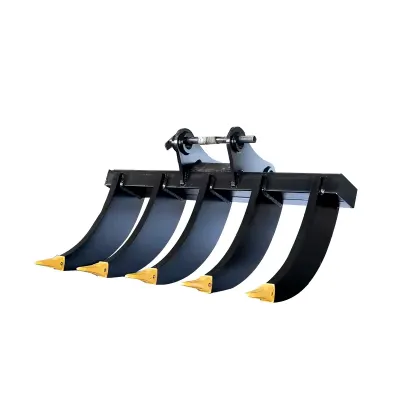
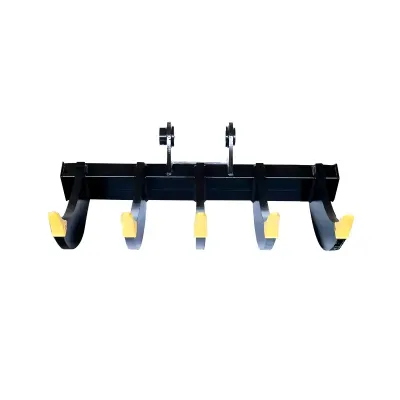
An excavator rake is an open-tine attachment used for root removal, brush clearing, rock sorting, land clearing, debris gathering, and vegetation management. The open-tine design allows soil and small material to fall through while retaining roots, rocks, brush, and larger debris, making it ideal for separating material types and reducing hauling volume. Common applications include site preparation, right-of-way clearing, stump removal, rock and gravel sorting, construction debris cleanup, pond and shoreline maintenance, and post-demolition material recovery.
What types of roots, brush, rocks, and debris can an excavator rake handle?+
An excavator rake handles a wide range of material types depending on tine spacing, tine strength, and excavator size. For roots: the rake gathers and extracts fibrous root mats, individual taproots, and stump systems, with tine spacing determining the minimum root size retained — wider spacing lets small roots and soil pass through while catching larger roots. For brush and vegetation: the tines collect saplings, undergrowth, woody brush, and fallen branches for pile-and-burn or haul-away operations, though very thick stems may require a shear or saw first. For rocks: the rake sorts and removes rocks from soil during landscaping and site prep, with tine spacing controlling the minimum rock size retained — narrower spacing catches smaller rocks, wider spacing lets gravel pass. For debris: the rake gathers construction debris, woody waste, storm-damage material, and scattered refuse into manageable piles. The maximum material size depends on the rake model and excavator lift capacity — larger rakes on bigger machines handle larger roots, rocks, and debris loads. Always ensure the combined rake and material weight stays within the excavator's rated lift capacity at the working radius.
Can an excavator rake be used on a mini excavator?+
Yes. TGEC offers rake models specifically designed for mini and compact excavators. The TG-R2T (700 mm / 28 in., 6 tines, 75 kg) and TG-R5T (1000 mm / 40 in., 8 tines, 130 kg) are suited to mini excavator class machines. When using a rake on a mini excavator, three factors require attention: lift capacity — mini excavators have limited lift, especially at extended reach, so the combined rake and material weight must stay within the machine's rated capacity; mounting dimensions — mini excavator pin sizes vary significantly between brands, so always measure pin diameter, pin center distance, and arm width rather than relying on tonnage; and rake width — a rake that is too wide for a mini excavator can cause instability and reduced control, so match the width to the machine class. For mini excavators at the lower end of the size range, the TG-R2T is generally the most appropriate starting point. Custom mounting brackets are available for non-standard mini excavator pin dimensions.
How do I match an excavator rake to my machine size?+
Matching an excavator rake to your machine size involves four key checks. First, operating weight range — TGEC rakes are grouped by excavator class: TG-R2T for mini class, TG-R5T for compact class, TG-R8T for compact to mid-size, TG-R12T for mid-size, TG-R20T for mid-size to large, and TG-R30T for large class. These are starting points, not hard limits. Second, lift capacity — the combined weight of the rake (75 to 1100 kg depending on model) plus the material load must remain within the excavator's rated lift capacity at the working radius. Consult the machine's load chart with the actual rake weight factored in, especially for mini and compact machines where the margin is narrow. Third, mounting dimensions — measure pin diameter, pin center distance (distance between the two arm pins), and arm width (distance between the inner arm plates). These vary between brands and models even within the same tonnage, so always measure your actual machine. Fourth, auxiliary considerations — if using a quick coupler, verify the coupler interface is compatible, and factor the coupler weight into the lift capacity calculation. If your machine falls between two rake classes, choose based on lift capacity and typical material load rather than nominal tonnage alone. Provide your excavator make, model, and measured pin dimensions to confirm compatibility before ordering.
How does rake width affect excavator performance and clearing efficiency?+
Rake width directly affects both excavator performance and clearing efficiency, and the optimal width depends on machine size, application, and jobsite conditions. Wider rakes (60–80 inches / 1500–2000 mm) cover more ground per pass, increasing productivity on large open-area clearing projects such as right-of-way clearing, field preparation, and large-scale land clearing. They gather more material per pass, reducing the number of passes needed to clear a given area. However, wider rakes are heavier, require more lift capacity, and can be harder to maneuver in confined spaces. They also put more stress on the excavator arm and pins, especially when prying or leveraging heavy roots and rocks. Narrower rakes (28–48 inches / 700–1200 mm) are lighter, more maneuverable, and better suited to confined spaces such as backyards, between buildings, along fence lines, and in dense vegetation. They allow more precise control for selective root removal and rock sorting, and they place less stress on smaller machines. However, they cover less ground per pass, reducing productivity on large open sites. The general guideline is: mini excavators (1.5–3.9 tons) use 28–40 inch rakes, compact excavators (4–6 tons) use 40–48 inch, mid-size (7–15 tons) use 48–60 inch, and larger machines (16+ tons) use 72–80 inch. If your work spans both confined and open areas, a mid-width rake (48–60 inches) offers the best balance of productivity and maneuverability for most applications. Always ensure the rake width is appropriate for your machine's lift capacity and stability.
What should I check before mounting an excavator rake to my machine?+
Before mounting an excavator rake, check the following items to ensure safe and proper installation. First, mounting dimensions — measure pin diameter, pin center distance (distance between the two arm pins), and arm width (distance between the inner arm plates) on your excavator, and confirm they match the rake's mounting bracket. These dimensions vary between brands and models, so always measure your actual machine rather than relying on published specs. Second, lift capacity — verify that the combined weight of the rake plus the expected maximum material load is within the excavator's rated lift capacity at the working radius. Consult the machine's load chart, especially for mini and compact excavators. Third, quick-coupler compatibility — if using a quick coupler, verify the coupler brand, model, and mounting interface are compatible with the rake's bracket. An adapter plate may be needed for non-standard couplers. Fourth, pin and bushing condition — inspect the excavator's bucket pins, link pins, and bushings for wear. Worn pins or bushings can cause excessive play, inaccurate alignment, and accelerated wear on the rake's mounting bracket. replace worn components before mounting the rake. Fifth, arm and boom condition — inspect the excavator arm, boom, and linkages for cracks, bends, or structural damage, especially if the machine has been used for heavy prying or demolition. Sixth, hydraulic system — if the rake has any hydraulic components (most standard rakes are non-hydraulic, but some configurations may have hydraulic adjustments), verify the auxiliary circuit is functional and properly connected. Seventh, worksite clearance — verify that the rake, when mounted, clears the tracks, blade, cab, and counterweight through the full range of arm motion, tilt, and rotation. Eighth, operator familiarity — ensure the operator is trained in rake operation, including proper techniques for gathering, prying, and sorting, and understands the machine's lift limits. Taking the time to verify these items before mounting prevents installation problems, equipment damage, and safety hazards.
Can an excavator rake be used with a quick coupler?+
Yes. TGEC excavator rakes can be used with most major quick-coupler brands, including mechanical and hydraulic couplers. To use a rake with a quick coupler, the rake's mounting bracket must be compatible with the coupler's interface — this includes matching pin dimensions, pin center distance, and the coupler's locking mechanism. If your quick coupler uses a non-standard mounting interface, TGEC can fabricate a custom mounting bracket or adapter plate to match your specific coupler brand and model. When ordering, provide your coupler brand, model, and the excavator make and model so we can verify compatibility and fabricate the correct mounting bracket. Also factor the coupler weight into your lift capacity calculations, as the combined weight of coupler plus rake plus material must remain within the excavator's rated capacity.
How does tine spacing affect the material an excavator rake can collect?+
Tine spacing is one of the most important factors determining what material an excavator rake can collect and separate. The spacing between adjacent tines acts as a sieve — material smaller than the spacing falls through, while material larger than the spacing is retained. Wider tine spacing allows more soil, sand, small gravel, and small roots to pass through, making it ideal for large root extraction, heavy brush gathering, and rock sorting where you want to retain only large material. This reduces the weight of the retained load and minimizes soil hauling. Narrower tine spacing catches smaller rocks, smaller roots, and finer debris, making it suitable for detailed rock removal, fine debris cleanup, and applications where you need to retain smaller material. However, narrower spacing also retains more soil, increasing load weight and potentially reducing the amount of material that can be gathered per pass. TGEC rake models offer different tine counts and spacing configurations: the TG-R2T has 6 tines on a 700 mm width, TG-R5T has 8 tines on 1000 mm, TG-R8T has 9 tines on 1200 mm, TG-R12T has 9 tines on 1500 mm, TG-R20T has 10 tines on 1800 mm, and TG-R30T has 10 tines on 2000 mm. The effective spacing varies by model. For specific applications, TGEC can evaluate custom tine spacing configurations — for example, wider spacing for heavy root work in rocky ground, or narrower spacing for fine rock sorting in landscaping applications. Custom tine spacing is subject to engineering review and production feasibility. When selecting tine spacing, consider your primary application: if you mostly do large root and brush clearing, wider spacing is more efficient; if you do detailed rock and debris sorting, narrower spacing may be necessary.
What mounting information is needed to confirm excavator rake compatibility?+
To confirm excavator rake compatibility, provide the following mounting information. First, excavator make and model — this helps identify the general machine class and typical pin dimensions, though actual measurements are always required. Second, pin diameter — measure the diameter of the bucket pin (the pin that attaches the attachment to the arm) in millimeters. Common pin diameters vary by excavator size and brand. Third, pin center distance — measure the distance between the center of the bucket pin and the center of the link pin (the pin connecting the arm to the bucket link or coupler). This dimension is critical for proper bracket fit. Fourth, arm width — measure the distance between the inner faces of the excavator arm plates (the gap where the attachment bracket fits). This determines whether the rake's mounting bracket will fit between the arm plates. Fifth, quick-coupler information — if using a quick coupler, provide the coupler brand, model, and whether it is mechanical or hydraulic. The coupler interface dimensions may differ from standard pin-on dimensions. Sixth, operating weight and lift capacity — provide the excavator's operating weight and, if possible, the rated lift capacity at the typical working radius. This helps confirm the rake model is appropriate for the machine. Seventh, any non-standard modifications — note if the excavator has modified arms, aftermarket couplers, or other modifications that may affect mounting. Always measure actual machine dimensions rather than relying on published specifications, as there can be variations between production years, regional configurations, and aftermarket modifications. Providing complete and accurate mounting information ensures the rake fits properly, operates safely, and avoids costly rework or installation delays.
Which wear components should be inspected on an excavator rake?+
The following wear components should be inspected regularly on an excavator rake. First, tines — the primary wear component. Inspect before each use for cracks, bends, excessive wear (thinning of the tine cross-section), loose or broken welds at the tine-to-frame junction, and dull or deformed tips. Tines undergo bending and impact forces during root prying, rock sorting, and debris gathering, and worn or damaged tines reduce performance and can fail unexpectedly. Second, mounting pins and bushings — inspect for wear that causes excessive play between the rake and the excavator arm. Worn pins or bushings can cause inaccurate alignment, increased stress on the mounting bracket, and accelerated wear on both the rake and the machine. Third, mounting plate and frame — inspect for cracks, bends, deformation, or worn pin holes, especially at critical stress points such as the tine-to-frame welds, the mounting plate-to-frame junction, and any reinforcement gussets. Cracks can propagate under load and lead to catastrophic failure. Fourth, welds — inspect all welds for cracks, porosity, or incomplete fusion, particularly at high-stress locations. Pay special attention after the rake has been used for heavy prying or impact work. Fifth, quick-coupler engagement points — if using a quick coupler, inspect the coupler adapter plate, locking pins, and engagement surfaces for wear and proper function. Worn coupler components can cause the rake to detach unexpectedly. Sixth, retaining rings and fasteners — inspect all retaining rings, bolts, and fasteners for proper installation and tightness. Loose or missing fasteners can lead to component loss and equipment damage. Seventh, wear plates or hardened surfaces — if the rake has wear plates, hardened tine tips, or abrasion-resistant surfaces, inspect these for wear and replace as needed. Inspection frequency depends on usage intensity — daily inspection of tines and pins is recommended for heavy-duty operation in rocky or abrasive ground, while weekly or monthly inspection may suffice for lighter use. Replacement tines, pins, bushings, wear plates, and mounting hardware are available from TGEC for all rake models.
Can the tine configuration or mounting arrangement be customized for a specific excavator?+
Yes. TGEC can evaluate custom tine configurations and mounting arrangements for specific excavators and applications. For tine configuration, customization may include modified tine spacing for specific material types — wider spacing for heavy root extraction and large rock sorting, or narrower spacing for fine debris cleanup and small rock removal. Customization may also include reinforced or hardened tines for rocky and abrasive ground, modified tine length or shape for specific applications, or adjusted tine count for a given rake width. For mounting arrangement, customization covers non-standard pin dimensions (pin diameter, pin center distance, arm width) that do not match standard bracket configurations, quick-coupler adapter plates for specific coupler brands and models, modified bracket offsets for unusual arm geometries, and custom mounting plate designs for aftermarket or modified excavator arms. Custom requests are subject to engineering review and production feasibility — the structural integrity of the rake must be maintained, and the custom configuration must be safe for the intended application and excavator class. To request a custom configuration, provide your excavator make and model, measured pin dimensions, quick-coupler information (if applicable), the desired tine spacing or configuration, the primary application, and the estimated quantity. Our technical team will review the request, confirm feasibility, and provide a quotation with lead time. Custom configurations may have longer lead times than standard models, and minimum order quantities may apply for some custom modifications. For most standard excavator brands and models, off-the-shelf mounting brackets are available, so custom mounting is typically only needed for unusual machines, aftermarket modifications, or specific coupler interfaces.