Welcome to the Official Website of TianGe Attachments.

Sweeper for excavators

Sweeper for excavators

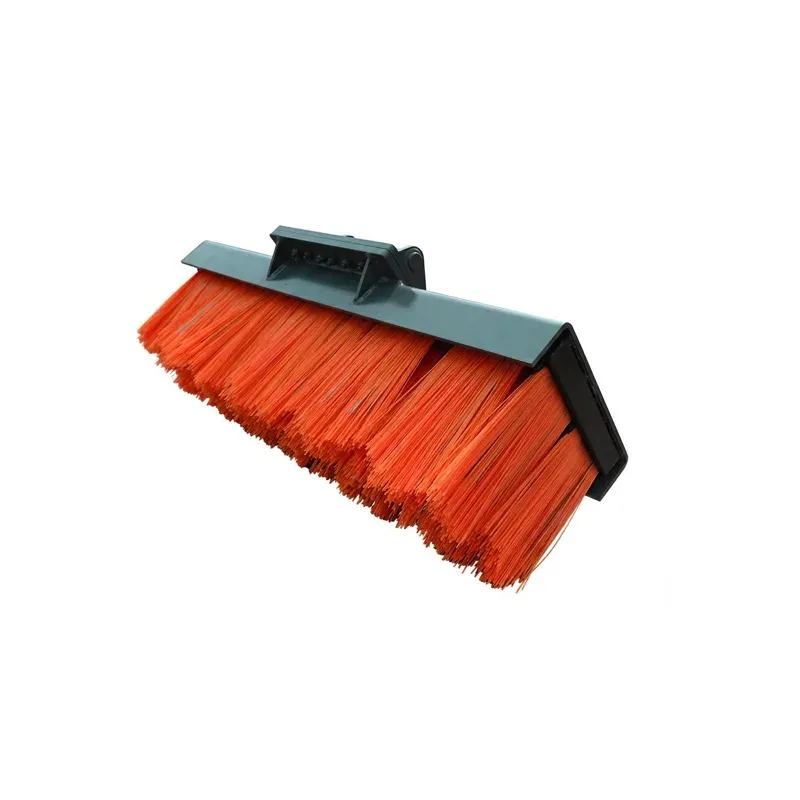
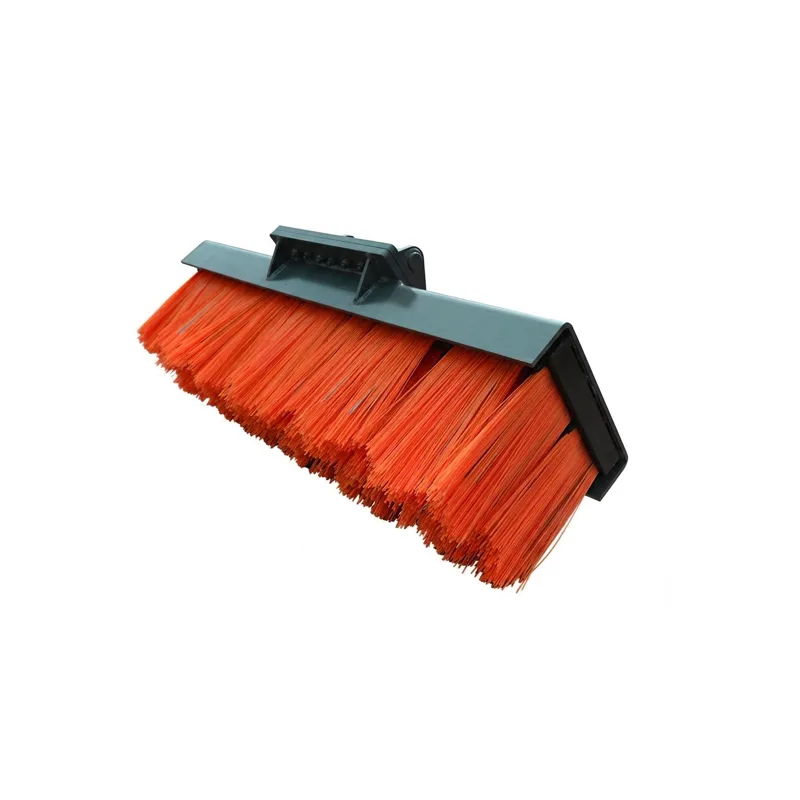
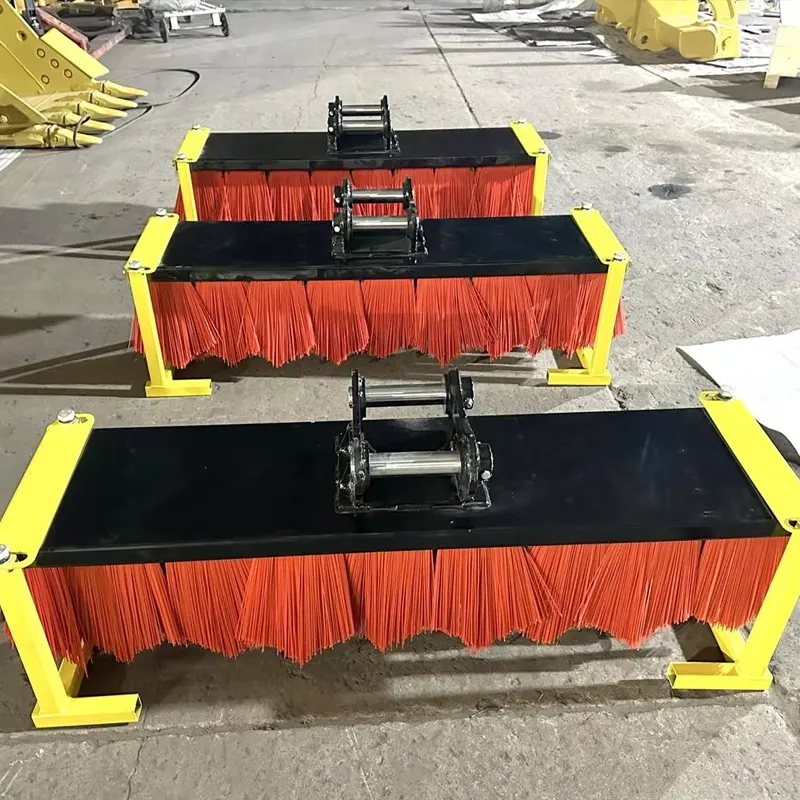
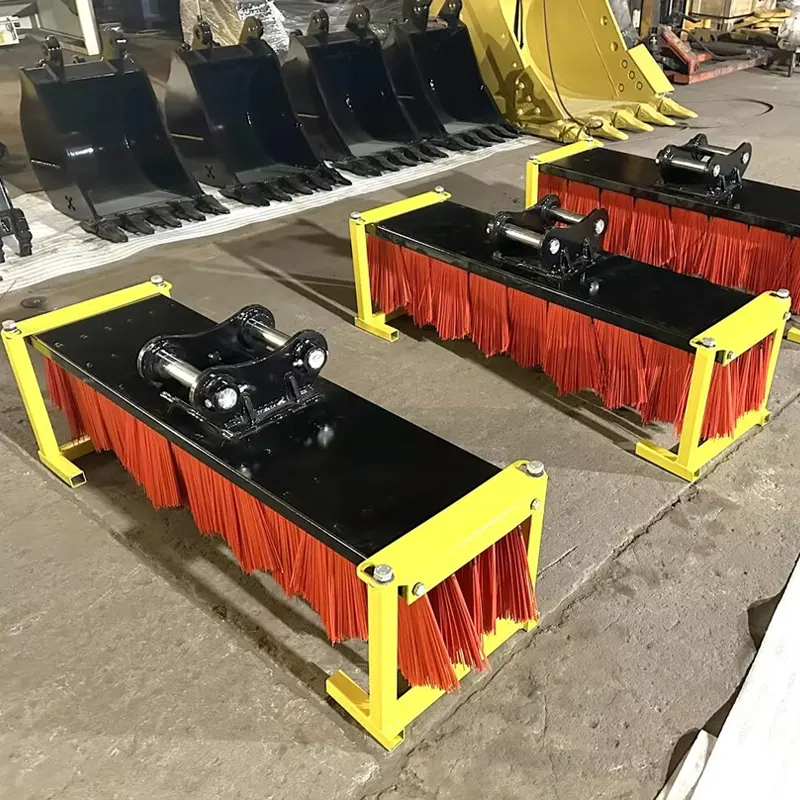
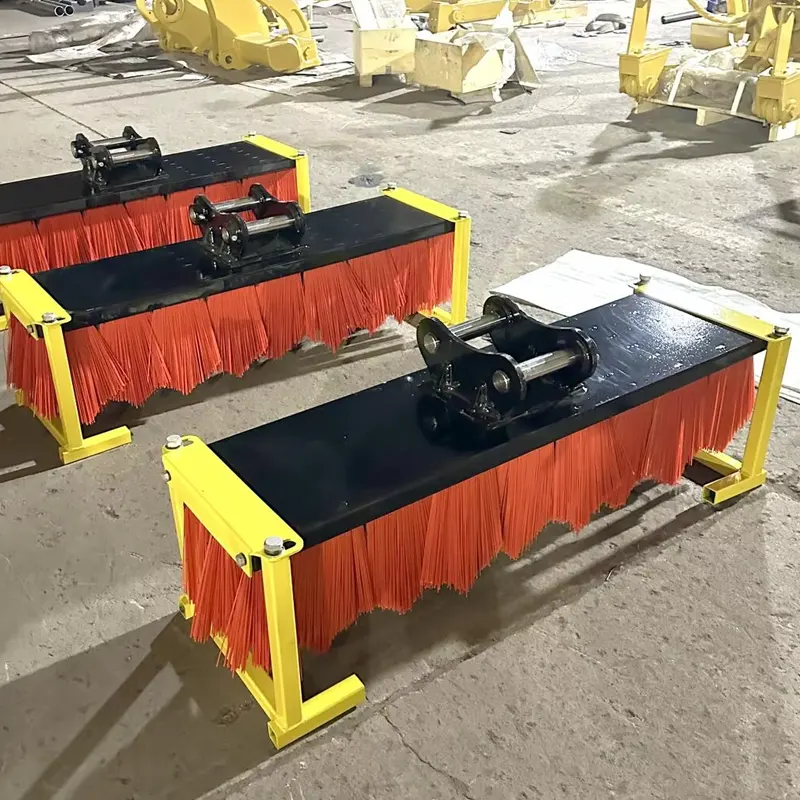
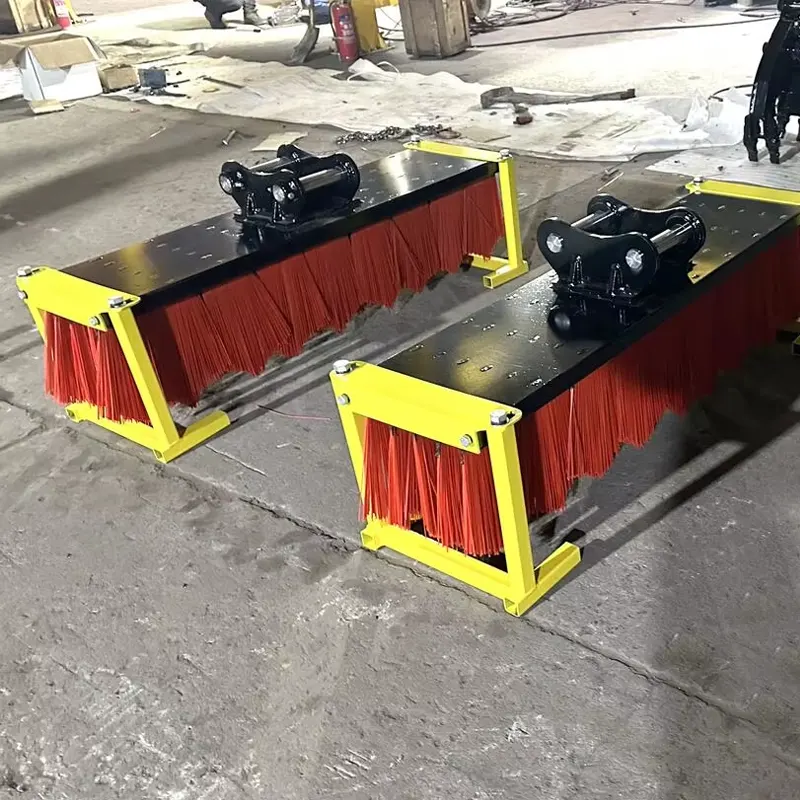
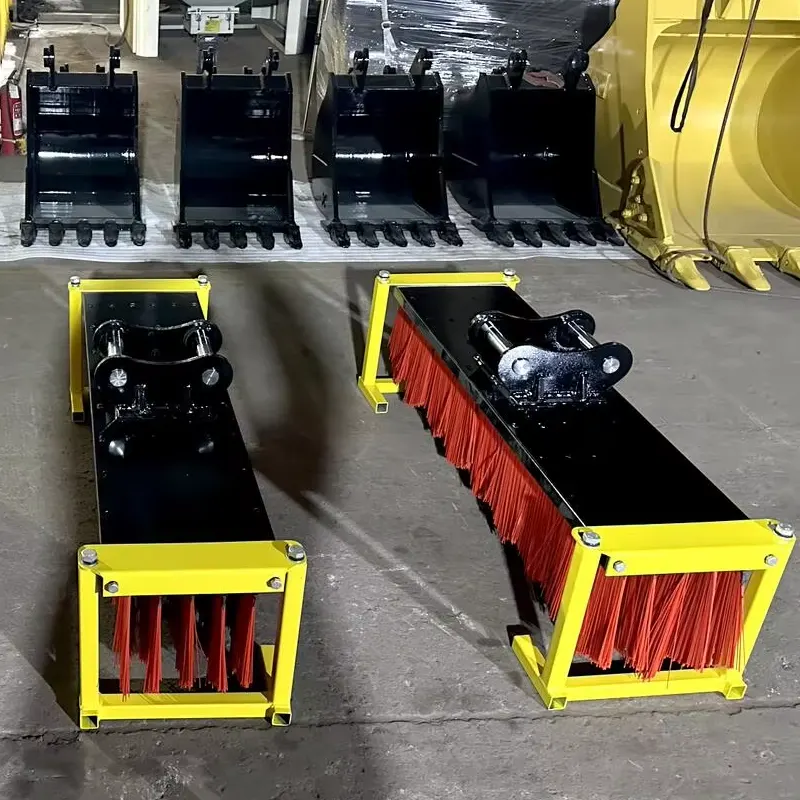
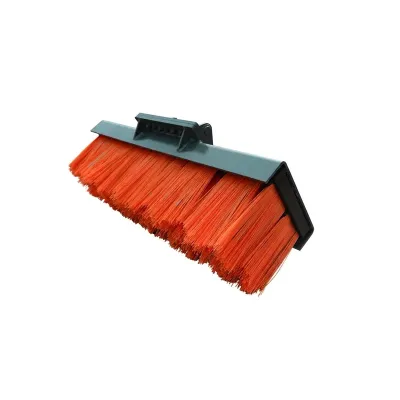
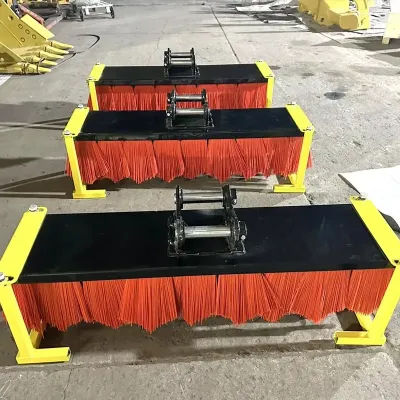
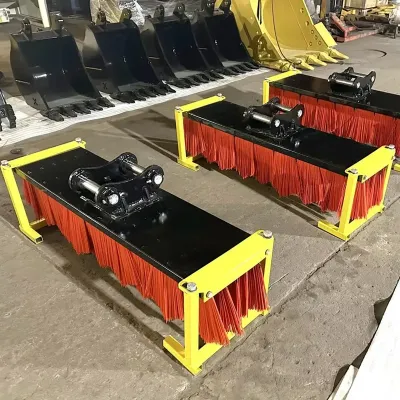
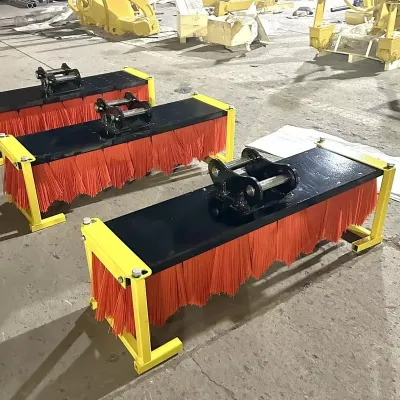
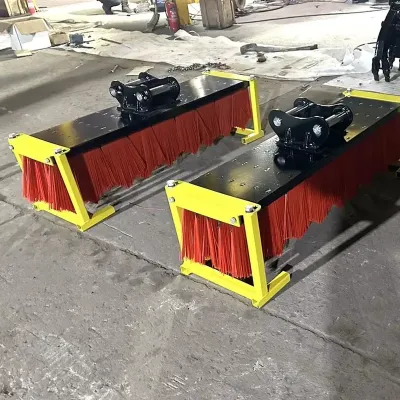
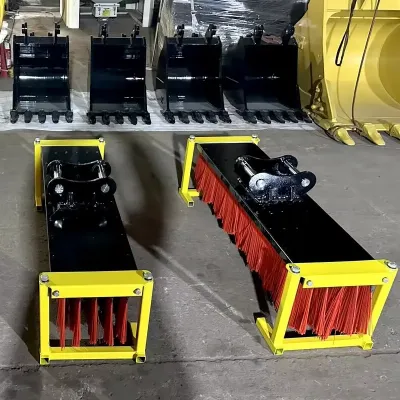
The TGEC excavator push broom is a fixed, non‑hydraulic sweeping attachment purpose‑built for light debris pushing and surface cleaning. Available in three models with working widths from 1200 to 1800 mm and unit weights from 120 to 280 kg, it offers brush choices including nylon‑steel mix, reinforced nylon, and heavy‑duty industrial nylon. No auxiliary hydraulic circuit is needed for basic operation.
Product Name: Push Broom / Push Broom Attachment / Static broom / Manual sweeper / Push sweeper / Fixed broom
Type: Sweepers & Brooms
After-sales Service: Provided
Warranty: 1 Year
Customization: Available
Shipping Cost: Negotiate with us about shipping cost and estimated delivery time.
Get a quote
Overview
FAQ

Product Overview

TGEC push brooms are designed for straightforward sweeping jobs where hydraulic power isn't available or isn't required. The fixed head mounts directly to the excavator arm and is controlled using the machine's standard arm and bucket functions — the operator angles and positions the broom to push debris across any flat surface. With no hydraulic motors, hoses, or rotating parts, this unit is simpler to maintain, lighter on the machine, and more cost‑effective than a rotary broom.

Three standard widths cover mini to mid‑size excavator applications, and we can supply custom mounting brackets for non‑standard pin dimensions. If you need powered sweeping with rotation and dust suppression, check out our full excavator brooms range, including the hydraulic rotary broom.

Technical Specifications

ParameterTG-PB03TG-PB08TG-PB12
Working Width1200 mm (47 in.)1500 mm (59 in.)1800 mm (71 in.)
Total Weight120 kg (265 lb)150 kg (331 lb)280 kg (617 lb)
Brush MaterialNylon & Steel MixedReinforced NylonHeavy‑Duty Industrial Nylon
Hydraulic RequirementNone (fixed)None (fixed)None (fixed)

Applicable excavator classes depend on pin dimensions, machine weight, and lift capacity — confirm compatibility with your specific model before ordering.

Table data is for reference only. Actual specifications may vary based on the final configuration. Please contact the TianGe technical team for details.

Model Selection Guide

Choose the push broom width based on your excavator size and typical sweep area. The TG‑PB03 (1200 mm) is ideal for mini and compact excavators working in tight spaces — sidewalks, narrow lanes, and small lots. The TG‑PB08 (1500 mm) fits compact to mid‑size machines for general street and lot sweeping. The TG‑PB12 (1800 mm) suits mid‑size excavators for large open areas like parking lots, industrial yards, and warehouse floors. For the full broom range including hydraulic rotary models, visit the excavator brooms category page.

Installation & Mounting

TGEC push brooms work with standard pin‑on mounting and most major quick‑coupler brands. Before ordering, verify three critical dimensions: pin diameter, pin center distance (span between the two arm pins), and arm width (gap between inner arm plates). These vary by excavator make and model — even within the same weight class — so always measure your actual machine rather than relying on published specs.

  • Standard pin‑on mounting uses the excavator's existing bucket pins

  • Quick‑coupler adapter plates available for leading mechanical and hydraulic coupler brands

  • Custom mounting brackets fabricated for non‑standard pin dimensions

  • No auxiliary hydraulic circuit needed — operates with standard arm and bucket controls

  • Always confirm combined broom weight is within the excavator's rated lift capacity

Key Features

  • Fixed non‑hydraulic design — no motors, hoses, or rotating parts, simplifying maintenance and lowering cost

  • Three working widths from 1200 to 1800 mm cover mini to mid‑size excavator applications

  • Multiple brush options — nylon‑steel mix for aggressive sweeping, reinforced nylon for general use, heavy‑duty industrial nylon for long‑life durability

  • Lightweight construction from 120 to 280 kg, ideal for machines with limited lift capacity

  • Compatible with standard pin‑on and most quick‑couplers, with custom brackets available

  • Replacement brush sections and wear components stocked for all models

Application Scenarios

  • Light construction site cleanup: Push sawdust, dirt, loose gravel, and small debris across job sites, especially in confined areas where a rotary broom is overkill.

  • Snow and slush pushing: Move light snow, slush, and water across pavements, parking lots, and loading docks — particularly useful for machines without auxiliary hydraulics.

  • Industrial facility sweeping: Clean warehouse floors, manufacturing yards, and loading areas where simple debris pushing suffices and dust suppression isn't required.

  • Agricultural use: Clear barn aisles, feed lots, farm yards, and equipment storage areas — pushing manure, feed, and debris into piles for removal.

  • Municipal light duty: Handle sidewalk sweeping, park path cleanup, and small‑scale public works tasks that don't justify a full rotary sweeper.

  • Material spreading: Spread gravel, sand, soil, and aggregate across surfaces for road base prep, landscaping, and leveling jobs.

How It Works

An excavator push broom operates on a simple mechanical principle: the fixed head mounts to the excavator arm, and the operator uses the standard arm and bucket controls to angle, lower, and push the broom across the ground. The bristles contact the surface and push debris forward as the machine moves. Unlike a rotary broom, there's no hydraulic motor or spinning brush — the sweeping action comes entirely from the excavator's forward motion and the broom's angle.

The operator can adjust the broom angle by curling or uncurling the arm, allowing debris to be pushed straight ahead or angled to one side for windrowing. Down pressure, controlled by the arm, determines how aggressively the bristles bite — lighter pressure for delicate surfaces (turf, painted pavement), heavier pressure for stubborn debris on concrete or asphalt. With no hydraulic components, the push broom is quiet, simple to operate, and doesn't require extra cab controls. The trade‑off is that it can't match the cleaning power or dust suppression of a hydraulic rotary broom, and it relies entirely on the machine's forward movement for sweeping action.

Wear & Service

The primary wear component is the brush bristle material. Over time, bristles wear down, lose effectiveness, and eventually need replacement. Inspection frequency depends on use — weekly for heavy‑duty operation, monthly for light use. Check for excessive wear, breakage, or uneven shortening, and replace the brush section when bristles are worn beyond effective length. Also inspect the mounting plate, bracket, and pins for cracks, deformation, or wear, and lubricate pivot points per the manufacturer's recommendations.

TGEC stocks replacement brush sections for all push broom models — nylon‑steel mix, reinforced nylon, and heavy‑duty industrial nylon. Replacement mounting pins, bushings, and hardware are also available. Because the push broom has no hydraulic components, there are no seals, hoses, or motors to service, which significantly reduces long‑term maintenance compared to a rotary broom. Contact our parts department with your broom model number and the specific component you need for availability and delivery estimates.

Dealer & Bulk Orders

TGEC supplies excavator push brooms to equipment dealers, rental fleets, contractors, and municipal fleets under factory‑direct and private‑label programs. Volume pricing and long‑term supply agreements are available for qualified dealer partners. Custom configurations include modified brush materials, custom widths, non‑standard mounting brackets, quick‑coupler adaptations, and private‑label branding with custom paint color, nameplate, and packaging. Dealers can combine push broom orders with other TGEC attachments — rotary brooms, buckets, rakes, and quick couplers — to streamline sourcing and international shipping. Contact our sales team with your target models, quantities, and delivery schedule for a bulk quotation.

Request a Quote

Share your excavator brand and model, typical surface and debris type, and preferred broom width. Our team will recommend the right push broom model and brush material, verify mounting compatibility, and provide a complete quote including specifications, custom brackets if needed, and delivery terms.
Frequently Asked Questions

What is an excavator push broom used for?+

An excavator push broom is a fixed, non‑hydraulic sweeping attachment designed for simple debris pushing and light surface cleaning. It mounts to the excavator arm and is controlled using the machine's standard arm and bucket functions to push debris across surfaces. Common uses include light construction site cleanup, snow and slush pushing, industrial floor sweeping, agricultural barn and yard cleaning, municipal sidewalk and park maintenance, and spreading materials like gravel, sand, or aggregate. With no hydraulic motor or rotating brush, it's simpler, lighter, and more affordable than a rotary broom, but it relies entirely on forward motion for sweeping and doesn't offer the powered cleaning or dust control of a rotary unit.

How does an excavator push broom differ from a rotary broom?+

The main difference lies in power source and sweeping action. A push broom is fixed and non‑hydraulic — no rotating brush, just bristles dragged across the surface by the excavator's movement. A rotary broom uses a hydraulic motor to spin a cylindrical brush at 250–300 rpm, providing powered sweeping that's more effective on fine debris and dust. Push brooms are lighter (120–280 kg), require no auxiliary hydraulics, are simpler to maintain, and cost less. Rotary brooms are heavier (800–1800 kg), need a dedicated hydraulic circuit at 160–230 bar, offer water suppression for dust control, and clean more thoroughly on paved surfaces. For basic debris pushing, a push broom is sufficient; for road sweeping, construction cleanup, and industrial jobs requiring thorough cleaning and dust control, a hydraulic rotary broom is the better choice.

What types of surfaces can an excavator push broom clean?+

The push broom works on a variety of surfaces, depending on brush material. Nylon bristles are gentle on smooth or delicate surfaces — warehouse floors, painted pavement, turf, artificial turf — as they resist scratching. Nylon‑steel mixed bristles are more aggressive for concrete, asphalt, gravel, and rough industrial surfaces, where steel wire provides extra scrubbing power. Reinforced nylon and heavy‑duty industrial nylon are durable options for continuous use on concrete, asphalt, and paved surfaces. The broom performs best on flat or gently sloping ground where consistent forward movement is possible. It's less effective on very rough or uneven terrain where the broom can't maintain full contact. Use lighter down pressure on delicate surfaces and heavier pressure with stiffer bristles for stubborn debris on hard surfaces.

What excavator size should be matched with a push broom?+

Matching depends on the broom model. The TG‑PB03 (1200 mm, 120 kg) suits mini and compact excavators, typically 2–6 tons, where light weight and narrow width are easy to handle in tight spaces. The TG‑PB08 (1500 mm, 150 kg) fits compact to mid‑size excavators, generally 4–10 tons, for general street and lot sweeping. The TG‑PB12 (1800 mm, 280 kg) is for mid‑size excavators, typically 8–15 tons, where wider coverage boosts productivity and the machine has ample lift capacity. These are guidelines — always verify that broom weight plus any applied down force stays within the excavator's rated lift capacity at the working radius. Also confirm pin dimensions match the bracket, or order a custom bracket. Since push brooms need no hydraulics, even older or base‑model excavators without auxiliary circuits can use them, which broadens compatibility compared to rotary brooms.

How should a push broom be mounted to an excavator?+

Mounting uses either standard pin‑on or a quick‑coupler adapter. For pin‑on, the bracket uses the excavator's existing bucket pins — remove the bucket, align the bracket with the arm pin holes, and insert the pins. Three dimensions must match: pin diameter, pin center distance, and arm width. If they don't, a custom bracket is needed. For quick‑coupler, the broom is fitted with an adapter plate compatible with the coupler brand, allowing quick change‑out from the cab. Before mounting, verify the broom weight is within lift capacity. After mounting, test by lowering the broom to check flat contact and proper angling with arm controls. Always secure pins with retaining rings. If unsure about compatibility, provide your excavator make, model, and pin dimensions to TGEC for a custom bracket recommendation.

What broom width should be selected for an excavator?+

Width selection depends on excavator size, sweep area, and maneuverability needs. For mini/compact excavators (2–6 tons) in confined spaces like sidewalks and narrow lanes, 1200 mm (47 in.) is best — light and agile. For compact to mid‑size (4–10 tons) doing general street and lot sweeping, 1500 mm (59 in.) balances coverage and handling. For mid‑size (8–15 tons) in large open areas like parking lots and industrial yards, 1800 mm (71 in.) maximizes productivity per pass. Wider brooms cover more area but are heavier and less nimble; narrower ones are more maneuverable but require more passes. Always ensure the broom weight is within the excavator's lift capacity, especially for the 1800 mm model. If you work across mixed spaces, the 1500 mm model is the most versatile compromise.

Can a push broom be used with a mini excavator?+

Yes. Push brooms are well‑suited for mini excavators, particularly the TG‑PB03 with 1200 mm width and 120 kg weight. Mini excavators (1.5–6 tons) often lack auxiliary hydraulics, making rotary brooms impractical or expensive. The push broom requires no hydraulics — it operates entirely with standard arm and bucket controls — so it works on virtually any mini excavator regardless of age or equipment level. Its light weight (120–150 kg) is critical for mini machines with limited lift capacity, preventing instability at the arm's end. The narrow 1200 mm width maneuvers easily in tight spaces where mini excavators typically work — residential yards, sidewalks, interior demo sites. For larger mini excavators (5–6 tons) in more open areas, the 1500 mm TG‑PB08 may also be suitable. Always verify the broom weight is within your mini excavator's rated lift capacity at the working radius and confirm pin dimensions for mounting.

What type of debris can an excavator push broom handle?+

A push broom handles a range of light to medium debris, depending on brush material and down pressure. Typical debris includes: loose dirt, dust, and sawdust on construction sites; light snow, slush, and standing water on pavements; gravel, sand, and small aggregate for spreading or cleanup; leaves, twigs, and light vegetation on streets and parks; feed, grain, and manure in agriculture; and small construction waste like nails, screws, wood shavings, and broken concrete fragments. It works best with dry, loose debris on flat surfaces. It's less effective with wet, sticky materials (mud, wet leaves) that cling, or heavy items (rocks, concrete chunks, logs) that bristles can't move. For heavy or wet debris, a bucket or a hydraulic rotary broom with more aggressive scrubbing may be better. Brush material also matters — nylon for light debris on smooth surfaces, nylon‑steel mix for heavier debris on rough surfaces.

Which broom components require regular inspection or replacement?+

The primary component is the brush bristle section — bristles wear down with use, especially on rough surfaces, reducing effectiveness. Inspect weekly for heavy use or monthly for light use — check for excessive shortening, breakage, uneven wear, or bristle loss. replace when bristles are worn to half or less of their original length. Other components to inspect: mounting plate and bracket for cracks, bends, or deformation after impacts; mounting pins and bushings for wear that causes play and misalignment; retaining rings and fasteners for tightness; and the brush core or holder for corrosion. With no hydraulic components, there are no seals, hoses, motors, or filters to service — a big maintenance advantage over rotary brooms. Lubricate pivot points per the manufacturer's recommendations, typically with a grease gun at regular intervals. TGEC supplies replacement brush sections in all three material types, plus pins, bushings, and hardware for all models. Contact our parts department with your model number for availability and pricing.

What factors should contractors consider when selecting a fixed excavator broom?+

Contractors should weigh these factors: (1) Excavator compatibility — verify broom weight is within lift capacity, confirm pin dimensions or order a custom bracket, and ensure arm control allows proper angling. (2) Application type — light debris pushing, snow removal, material spreading, or general cleanup — and surface type (smooth concrete, rough asphalt, gravel, delicate turf). (3) Brush material — nylon for smooth/delicate, nylon‑steel for aggressive sweeping on rough surfaces, reinforced or heavy‑duty nylon for durable continuous use. (4) Width — 1200 mm for confined spaces, 1500 mm for general use, 1800 mm for large open areas — balancing productivity against maneuverability. (5) Hydraulic availability — if no auxiliary circuit, a push broom is the only option; if hydraulics exist and thorough cleaning/dust control is needed, consider a rotary broom instead. (6) Maintenance and parts — ensure replacement brush sections and wear parts are readily available, and factor in total cost of ownership including brush replacement frequency. (7) Budget — push brooms are significantly more affordable than rotary brooms, making them attractive for contractors with limited budgets or occasional sweeping needs. (8) Multi‑machine flexibility — if the broom will be shared, verify mounting compatibility with all excavators in the fleet, or use a quick‑coupler system for fast changes.
Please make sure to include your phone number with the country code (e.g., 86 for China, 1 for USA).