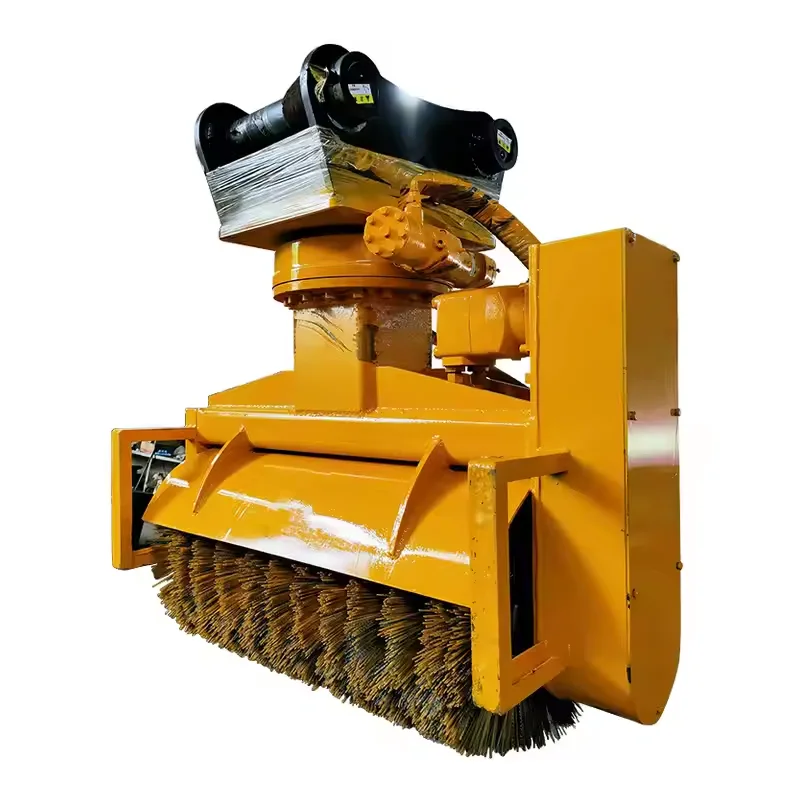
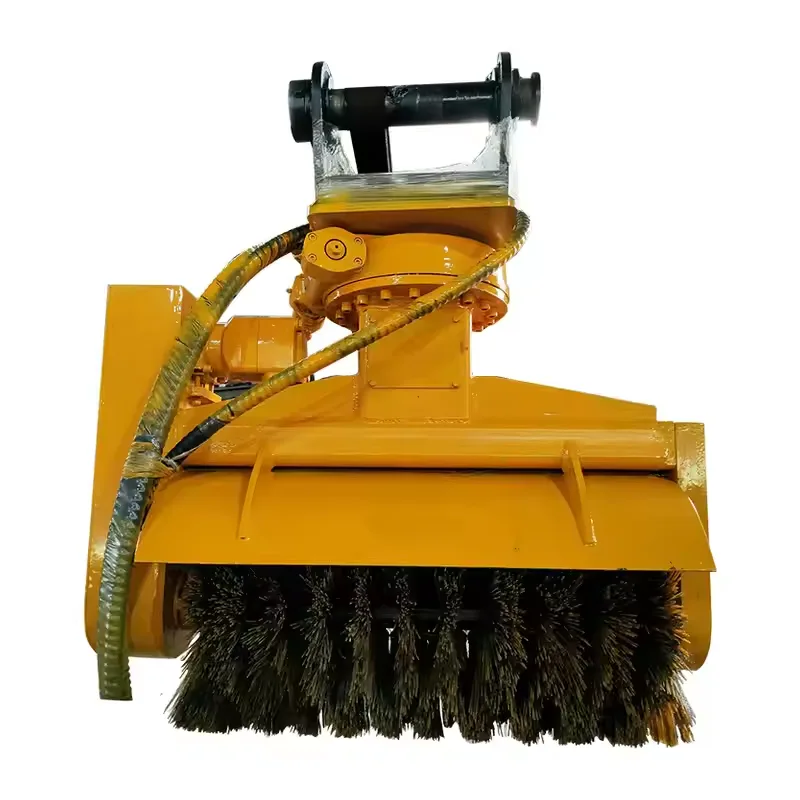
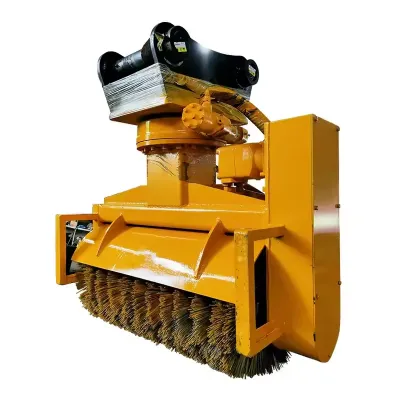
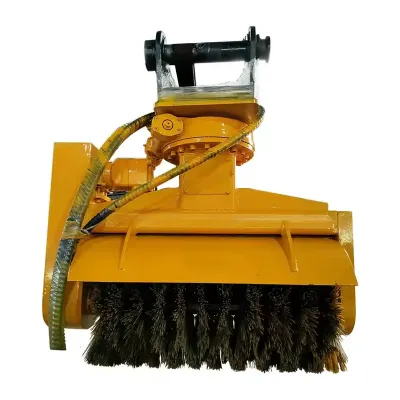
Product Overview
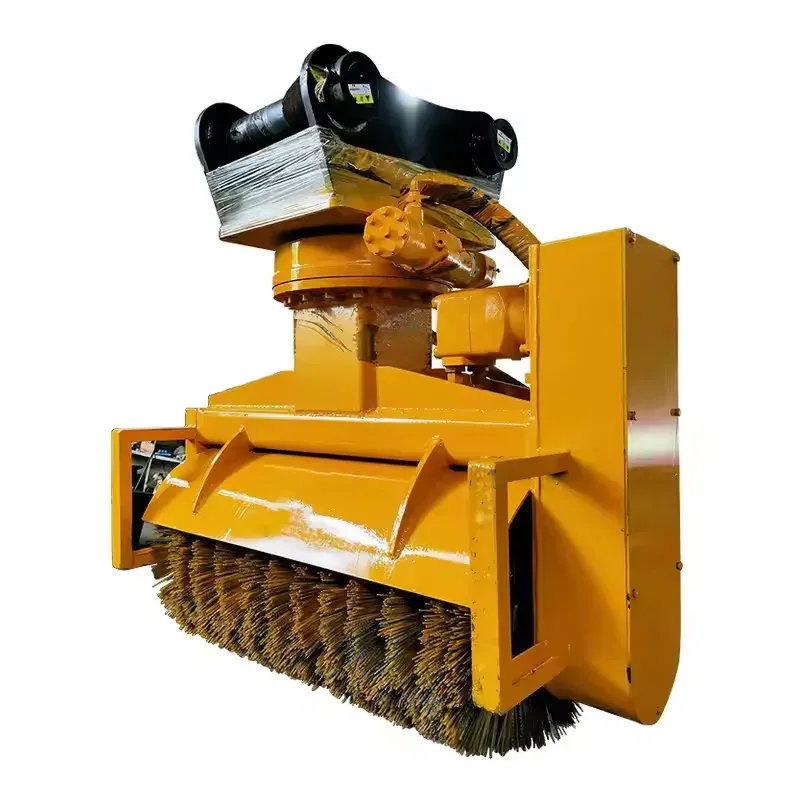
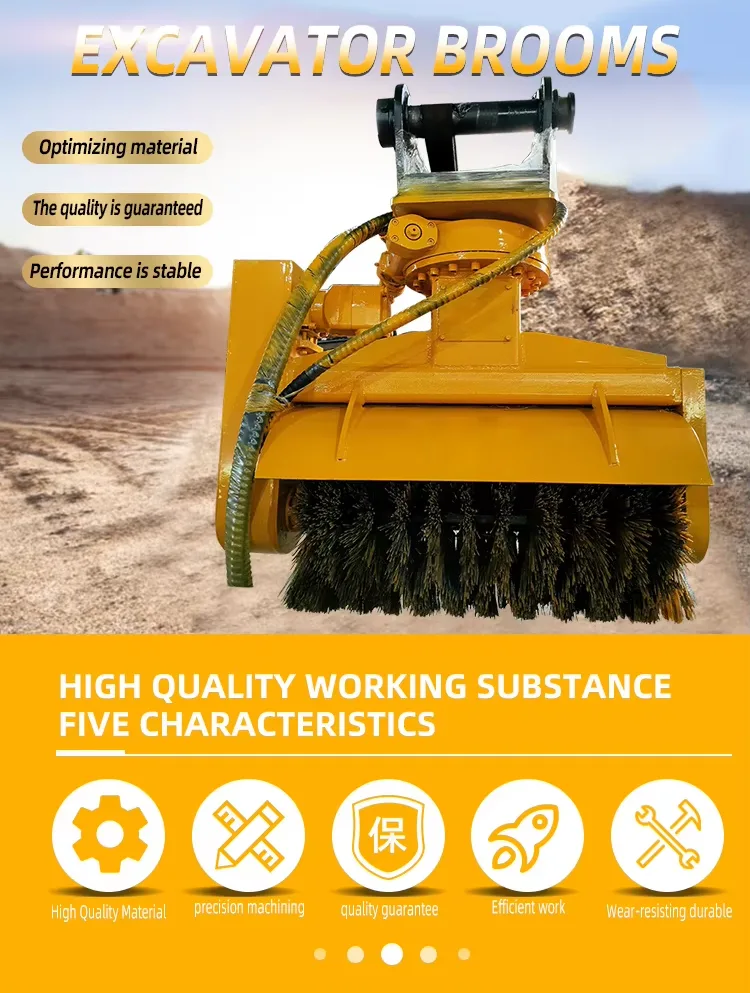
TGEC rotary brooms deliver powered sweeping and debris collection (250–300 rpm), with onboard water spray to keep dust down. The angled head allows directional windrowing. Six standard widths cover everything from sidewalks to arterial roads. All run at 160–230 bar. Custom brackets and quick‑coupler adaptations are available. For simpler tasks, see the fixed push broom.
Technical Specifications
| Parameter | TG-RB1500 | TG-RB1900 | TG-RB2000 | TG-RB2200 | TG-RB2500 | TG-RB3000 |
|---|---|---|---|---|---|---|
| Working Width | 150 cm (59 in) | 190 cm (75 in) | 220 cm (87 in) | 220 cm (87 in) | 250 cm (98 in) | 300 cm (118 in) |
| Full Width | 180 cm (71 in) | 216 cm (85 in) | 253 cm (100 in) | 253 cm (100 in) | 280 cm (110 in) | 300 cm (118 in) |
| Max. Height | 150 cm (59 in) | 150 cm (59 in) | 150 cm (59 in) | 177 cm (70 in) | 177 cm (70 in) | 177 cm (70 in) |
| Depth | 207 cm (81 in) | 207 cm (81 in) | 207 cm (81 in) | 245 cm (96 in) | 245 cm (96 in) | 245 cm (96 in) |
| Brush Drum Diameter | 70 cm (28 in) | 70 cm (28 in) | 70 cm (28 in) | 90 cm (35 in) | 120 cm (47 in) | 120 cm (47 in) |
| Machine Recommendation | 4–7 ton | 5–8 ton | 7–13 ton | 9–16 ton | 10–18 ton | 10–18 ton |
| Empty Weight | 800 kg (1764 lb) | 900 kg (1984 lb) | 1000 kg (2205 lb) | 1500 kg (3307 lb) | 1800 kg (3968 lb) | 1800 kg (3968 lb) |
| Hydraulic Pressure | 160–230 bar | 160–230 bar | 160–230 bar | 160–230 bar | 160–230 bar | 160–230 bar |
| Brush Rotation (max) | 250–300 rpm | 250–300 rpm | 250–300 rpm | 250–300 rpm | 250–300 rpm | 250–300 rpm |
| Water Tank Volume | 250 L (66 gal) | 250 L (66 gal) | 330 L (87 gal) | 330 L (87 gal) | 350 L (92 gal) | 350 L (92 gal) |
Confirm auxiliary flow, pin dimensions, and lift capacity with your excavator spec. Data for reference only.
Model Selection Guide
TG‑RB1500/1900 suit 4–8 t compact excavators for sidewalks and small lots. TG‑RB2000/2200 fit 7–16 t mid‑size machines for general street and construction sweeping. TG‑RB2500/3000 are for 10–18 t large excavators covering wide roads and industrial yards. For full broom lineup, see excavator brooms.
Installation & Mounting
Standard pin‑on or quick‑coupler mounting. Verify pin diameter, pin center distance, and arm width — measure your machine, don't trust specs. Custom brackets available for non‑standard pins. Requires dedicated auxiliary circuit (160–230 bar) for brush rotation; water suppression may need an extra circuit or self‑contained pump. Ensure broom + water weight stays within lift capacity.
Key Features
Hydraulic rotary brush at 250–300 rpm for aggressive cleaning
Six widths 150–300 cm, covering 4–18 t excavators
Integrated 250–350 L water tank with spray nozzles
Angle broom for directional windrowing
Brush drum diameters 70–120 cm for long life and tough jobs
Heavy‑duty frame, protected motor, corrosion‑resistant water system
Custom brackets and quick‑coupler adaptations
Full replacement parts availability
Application Scenarios
Road sweeping – removes gravel, sand, debris, prepares for paving
Construction cleanup – sawdust, dirt, concrete dust, aggregate
Snow/ice removal – clears pavements, lots, loading docks
Industrial sweeping – warehouses, yards, logistics centers
Municipal work – streets, parks, storm cleanup
Agricultural – barns, feed lots, farm lanes

How It Works
Auxiliary hydraulic fluid (160–230 bar) drives a motor that spins the brush at 250–300 rpm. The bristles scrub and propel debris forward or sideways (angled head). Operator controls speed and angle from the cab. Water spray (if equipped) suppresses dust. Consistent cleaning force regardless of forward speed.
Wear & Service
Main wear item is the brush bristles — inspect weekly (heavy use) or monthly; replace when worn to half or less of original diameter. Also check hydraulic motor, hoses, seals, water tank/nozzles, mounting plate, pivot pins. TGEC stocks all replacement parts. Drain water tank before freezing.
Dealer & Bulk Orders
TGEC supplies rotary brooms factory‑direct and private‑label. Volume pricing, long‑term agreements, custom configurations (bristle materials, widths, brackets, water tank, hydraulics, branding) available. Combine with other TGEC attachments for streamlined shipping. Contact sales with your target models and quantities.
Request a Quote
Provide excavator make/model, surface/debris type, auxiliary flow/pressure, and preferred width. We'll recommend the right model, verify compatibility, and quote with brackets, water options, and delivery terms.