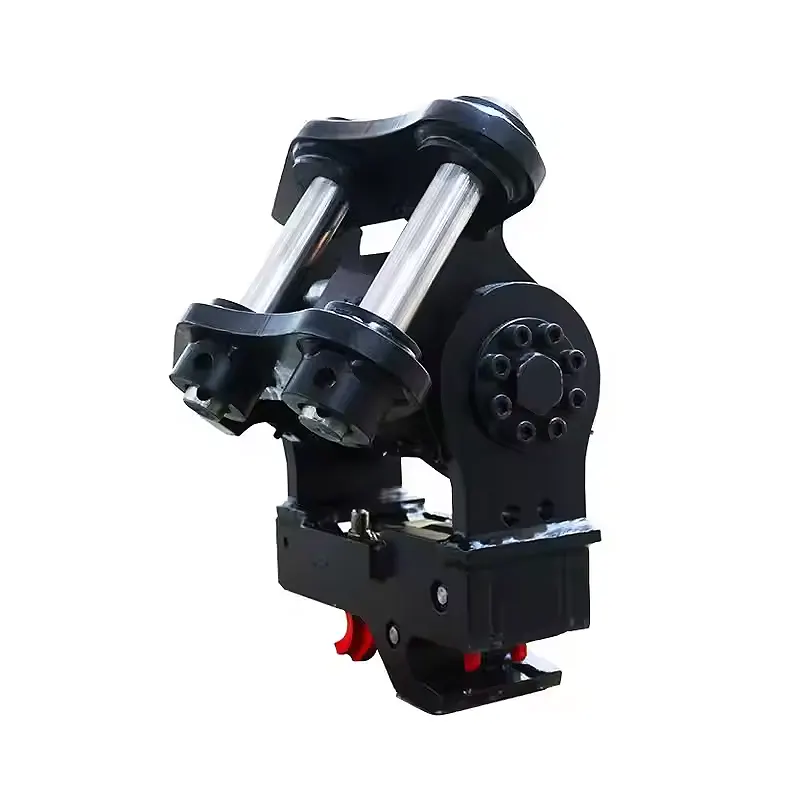
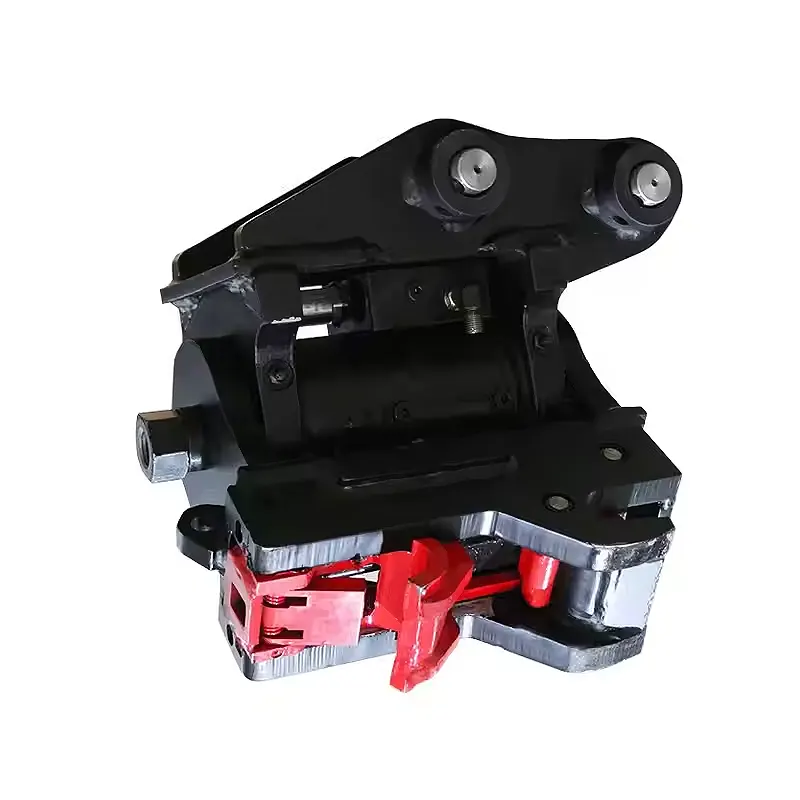
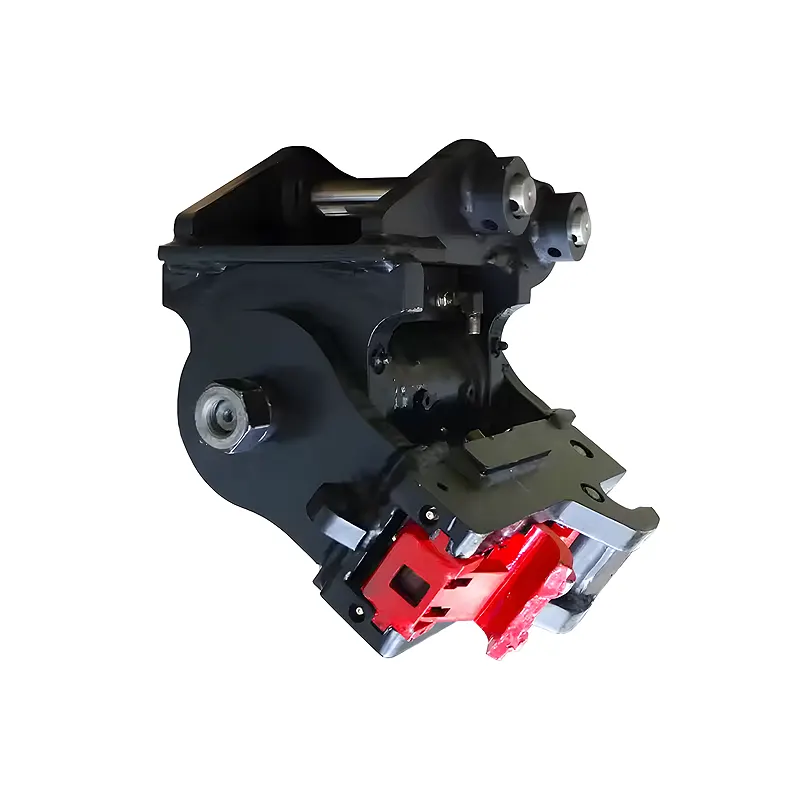
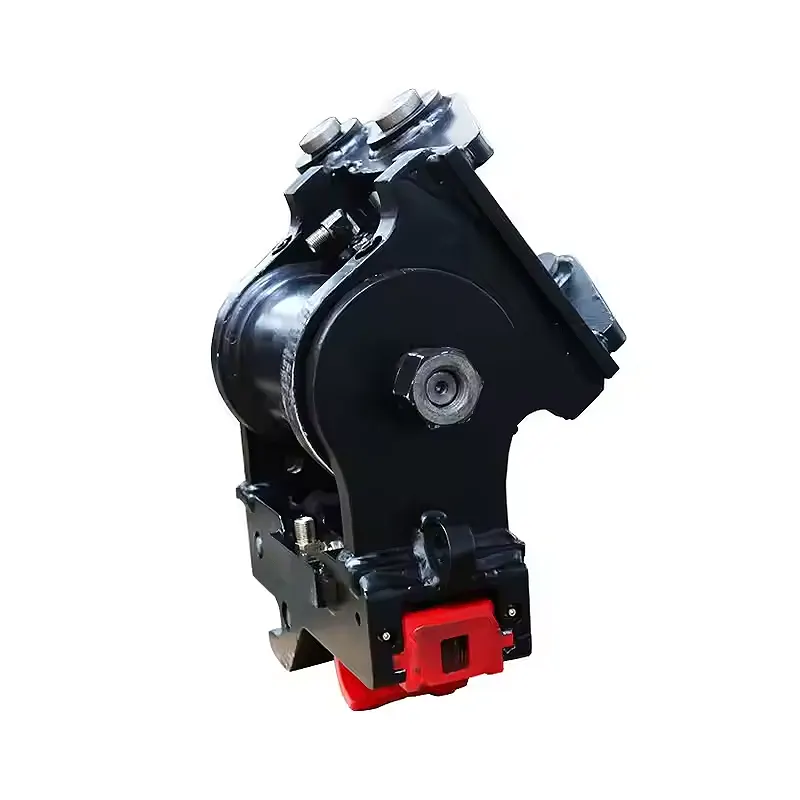
Product Overview
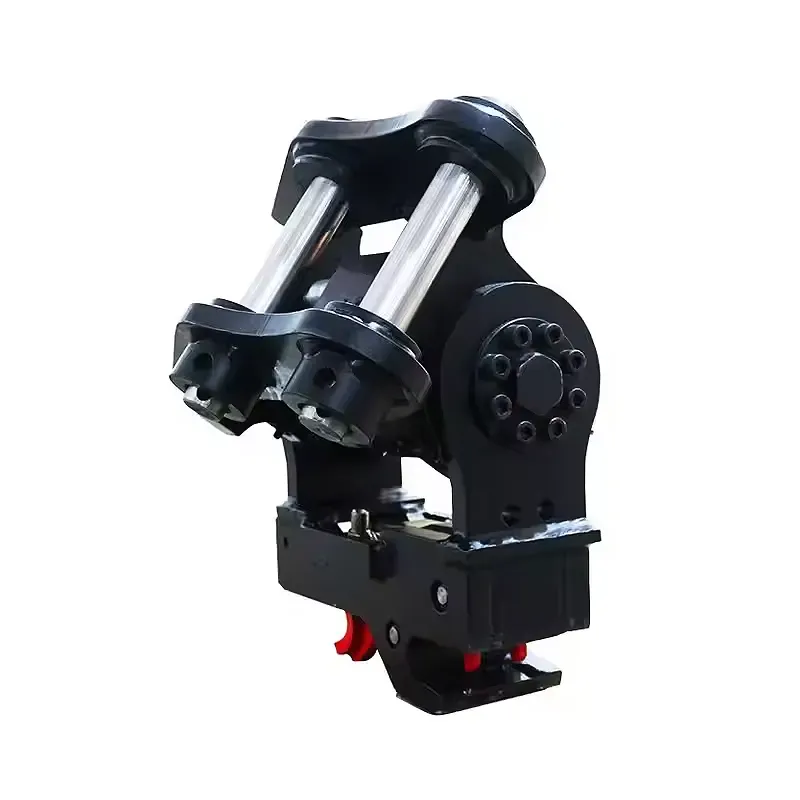
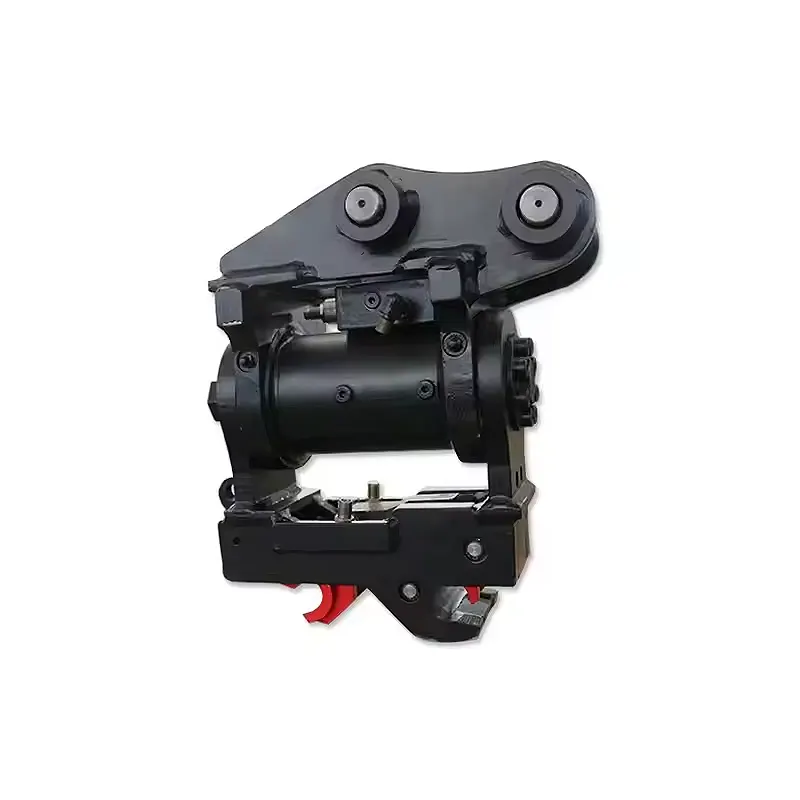
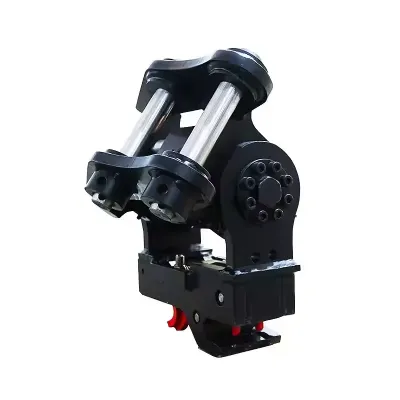
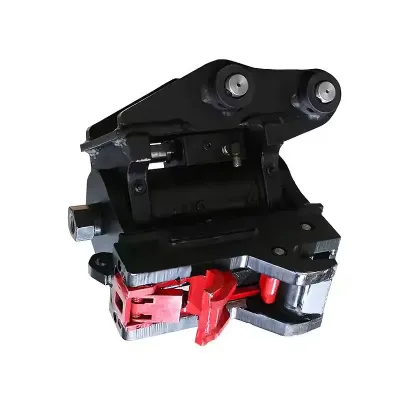
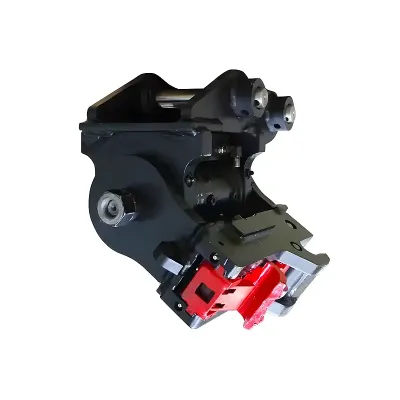
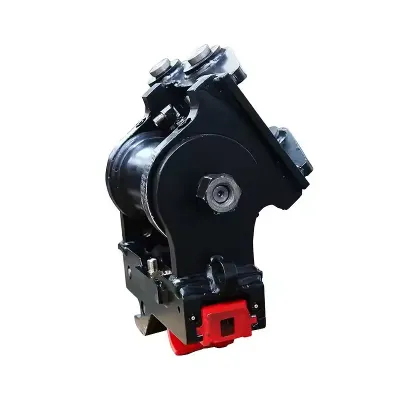
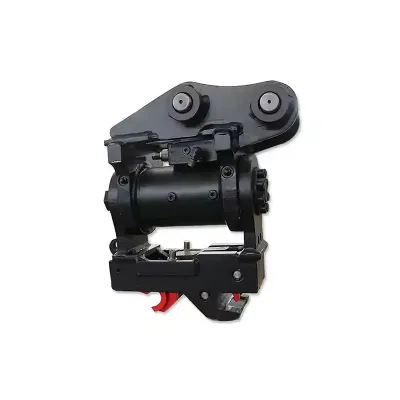
The TGEC tilt coupler mounts between your excavator arm and attachment, combining quick attachment changes with hydraulic tilt up to ±45° — all without repositioning the machine. Also called a tilt hitch or hydraulic tilt coupler, it's built for grading, ditching, slope finishing, and any job where angling the attachment saves time and improves accuracy.
Four models cover 1.5 to 20 ton excavators, with operating weights from 85 to 260 kg. Each model specifies pin diameter, center distance, and arm width ranges to match common compact and mid-size excavator configurations. The tilt mechanism runs off the excavator auxiliary circuit, with ±45° tilt on all models.
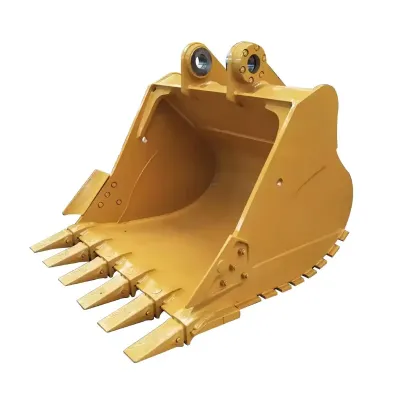
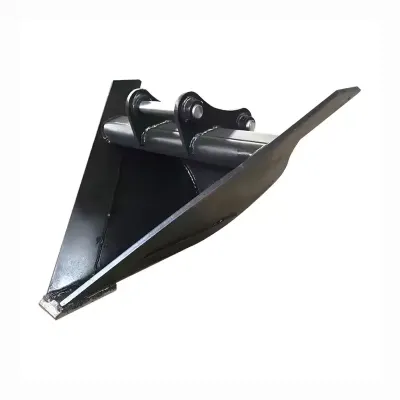
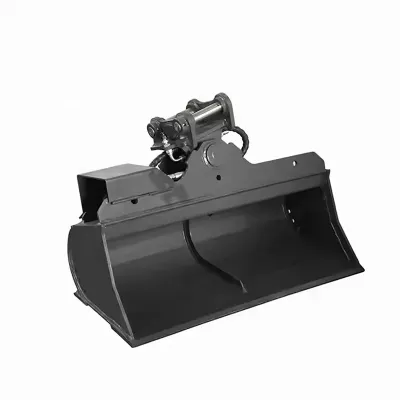
TGEC tilt couplers feature heavy-duty fabricated bodies, hardened pivot pins and bushings, double-acting tilt cylinders, and integrated safety locks. Custom brackets adapt to specific excavator arm dimensions and existing coupler interfaces. Works with standard buckets, grading buckets, rippers, and other pin-on attachments that match the coupler pin configuration.
Unlike a standard quick coupler, which only speeds up attachment swaps, a tilt coupler adds ±45° hydraulic angling on top of quick-change capability — the trade-off is extra weight, a required double-acting auxiliary circuit, and a higher purchase cost. Choose a standard quick coupler for general multi-attachment work, and a tilt coupler when precision angled grading, sloping, or ditching is a primary application.
Technical Specifications
Key specs for each TGEC tilt coupler model are listed below. Verify your excavator's pin diameter, center distance, and arm width before ordering. Custom pin configurations and brackets available for non-standard interfaces.
| Specification | TG-TC02 | TG-TC05 | TG-TC10 | TG-TC20 |
|---|---|---|---|---|
| Max Tilt Angle | ±45° | ±45° | ±45° | ±45° |
| Operating Weight | 85 kg (187 lb) | 120 kg (265 lb) | 180 kg (397 lb) | 260 kg (573 lb) |
| Pin Diameter | 30–35 mm (1.2–1.4 in) | 40–45 mm (1.6–1.8 in) | 50–60 mm (2.0–2.4 in) | 65–80 mm (2.6–3.1 in) |
| Center Distance | 120–150 mm (4.7–5.9 in) | 160–200 mm (6.3–7.9 in) | 220–280 mm (8.7–11.0 in) | 300–380 mm (11.8–15.0 in) |
| Arm Width | 100–130 mm (3.9–5.1 in) | 140–170 mm (5.5–6.7 in) | 180–220 mm (7.1–8.7 in) | 240–300 mm (9.4–11.8 in) |
| Applicable Excavator | 1.5–3 t (1.7–3.3 ton) | 3–6 t (3.3–6.6 ton) | 6–12 t (6.6–13.2 ton) | 12–20 t (13.2–22.0 ton) |
Table data is for reference only. Actual specifications may vary based on the final configuration. Please contact the TianGe technical team for details.
All models require a double-acting auxiliary circuit with hydraulic pressure of 16–28 MPa (2320–4060 psi), depending on the excavator. Custom hose lengths and fittings available.
How It Works
The tilt coupler replaces the standard pin-on connection. The coupler body has a quick-connect lock that secures attachment pins, plus a hydraulic tilt mechanism that rotates the attachment mounting plate. The tilt is driven by double-acting cylinders connected to the excavator auxiliary circuit.
From the cab, the operator controls tilt proportionally — extend or retract the cylinders to rotate the attachment through ±45°. The quick-connect lock operates independently of the tilt mechanism. Safety features include a mechanical locking latch that secures pins if hydraulic pressure drops, and check valves that hold tilt position when the circuit is off. The body is high-strength steel with hardened, ground pivot pins.
Application Scenarios
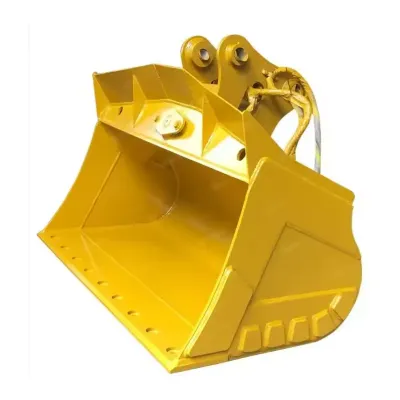
Grading and slope finishing: ±45° tilt lets you angle the grading bucket for slopes, road shoulders, and embankments without moving the machine — faster cycles, better accuracy.
Ditching and drainage: Ideal for V-ditches, drainage channels, culvert outlets — angle the bucket to shape ditch sides and bottom in one pass.
Landscaping and site prep: Compact tilt couplers for mini excavators give precise grading for landscape beds, lawn prep, and drainage swales. Follow terrain contours and create smooth grade transitions.
Foundation and trench work: Clean and shape trench walls and foundation perimeters without repositioning. Also useful for placing and leveling bedding material in pipe trenches.
Riverbank and coastal work: Angle the bucket for riverbank shaping, erosion control, and coastal reinforcement — especially where repositioning the excavator is difficult or unsafe.
Snow removal: In seasonal climates, tilt couplers let you angle snow pushers and plow blades for efficient windrowing and road clearing. Quick-connect makes seasonal attachment swaps easy.
Installation & Mounting
Mounts directly to the excavator arm, replacing the bucket pin connection. Pull the existing pins, position the tilt coupler between the arm plates, and install the mounting pins through the coupler and arm. Secure with retaining rings or bolts, grease all pin bores.
For hydraulics, connect the tilt cylinder hoses to the double-acting auxiliary circuit. Make sure the circuit has proportional control. Route hoses to avoid pinch points and allow full tilt range without binding. Cycle tilt through full range several times to purge air and verify smooth operation.
Custom brackets are available for non-standard arm dimensions. A tilt coupler can also be adapted to an existing quick-coupler system using custom brackets that match the quick-coupler interface — this stacks the tilt function between the existing quick coupler and the attachment while retaining quick-change capability. Stacking couplers adds weight and reduces breakout force, so verify the combined weight does not exceed lift capacity at your working radius. Installation should be performed by a qualified technician with proper torque and pressure testing.
Wear & Service
Main wear items: pivot pins and bushings (tilt mechanism), quick-connect locking pins and latches, hydraulic cylinder seals. Grease pivot pins and bushings daily or every 8 hours with high-quality lithium-based grease.
Inspect the quick-connect lock weekly for wear, damage, and proper engagement. Replace worn pins or latches promptly. Check the tilt cylinder for leaks, rod scoring, seal condition — replace seals at first sign of leakage. Follow the excavator manufacturer's schedule for hydraulic fluid and filter changes. Periodically inspect the coupler body for cracks, deformation, and weld integrity, especially around pivot areas and pin bores. Use only genuine TGEC replacement parts.
Dealer & Bulk Orders
TGEC offers dealer and bulk pricing on tilt couplers, with volume discounts for dealers, rental companies, and distributors. Bulk orders can mix tilt coupler models and configurations. Custom brackets available for common excavator models. Combine tilt coupler orders with other TGEC attachments — standard couplers, buckets, hydraulic tools — to simplify sourcing and shipping.
Private-label and OEM branding options available for qualified dealer partners: custom paint, nameplates, packaging. Configuration support for custom pin sizes, bracket dimensions, hydraulic adaptations, coupler interface modifications. Contact dealer sales with target models, annual volume, and configuration requirements.
Request a Quote
Got an excavator model and attachments in mind? Not sure if tilt makes sense for your work? Either way, send us your machine make and model, attachment list, and the jobs you're running — grading, ditching, landscaping, or general construction. We'll point you to the right tilt coupler model, check the fit, and get back to you with a quote covering the bracket, specs, and delivery. No hard sell — just good advice.