Product Overview
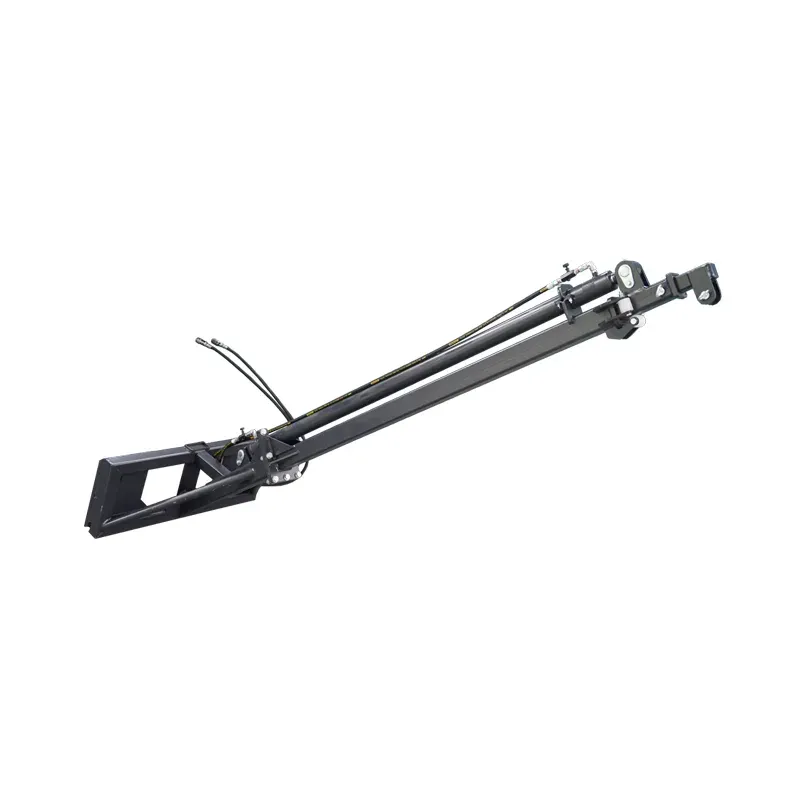
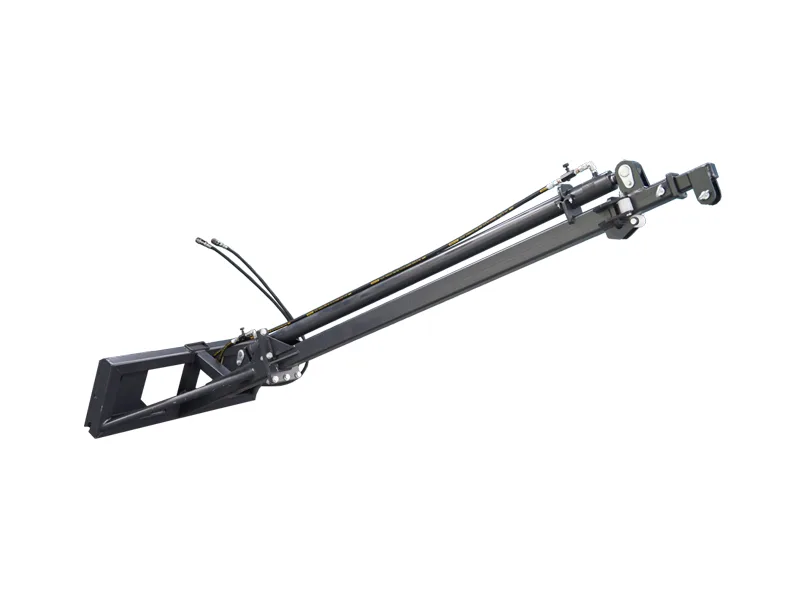
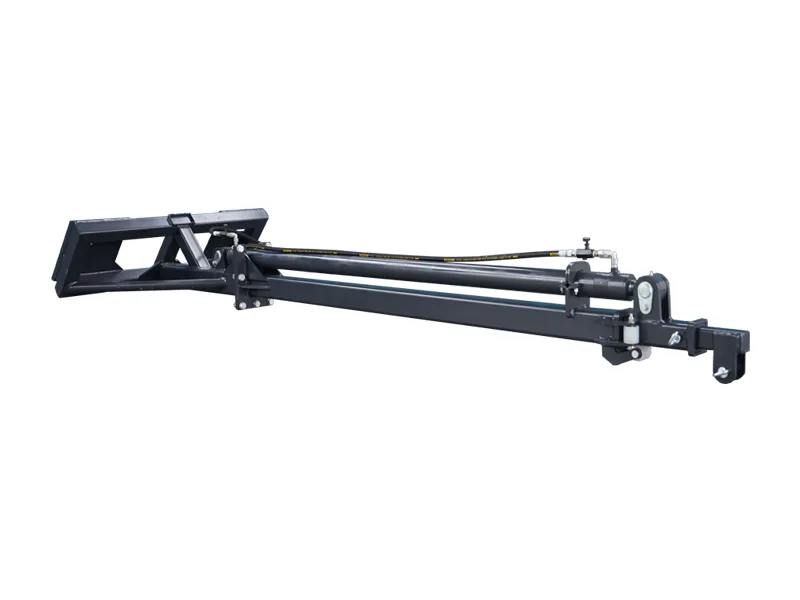
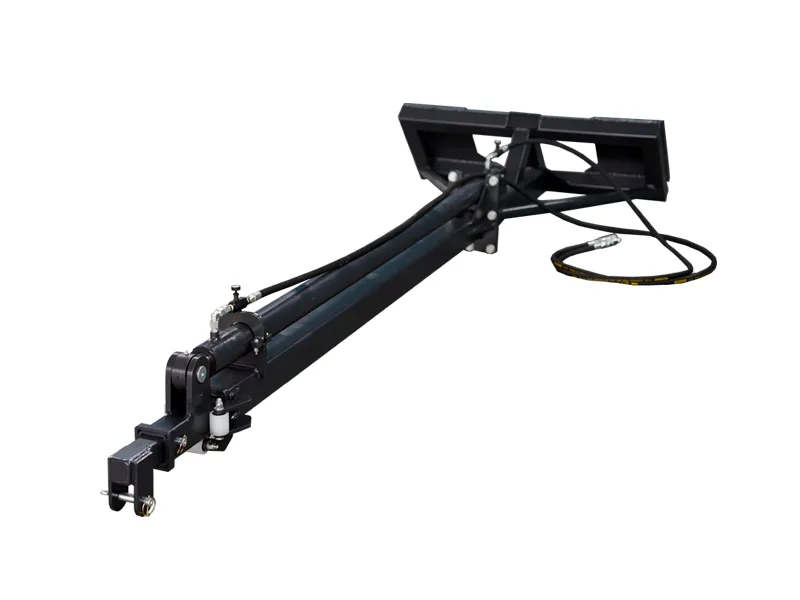
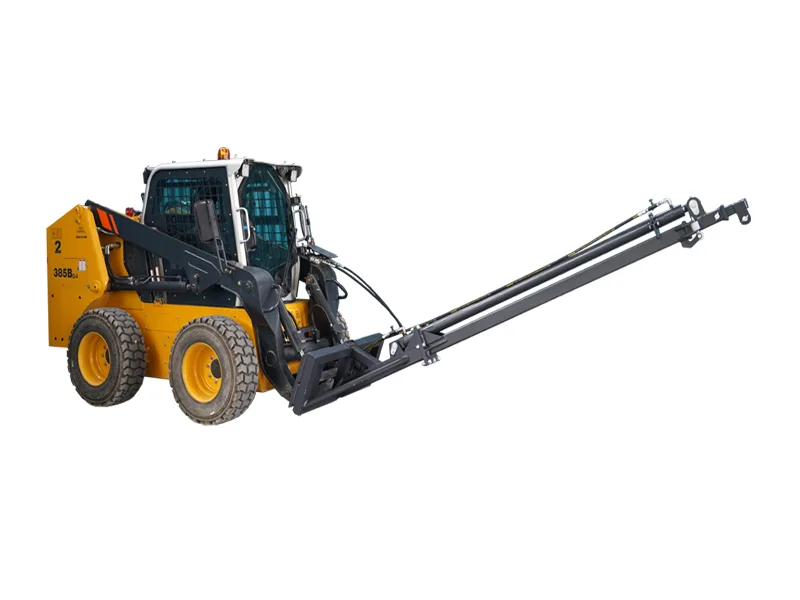
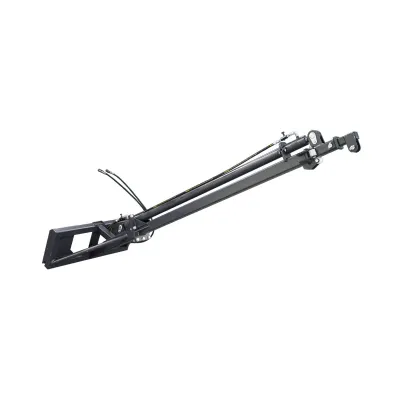
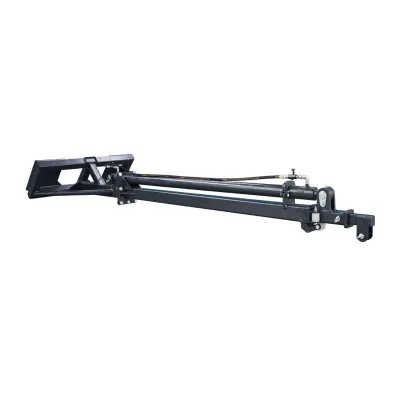
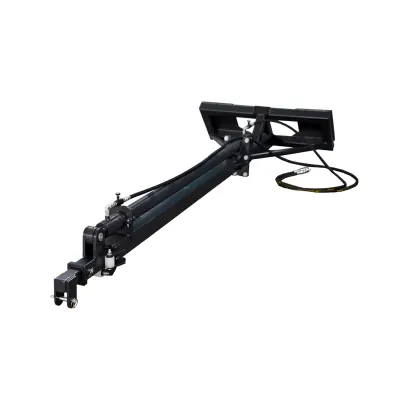
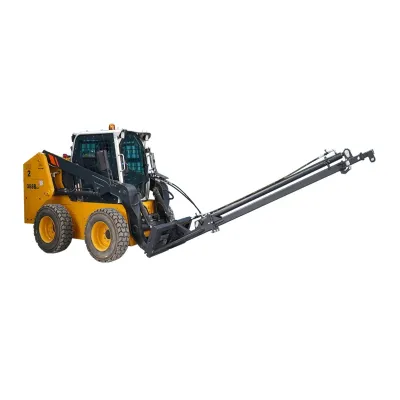
A truss boom transforms a skid steer into a mobile lifting platform for tasks that would otherwise require a crane, telehandler, or a crew on ladders. The attachment telescopes from a compact transport length to a fully extended reach approaching 8 meters, enabling the operator to lift roof trusses, position wall framing, hang signage, place HVAC units, and handle overhead materials that are beyond the loader arms' natural reach. A hydraulic cylinder controls telescopic extension from the cab, while the skid steer's loader arms manage boom angle and lift height. The boom head features a lifting hook or shackle point for attaching slings, chains, or custom lifting fixtures.
The TG-HLJ400 is rated at 385 kg safe working load and extends from 3400 mm to 7950 mm, covering the reach requirements for residential and light commercial construction. The boom uses a telescopic box-section design with internal wear pads for smooth extension and retraction, and mounts via the standard MP1140 universal quick-attach plate. Hydraulic requirements are 16 MPa operating pressure at 60 L/min flow — standard on most mid-size and large-frame skid steers. At 358 kg, the attachment is light enough for mid-size machines while maintaining structural rigidity for stable lifting at full extension.
Specifications
| Model | TG-HLJ400-(3400-7950)-MP1140 |
|---|---|
| Safe Working Load (SWL) | 385 kg |
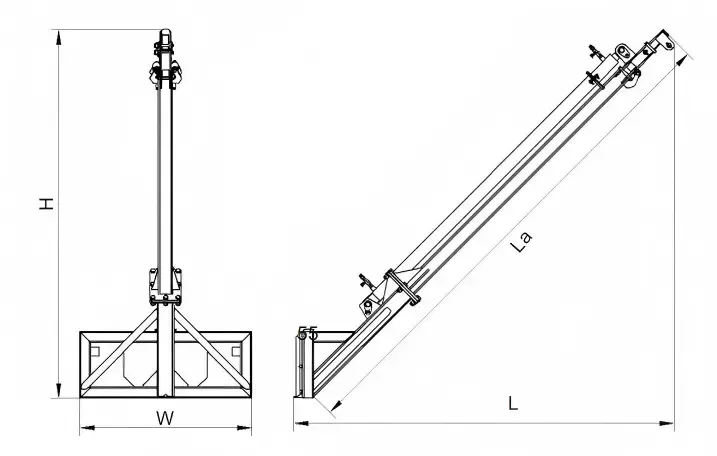
| Dimensions (L×W×H) | 2735 × 1156 × 2646 mm |
| Telescopic Extension Range | 3400 – 7950 mm |
| Operating Pressure | 16 MPa |
| Hydraulic Flow Required | 60 L/min |
| Mounting Type | MP1140 Universal Quick-Attach |
| Product Weight | 358 kg |
Safe working load (SWL) is rated for static lifting at full extension. Dynamic loads, swinging, side loading and wind forces reduce effective capacity — operate well below the SWL rating for normal operation and refer to the lifting chart for load limits at each extension. Always confirm load weight and lift radius before lifting. MP1140 universal mount fits mid-size and large-frame skid steers with 60 L/min auxiliary flow at 16 MPa.
Key Features
Hydraulic Telescopic Extension
A hydraulic cylinder extends and retracts the inner boom section from 3400 mm to 7950 mm, controlled directly from the operator's seat. The telescopic design delivers a compact transport length (2735 mm retracted) while providing nearly 8 meters of reach when fully extended — enough to set trusses on single-story and most two-story residential structures. Internal wear pads between the telescoping sections ensure smooth, rattle-free extension and prevent metal-to-metal contact that would accelerate wear.
385 kg Safe Working Load
The boom is rated at 385 kg SWL at full extension, covering the weight of most residential roof trusses, wall panels, signage bundles and light HVAC units. The box-section boom structure is engineered for rigidity at full extension, minimizing deflection and sway during lifting. The SWL rating accounts for the load moment at maximum extension — the most stress-intensive position. For loads approaching the rating, reduce extension or use a machine with higher rated operating capacity.
Universal MP1140 Mounting
The standard MP1140 quick-attach plate fits Bobcat, Case, Caterpillar, John Deere, New Holland, Kubota, Gehl, Mustang, Takeuchi, ASV and most other mid-size and large-frame skid steer and compact track loader brands. The universal mount allows the truss boom to be swapped between machines in a fleet without adapter plates. The mounting frame is reinforced at the boom pivot to transfer lifting forces directly into the machine's loader arms.
Cab-Controlled Boom Operation
All boom functions — telescopic extension and retraction — are controlled from the operator's seat using the skid steer's auxiliary hydraulic controls. The loader arms control boom angle and lift height, while the auxiliary circuit controls extension. This single-operator design eliminates the need for a ground crew to manually position or extend the boom, improving jobsite efficiency and safety. A hydraulic lock valve holds the boom extension in position when the control is released, preventing unintended drift during lifting.
How It Works
The truss boom mounts to the skid steer's quick-attach carriage and connects to the auxiliary hydraulic circuit. The operator approaches the load, extends or retracts the boom to the desired reach using the auxiliary control, and attaches the load to the lifting hook or shackle at the boom head using slings or chains. Raising the loader arms lifts the boom and load, while tilting the arms adjusts the boom angle. The operator drives the skid steer to the placement location, positions the load using a combination of arm height, arm tilt and boom extension, then lowers the load into place. The telescopic function allows the operator to reach over obstacles, extend beyond the machine's footprint, and retract for transport. The hydraulic lock valve holds extension position during lifting, and the box-section boom structure maintains rigidity at full reach for stable, controlled placement.
Compatibility
The TGEC truss boom works with all major skid steer and compact track loader brands featuring the MP1140 universal quick-attach plate, including Bobcat, Case, Caterpillar, John Deere, New Holland, Kubota, Gehl, Mustang, Takeuchi, and ASV. The attachment requires 60 L/min auxiliary hydraulic flow at 16 MPa — standard on most mid-size and large-frame skid steers. At 358 kg attachment weight plus the lifted load, ensure the machine's rated operating capacity is sufficient for stable operation, especially when lifting at full extension — refer to the machine's load chart and the boom's lifting chart for specific limits. Compact track loaders (CTLs) are well suited to truss boom operation due to better stability, lower ground pressure and reduced risk of tipping on uneven terrain. Custom mounting brackets for tractor front-end loaders, backhoe loaders and other carriers are available on request — provide your machine make, model and pin dimensions for a direct-fit quote.
Applications
Roof truss installation: Lift and place wood and steel roof trusses on residential and light commercial structures
Wall framing and panel placement: Position prefabricated wall panels, headers and framing materials at elevated heights
Signage and banner installation: Hang commercial signs, banners, lighting fixtures and decorative elements on buildings and poles
HVAC and mechanical unit placement: Lift light HVAC units, exhaust fans and mechanical equipment onto rooftops and elevated platforms
Material handling at height: Move lumber, plywood, siding and roofing materials to upper levels during construction
Agricultural building construction: Set trusses and framing for pole barns, arenas, hay storage and farm outbuildings
Landscaping and hardscape: Place large rocks, timbers and decorative elements in elevated or hard-to-reach locations
Which Model Fits Your Machine?
| Machine Class | Recommended Model | ROC Requirement | Best For |
|---|---|---|---|
| Mid-size skid steer (1.5–2.5t) | TG-HLJ400 | 1,000+ kg | Residential trusses, signage, light material handling, farm buildings |
| Large-frame skid steer (2.5t+) | TG-HLJ400 | 1,200+ kg | Commercial trusses, heavier loads, full extension lifting, uneven terrain |
Wear Parts & Service Support
Replacement components are stocked for the truss boom: telescopic extension cylinder and seal kits, internal boom wear pads, boom head lifting hook and shackle, hydraulic hoses with flat-faced couplers, hydraulic lock valve, pivot pins and bushings, and mounting plate hardware. All wear parts are manufactured to OEM specifications for a precise fit. Standard parts ship within 5 business days. Internal wear pads should be inspected every 100 hours and replaced when clearance exceeds the manufacturer's specification — excessive wear between telescoping sections causes boom play and accelerated structural wear. For dealers and fleet operators, we recommend ordering a basic parts kit with each boom — one set of wear pads, one hydraulic hose set, and one cylinder seal kit — to minimize customer downtime.
Get a Quote — TGEC Truss Boom
Tell us your skid steer make and model, operating weight, ROC rating, auxiliary hydraulic flow, and primary application (truss installation, signage, material handling). Our team will confirm the TG-HLJ400 fits your machine, verify MP1140 mounting compatibility and hydraulic requirements, and provide a factory-direct quotation with lead time and delivery terms.
Dealer inquiry: Contact our team to discuss sample orders, volume requirements, and custom branding options.