Welcome to the Official Website of TianGe Attachments.

Skid Steer Vibratory Roller

Skid Steer Vibratory Roller

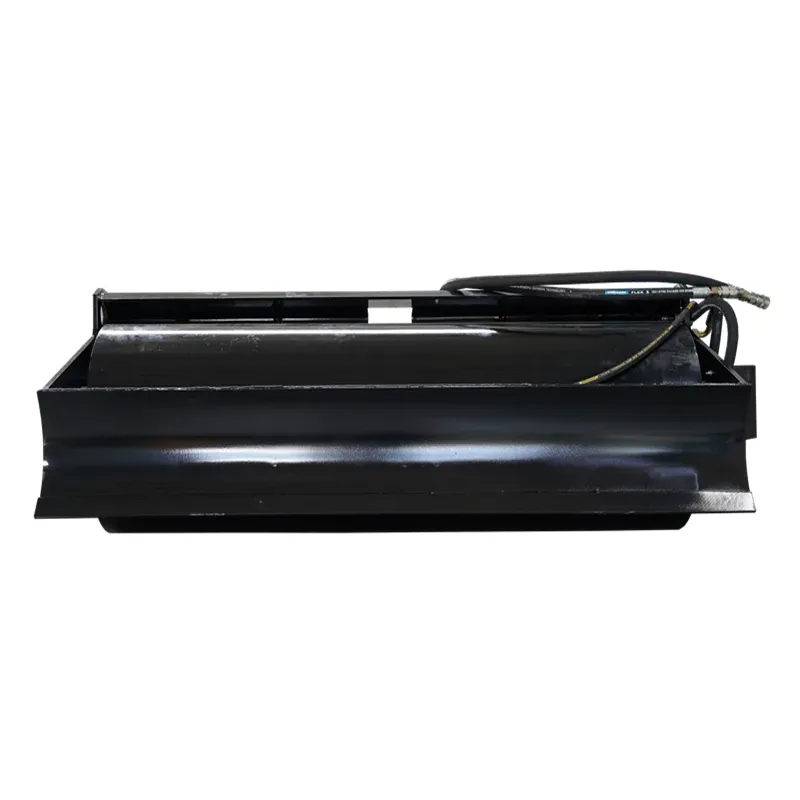
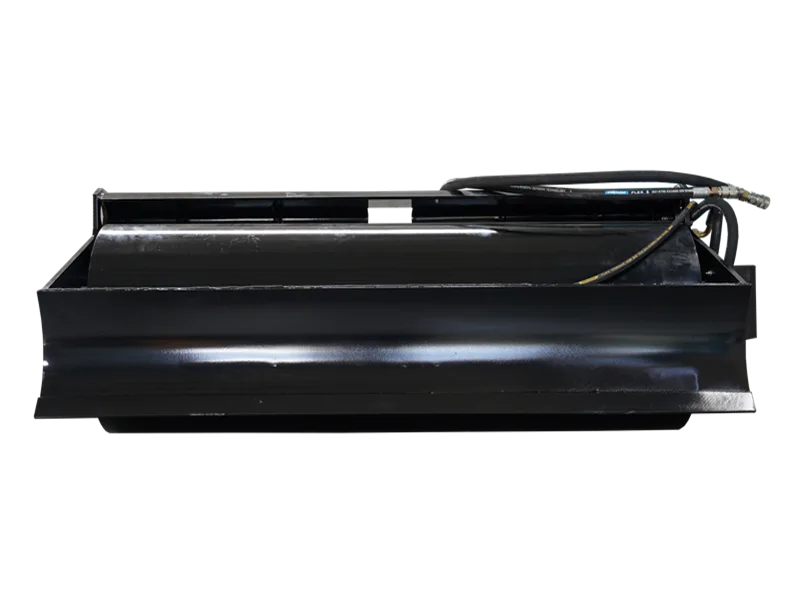
TGEC TG-VR1830(72IN)-MP1140 skid steer vibratory roller features an 1830 mm smooth drum, 600 mm diameter, 885 kg operating weight, and MP1140 universal quick-attach. 20 L/min hydraulic flow, padfoot drum available as custom for soil, aggregate and trench compaction.
Product Name: Vibratory compactor / Roller compactor / Compaction roller / Trench roller / Vibratory roller / Skid steer roller / Roller packer
Type: Compactors
After-sales Service: Provided
Warranty: 1 Year
Customization: Available
Shipping Cost: Negotiate with us about shipping cost and estimated delivery time.
Get a quote
Overview
FAQ

Product Overview

The TGEC skid steer vibratory roller is a heavy-duty compaction attachment designed for soil, aggregate, and trench compaction on construction, landscaping, and infrastructure sites. A 600 mm diameter smooth steel drum generates vibration that settles and densifies material through a combination of static weight and dynamic force. The attachment mounts to a universal skid steer quick-attach plate and uses the carrier's auxiliary hydraulic circuit to power the vibration mechanism, making it suitable for mid-to-large frame skid steers and compact track loaders.

The TG-VR1830(72IN)-MP1140 offers an 1830 mm (72 in) working width, 885 kg (1951 lb) operating weight, and requires 20 L/min (5.3 GPM) auxiliary hydraulic flow. The standard smooth drum handles granular soils and aggregate, while a padfoot drum configuration is available as a custom option for cohesive clay soils. As a core product in the skid steer compaction attachments category, this roller supports contractors who need reliable compaction performance across a range of site conditions. For help selecting the right configuration, see our vibratory roller selection guide and the smooth drum and padfoot roller comparison.

Technical Specifications

ParameterValue
ModelTG-VR1830(72IN)-MP1140
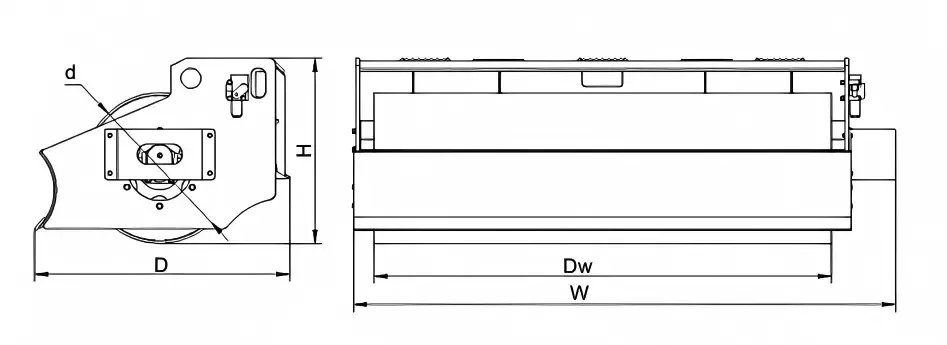
Dimensions (W × D × H)2168 × 1021 × 738 mm (85.4 × 40.2 × 29.1 in)
Working Width1830 mm (72 in)
Drum Diameter600 mm (23.6 in)
Hydraulic Flow Required20 L/min (5.3 GPM)
Operating Pressure75 MPa (10878 psi)
Product Weight885 kg (1951 lb)
Mounting TypeMP1140 Universal Quick-Attach
Drum SurfaceSmooth steel (padfoot available as custom)

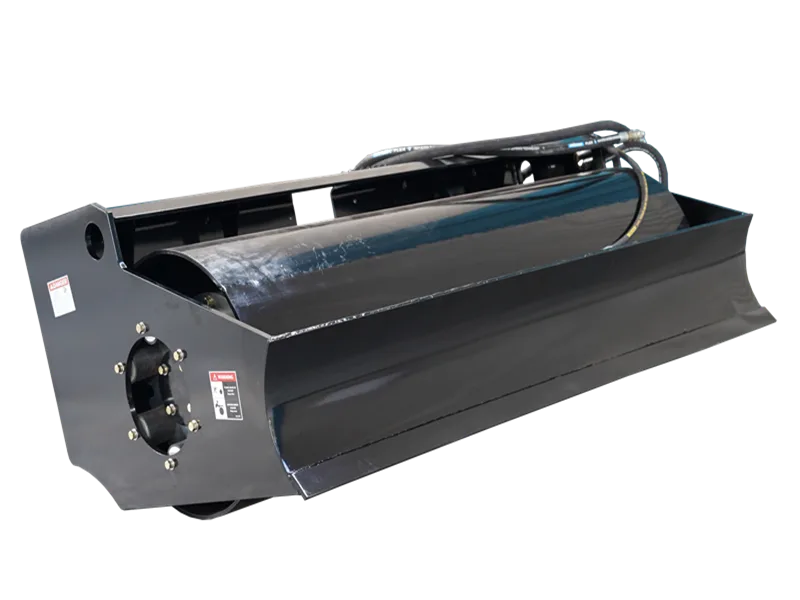
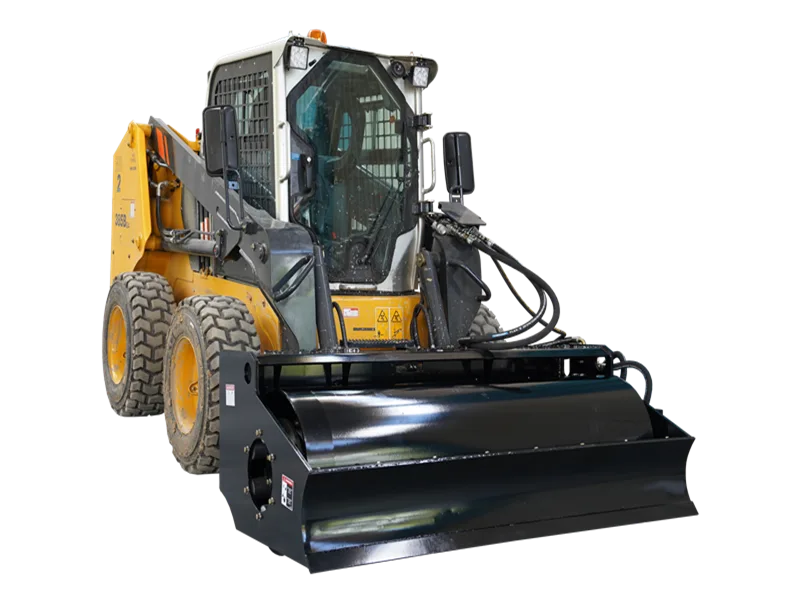
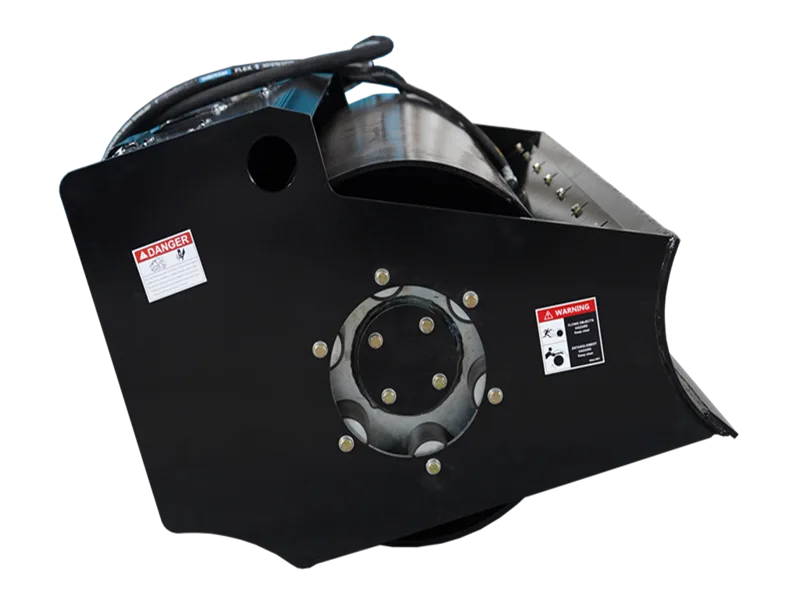
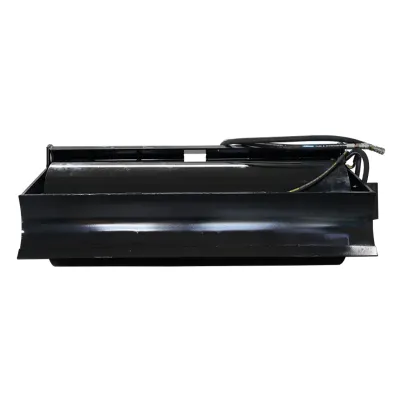
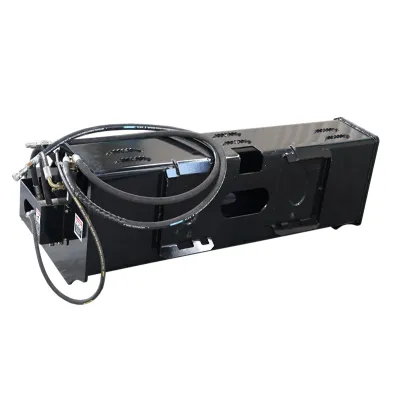
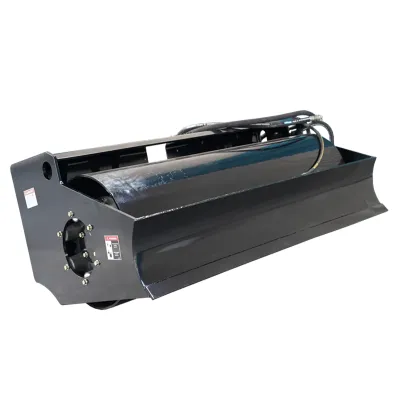
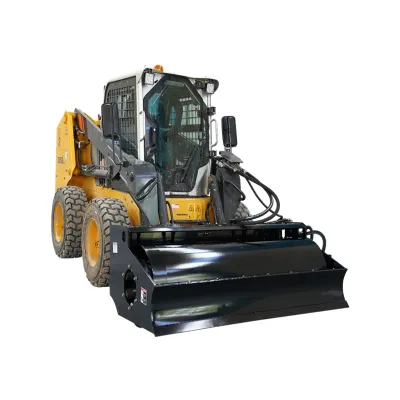
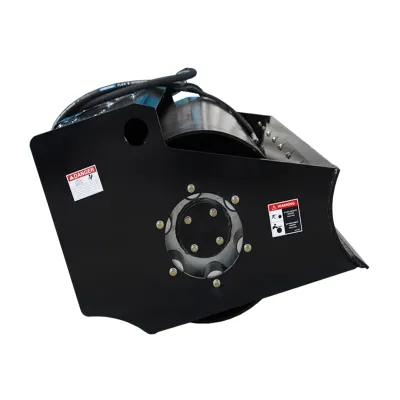
TGEC Skid Steer Vibratory Roller 72 inch compaction drum attachment with smooth steel drum and universal quick-attach mount

Table data is for reference only. Actual specifications may vary based on the final configuration. Please contact the TianGe technical team for details.

How It Works

The vibratory roller uses the skid steer auxiliary hydraulic circuit to power an eccentric weight mechanism inside the drum. As hydraulic fluid drives the motor, the eccentric weight rotates at high speed, generating centrifugal force that creates vertical vibration. This vibration transfers through the drum to the material below, causing soil particles to rearrange and densify. The static weight of the 885 kg (1951 lb) attachment adds downward force, while the operator controls forward and reverse movement to pass the drum over the compaction area in overlapping patterns.

Application Scenarios

  • Road and highway construction: Compact subbase, base course, and asphalt layers during road building, repair, and maintenance projects.

  • Trench and utility backfill: Compact soil backfill in trenches for pipelines, cable lines, sewer, and water main installations.

  • Building site preparation: Compact soil on building pads, foundation areas, parking lots, and driveways before concrete or paving.

  • Aggregate and gravel surfaces: Compact gravel driveways, temporary access roads, parking areas, and railway ballast.

  • Landscaping and grounds: Finish-grade compaction for lawns, athletic fields, golf courses, and park construction.

  • Residential construction: Compact backfill around foundations, footings, and utility trenches on housing and subdivision sites.

Installation & Mounting

The vibratory roller attaches to the MP1140 universal skid steer quick-attach plate. The operator aligns the receiver, locks the levers, and connects the auxiliary hydraulic hoses for the vibration motor. Before operation, confirm the auxiliary circuit delivers at least 20 L/min (5.3 GPM) flow at the required pressure, and verify the machine's rated operating capacity accounts for the 885 kg (1951 lb) attachment. Cycle the motor briefly after connection to remove air and check for even rotation and leaks.

Wear & Service

Primary wear items include the drum shell, eccentric bearing assembly, hydraulic motor, hoses, and quick-attach latch. Inspect the drum for cracks, dents, or excessive wear along the edges. Check bearings for unusual noise or play during operation. Inspect hoses for abrasion or leaks, and replace damaged hoses immediately. Grease all pivot and bearing points per the schedule, and keep the quick-attach plate clean. OEM replacement bearings, seals, and hydraulic components are available.

OEM & Bulk Supply

TGEC supplies vibratory roller attachments to dealers, rental fleets, contractors, and OEM partners under factory-direct terms. Volume pricing and private-label branding are available for qualified orders, and custom configurations — padfoot drum conversion, modified width, alternative mounting plates — can be reviewed for production runs. Dealers can combine roller orders with other TGEC attachments to consolidate sourcing.

Soil, Aggregate, or Trench — What's Your Primary Compaction Job?

We're looking for three things to get you the right roller: your skid steer model, your ROC, and a quick description of your primary material — soil, gravel, or clay. Send those over, we'll confirm compatibility, and reply with a quote and estimated shipping date. If you're between drum configurations, we'll note which option gives you the most flexibility for your usual work.
Frequently Asked Questions

What applications are skid steer vibratory rollers designed for?+

Skid steer vibratory rollers are designed for compacting soil, aggregate, and backfill material on construction, landscaping, and infrastructure sites. Common applications include road subbase and base course compaction, trench and utility backfill, building pad preparation, gravel driveway and access road compaction, residential foundation backfill, and finish-grade landscaping work. The 1830 mm (72 in) smooth drum is suited for granular soils and aggregate, while a padfoot drum configuration can be specified for cohesive clay soils.

How do I match a vibratory roller to my skid steer?+

Matching a vibratory roller to a skid steer requires checking three key factors. First, the machine's rated operating capacity must safely handle the 885 kg (1951 lb) attachment weight plus any dynamic forces generated during vibration. Second, the auxiliary hydraulic circuit must deliver at least 20 L/min (5.3 GPM) flow at the required operating pressure to power the vibration motor. Third, the machine must have a universal quick-attach mounting plate compatible with the MP1140 interface. Provide your machine make, model, operating weight, and hydraulic specifications for a precise compatibility assessment.

Can a vibratory roller be used with a mini skid steer?+

The TG-VR1830(72IN)-MP1140 weighs 885 kg (1951 lb) and is designed for mid-to-large frame skid steers and compact track loaders. Most mini skid steers and compact utility loaders lack the operating weight, rated capacity, and hydraulic output to safely operate this attachment. Using an undersized machine can cause instability, reduced vibration performance, and premature hydraulic system wear. For mini skid steer applications, a smaller, lighter roller attachment may be required — contact our technical team to discuss options.

What skid steer specifications should be checked before mounting the roller?+

Before mounting a vibratory roller, verify the skid steer's operating weight, rated operating capacity (ROC), auxiliary hydraulic flow and pressure, and quick-attach mounting plate type. The ROC must account for the 885 kg (1951 lb) attachment weight. The auxiliary circuit must deliver at least 20 L/min (5.3 GPM) flow at the required pressure. Confirm the machine uses a universal quick-attach plate compatible with the MP1140 interface. Also check that the machine's tires or tracks and hydraulic cooling system can handle continuous auxiliary use during compaction cycles.

What is the difference between a smooth drum and padfoot configuration?+

A smooth drum has a flat, cylindrical steel surface that applies uniform pressure and is best suited for granular soils, sand, gravel, and aggregate. It produces a smooth finish and is ideal for road base, parking lots, and landscaping. A padfoot drum has raised, conical pads that penetrate the surface and apply kneading action, making it more effective for cohesive soils such as clay and silt where shearing and recompaction are needed. Padfoot drums achieve better compaction in cohesive materials but leave a textured surface that may require a final smooth pass.

What soil and aggregate conditions are suitable for a vibratory roller?+

The standard smooth drum vibratory roller is suitable for granular soils including sand, gravel, crushed stone, and well-graded aggregate with low to moderate moisture content. It also works on mixed soils and compacted fill. For cohesive clay or silt soils, a padfoot drum configuration is recommended because the pads penetrate and knead the material. Extremely wet or saturated soils should be allowed to dry before compaction, as excessive moisture prevents proper densification and can cause the drum to bog. Always test soil moisture and gradation before beginning compaction work.

How does drum width affect roller performance?+

Drum width determines the area covered per pass and the attachment's suitability for different workspaces. The 1830 mm (72 in) working width covers a broad area efficiently on open sites such as road bases, parking lots, and building pads, reducing the number of passes needed. However, a wider drum is less maneuverable in narrow trenches, confined utility corridors, or tight residential lots. Narrower drums are better for trench work but require more passes on large areas. The 1830 mm width balances productivity for general construction while remaining suitable for most standard trench widths.

What hydraulic requirements should be considered when matching the attachment?+

The vibratory roller requires a skid steer auxiliary hydraulic circuit delivering at least 20 L/min (5.3 GPM) flow at the specified operating pressure. Insufficient flow causes weak or irregular vibration, reducing compaction effectiveness, while excessive pressure can damage the hydraulic motor and seals. Verify that the machine's auxiliary circuit supports continuous use during vibration cycles, as intermittent flow can overheat the system. Some machines may require a high-flow auxiliary option. Check your machine's hydraulic specifications in the operator manual or on the identification plate.

How is a skid steer vibratory roller mounted and removed?+

The roller uses the MP1140 universal quick-attach plate. To mount, align the skid steer's quick-attach plate with the attachment receiver, lock the levers, and connect the auxiliary hydraulic hoses for the vibration motor. Cycle the motor briefly to remove air and verify even rotation. To remove, lower the drum to the ground, shut off the engine, relieve residual hydraulic pressure by cycling the auxiliary controls, disconnect and cap the hydraulic hoses, release the quick-attach locks, and back the machine away. Always confirm the quick-attach locks are fully engaged before operating, and never remove the attachment while the drum is vibrating or under load.

What wear parts typically require inspection on a vibratory roller?+

Key wear parts include the drum shell — inspect for cracks, dents, and excessive wear along edges — the eccentric bearing assembly, which can develop noise or play over time, the hydraulic motor and its shaft seal, hydraulic hoses for abrasion or leaks, and the quick-attach latch components. The drum shell is subject to impact and abrasion from rocks and debris, while bearings experience continuous high-speed rotation. Inspect these components before each shift, and replace worn bearings, seals, or hoses promptly to prevent catastrophic failure during operation.

How should the roller be maintained during regular operation?+

During regular operation, inspect the drum surface daily for cracks, dents, or buildup of compacted material. Check hydraulic hoses and fittings for leaks or abrasion before each shift. Grease the eccentric bearings and pivot points per the manufacturer's maintenance schedule. Clean the drum and frame after use to remove caked soil and debris that can cause corrosion or imbalance. Monitor vibration performance — a sudden change in vibration frequency or amplitude may indicate bearing wear or hydraulic issues. Store the attachment indoors or under cover when not in use, and relieve hydraulic pressure before long-term storage.

What operating factors affect vibratory compaction performance?+

Compaction performance depends on several operating factors. Soil moisture content is critical — material that is too dry or too wet will not compact properly. Lift thickness affects how deeply vibration penetrates; thinner lifts achieve better compaction than thick layers. The number of passes and overlap between passes determine uniformity — typically 3 to 5 passes with 10 to 15 percent overlap. Travel speed should be slow enough to allow vibration to act on the material, usually 3 to 5 km/h. Finally, the attachment's static weight and vibration amplitude must match the soil type and required compaction density.
Please make sure to include your phone number with the country code (e.g., 86 for China, 1 for USA).