Welcome to the Official Website of TianGe Attachments.

Compaction Wheels

Compaction Wheels

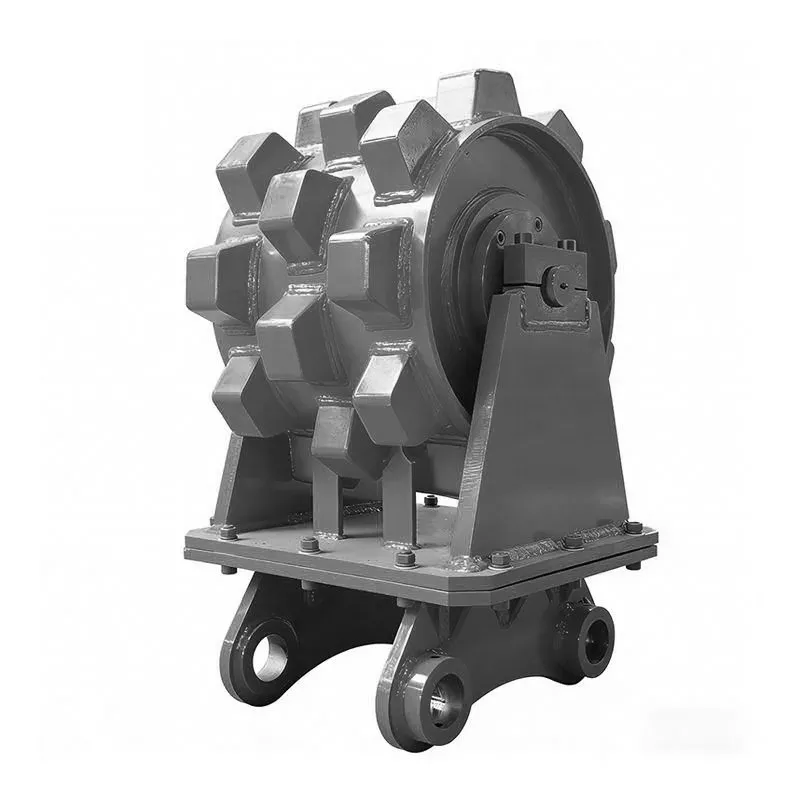
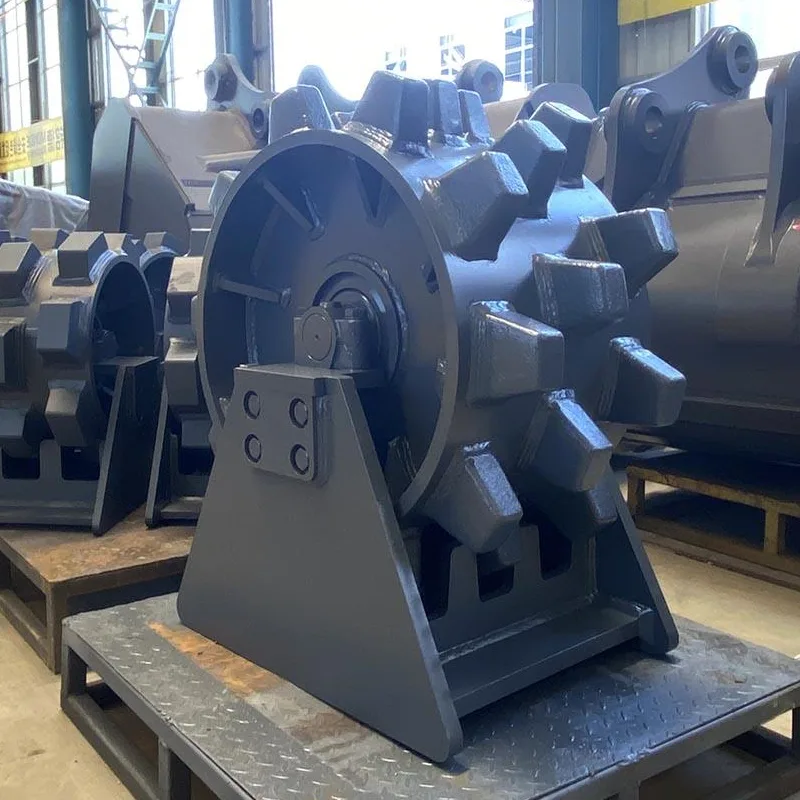
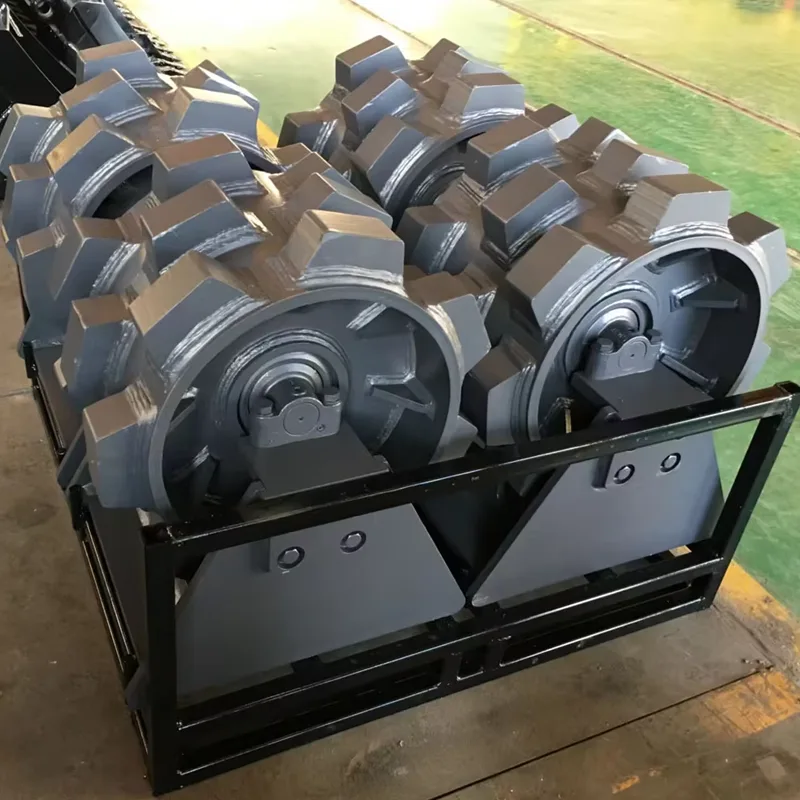
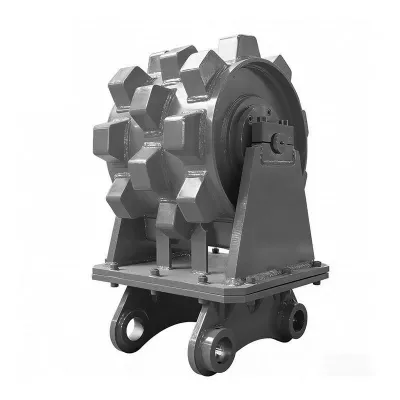
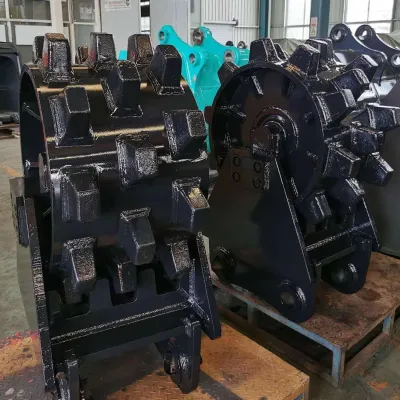
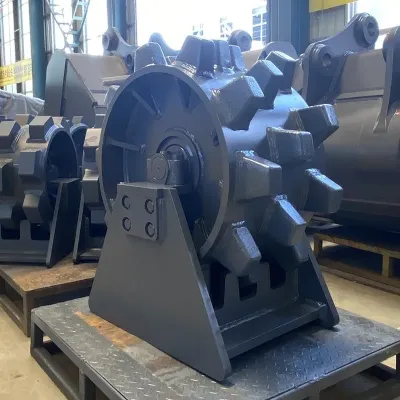
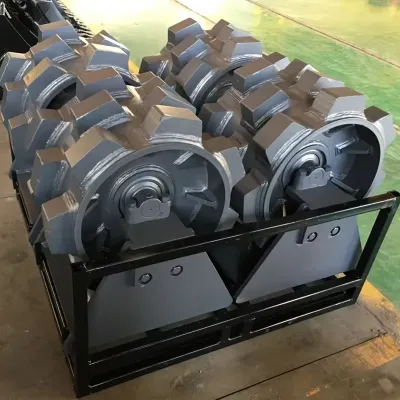
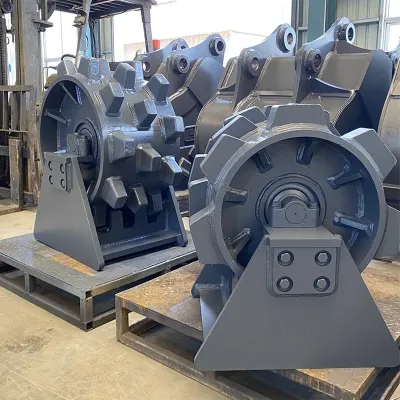
TGEC excavator compaction wheels deliver targeted kneading compaction in narrow trenches and confined spaces where ride-on rollers cannot reach. Mechanical operation requires no auxiliary hydraulic circuit.
Product Name: Trench compactor wheel / Padfoot compaction drum / Roller compactor / Compactor wheel attachment
Type: Compactors
After-sales Service: Provided
Warranty: 1 Year
Customization: Available
Shipping Cost: Negotiate with us about shipping cost and estimated delivery time.
Get a quote
Overview
FAQ

Product Overview

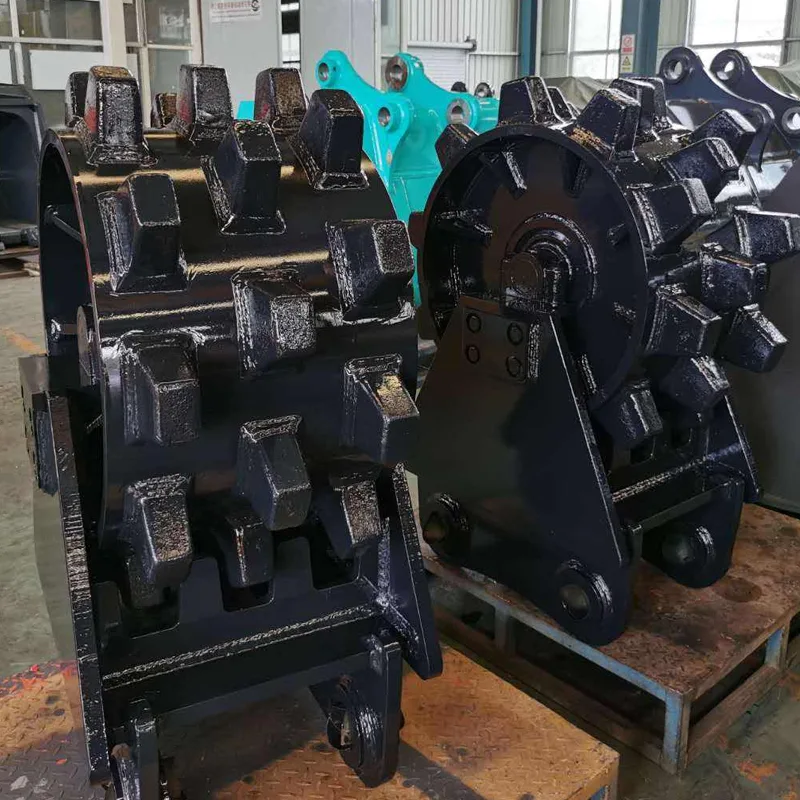
The TGEC excavator compaction wheel is a purely mechanical attachment built specifically for compacting soil in tight utility trenches, pipeline ditches, and other confined excavation sites where standard compaction gear simply won't fit. Its padfoot drums work a kneading action that densifies cohesive and mixed soils layer by layer, using the excavator's own boom and curl functions. This makes it a natural fit for utility contractors, civil crews, and pipeline installers who regularly work in restricted-access conditions.

We offer five wheel models that span excavators from 1 all the way up to 39 tons, with wheel widths from 450 mm to 650 mm and working diameters reaching 1090 mm. Every model is sized to match the lift capacity and linkage geometry of its target machine class. Within the TGEC excavator compaction attachments family, this wheel pairs with the hydraulic plate compactor—which is better suited for broad, open-area surface work. For a closer look at where this attachment really shines, check out our compaction wheel applications guide.

Technical Specifications

ParameterTG-CW100TG-CW120TG-CW200TG-CW300TG-CW400
Compatible Excavator Class1–4 t (1.1–4.4 ton)5–6 t (5.5–6.6 ton)7–18 t (7.7–19.8 ton)20–29 t (22–32 ton)30–39 t (33–43 ton)
Attachment Weight115–260 kg (254–573 lb)290 kg (639 lb)320–620 kg (705–1367 lb)950 kg (2094 lb)1080 kg (2381 lb)
Wheel Width450 mm (17.7 in)450 mm (17.7 in)450–500 mm (17.7–19.7 in)600 mm (23.6 in)650 mm (25.6 in)
Wheel Diameter380 mm (15.0 in)450 mm (17.7 in)500–600 mm (19.7–23.6 in)890 mm (35.0 in)920 mm (36.2 in)
Working Diameter470 mm (18.5 in)540 mm (21.3 in)600–770 mm (23.6–30.3 in)1070 mm (42.1 in)1090 mm (42.9 in)

Table data is for reference only. Actual specifications may vary based on the final configuration. Please contact the TianGe technical team for details.

How It Works

This wheel runs entirely off the excavator's mechanical linkage—no auxiliary hydraulics, no extra plumbing. The operator drops the padfoot drum onto the soil using the boom, then uses the curl function to roll the drum forward and backward across the compaction zone. As the drum turns, the padfeet penetrate and knead the soil, pushing out air voids and building density pass after pass. The combination of the excavator's downforce and the wheel's own weight delivers the compaction energy, while the narrow drum profile lets you work in trenches only slightly wider than the wheel itself.

Application Scenarios

  • Pipeline trench backfill: Compact soil layers around water, sewer, gas and telecommunications lines in narrow utility trenches.

  • Foundation excavation backfill: Densify soil in building foundation pits and around basement walls where access is restricted.

  • Roadside ditch and culvert work: Compact backfill around drainage structures, culverts and roadside ditches.

  • Confined-area compaction: Work in narrow trenches, between structures and in areas where ride-on rollers cannot maneuver.

  • Cohesive soil stabilization: Knead and densify clay and silt soils that respond better to sheepsfoot-style compaction.

  • Utility and municipal projects: Compact backfill on street repairs, water main replacements and underground utility installations.

  • Embankment and slope compaction: Compact soil layers on embankments, slopes and retaining wall backfill.

Installation & Mounting

Mounting the compaction wheel is straightforward—it pins onto your excavator's bucket linkage using the existing bucket pins, with no hydraulic hoses to mess with. Before you start, confirm your machine's pin-to-pin spacing, pin diameter, and coupler type (direct pin-on or quick coupler), since those determine the right bracket. Also double-check that the attachment weight is within your excavator's lift capacity at working reach. TGEC supplies brackets customized to each excavator model, and the whole swap usually takes less than an hour with basic shop tools.

Wear Parts & Service

The main things to watch are the padfoot tips, the drum surface, and the mounting pins and bushings. Check the padfoot tips regularly for wear or breakage—once the protrusion height drops below the effective compaction range, it's time to replace them. Keep an eye on the drum surface for cracks or distortion, especially after working in rocky or abrasive ground. And stay on top of greasing the pins and bushings to avoid premature wear and keep the drum rotating smoothly. We stock genuine replacement padfoot sets, pins, and bushings for every TGEC compaction wheel model.

Dealer & Bulk Orders

TGEC supplies compaction wheels to equipment dealers, civil contractors, and pipeline installation firms around the world. We offer bulk pricing and OEM private-label programs based on product selection, order quantity, and your target market. Reach out to our sales team to talk dealer pricing, volume supply, and custom configuration options.

Request a Quote — Excavator Compaction Wheel

Since this is a mechanical attachment, you don't need an auxiliary hydraulic circuit. To get a quote, just send us your excavator make and model, operating weight, pin-to-pin spacing, pin diameter, coupler type, and which model you're looking at (TG-CW100 through TG-CW400). We'll confirm the right wheel size and bracket for your machine. We can also supply custom pad configurations for specific soil conditions.
Frequently Asked Questions

What is an excavator compaction wheel used for?+

An excavator compaction wheel is used to compact soil in narrow trenches, pipeline ditches and confined foundation excavations where larger compaction equipment cannot access. It mounts to the excavator bucket linkage and uses padfoot drums to knead and densify soil through the machine's boom and curl functions. It is especially common in utility installation, pipeline work and municipal construction projects where trench width limits equipment choice.

What types of soil and trench work are suitable for a compaction wheel?+

Compaction wheels are most effective on cohesive and semi-cohesive soils such as clay, silt and clay-gravel mixtures, where the padfoot kneading action displaces air voids and increases density. They excel in narrow utility trenches, pipeline ditches, foundation backfill and culvert installation work where trench width typically ranges from 450 mm to 650 mm. They are less suitable for open-area granular soil compaction, where a vibratory plate compactor or ride-on roller is more efficient.

How does an excavator compaction wheel compact soil?+

The compaction wheel uses padfoot drums that rotate across the soil surface as the operator engages the excavator's curl function. The protruding padfeet penetrate the upper soil layer and apply a kneading, shearing force that displaces air voids and rearranges soil particles into a denser configuration. The excavator's downward boom force and the wheel's own weight provide the static pressure needed for effective compaction. Multiple passes in overlapping patterns achieve the target density, with each pass increasing compaction depth.

What excavator size is suitable for a compaction wheel?+

TGEC compaction wheels are available for excavators ranging from 1 ton mini excavators up to 39 ton class machines. The TG-CW100 fits 1–4 ton machines for small utility and landscaping trenches, while the TG-CW400 handles 30–39 ton excavators for large pipeline and heavy civil projects. The key matching criteria are the excavator's operating weight, bucket linkage dimensions and lift capacity at working reach, not just the machine's tonnage class. Our technical team can verify the correct model for your specific excavator.

What should be checked before mounting a compaction wheel on an excavator?+

Before mounting, verify the excavator's pin-to-pin spacing, pin diameter and coupler type to ensure the mounting bracket fits correctly. Check that the attachment weight is within the excavator's safe lift capacity at the intended working reach, especially for larger models like the TG-CW300 and TG-CW400. Inspect the bucket linkage pins and bushings for wear, as worn components can cause excessive play and reduce compaction precision. Confirm that the trench width is compatible with the selected wheel width, typically requiring at least 100 mm clearance on each side.

How does a compaction wheel differ from a vibratory plate compactor?+

A compaction wheel is a mechanical attachment with padfoot drums that knead soil through the excavator's curl motion, requiring no hydraulics and excelling in narrow trenches and cohesive soils. A vibratory plate compactor uses an eccentric weight driven by a hydraulic motor to generate high-frequency vibration, delivering uniform surface compaction across larger open areas and granular soils. The wheel is limited to the trench width it can fit, while the plate covers broader areas more quickly but requires an auxiliary hydraulic circuit with sufficient flow and pressure.

What is a padfoot compaction wheel used for?+

A padfoot compaction wheel, also called a sheepsfoot roller, is specifically designed for compacting cohesive soils such as clay and silt through a kneading action. The protruding padfeet penetrate the soil surface and apply concentrated pressure that displaces air and water from between soil particles, achieving higher density than a smooth drum on cohesive materials. It is widely used in pipeline trench backfill, foundation work and embankment construction where clay-rich soils require sheepsfoot-style compaction to meet engineering density specifications.

When is a trench compactor wheel useful for confined-area work?+

A trench compactor wheel is essential when the compaction area is too narrow or confined for ride-on rollers, plate compactors or ramming equipment. Typical scenarios include utility trenches narrower than 600 mm, pipeline ditches with limited side clearance, foundation pits between existing structures, and culvert backfill where overhead clearance restricts larger equipment. The wheel's narrow profile allows it to reach the trench bottom and compact in lifts, while the excavator's boom provides reach and positioning that handheld equipment cannot match.

What parts of a compaction wheel are subject to wear?+

The primary wear parts are the padfoot tips, which experience direct abrasion against soil and rock during compaction. The drum surface itself can develop cracks or deformation in rocky or highly abrasive conditions. Mounting pins and bushings wear from rotational movement and should be greased regularly to extend service life. The mounting bracket may experience stress fatigue at weld points, especially on larger models used in heavy civil applications. TGEC supplies genuine replacement padfoot sets, pins, bushings and drum repair components for all compaction wheel models.

What information is needed to configure a compaction wheel for an excavator?+

To configure the correct compaction wheel, provide the excavator make and model, operating weight, bucket pin-to-pin spacing, pin diameter and coupler type (direct pin-on or quick coupler). Specify the primary application and typical trench width, as this helps determine the optimal wheel width and drum diameter. Indicate whether a standard or custom padfoot configuration is needed for specific soil types. Our technical team uses this information to match the correct TG-CW model and mounting bracket, ensuring safe lift capacity and effective compaction performance.
Please make sure to include your phone number with the country code (e.g., 86 for China, 1 for USA).