Welcome to the Official Website of TianGe Attachments.

Post driver attachment for excavator

Post driver attachment for excavator

Breaker-converted post driver kit that mounts to an existing hydraulic breaker, using the breaker's impact force to drive fence, T-post and sign posts. Six models cover 1.5–28 ton excavators with pounding caps from 60 mm to 125 mm.
Product Name: Post Driver / Post Pounder / Hydraulic Hammer Post Driver / Breaker Post Driver / Fence Post Driver / Post Knocker / Post Driver Attachment / Hydraulic Post Pounder
Type: Post Drivers
After-sales Service: Provided
Warranty: 1 Year
Customization: Available
Shipping Cost: Negotiate with us about shipping cost and estimated delivery time.
Get a quote
Overview
FAQ

Product Overview

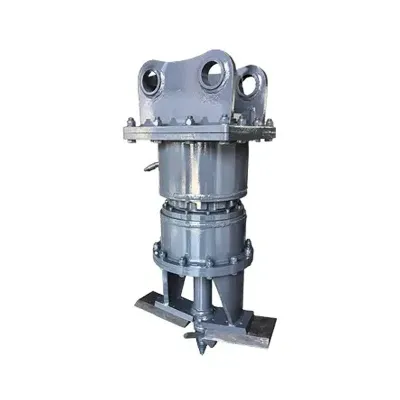
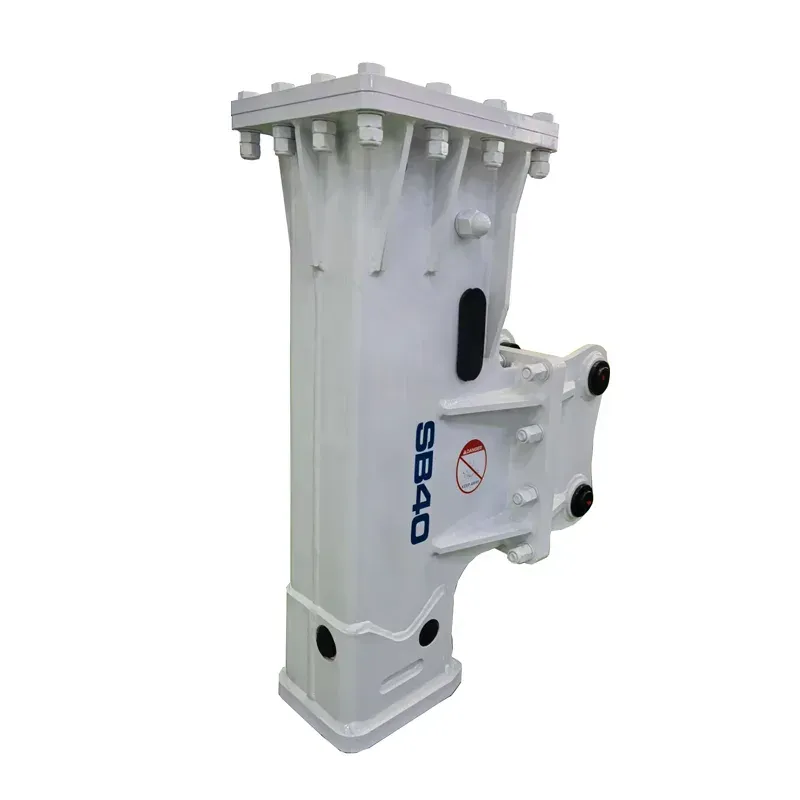
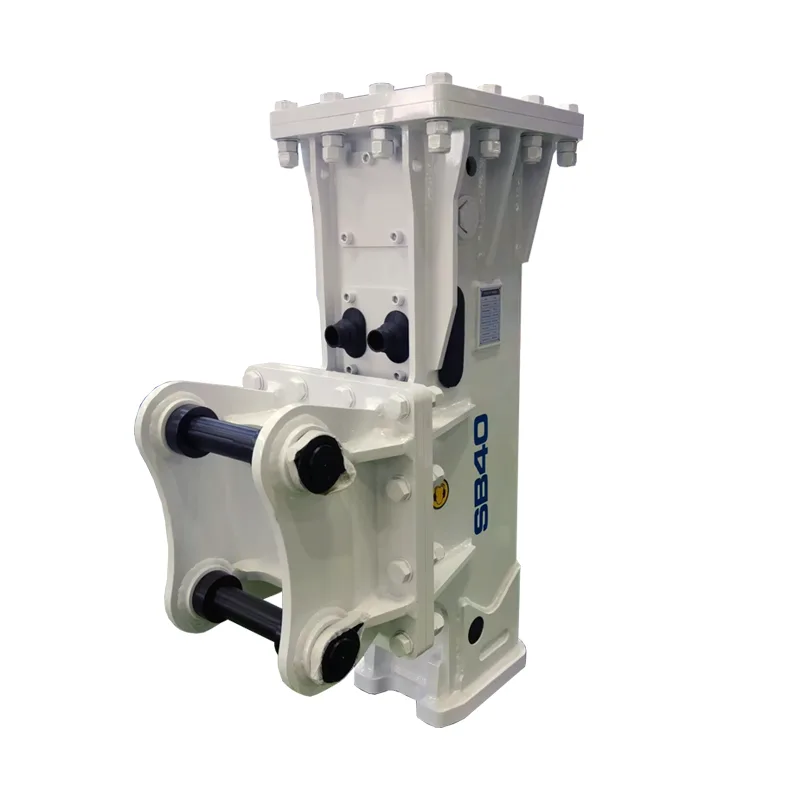
The TGEC excavator hydraulic post driver is a breaker-converted attachment in the Excavator Post Drivers range, built for fence installation, T-post driving, sign post work, and agricultural post setting. Unlike dedicated post drivers that come with their own hydraulic motor, this one is an adapter kit that bolts onto your existing hydraulic breaker and turns it into a post-pounding machine. You pull the breaker's standard chisel, slide on the guide tube and pounding cap assembly, and the breaker's piston does the rest—hammering the cap to drive posts straight into the ground. It leverages the breaker's existing hydraulic circuit and impact guts, so you get the power you need without the cost and complexity of a separate attachment.

We offer six models that cover excavators from 1.5 tons all the way up to 28 tons, with matched breaker classes from 150 kg to 1300 kg. The TG-PD80 is the compact option for mini excavators and small breakers—60 mm pounding cap, 78 kg kit weight, perfect for light fence and T-post work. The TG-PD120 and TG-PD160 step up to medium-duty mini excavators with 75 mm and 85 mm caps. The TG-PD220 and TG-PD280 are built for full-size machines with 95 mm and 110 mm caps for heavier posts. And the TG-PD350 is the big dog—125 mm cap for large-diameter posts on 20–28 ton excavators. Every kit includes the driver body, pounding cap, mounting hardware, and clear instructions. No welding, no modifications—just bolt it on and go.

Technical Specifications

ModelTG-PD80TG-PD120TG-PD160TG-PD220TG-PD280TG-PD350
Excavator Class1.5–2.5 T2.5–4.0 T4.0–7.0 T7.0–12.0 T12.0–20.0 T20.0–28.0 T
Matched Breaker ClassUp to 150 kg / 331 lb150–250 kg / 331–551 lb250–400 kg / 551–882 lb400–600 kg / 882–1323 lb600–900 kg / 1323–1984 lb900–1300 kg / 1984–2866 lb
Kit Weight78 kg / 172 lb112 kg / 247 lb158 kg / 348 lb215 kg / 474 lb275 kg / 606 lb340 kg / 750 lb
Pounding Cap Diameter60 mm / 2.4 in75 mm / 3.0 in85 mm / 3.3 in95 mm / 3.7 in110 mm / 4.3 in125 mm / 4.9 in

Kit weight excludes the hydraulic breaker. Both excavator class and matched breaker class must fall within the specified range for proper compatibility.

How It Works

The TGEC excavator hydraulic post driver works by turning your existing breaker into a post-pounding attachment. You pull the breaker's standard chisel or tool, then install the post driver kit—guide tube, pounding cap, and mounting hardware—in its place. When you fire up the breaker, its hydraulic piston slams into the pounding cap at the top of the guide tube, transferring that impact energy straight down through the cap to the top of the post sitting below. The guide tube keeps the post lined up and prevents the cap from glancing off, so all that energy goes right down the post axis. The operator controls impact frequency and force using the breaker's existing cab controls, so you can dial it in for different posts, soil conditions, and depths. Once the post is set, you stop the breaker, lift the attachment, and move to the next one.

Application Scenarios

  • Fence installation: Drive wooden, steel and vinyl fence posts for agricultural, residential and commercial fencing projects.

  • T-post installation: Drive steel T-posts for agricultural fencing, wildlife management and erosion control.

  • Sign post installation: Install steel sign posts for road signs, property markers and directional signage.

  • Agricultural post work: Drive posts for livestock fencing, crop protection, barn construction and farm infrastructure.

  • Landscaping: Install posts for landscape edging, tree support and garden structures.

  • Construction fencing: Drive posts for temporary construction fencing, site security and perimeter control.

  • Municipal work: Install posts for traffic control, utility markers and public infrastructure projects.

Installation & Mounting

Getting the post driver on your excavator is straightforward. Start by removing the breaker from the excavator's boom or quick coupler, then pull the standard chisel or tool out of the breaker's front head. Mount the post driver kit—guide tube, pounding cap, and hardware—onto the breaker's front head in place of the chisel, using the provided bolts and instructions. Make sure the guide tube and cap align properly with the breaker piston so impact energy transfers cleanly. Once the kit is snug on the breaker, reattach the breaker to the excavator and reconnect the hydraulic hoses to the auxiliary circuit. Before you start driving, double-check that the kit is secure, the cap is aligned with the tube, and the breaker cycles properly with the driver installed. The whole job usually takes 15–30 minutes with basic hand tools, and you can pull the kit off just as fast to switch back to demolition work.

Wear & Service

The main wear parts on the post driver are the pounding cap, the guide tube, and the mounting hardware. The pounding cap takes a beating from the breaker piston—check it regularly for flattening, cracking, or deformation, and replace it when it starts to lose shape or causes the post to drive crooked. The guide tube can get bent or worn at the post entry point; if it's damaged, swap it out to keep posts straight. Keep an eye on the bolts, pins, and clips that hold everything together—tighten or replace them if they get loose or worn. Your hydraulic breaker still needs its regular maintenance too: grease the front head and bushings, change hydraulic fluid and filters on schedule, and check the piston and seals. Since the post driver mounts to the breaker, any wear on the breaker's front head or tool retainer can mess with the driver's fit and performance, so stay on top of that as well.

Dealer & Bulk Orders

TGEC supplies excavator hydraulic post drivers to fence contractors, agricultural equipment dealers, construction rental companies, municipal maintenance departments, and OEM partners worldwide. We offer dealer and bulk-supply programs based on model selection, order volume, breaker compatibility, and project needs. OEM and private-label arrangements can also be explored based on partner requirements and production feasibility.

Request a Quote

Ready to order? Just give us your excavator make and model, operating weight, breaker make and model and weight class, which post driver model you're looking at, the typical post size and material, and your main application. We'll confirm the fit, recommend the right cap and mounting hardware, and send you a factory-direct quote with delivery lead time.
Frequently Asked Questions

What is an excavator hydraulic post driver used for?+

An excavator hydraulic post driver is used to drive posts into the ground using the impact force of a hydraulic breaker converted into a post-driving attachment. It is commonly used for fence installation, including wooden, steel and vinyl posts for agricultural, residential and commercial fencing; T-post installation for agricultural fencing and wildlife management; sign post installation for road signs and property markers; agricultural post work for livestock fencing and farm infrastructure; landscaping for tree support and garden structures; construction site fencing for temporary security; and municipal work for traffic control posts and utility markers. The breaker-converted design allows contractors who already own hydraulic breakers to use them for post driving without purchasing a dedicated post driver attachment.

How does an excavator post driver work?+

An excavator post driver works by mounting a guide tube and pounding cap assembly to an existing hydraulic breaker in place of the breaker's standard chisel or tool. When the breaker is activated, its hydraulic piston strikes the pounding cap at the top of the guide tube, transferring impact energy through the cap to the top of the post positioned below. The guide tube keeps the post aligned and prevents the cap from glancing off, ensuring impact energy is directed straight down the post axis. The operator controls the breaker's impact frequency and force using the existing breaker controls in the cab, allowing adjustment for different post types, soil conditions and installation depths. When the post reaches the desired depth, the operator stops the breaker and lifts the attachment for the next post.

What types of posts can an excavator post driver be used with?+

An excavator post driver can be used with a wide range of post types, including wooden posts such as treated pine, cedar and hardwood fence posts; steel posts including T-posts, U-posts, channel posts and round steel posts; vinyl and composite fence posts; sign posts for road and property signage; and agricultural posts for livestock fencing and crop protection. The appropriate pounding cap diameter should be selected based on the post type and top diameter — smaller caps (60–75 mm) are suitable for T-posts and small steel posts, while larger caps (95–125 mm) are needed for heavy wooden posts and large-diameter sign posts. The post driver can also be used with post adapters or sleeves for specialized post types, though these may need to be sourced separately. Posts with irregular or damaged tops may require preparation before driving to ensure proper cap contact and alignment.

Can an excavator post driver be used for fence posts?+

Yes, an excavator post driver is well-suited for fence post installation and is one of its primary applications. It can drive wooden, steel, vinyl and composite fence posts for agricultural, residential and commercial fencing projects, with the breaker's impact force providing consistent driving power even in hard or rocky soil. The guide tube ensures posts are driven straight and plumb, reducing the need for post-straightening after installation. For vinyl and composite posts, the pounding cap distributes impact force evenly across the post top to avoid material damage. Fence contractors commonly use the breaker-converted design because it allows quick conversion between demolition and post-driving tasks, making the attachment versatile for mixed job sites.

Can a mini excavator use a hydraulic post driver?+

Yes, mini excavators can use a hydraulic post driver, provided the mini excavator is equipped with a compatible hydraulic breaker that falls within the post driver kit's matched breaker class. The TG-PD80 is specifically designed for 1.5–2.5 ton mini excavators with breakers up to 150 kg, featuring a 60 mm pounding cap and 78 kg kit weight for light fence and T-post work. The TG-PD120 fits 2.5–4.0 ton mini excavators with 150–250 kg breakers, and the TG-PD160 fits 4.0–7.0 ton machines with 250–400 kg breakers. Mini excavator operators should verify that the machine's lift capacity at working reach can safely handle the combined weight of the breaker, post driver kit and post being driven, particularly when working at full boom extension or on uneven terrain. The mini excavator's auxiliary hydraulic flow and pressure must also be sufficient to operate the breaker effectively, as the post driver relies on the breaker's impact performance.

What hydraulic requirements should be checked before installing a post driver?+

Before installing a post driver, the primary hydraulic requirement is that the excavator's auxiliary hydraulic circuit can properly operate the hydraulic breaker to which the post driver kit mounts. Since the post driver is a breaker-converted kit, it does not have its own hydraulic requirements — instead, the breaker's hydraulic specifications must be met. Verify that the excavator's auxiliary hydraulic flow and pressure fall within the breaker manufacturer's specified range, as insufficient flow or pressure will result in weak impact force and poor driving performance. Check that the auxiliary circuit has a control valve for both impact modes, that hoses are properly rated, and that the reservoir and cooler can handle continuous operation. For selection guidance, refer to the How to Choose an Excavator Post Driver guide.

How is a post driver mounted to an excavator?+

A post driver is mounted to an excavator by first attaching it to a compatible hydraulic breaker, then mounting the breaker to the excavator's boom or quick coupler. Remove the breaker's standard chisel or tool from the front head, then install the post driver kit — guide tube, pounding cap and mounting hardware — in its place, ensuring all bolts and pins are properly torqued and secured. Reattach the breaker to the excavator's boom or quick coupler and reconnect the hydraulic hoses to the auxiliary circuit. Before operation, verify that the kit is securely mounted, the pounding cap is aligned with the guide tube, and the breaker operates correctly. The entire process typically takes 15–30 minutes with basic hand tools, and the kit can be removed just as quickly to restore the breaker to demolition function.

Can an excavator post driver be used for T-post installation?+

Yes, an excavator post driver can be used for T-post installation, and T-post driving is one of its common applications, particularly for mini excavator models. Steel T-posts are widely used in agricultural fencing, wildlife management and erosion control, and the post driver's impact force provides consistent driving power for installing T-posts in various soil conditions. The smaller pounding cap diameters (60–75 mm) on the TG-PD80 and TG-PD120 models are well-suited for T-post tops, providing proper contact and alignment without damaging the post. For high-volume T-post installation, the breaker-converted design allows rapid post driving with the operator controlling impact force from the cab, significantly reducing manual labor compared to hand-held post drivers. When driving T-posts, the operator should ensure the post is properly aligned in the guide tube and that the pounding cap contacts the T-post top evenly to prevent post bending or cap glancing.

What is the difference between a post driver, post pounder, and post knocker?+

Post driver, post pounder and post knocker are essentially synonymous terms for the same type of attachment — a device that uses impact force to drive posts into the ground. The terminology varies by region and industry: "post driver" is the most common and general term, widely used in construction and agricultural equipment; "post pounder" is commonly used in agricultural and fencing contexts, emphasizing the pounding action; and "post knocker" is a colloquial term used in some regions, particularly in the UK and Australia. All three terms refer to attachments that use impact energy — whether from a converted hydraulic breaker, a dedicated hydraulic motor, or a mechanical weight — to drive posts. TGEC markets this attachment as the Excavator Hydraulic Post Driver, with post pounder and post knocker treated as search aliases rather than separate products. There is no meaningful mechanical or functional difference between the three terms in the context of excavator-mounted post-driving attachments.

When is a vibrating post driver configuration appropriate?+

A vibrating post driver configuration is appropriate when posts need to be installed in sensitive soil conditions or when impact driving could damage the post or surrounding infrastructure. Vibratory post drivers use high-frequency, low-amplitude vibration rather than impact force, which can be more effective in sandy or loose soils and for sheet piles, H-piles or sensitive urban applications. However, the TGEC excavator hydraulic post driver is an impact-based, breaker-converted design that uses the breaker's impact force rather than vibration and does not offer a vibratory configuration. For applications where vibratory driving is preferred, a dedicated vibratory post driver or pile driver would be more appropriate. The impact-based TGEC design is best suited for standard fence posts, T-posts, sign posts and agricultural posts where impact driving is the standard and most cost-effective method.

What maintenance does an excavator post driver require?+

An excavator post driver requires regular inspection and maintenance of both the post driver kit and the hydraulic breaker to which it mounts. For the kit, inspect the pounding cap for flattening or cracking, the guide tube for bending or wear, and all mounting hardware for looseness or damage, replacing worn components as needed. For the hydraulic breaker, follow the manufacturer's maintenance schedule including regular grease application to the front head and bushings, hydraulic fluid and filter changes, and inspection of the piston, seal kit and front head. Since the post driver mounts to the breaker, any wear or damage to the breaker's front head or tool retaining mechanism can affect the post driver's fit and performance and should be addressed promptly. Keep the guide tube and pounding cap clean of dirt and debris, and store the kit in a dry location when not in use.

What should operators inspect when a post driver shows reduced performance?+

When a post driver shows reduced performance — slower driving, posts not reaching depth, or inconsistent force — operators should inspect several potential causes. Check the pounding cap for excessive flattening or cracking, the guide tube for bending or damage, and all mounting hardware for tightness, as any of these can reduce impact transfer efficiency. Check the hydraulic breaker for proper operation including adequate flow and pressure, correct settings, proper grease levels, and worn piston or front head components, as a poorly performing breaker directly reduces post driver performance. Consider soil conditions and post type — hard or rocky soil, frozen ground, or oversized posts may require a larger breaker or model, or pre-drilling may be necessary. If performance issues persist after inspection and maintenance, consult the breaker manufacturer or TGEC technical support.
Please make sure to include your phone number with the country code (e.g., +86 for China, +1 for the United States).