Product Overview
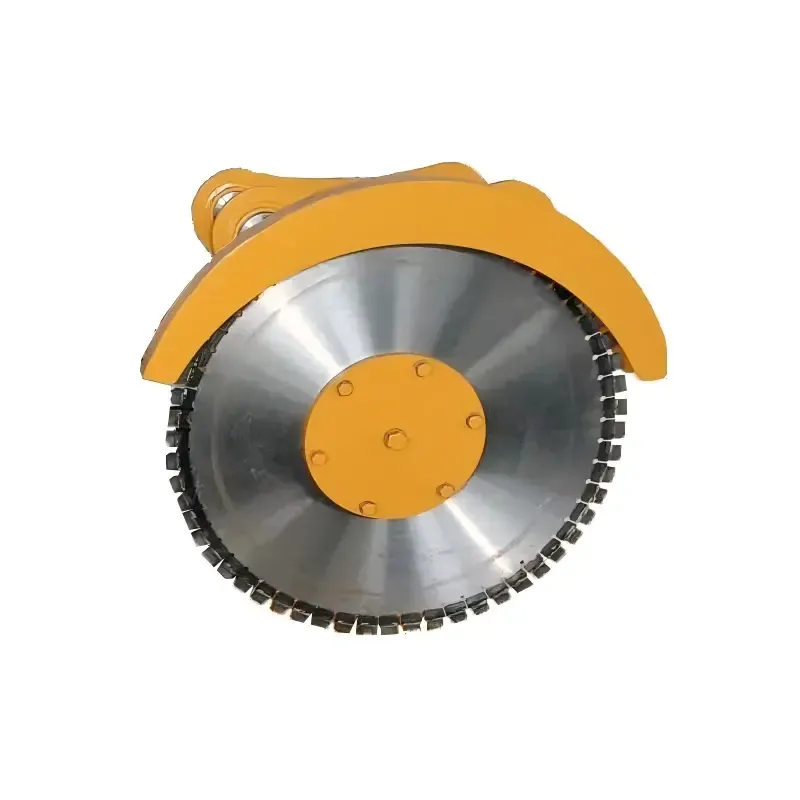
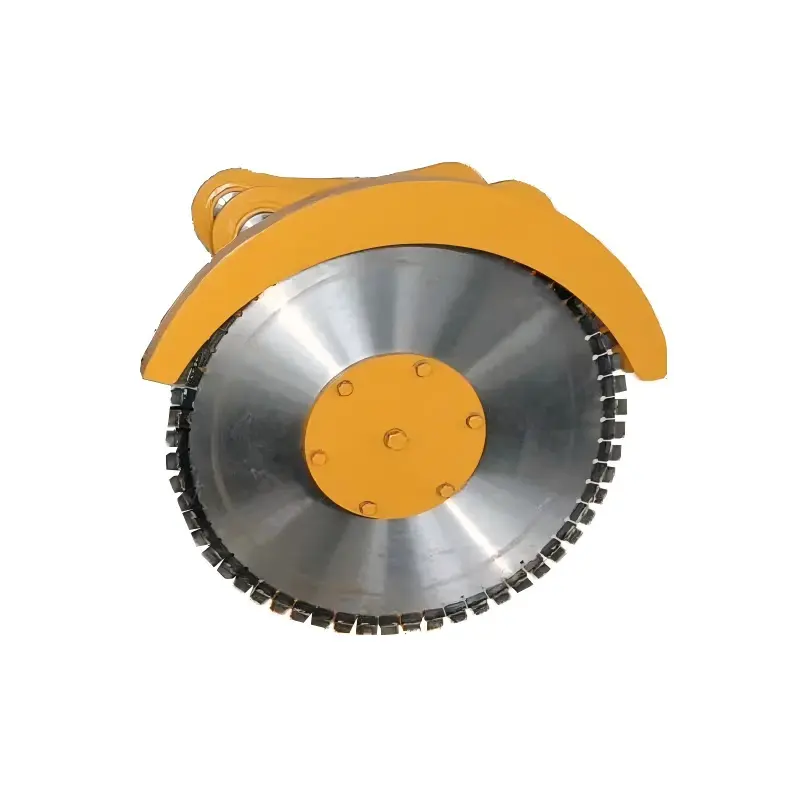
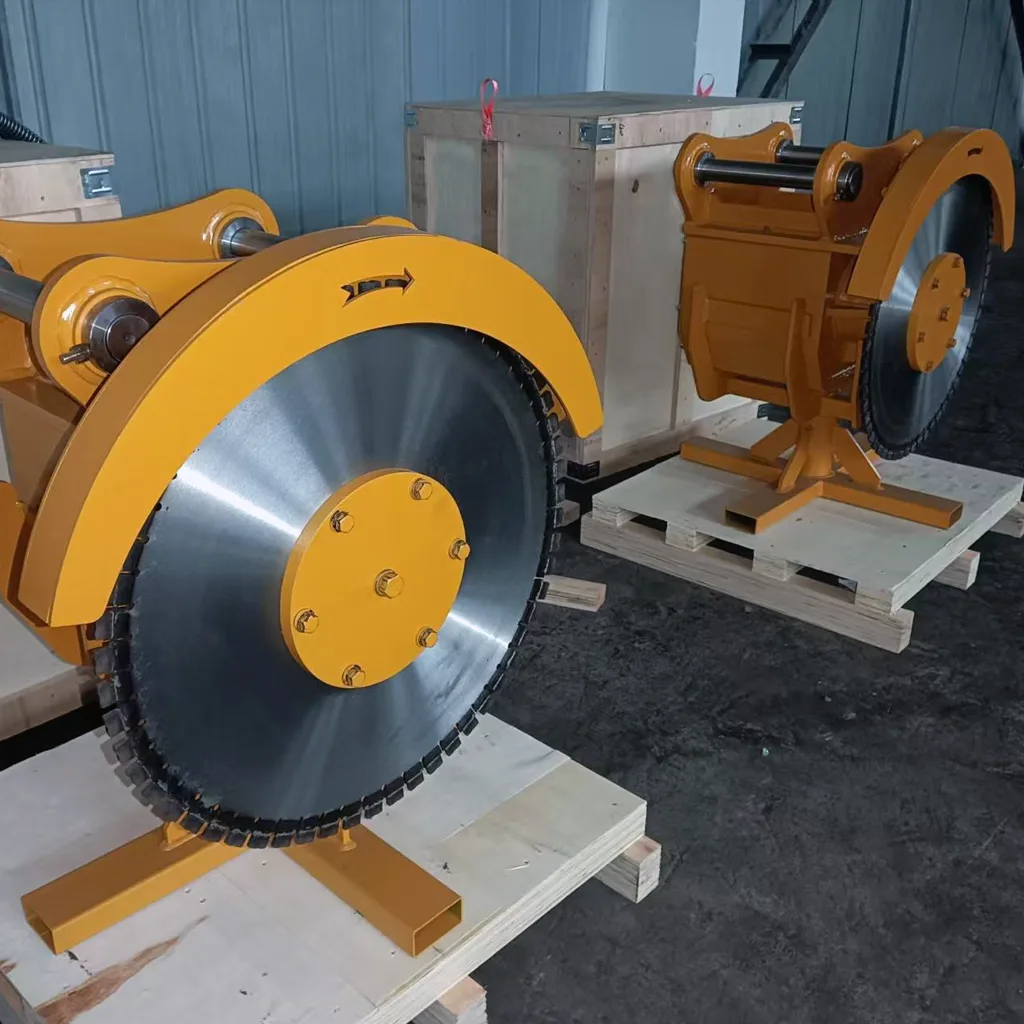
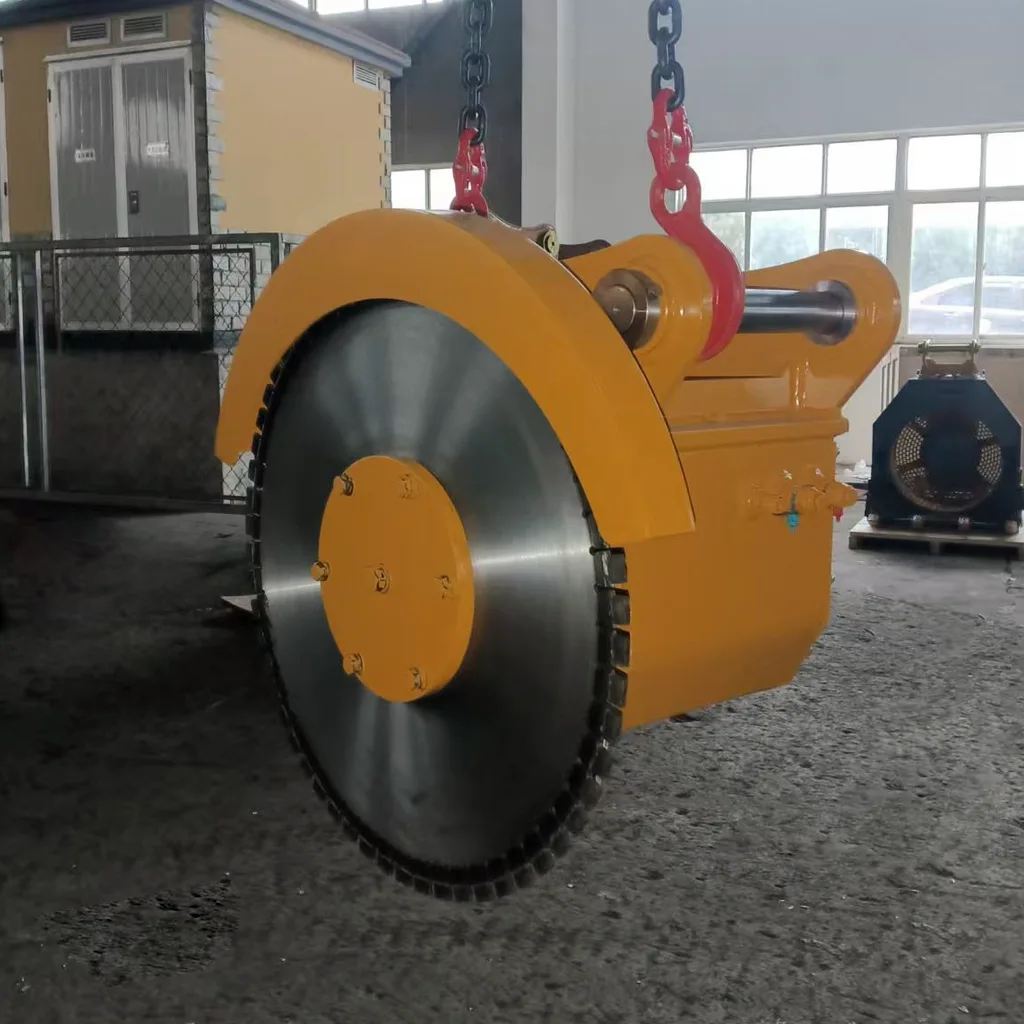
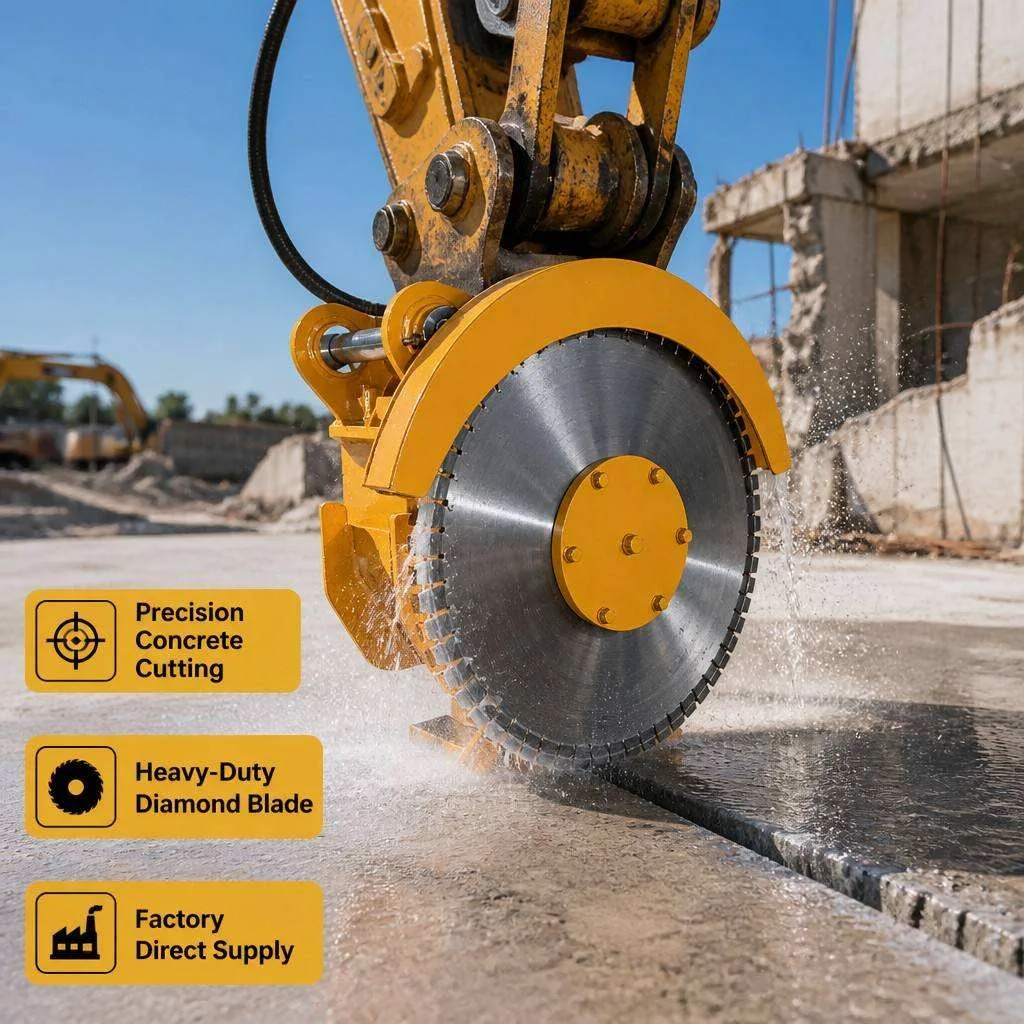
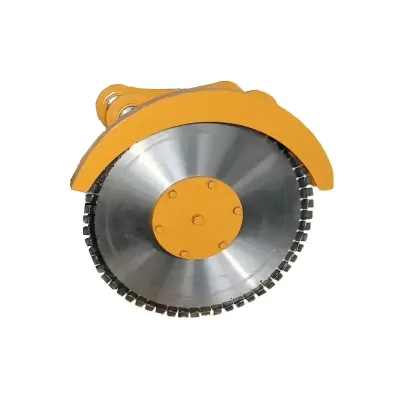
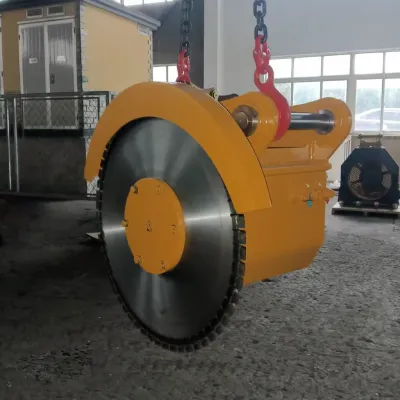
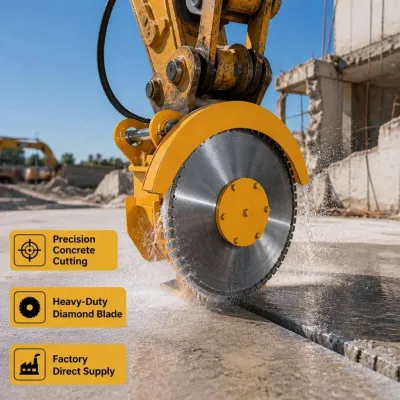
This rock saw bolts onto your excavator boom where the bucket would normally go. A high-torque hydraulic motor spins a large circular blade, letting you make clean, straight cuts through hard materials with far less vibration than a breaker or blasting. The boom gives you precise control over positioning, downforce, and feed rate, while the operator adjusts hydraulic flow to dial in cutting speed. It's a go-to tool for dimension stone work, concrete cutting, trenching, road jobs, and structural demolition where clean edges and controlled depth matter.
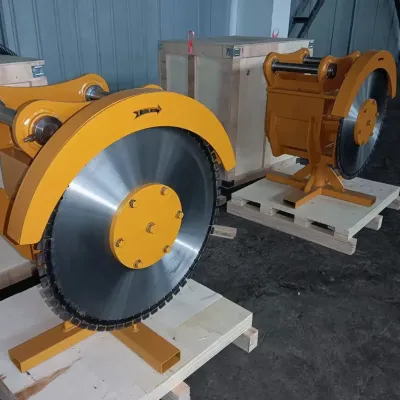
Five models cover just about any excavator size and cutting need you'll run into. The TG-RS60 fits 6 to 9-ton mini excavators with 600 to 1200 mm discs, the TG-RS150 handles 10 to 18-ton machines with 1000 to 1800 mm discs, the TG-RS200 runs on 20 to 27-ton carriers with 2000 to 2600 mm discs, the TG-RS300 is built for 30 to 40-ton excavators with 2800 to 3600 mm discs, and the TG-RS200D gives you a double-disc setup for parallel cutting on 20 to 27-ton machines. They're part of the TGEC excavator rock saws lineup, each one engineered to hold up to the demands of professional hard-material cutting.
Technical Specifications
Five models cover excavators from 6 to 40 tons. All dimensions and performance figures are listed in metric with imperial equivalents.
| Parameter | TG-RS60 | TG-RS150 | TG-RS200 | TG-RS300 | TG-RS200D |
|---|---|---|---|---|---|
| Matching Excavator Class | 6–9 t (6.6–9.9 ton) | 10–18 t (11–19.8 ton) | 20–27 t (22–29.7 ton) | 30–40 t (33–44 ton) | 20–27 t (22–29.7 ton) |
| Saw Disc Diameter | 600–1200 mm (23.6–47.2 in) | 1000–1800 mm (39.4–70.9 in) | 2000–2600 mm (78.7–102.4 in) | 2800–3600 mm (110.2–141.7 in) | 2000–2600 mm (78.7–102.4 in) |
| Cutting Width | 5–9 mm (0.2–0.35 in) | 10–14 mm (0.4–0.55 in) | 12–16 mm (0.47–0.63 in) | 14–18 mm (0.55–0.71 in) | 12–16 mm (0.47–0.63 in) |
| Rated Pressure | 20–25 MPa (2900–3625 psi) | 20–25 MPa (2900–3625 psi) | 30 MPa (4350 psi) | 30 MPa (4350 psi) | 30 MPa (4350 psi) |
| Attachment Weight | 400 kg (882 lb) | 600 kg (1323 lb) | 800 kg (1764 lb) | 1000 kg (2205 lb) | 1000 kg (2205 lb) |
| Double Disc Configuration | — | — | — | — | Standard |
Table data is for reference only. Actual specifications may vary based on the final configuration. Please contact the TianGe technical team for details.
How It Works
Pressurized hydraulic fluid from your excavator's auxiliary circuit feeds into a high-torque motor mounted on the saw frame, spinning the motor shaft. That shaft connects directly to the circular blade hub, transferring torque to the blade. As the blade turns at controlled speed, its cutting edge—typically diamond-impregnated segments for hard, abrasive materials or carbide-tipped teeth for softer stuff—cuts through the material. The excavator boom gives you downforce and feed control, pushing the blade into the cut at a steady rate, while the operator adjusts hydraulic flow to fine-tune cutting speed. Depending on the setup and job, water or air cooling can be used to keep blade temperature in check and knock down dust.
Application Scenarios
Quarrying and dimension stone: Cut granite, marble, limestone and other stone blocks with precise, controlled cuts that preserve material quality and reduce waste from explosive fracture.
Concrete cutting and demolition: Cut reinforced concrete slabs, walls, foundations and structural elements during building demolition, renovation and foundation work where controlled cutting minimizes vibration and dust.
Trenching and pipeline construction: Cut rock and concrete trenches for pipeline installation, utility work and underground infrastructure where clean, straight cut walls are required.
Road and highway construction: Cut asphalt and concrete pavement for road reconstruction, expansion joint installation, utility access cuts and highway repair projects.
Mining and underground excavation: Cut hard ore and rock in mining operations and tunnel headings where controlled cutting reduces flyrock and ground vibration compared to blasting or breaking.
For more detailed application guidance, see What Can an Excavator Rock Saw Be Used for on Construction and Quarrying Jobs?.
Installation & Mounting
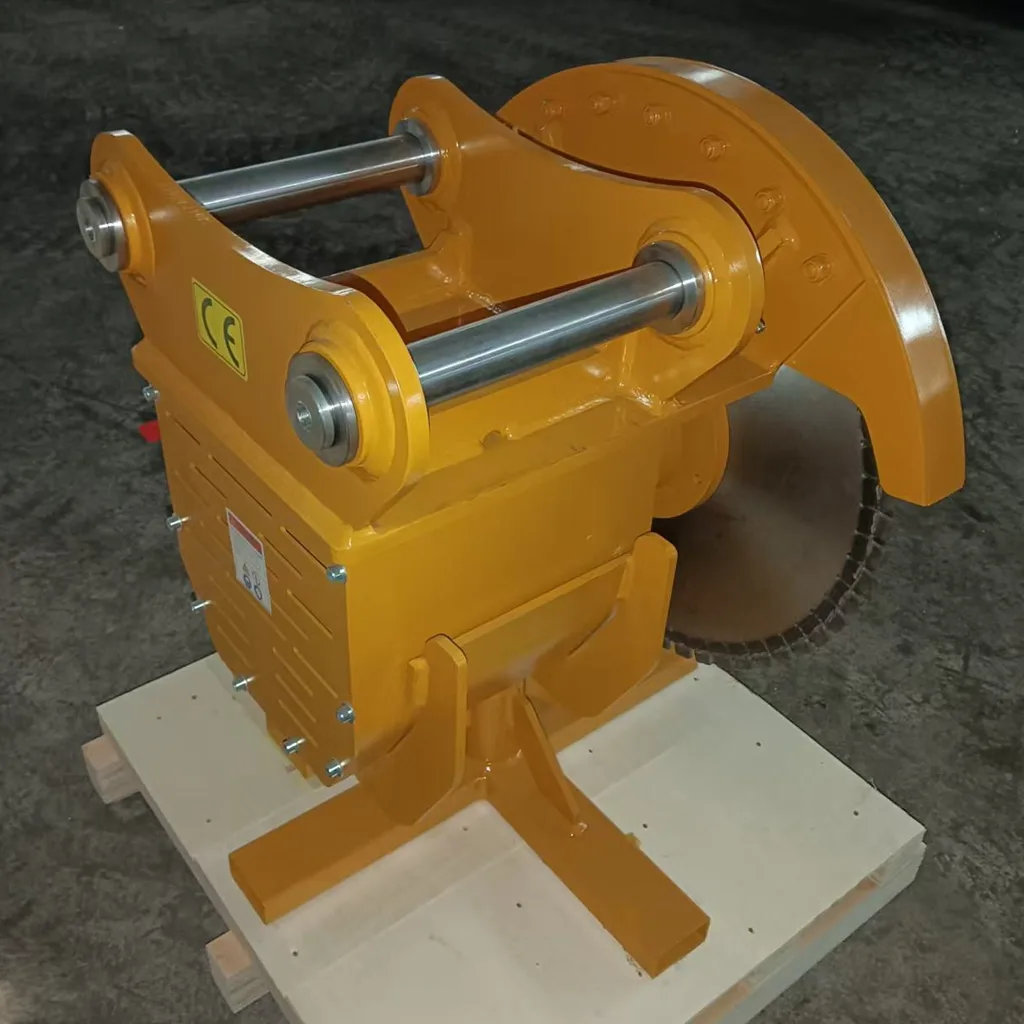
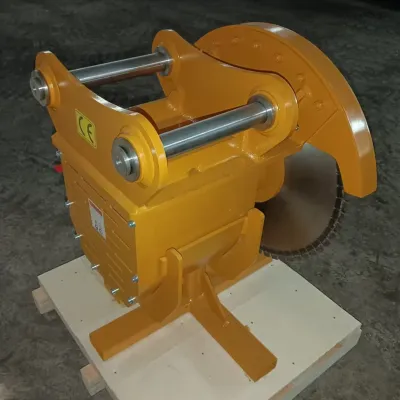
The rock saw mounts to your excavator boom in place of the bucket, using a custom bracket machined to match your machine's pin spacing, pin diameter, and linkage geometry. The bracket ties into both the boom pin and the bucket linkage, and the auxiliary hydraulic lines connect to the unit's manifold to supply flow for the saw motor. When ordering, provide your excavator make and model, operating weight, pin-to-pin spacing, pin diameter, stick width, and auxiliary hydraulic flow and pressure. The unit can also be configured for mechanical or hydraulic quick couplers—just specify your coupler type. For a full selection framework covering machine matching, material, and cutting requirements, check out How to Choose the Right Excavator Rock Saw for Your Project.
Wear Parts & Service
The main wear items are the cutting blade or segments, the hydraulic motor, the drive bearings, and the hydraulic hoses. Check the blade regularly for wear, segment loss, or cracking, and replace or re-tip it when cutting quality drops. Worn or damaged blades cause rough cuts, extra vibration, and strain on the hydraulic motor. Keep an eye on the hydraulic motor and drive bearings for leaks, unusual noise, or excessive play during routine checks. Inspect hydraulic hoses for abrasion, cracking, or leaks at the fittings, and replace any that show damage. Grease the mounting bracket pins and bushings according to the maintenance schedule and check them for wear. TGEC can supply genuine replacement blades, blade segments, seal kits, and wear components for all five models.
Request a Quote — Excavator Hydraulic Rock Saw
To get a quote for the TGEC hydraulic rock saw, send us your excavator's operating weight, auxiliary hydraulic flow (L/min) and pressure (MPa), pin-to-pin spacing and pin diameter, and quick-coupler type if you're using one. Let us know which model you're evaluating—TG-RS60, TG-RS150, TG-RS200, TG-RS300, or the double-disc TG-RS200D—along with the cutting depth you need and the primary material you'll be cutting (granite, limestone, concrete, asphalt, etc.). That way we can recommend the right blade segment type. Once we have your specs, our engineering team will check compatibility with your excavator, confirm the correct mounting bracket, and send you a detailed quote with pricing and lead time.