Product Overview
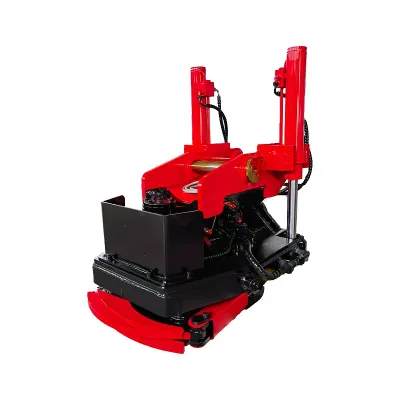
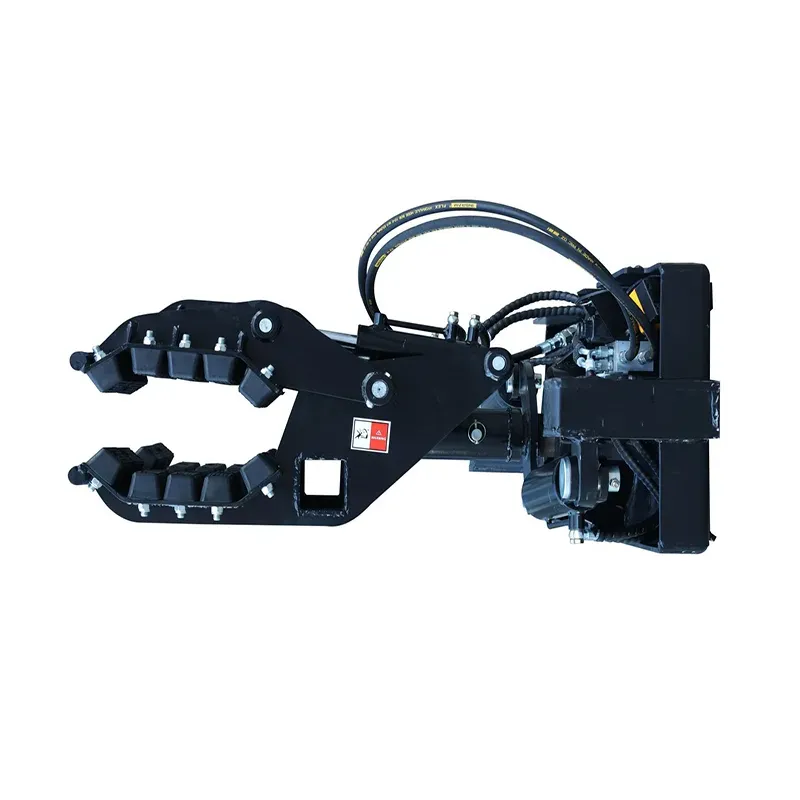
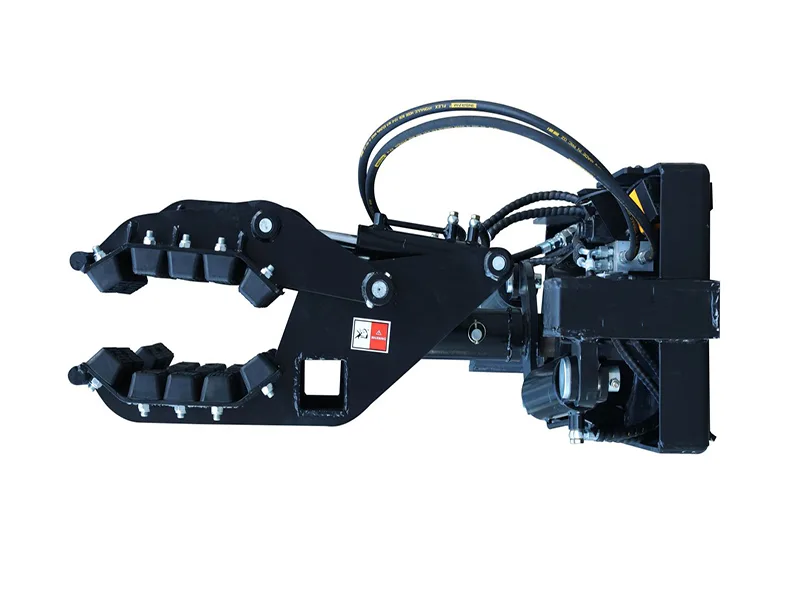
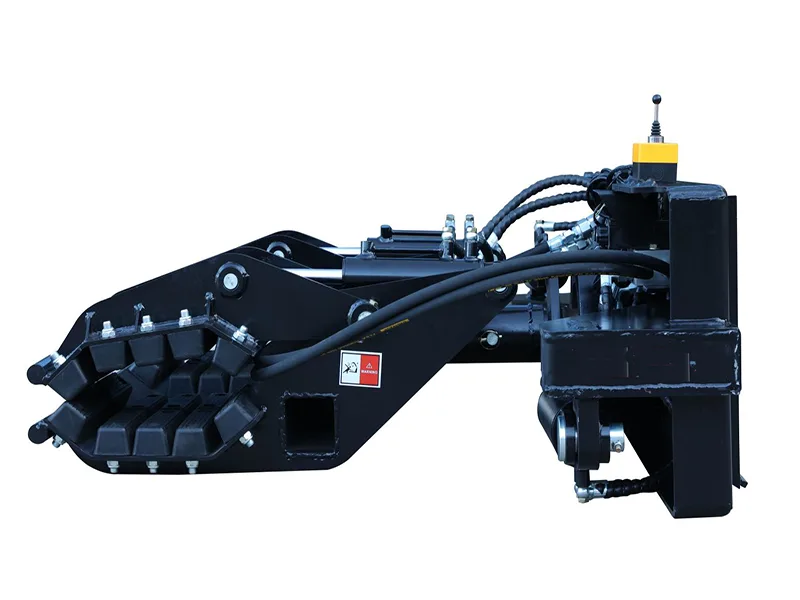
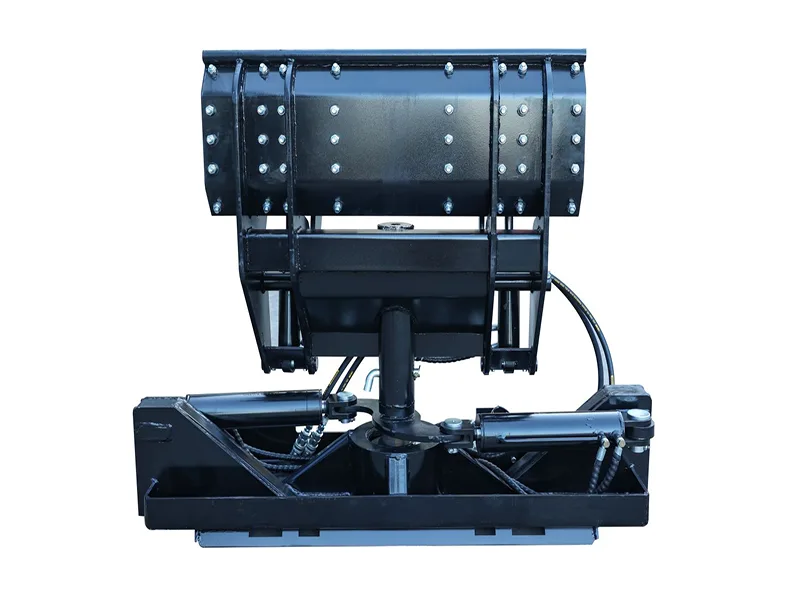
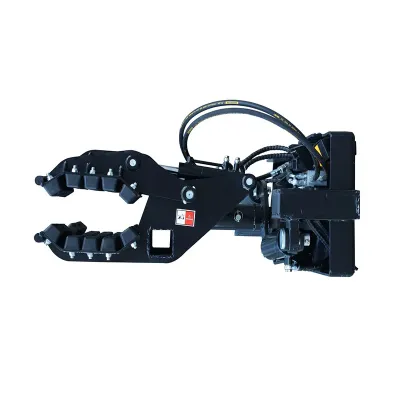
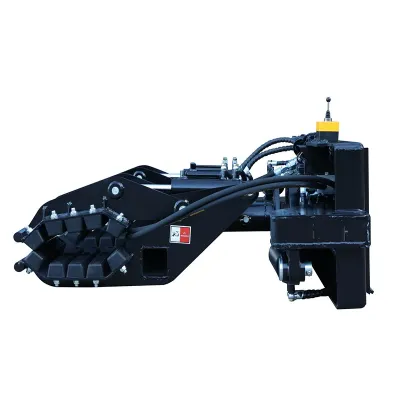
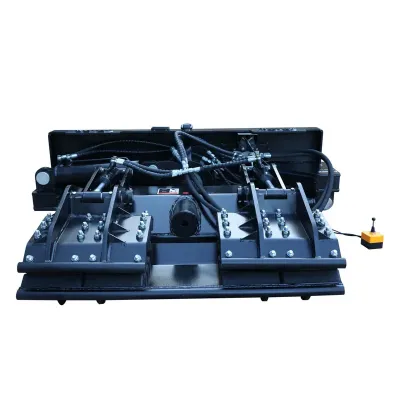
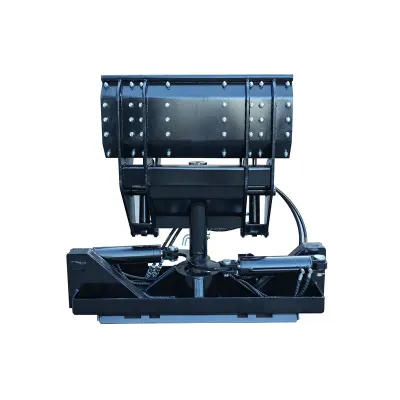
Utility pole installation often comes down to one question: how do you grip, lift, and position a heavy pole accurately without a truck-mounted derrick? TGEC's hydraulic pole setter answers that for skid steer and compact track loader operators. It clamps poles securely across a wide diameter range, rotates them into vertical alignment, and holds them steady while crews backfill—all without repositioning the carrier. Power line contractors, telecom crews, and municipal streetlight teams working in tight rights-of-way, residential lots, or off-road corridors will find this attachment provides a practical solution for pole handling in confined work areas.
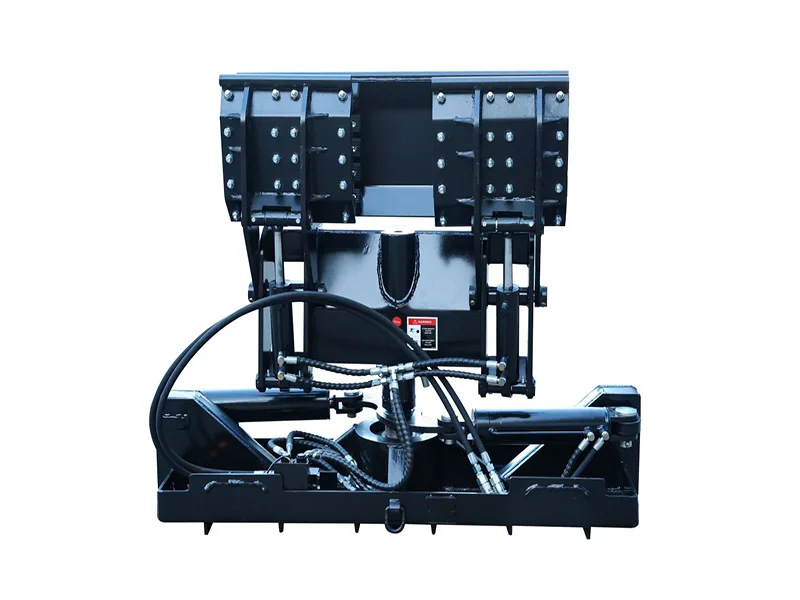
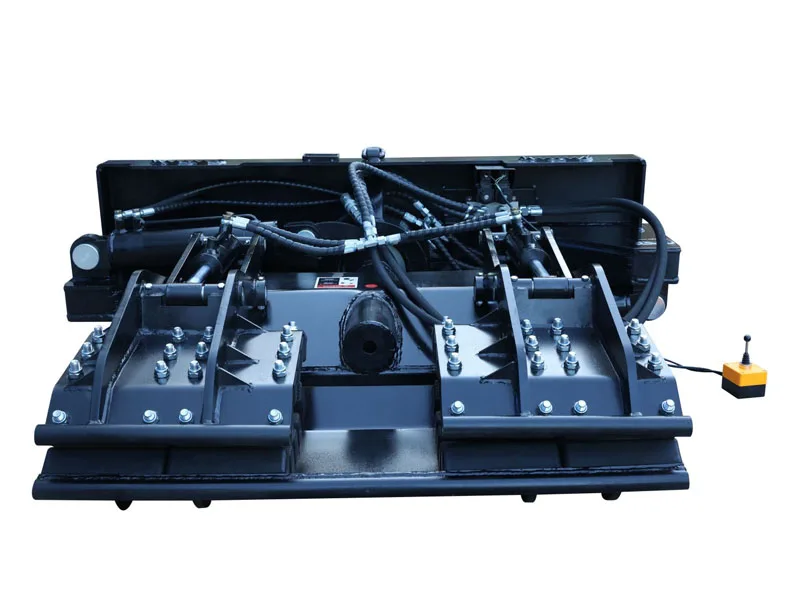
Two models cover standard to heavy-duty work. The TG-PS540 delivers a 540 kg safe working load with a 75–355 mm clamping range, suited for distribution wood poles and streetlight standards. The TG-HDPS610 steps up to 610 kg SWL and a 125–520 mm opening, handling larger concrete poles and heavy steel sections. Both share the MP1140 universal quick-attach plate and are specified for 16 MPa at 60 L/min from the carrier's auxiliary circuit. For additional configurations, the full line of skid steer pole setters from TGEC covers custom and specialized setups.
Technical Specifications
| Parameter | TG-PS540 | TG-HDPS610 |
|---|---|---|
| Full Model Designation | TG-PS540(75-355)-MP1140 | TG-HDPS610(125-520)-MP1140 |
| Safe Working Load (SWL) | 540 kg (1190 lb) | 610 kg (1345 lb) |
| Overall Dimensions (W×D×H) | 1500 × 1087 × 501 mm (59.1 × 42.8 × 19.7 in) | 1640 × 1328 × 505 mm (64.6 × 52.3 × 19.9 in) |
| Clamping Opening Range | 75–355 mm (3.0–14.0 in) | 125–520 mm (4.9–20.5 in) |
| Operating Pressure | 16 MPa (2320 psi) | 16 MPa (2320 psi) |
| Hydraulic Flow Required | 60 L/min (15.9 GPM) | 60 L/min (15.9 GPM) |
| Mounting Type | MP1140 Universal Quick-Attach | MP1140 Universal Quick-Attach |
| Product Weight | 326 kg (719 lb) | 605 kg (1334 lb) |
Table data is for reference only. Actual specifications may vary based on the final configuration. Please contact the TianGe technical team for details.
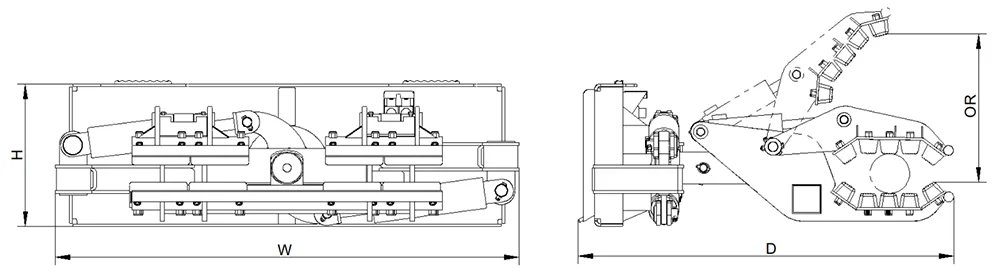
How It Works
The pole setter taps into the skid steer's auxiliary hydraulic circuit to drive both the clamping cylinder and the rotation motor. Open the jaws, position them around the pole, and close them to secure the load. Lift arms raise the pole from horizontal to vertical, while the rotation motor fine-tunes orientation—perfect for squaring a light pole base to anchor bolts or aligning a telecom pole with existing overhead lines. Once the pole is backfilled and compacted, the clamp releases and you move to the next hole.
Application Scenarios
Power distribution: Setting wood or composite poles for overhead lines in suburban and rural corridors. Handles standard distribution diameters along established rights-of-way.
Telecom and broadband: Installing poles for fiber and wireless network expansion. Rotation allows precise alignment for pole-top antennas and cabinets.
Streetlight and signals: Positioning metal light poles and signal mast arms in urban streets, parking lots, and interchange ramps. Compact skid steer footprint fits tight medians and sidewalks.
Pole replacement: Removing damaged poles and installing replacements during maintenance or storm response. Handles both extraction from and placement into the same hole.
Rural electrification: Reaching poles in off-road locations where derrick trucks can't travel. Navigates uneven terrain and narrow farm tracks along power corridors.
For a complete workflow overview, see our guide on setting utility poles with a skid steer, covering site prep, lifting technique, and crew safety.
Installation & Mounting
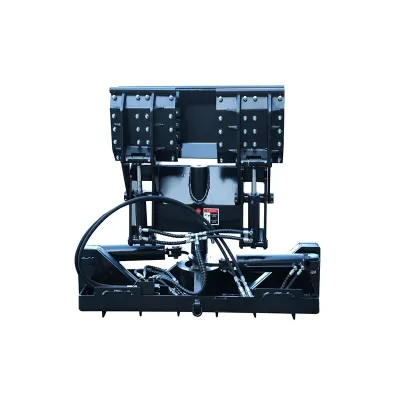
Mounting the pole setter is straightforward. The MP1140 universal quick-attach plate connects like any standard bucket—align, lower the locking pins, and verify engagement. Two hydraulic hose sets connect the clamp and rotation circuits to the machine's auxiliary couplers. Before first use, confirm your skid steer delivers 60 L/min at 16 MPa, and inspect all hose connections for tightness and leaks. Cycle the clamp and rotation through their full range without a load to verify smooth operation before picking up a pole.
Wear & Service
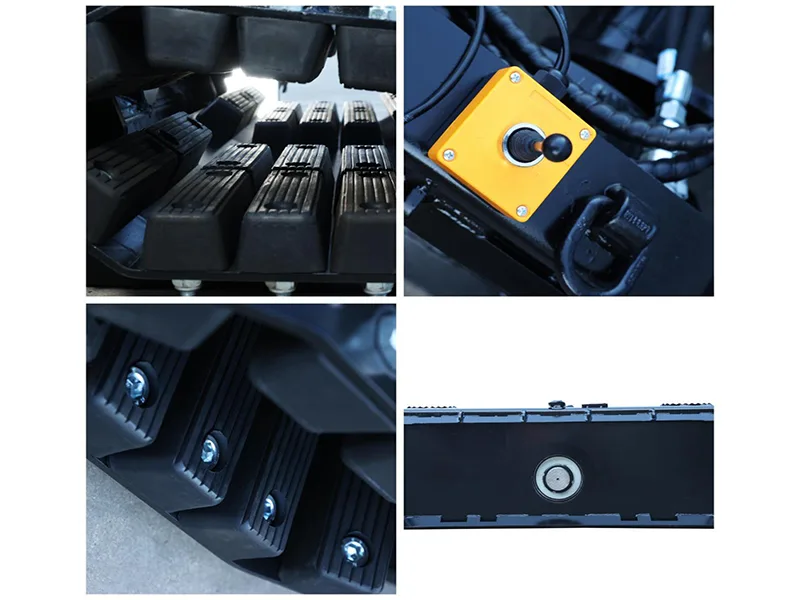
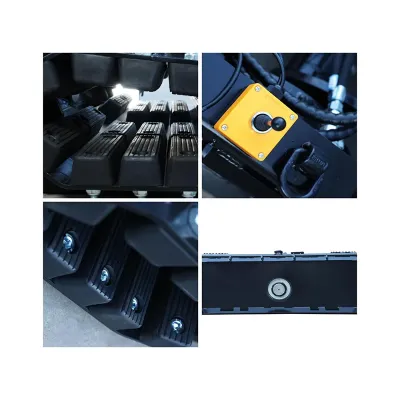
Key components to inspect include the clamping jaw pads, hydraulic cylinder seals, rotation motor, hydraulic hoses, and mounting frame pins. Inspect jaw pads regularly and replace them when grip begins to deteriorate. Check hoses for abrasion, cracks, or leaks—replace any damaged lines immediately. Grease all pivot pins and bushings per the maintenance schedule, and inspect the frame for cracks after heavy use. Replacement jaw pads and service parts are available on request for both models.
OEM & Bulk Supply
TGEC supplies hydraulic pole setters to utility dealers, attachment distributors, rental fleets, and contractors through direct factory and OEM programs. Volume pricing, long-term contracts, and private-label branding are open to qualified partners. Custom configurations—modified jaw profiles or hydraulic tuning—can be reviewed on a project basis. Contact our OEM sales team with your target configuration and estimated volume.
Which Pole Setter Fits Your Fleet—TG-PS540 or TG-HDPS610?
We'll need your skid steer model, auxiliary hydraulic flow and pressure, the pole diameters you handle most (wood, steel, or concrete), and whether you're leaning toward the TG-PS540 (75–355 mm clamp) or the TG-HDPS610 (125–520 mm clamp). We'll confirm compatibility, check your machine's ROC against the load, and reply with a quote and estimated ship date.