Welcome to the Official Website of TianGe Attachments.

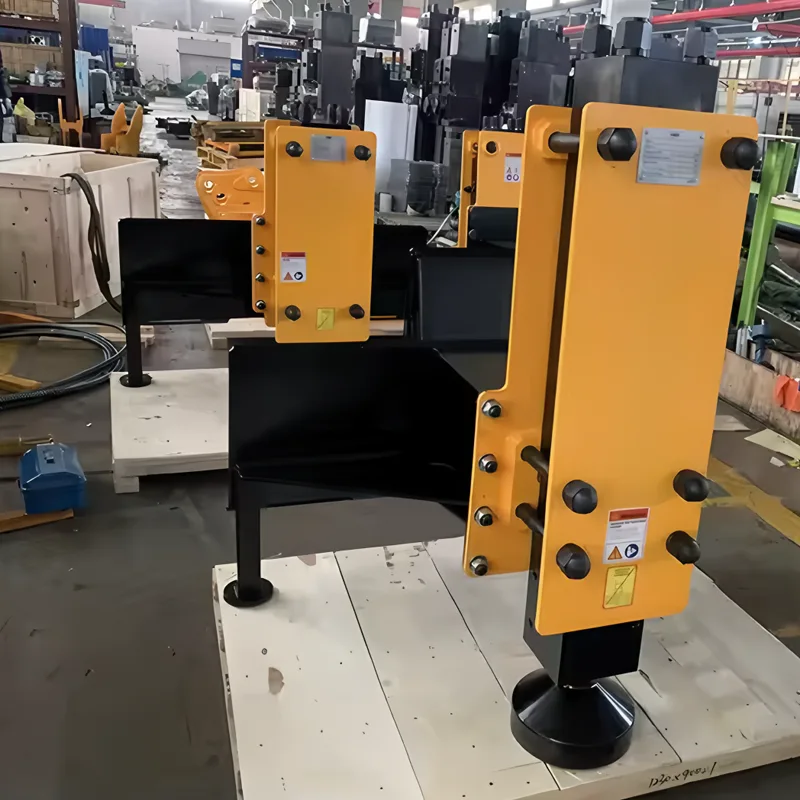
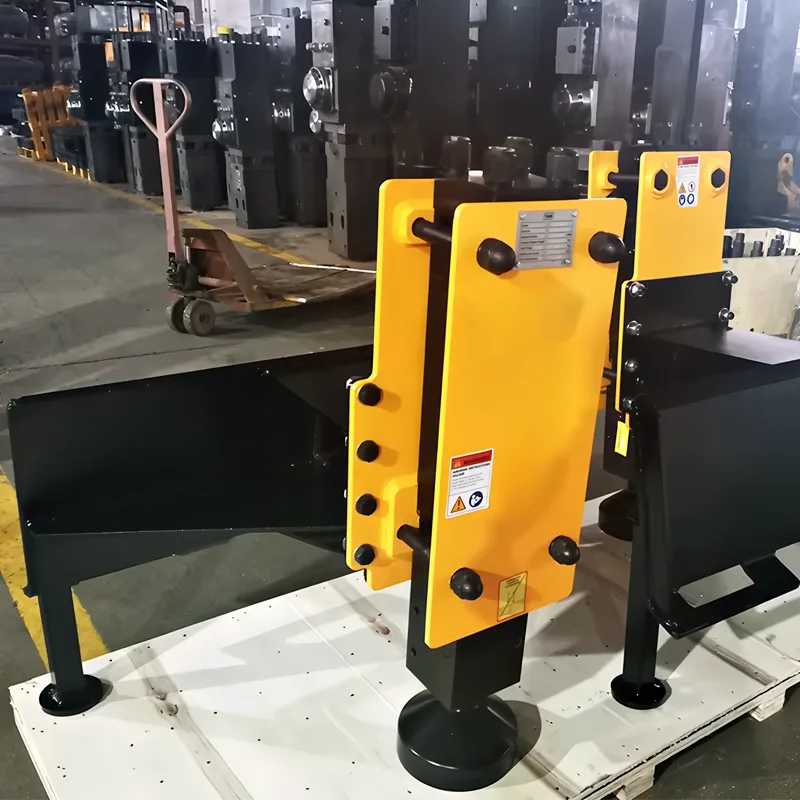
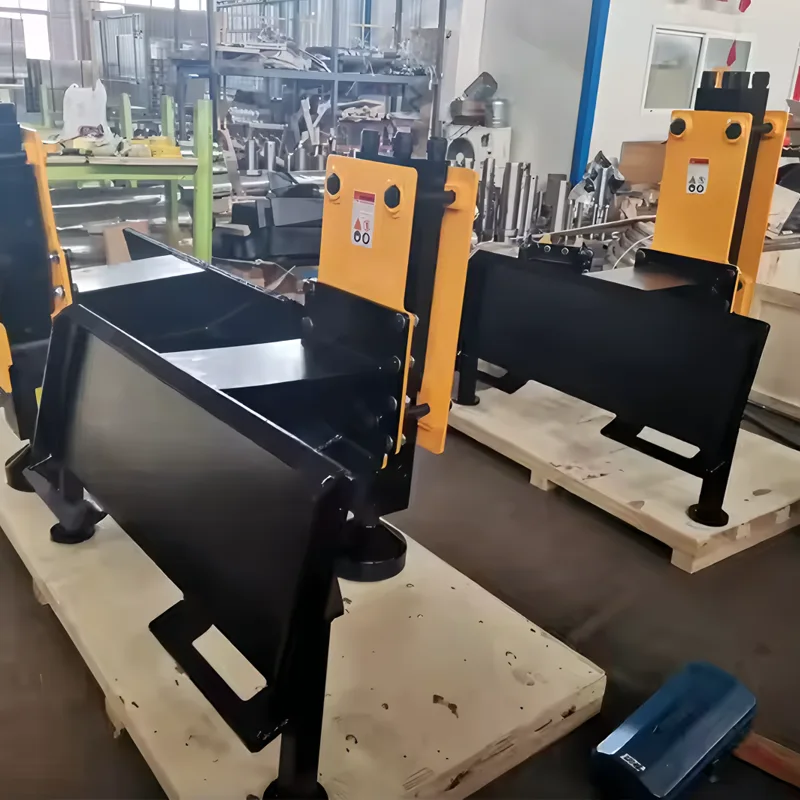
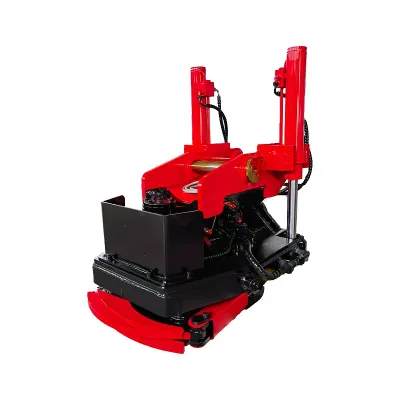
Skid Steer Hydraulic Post Driver

Skid Steer Hydraulic Post Driver

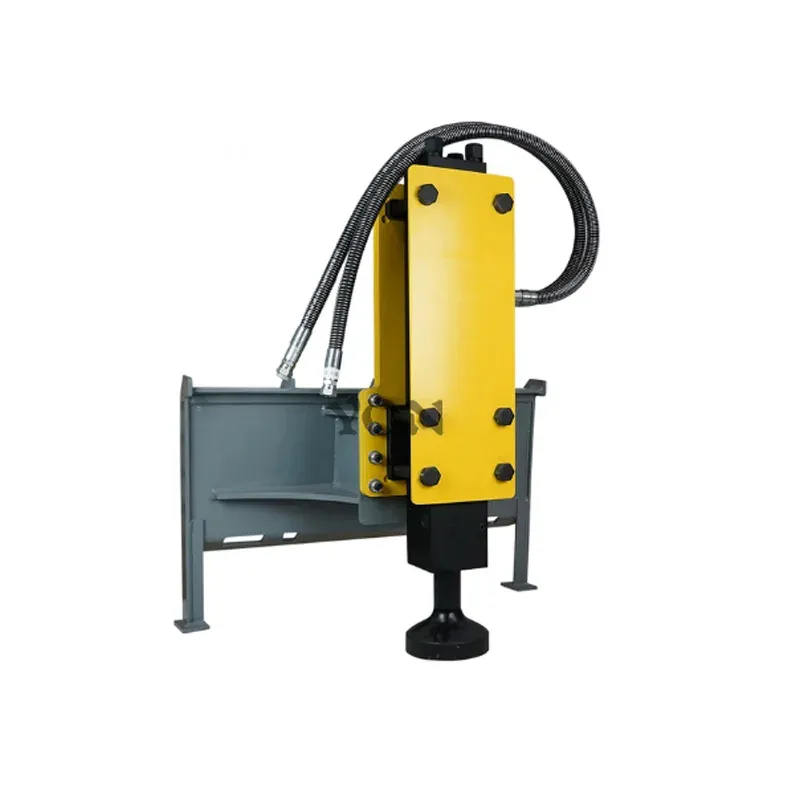
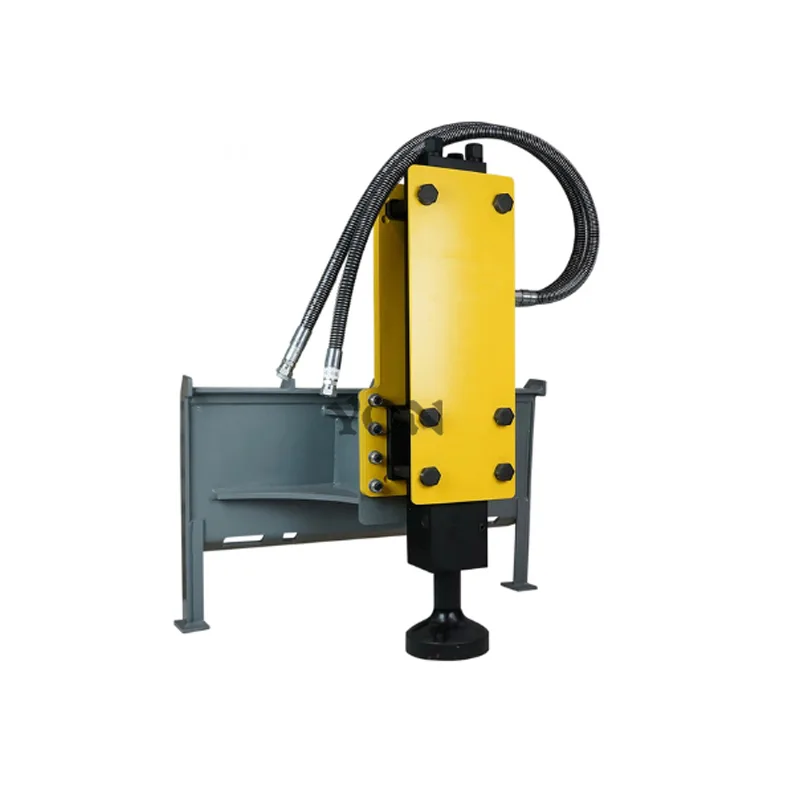
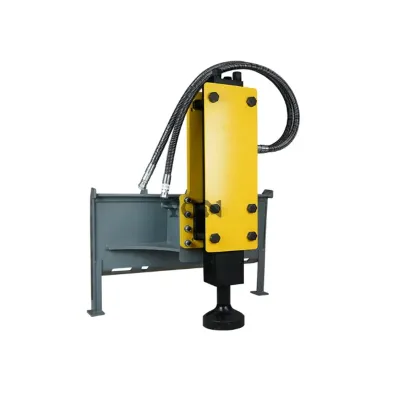
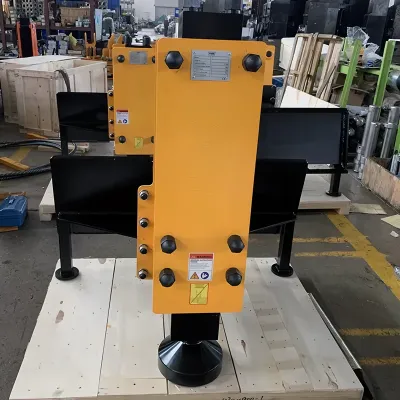
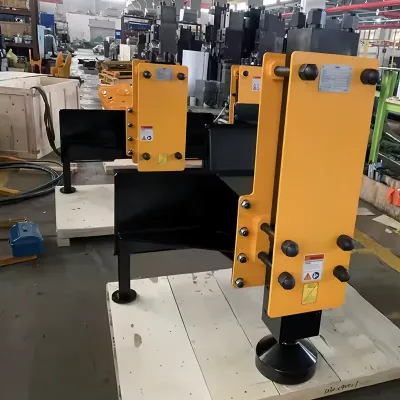
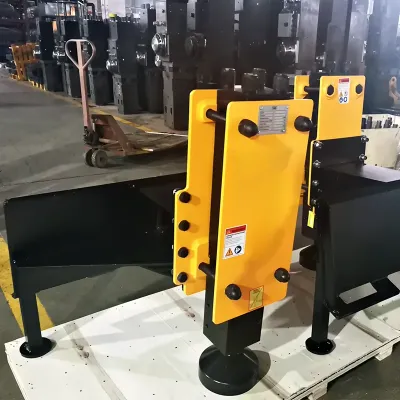
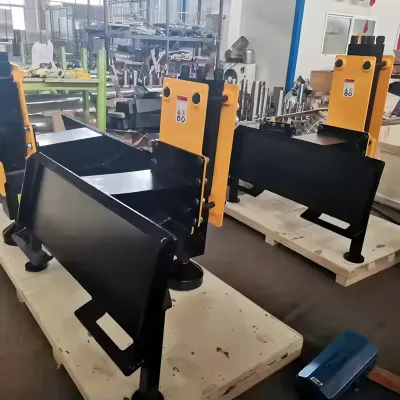
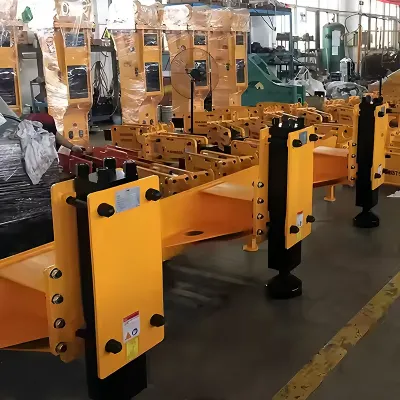
TGEC skid steer post driver with seven models from TG-PD530 to TG-PD1550, fitting 2.5–35 t carriers. Hydraulic impact drive, 25–220 L/min flow, universal quick-attach. For T-post, wood, steel and guardrail post installation.
Product Name: Post Pounder / Post Knocker / Fence Post Driver / Hydraulic Post Driver / T-Post Driver / Hammer Post Driver / Wood Post Driver / Steel Post Driver
Type: Post Drivers
After-sales Service: Provided
Warranty: 1 Year
Customization: Available
Shipping Cost: Negotiate with us about shipping cost and estimated delivery time.
Get a quote
Overview
FAQ

Product Overview

A post driver turns your skid steer into a dedicated fencing and sign-installation rig. It uses the machine's auxiliary hydraulics to power a high-frequency impact mechanism that drives posts straight down, whether you're setting T-posts on a ranch or installing guardrail on a highway project. The TGEC lineup includes seven models to match carriers from 2.5 to 35 t, with flow requirements spanning 25 to 220 L/min.

Each model in the series—from the compact TG-PD530 up to the heavy-duty TG-PD1550—shares the same universal quick-attach design. This means you can move the attachment between compatible loaders without swapping plates, as long as the auxiliary flow and pressure fall within the specified range. For a complete look at the full offering, visit our skid steer post drivers page.

Technical Specifications

ParameterTG-PD530TG-PD680TG-PD750TG-PD1000TG-PD1350TG-PD1400TG-PD1550
Operating Weight130 kg (287 lb)300 kg (661 lb)396 kg (873 lb)780 kg (1720 lb)1650 kg (3638 lb)1750 kg (3858 lb)2600 kg (5732 lb)
Required Hydraulic Flow25–50 L/min40–70 L/min50–90 L/min80–120 L/min100–150 L/min130–170 L/min170–220 L/min
Impact Rate550–1000 BPM500–800 BPM450–800 BPM350–700 BPM350–600 BPM350–500 BPM300–450 BPM
Working Pressure8.8–11.8 MPa9.8–13.7 MPa11.8–14.7 MPa15.7–17.7 MPa17.7–20.6 MPa18.6–21.6 MPa21.6–23.5 MPa
Rod Diameter53 mm (2.1 in)68 mm (2.7 in)75 mm (3.0 in)100 mm (3.9 in)135 mm (5.3 in)140 mm (5.5 in)155 mm (6.1 in)
Applicable Carrier2.5–4.5 t (2.8–5.0 ton)4–7 t (4.4–7.7 ton)6–9 t (6.6–9.9 ton)11–16 t (12.1–17.6 ton)18–21 t (19.8–23.1 ton)20–26 t (22.0–28.7 ton)28–35 t (30.9–38.6 ton)

Table data is for reference only. Actual specifications may vary based on the final configuration. Please contact the TianGe technical team for details.

How It Works

Hydraulic fluid from the skid steer auxiliary circuit powers a motor that drives an internal impact mechanism, generating rapid percussive blows through the drive rod to the post top. The operator positions the post with the loader arms and engages the hydraulics, while impact energy transfers down the post to displace soil and drive it to grade. Adjustable flow control lets the operator match impact rate to post type and ground conditions.

Application Scenarios

  • Agricultural fencing: T-posts and wood posts for pasture, paddock and property boundary fencing on farms and ranches.

  • Commercial fence installation: steel and wood posts for chain-link, ornamental iron, vinyl and security fencing on residential and commercial sites.

  • Highway guardrail: steel guardrail posts along roadways, bridges and infrastructure projects where consistent driving depth is critical.

  • Vineyard and orchard trellises: wood and steel posts for vineyard trellis systems, orchard support structures and hop yards.

  • Sign and banner posts: steel posts for road signs, construction markers, temporary signage and billboard support.

  • Utility and construction sites: temporary fencing, site barriers, ground-mounted structures and erosion-control post installation.

  • Landscaping and grounds maintenance: decorative fencing, garden borders, perimeter posts and recreational facility enclosures.
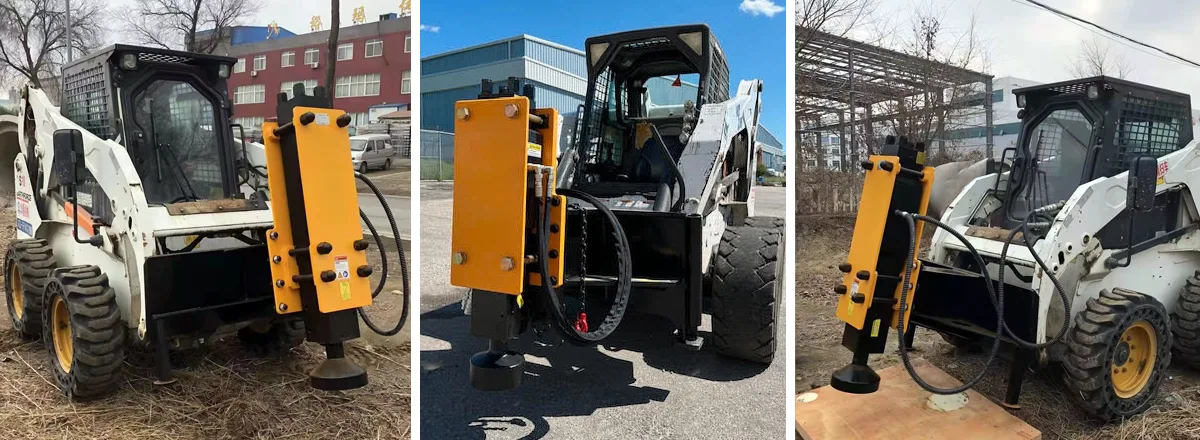
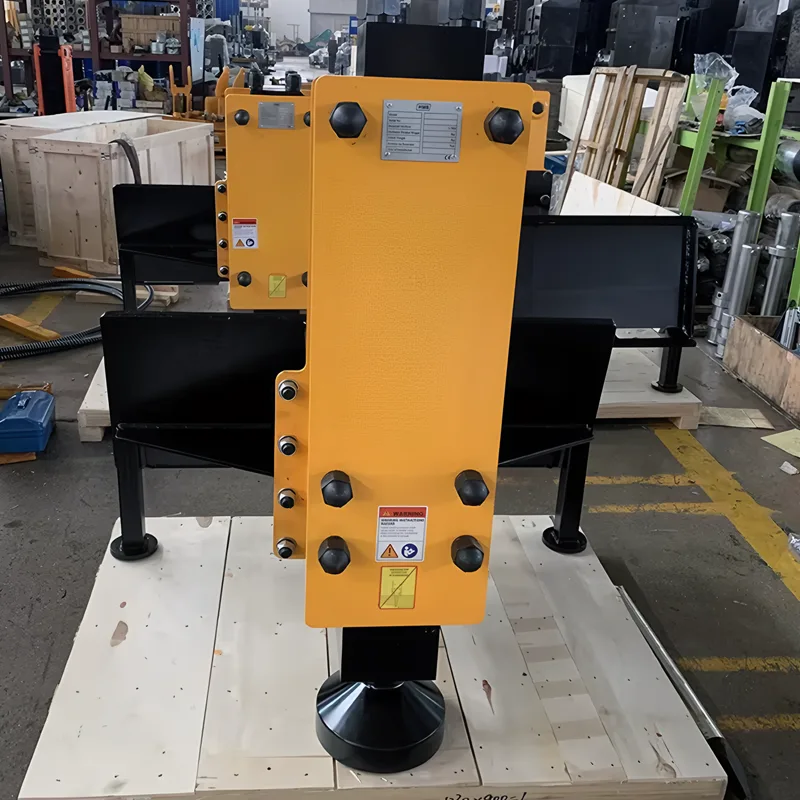
TGEC Skid Steer Post Driver – Installing Fence Posts on a Construction Site

Installation & Mounting

The post driver attaches to any skid steer with a universal quick-attach plate. Connect the auxiliary hydraulic hoses to the machine couplers, verify that your auxiliary flow and pressure fall within the model specified range, and cycle the attachment briefly to confirm smooth operation. For non-standard mounting interfaces, custom plates and hose kits are available to fit your machine.

Wear & Service

Primary wear items include the drive rod, impact mechanism internals, hydraulic hoses and mounting plate pins. Inspect the drive rod regularly for mushrooming or cracking, check hydraulic hoses for abrasion or leaks, and grease all pivot points per the maintenance schedule. OEM replacement parts including drive rods, seals and hose kits are available for all seven models.

OEM & Bulk Supply

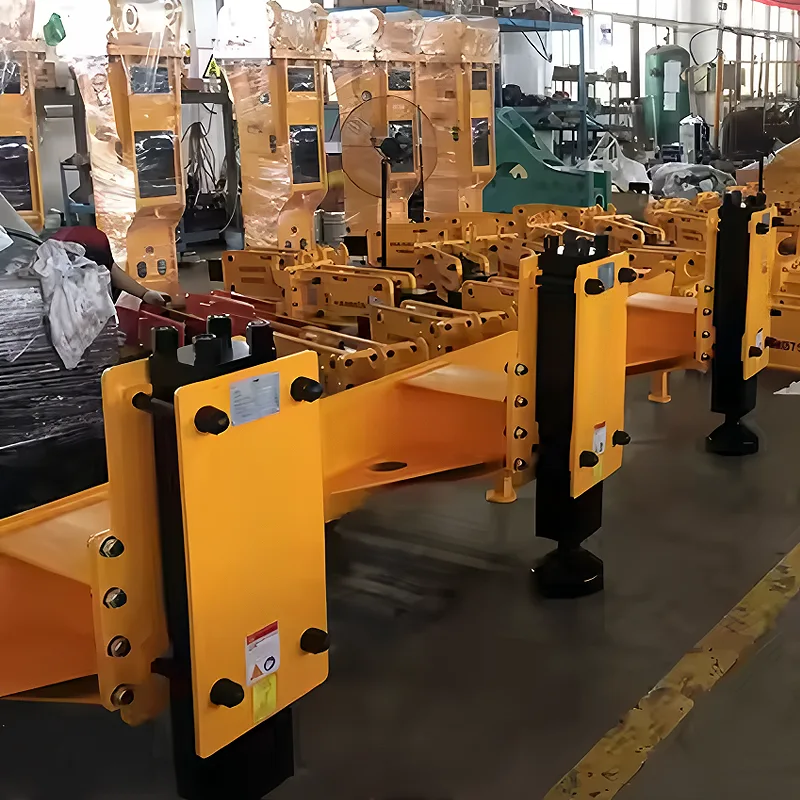
TGEC supplies skid steer post drivers to equipment dealers, rental fleets and fence contractors through OEM and bulk-supply programs. Private-label branding, custom paint colors, modified mounting plates and mixed-product container orders are available for qualified partners. For more on sizing and selection, see our post driver selection guide.

Which Post Driver Model Fits Your Skid Steer and Fencing Work?

We need a few details to match you with the right TG-PD model: your skid steer make and model, its operating weight, and the auxiliary hydraulic flow and pressure it delivers. Also, let us know the type and diameter of posts you drive most often — T-post, wood, or steel. We'll check compatibility across the seven models, recommend the right configuration, and reply with a quote and estimated ship date.
Frequently Asked Questions

What types of posts can a skid steer post driver drive?+

A skid steer post driver can handle T-posts, wood posts, steel posts, guardrail posts and sign posts. The appropriate model depends on post diameter, material and the carrier hydraulic capacity. Larger diameter and heavier posts require a higher impact energy model with a thicker drive rod.

Can a skid steer post driver be used for T-posts and fence posts?+

Yes. T-posts and standard fence posts are among the most common applications. The impact mechanism drives steel T-posts and wood fence posts efficiently when the correct model and flow setting are used. For detailed post-type selection, refer to our post driver applications by post type guide.

Can a hydraulic post driver handle wood and steel posts?+

Yes. Hydraulic post drivers handle both wood and steel posts, though the driving technique differs. Wood posts require steady impact to avoid splitting, while steel posts tolerate higher impact rates. The operator adjusts hydraulic flow to match the post material and ground conditions.

How do I match a post driver to my skid steer?+

Match the post driver to your skid steer by checking three factors: operating weight, auxiliary hydraulic flow and pressure. The model specified carrier range and flow range must overlap with your machine capabilities. A model that requires more flow than your machine delivers will underperform, while excessive flow can damage the attachment.

What hydraulic flow and pressure should be checked before installation?+

Check your skid steer auxiliary hydraulic flow in L/min and working pressure in MPa against the model specification table. Standard-flow machines typically deliver 50–80 L/min, while high-flow machines deliver 100 L/min or more. Confirm both values before selecting a model to ensure the impact mechanism operates within its designed range.

How is a skid steer post driver mounted to the machine?+

The post driver mounts using a universal quick-attach plate that fits most skid steer and compact track loader brands. Align the plate with the machine quick-attach, lock it in place, then connect the auxiliary hydraulic hoses to the machine couplers. Custom mounting plates are available for non-standard interfaces.

What should I check before connecting the hydraulic lines?+

Before connecting hydraulic lines, verify that the machine auxiliary circuit is depressurized, inspect hose fittings for damage or debris, and confirm the flow and pressure ratings match the attachment requirements. After connection, cycle the attachment at low flow to check for leaks and smooth operation before full-load use.

How does a hydraulic post driver transfer impact energy to the post?+

Hydraulic fluid drives a motor that powers an internal impact mechanism, producing rapid percussive blows. The drive rod transmits this energy directly to the top of the post, transferring force along the post length to displace soil and drive the post downward. The operator controls impact rate by adjusting auxiliary hydraulic flow.

What factors affect post-driving performance in different ground conditions?+

Post-driving performance depends on soil type, moisture content, rock content and compaction. Soft, moist soils drive easily, while hard clay, rocky ground or frozen soil require higher impact energy and slower driving rates. Operator technique, including maintaining vertical alignment and steady down pressure, also affects results.

Which components are most likely to require wear-part replacement?+

The drive rod is the most common wear item, as it absorbs repeated impact and may mushroom or crack over time. Hydraulic hoses, seals and mounting plate pivot pins also require periodic inspection and replacement. OEM replacement parts including drive rods, seal kits and hose assemblies are available for all TG-PD models.

How should a post driver be inspected and maintained during regular use?+

Inspect the drive rod for mushrooming or cracking before each use, check hydraulic hoses for abrasion and leaks, and grease all pivot points per the maintenance schedule. Periodically verify mounting plate bolt torque and inspect the impact mechanism housing for structural damage. Address any wear promptly to avoid costly repairs.

What should contractors consider when selecting a post driver for different applications?+

Contractors should evaluate post type and diameter, typical soil conditions, daily production volume and the skid steer models already in their fleet. A model that covers the full range of expected post sizes and machine capacities reduces the need for multiple attachments. Consider carrier compatibility, parts availability and service support when making the selection.
Please make sure to include your phone number with the country code (e.g., 86 for China, 1 for USA).