Welcome to the Official Website of TianGe Attachments.

Skid Steer Backhoe Attachment

Skid Steer Backhoe Attachment

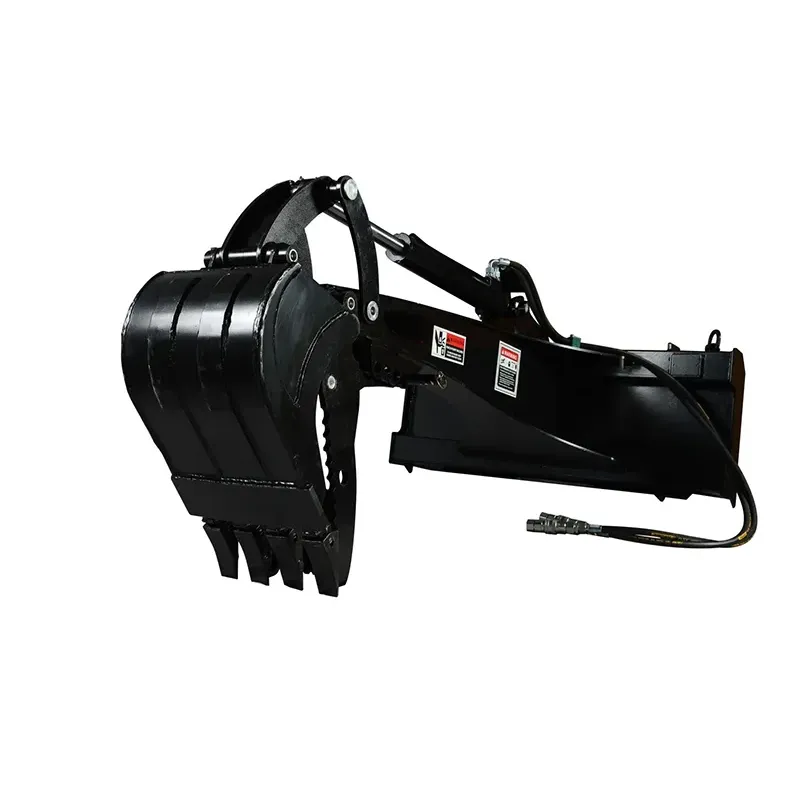
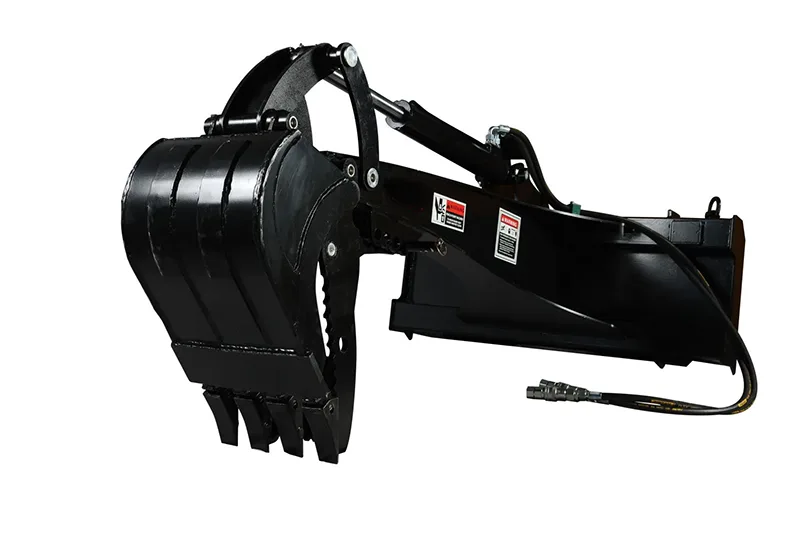
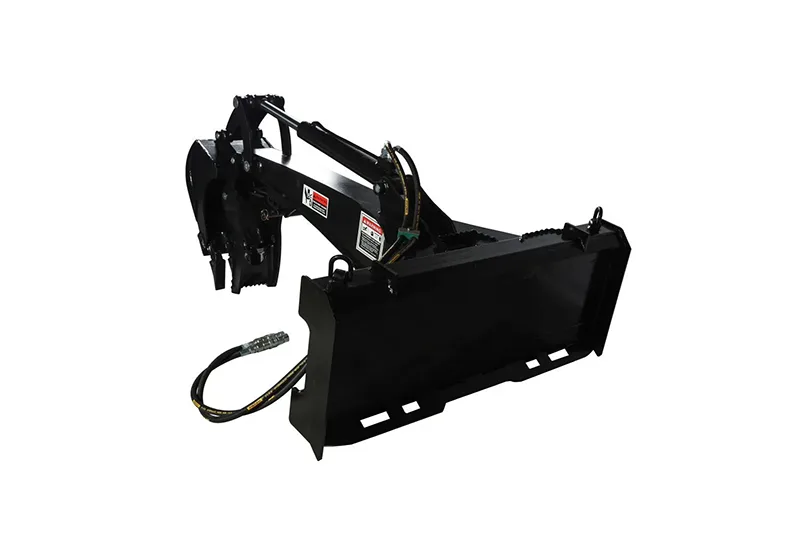
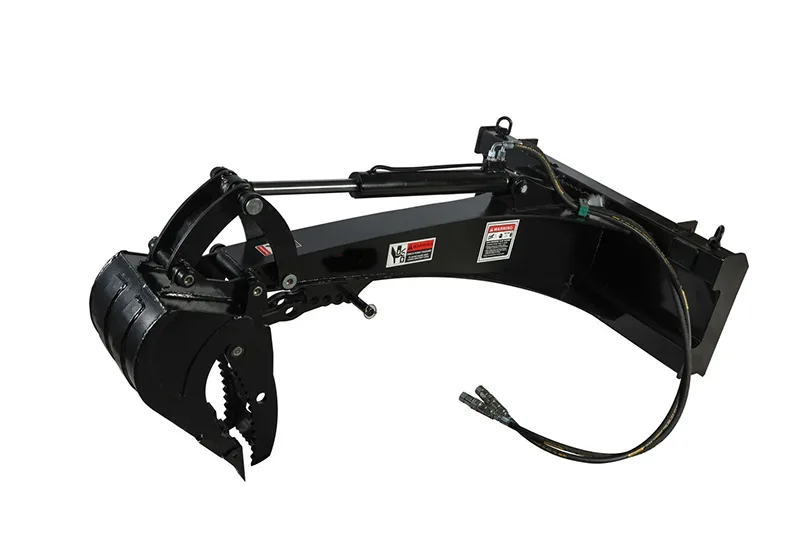
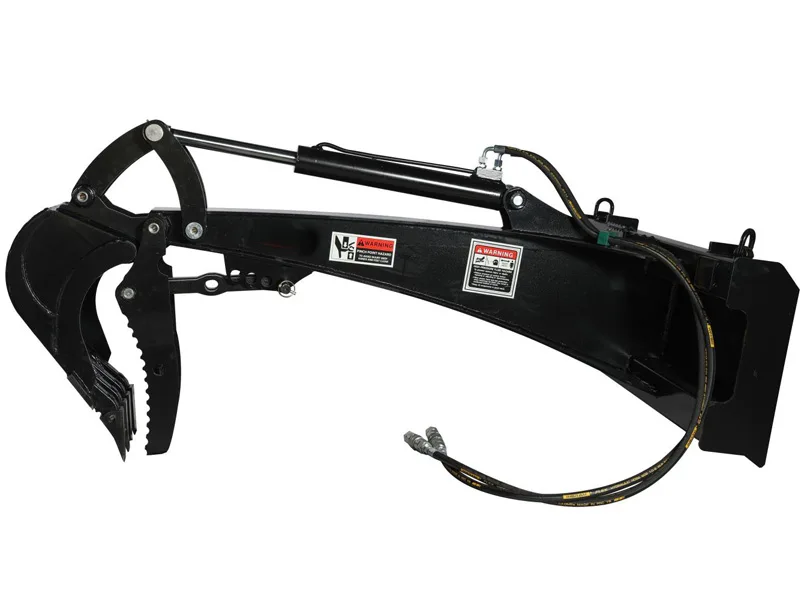
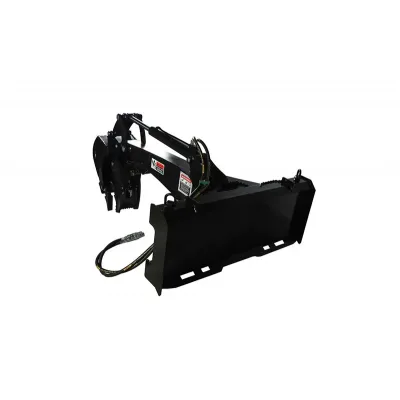
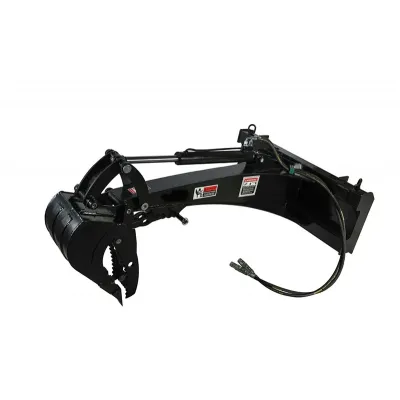
TGEC TG-BD1580 skid steer backhoe attachment with 380 mm bucket and 635 mm hydraulic thumb. Universal quick-attach, 60 L/min flow, 20 MPa pressure, 330 kg. For footings, trenching, utility work, and general excavation.
Product Name: Backhoe arm / Digging attachment / Backhoe digger / Mini backhoe
Type: Backhoes
After-sales Service: Provided
Warranty: 1 Year
Customization: Available
Shipping Cost: Negotiate with us about shipping cost and estimated delivery time.
Get a quote
Overview
FAQ

Product Overview

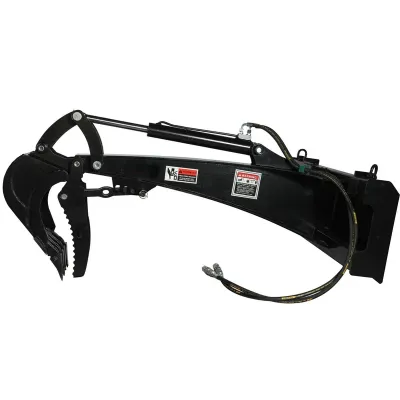
TGEC's skid steer backhoe attachment turns a skid steer or compact track loader into a compact excavator for footings, trenches, and site prep. The TG-BD1580 packs a 380 mm digging bucket, a 635 mm hydraulic thumb, and a 1580 mm overall width. It's spec'd for standard-flow skid steer hydraulic systems at 60 L/min auxiliary flow with a 20 MPa max pressure ceiling.

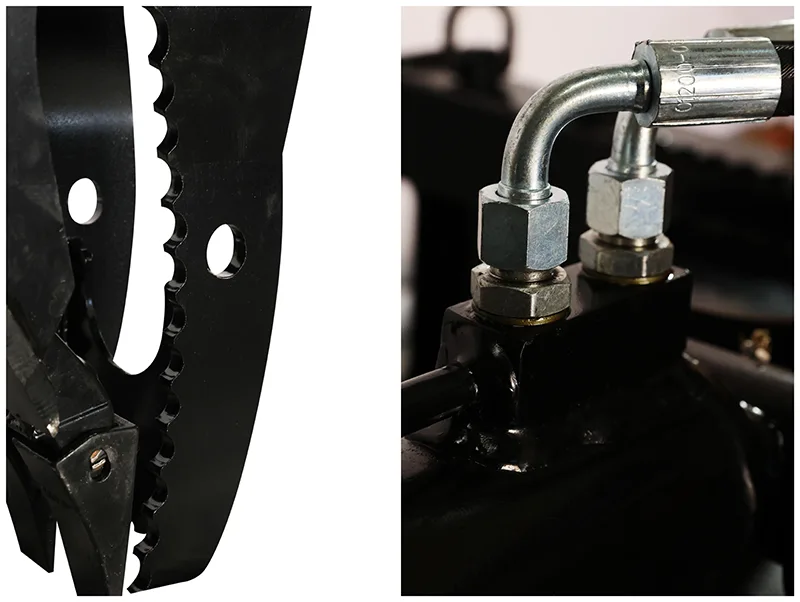
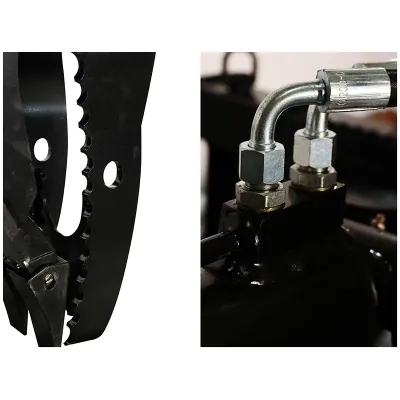
Every unit ships with a universal quick-attach frame and a hydraulic hose kit pre-configured to the carrier's flow spec. The hydraulic thumb gives you a secure grip on rocks, debris, and awkward loads, while the boom and arm deliver the reach and breakout force for residential, commercial, and utility excavation. As a direct manufacturer, TGEC supplies this backhoe to equipment dealers, rental fleets, and contractors worldwide with factory-direct pricing and a range of custom configuration options.

Technical Specifications

Specification ItemTG-BD1580
ModelTG-BD1580
Bucket Width380 mm / 15"
Hydraulic Thumb Length635 mm / 25"
Overall Attachment Width1580 mm / 62"
Required Hydraulic Flow60 L/min
Maximum System Pressure20 MPa
Total Operating Weight330 kg / 728 lb
Mounting SystemUniversal Quick Attach Plate

Specifications are subject to change without notice. Contact TGEC for the latest technical data and custom configuration options.
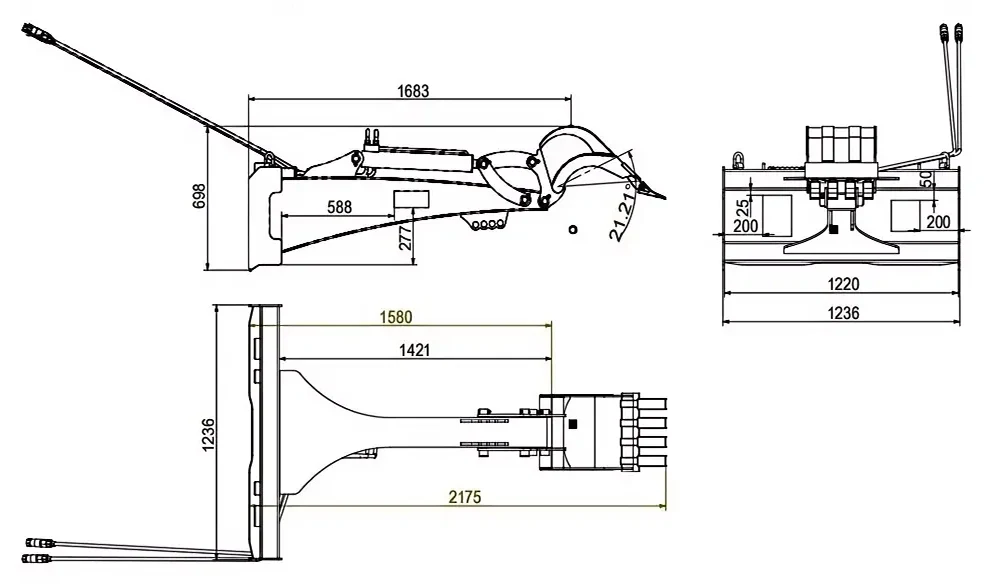
Tiange Skid Steer Backhoe Attachment – Versatile Digging Tool

How It Works

The backhoe ties into the skid steer's auxiliary hydraulic circuit via quick-disconnect couplers. Hydraulic flow drives the boom, arm, bucket, and thumb cylinders, putting digging, curling, dumping, and clamping controls right at the operator's fingertips in the cab. The universal quick-attach plate makes mounting and removal a tool-free, minutes-long process, so your skid steer can switch between the backhoe and other attachments as work demands.

Installation

Line up the backhoe's universal quick-attach plate with the skid steer's attachment interface, lower the loader arms to seat the pins, and lock the latch. Connect the auxiliary hoses to the skid steer's quick-disconnect couplers, verifying that flow and return lines match the attachment's port orientation. Run the hydraulic controls slowly at first to purge air from the system, then confirm smooth boom, arm, bucket, and thumb operation before you start digging.

Applications

  • Residential and light commercial footing excavation for decks, patios, additions, and outbuildings.

  • Trenching for water lines, sewer laterals, electrical conduit, and drainage systems.

  • Site prep and grading for landscaping projects, hardscape installation, and outdoor structure construction.

  • Utility and irrigation installation on residential properties, farms, and municipal job sites.

  • General excavation and material handling with the hydraulic thumb for rocks, stumps, and debris.

  • Confined-space digging on backyard-access jobs, indoor demolition, and tight urban work sites.

Wear Parts

Regular wear-part inspections are essential for getting the most life out of your backhoe. The main items to watch: bucket teeth and cutting edges, pivot pins and bushings at the boom, arm, and bucket joints, hydraulic cylinder seals and hoses, and the thumb pivot assembly. Replace bucket teeth when they show significant wear to keep digging efficiency up. Check pivot bushings for slop—excessive play kills digging precision and speeds up wear on surrounding parts.

Dealer & OEM

TGEC supplies the skid steer backhoe attachment to equipment dealers, rental companies, and distributors worldwide with volume pricing and mixed-order consolidation. OEM and private-label programs are open to qualified partners, including custom paint colors, nameplates, packaging, and configuration modifications. Custom work goes through engineering review and production feasibility assessment. Reach out to the OEM sales team with your branding specs, target configurations, and estimated annual volume to talk supply terms.

Request a Quote

Interested in a backhoe attachment for your skid steer? Pass along your machine's make and model, auxiliary flow and pressure specs, the digging conditions you typically encounter, and any custom bucket or thumb needs. We'll check compatibility, pin down the right configuration, and send you a complete quote with pricing and delivery timing.
Frequently Asked Questions

What is a skid steer backhoe attachment used for?+

A skid steer backhoe attachment gives a skid steer or compact track loader true excavation capability. It's purpose-built for digging footings, trenches, and holes on residential, commercial, and utility projects. It mounts through the universal quick-attach plate and taps the skid steer's auxiliary hydraulic flow to run the boom, arm, bucket, and thumb—turning a loader into a compact excavator that delivers both reach and precision.

What types of digging work can a skid steer backhoe attachment handle?+

A skid steer backhoe covers a wide spectrum—footing excavation for decks and foundations, trenching for water lines and conduit, site prep for landscaping, utility and irrigation installation, and general excavation on residential and light commercial jobs. The hydraulic thumb adds the ability to grapple rocks, stumps, and debris. It excels in confined areas where a full-size excavator won't fit—backyards, indoor demolition, and cramped urban sites are all within its reach.

How does a backhoe attachment mount to a skid steer loader?+

A backhoe mounts to a skid steer via the universal quick-attach plate—the standard interface on most skid steers and compact track loaders. The operator aligns the attachment plate with the skid steer's quick-attach system, lowers the arms to engage the pins, and secures the latch. Hydraulic hoses then connect to the skid steer's auxiliary quick-disconnect couplers. The whole process takes just a few minutes with no tools required, making attachment changes fast and straightforward.

What skid steer specifications should be checked before mounting a backhoe attachment?+

Before mounting a backhoe, go through this checklist: the skid steer's operating weight—must safely handle the attachment's weight and digging forces; auxiliary hydraulic flow—needs to match the attachment's requirement; maximum system pressure—must be compatible; and the quick-attach interface—confirm it's a universal plate. Also check that the skid steer has enough lift capacity and rated operating capacity for the attachment plus the material you're moving. The TG-BD1580 requires 60 L/min flow, 20 MPa pressure, and weighs 330 kg.

What hydraulic requirements should be checked for a skid steer backhoe attachment?+

For a skid steer backhoe, you need to verify that auxiliary flow meets the attachment's spec, maximum system pressure stays within the attachment's rated range, and the skid steer has enough hydraulic circuit capacity to run the boom, arm, bucket, and thumb simultaneously. The TG-BD1580 calls for 60 L/min auxiliary flow and 20 MPa max pressure—right in line with standard-flow systems on most mid-size and full-size skid steers. Also confirm quick-disconnect coupler type and hose configuration are compatible with your skid steer's auxiliary circuit.

How does digging depth affect skid steer backhoe performance?+

Digging depth directly shapes performance because boom and arm geometry set the maximum reach and depth the attachment can achieve. As depth increases, the bucket angle becomes less efficient for cutting and loading, and the skid steer's stability drops as the load extends farther out. For deeper excavation, consider whether the backhoe's reach is sufficient or whether a dedicated excavator or different attachment would be a better fit. The TG-BD1580 is designed for standard footing and trench depths typical of residential and light commercial work.

How does bucket width affect digging performance?+

Bucket width determines both the volume you move per cycle and how precise your excavation is. A wider bucket hauls more material per pass but needs more breakout force and can be less precise for narrow trenches or tight footing holes. A narrower bucket delivers better precision for trench work and confined spaces but moves less material per cycle. The TG-BD1580 comes with a 380 mm (15 inch) bucket—a versatile width suited to general excavation, footing work, and standard trenching. Custom bucket widths may be available on qualified production orders.

Can a skid steer backhoe attachment be used for trenching?+

Yes—a skid steer backhoe handles trenching well. The 380 mm bucket on the TG-BD1580 is a solid match for trenches for water lines, sewer laterals, electrical conduit, and drainage. The boom and arm give you the reach for standard trench depths, and the operator can adjust the bucket angle to keep trench walls clean and grade consistent. For long, straight trenches where speed is critical, a dedicated trencher might be more efficient, but the backhoe offers more versatility for footing excavation, material handling, and irregular digging alongside trenching.

What is the purpose of a thumb on a skid steer backhoe attachment?+

The hydraulic thumb on a skid steer backhoe adds material handling capability by clamping objects between the thumb and the bucket. This lets you pick up and move irregular items—rocks, stumps, logs, debris, construction materials—that would be tough to handle with a bucket alone. The thumb also improves control when dumping and can hold objects steady during placement. The TG-BD1580's 635 mm hydraulic thumb operates independently of the bucket, putting precise clamping force and object control right at your command.

What is the difference between a fixed-arm and swing-arm backhoe attachment?+

A fixed-arm backhoe has the boom and arm locked in place, with the digging arc centered directly ahead of the skid steer. A swing-arm backhoe lets the boom pivot side to side, enabling you to dig offset trenches and holes without repositioning the machine. Swing-arm setups offer more flexibility around obstacles and in tight spaces but add cost and complexity. The TG-BD1580 is a fixed-arm configuration for general excavation where the skid steer can be positioned right in front of the digging area.

What wear parts should be inspected on a skid steer backhoe attachment?+

Key wear parts to keep tabs on: bucket teeth and cutting edges—they take punishment from soil and rock; pivot pins and bushings at the boom, arm, bucket, and thumb joints—they develop play with use; hydraulic cylinder seals and rod surfaces—watch for leaks or scoring; and hydraulic hoses and fittings—check for cracks or leaks. Regular inspections catch wear before it leads to downtime or collateral damage. Replace bucket teeth when worn, and check pivot bushings for play on a routine basis.

How should the pivot points, hydraulic cylinders, and bucket teeth be maintained?+

Pivot points need regular greasing—ideally before each use, continue until fresh grease pushes out around the pin seals. Hydraulic cylinders: inspect for rod scoring, seal leaks, and bent rods; keep rods clean and replace leaking seals promptly. Bucket teeth: check for wear and replace when the profile flattens out—worn teeth kill digging efficiency and add stress to the bucket and arm. Hoses and fittings: inspect for cracks, abrasion, and leaks and replace any that show damage. Routine maintenance stretches service life and prevents expensive downtime.
Please make sure to include your phone number with the country code (e.g., 86 for China, 1 for USA).