Short answer: yes, a skid steer can dig. But the real answer depends on what attachment you're running and what your machine's hydraulic system can deliver. A standard bucket will scrape and move topsoil, but for real excavation—footings, trenches, deep holes—you need a dedicated digging attachment. Backhoes, trenchers, augers, and digging buckets each do different jobs. Here's what each one can handle and where a skid steer's digging capability maxes out.
How Skid Steers Dig
A skid steer digs by channeling its auxiliary hydraulic flow into whatever attachment is mounted up front. With a standard bucket, you're pushing into the soil with the loader arms and curling to scoop material—great for shallow work, grading, and loading, but depth is limited and precision is rough. With a backhoe attachment, the hydraulic flow powers a boom, arm, and bucket that give you controlled digging at depth, similar to a mini excavator. The catch is that digging power is limited by your machine's hydraulic flow rate, operating weight, and ROC—bigger jobs need bigger machines or a dedicated excavator.
Digging Depth Limits
How deep you can go depends entirely on the attachment and your machine's size. A standard bucket on a mid-size skid steer can typically dig 1 to 2 feet deep by pushing and curling—enough for shallow grading, topsoil stripping, and light excavation. A backhoe attachment can get you 6 to 10 feet deep, depending on boom and arm length, which covers most residential footings, utility trenches, and standard digging work. A trencher attachment cuts 3 to 6 feet deep with consistent width and grade, ideal for irrigation, electrical conduit, and drainage. An auger attachment drills holes 3 to 10 feet deep for fence posts, footings, and utility poles, with depth depending on extension length.
For deeper jobs—full basement foundations, large pond excavation, deep utility trenches—a skid steer isn't the right tool. Mini excavators and full-size excavators are purpose-built for that kind of work, with greater depth, reach, and breakout force. A skid steer's strength is versatility: you can dig with it, then swap to a bucket, forks, or snow blade in minutes. For most residential and light commercial projects, though, a skid steer with the right attachment gets it done.
Best Digging Attachments for Skid Steers
Backhoe Attachment
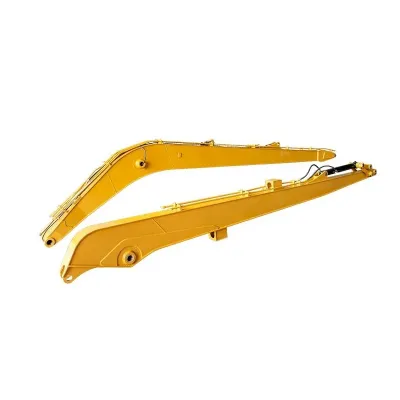
A skid steer backhoe attachment is the most versatile digging attachment you can put on a skid steer. It mounts via the universal quick-attach plate and uses auxiliary flow to run the boom, arm, bucket, and optional thumb—giving you excavator-style digging for footings, trenches, holes, and general excavation. The TG-BD1580 packs a 380 mm bucket, 635 mm hydraulic thumb, and needs 60 L/min auxiliary flow, making it a solid match for most mid-size and full-size skid steers. If you need flexible, general-purpose digging across a variety of tasks, a backhoe attachment is the way to go.
Trencher Attachment
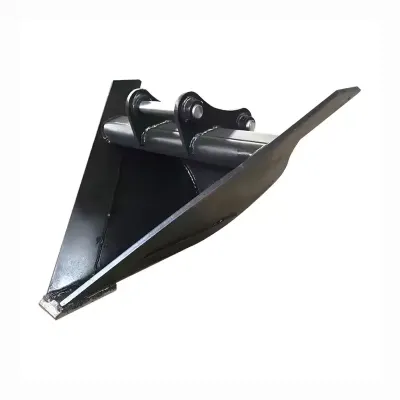
A trencher attachment is purpose-built for one thing: digging narrow, consistent-depth trenches. It uses a rotating chain with cutting teeth to cut trenches 100 to 300 mm wide and 1 to 2 meters deep, with a conveyor to carry spoil out of the trench. It's faster and more efficient than a backhoe for long, straight runs, but it doesn't do anything else. If your primary digging job is trench installation, a trencher is your best bet.
Auger Attachment
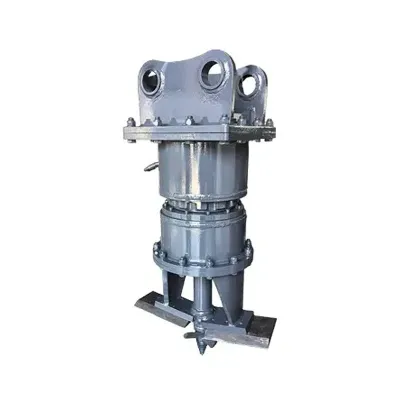
An auger attachment drills round holes—fence posts, deck footings, sign posts, tree planting, utility poles. Augers come in diameters from 100 to 600 mm and can drill 1 to 3 meters deep with extension rods. They use the skid steer's auxiliary flow to spin the bit, cutting into the soil and lifting material out of the hole. If you need precise, round holes for posts and footings, an auger is the tool for the job.
Digging Bucket
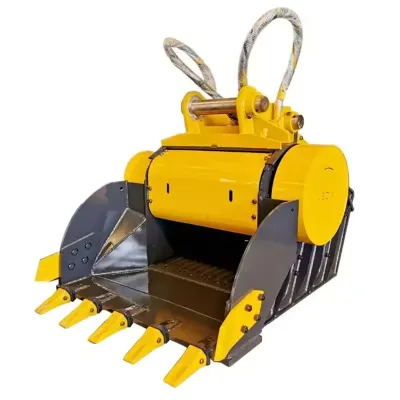
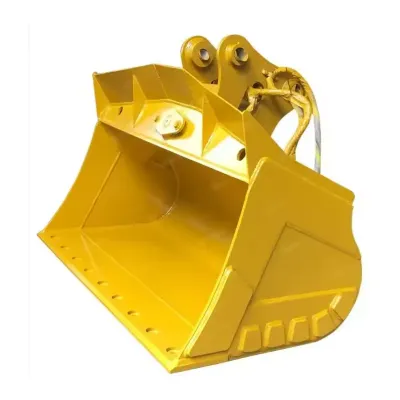
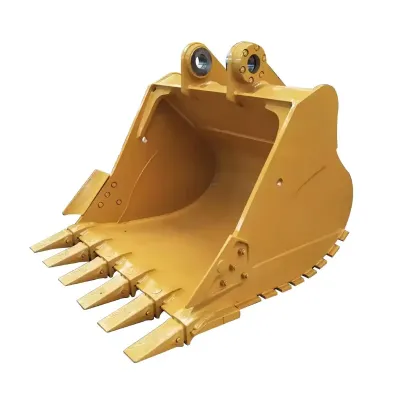
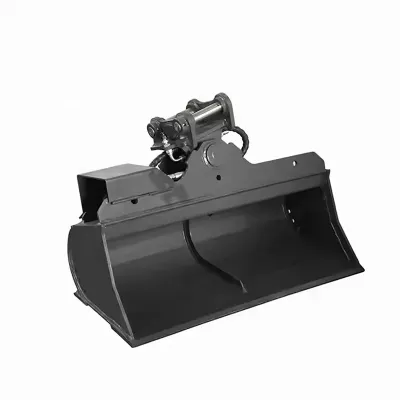
A digging bucket (also called a tooth bucket or severe-duty bucket) is a standard loader bucket with reinforced edges and teeth for more aggressive digging. It mounts directly to the quick-attach plate and uses the loader arms to push into the soil and curl to collect material. It works for shallow excavation, topsoil removal, grading, and loading, but depth and precision are limited compared to dedicated attachments. If you only need shallow digging and general site work, a digging bucket is a solid choice without the extra cost of a specialized attachment.
Can a Skid Steer Dig Trenches?
Yes—a skid steer can dig trenches with either a backhoe attachment or a trencher attachment. A backhoe works well for shorter trenches, irregular layouts, and trenches that need varying depth or width—think footing trenches and utility connections. The operator controls the bucket section by section, which gives you flexibility but is slower on long, straight runs. A trencher attachment is designed specifically for long, straight trenches with consistent width and depth—irrigation lines, electrical conduit, drainage—and it's significantly faster than a backhoe for that type of work.
When deciding between a backhoe and a trencher for trenching, think about total trench length, how consistent the width and depth need to be, and whether you need the attachment for other digging jobs. If you dig trenches occasionally and also need general excavation capability, a backhoe attachment gives you more versatility. If you're regularly installing long runs of irrigation, drainage, or utility lines, a dedicated trencher is the more productive call. Many operations keep both on hand to cover different trench types.
Can a Skid Steer Dig a Pond or Foundation?
A skid steer can handle small ponds and shallow foundations, but the scale matters. For small residential ponds, rain gardens, and shallow basins, a skid steer with a digging bucket or backhoe attachment can get the job done—especially if the pond is less than 1.5 meters deep and the total volume is manageable. For larger ponds, deep basements, and full-size foundation excavation, a skid steer isn't the right tool. A mini excavator or full-size excavator is much more efficient, with greater depth, reach, and material-moving capacity.
For foundation work, a skid steer with a backhoe attachment can handle footing trenches and shallow foundation excavation for residential additions, decks, and outbuildings. The backhoe gives you the precision to dig clean footing trenches and shape the foundation area. For full basement excavation or large commercial foundations, though, the volume and depth typically exceed what a skid steer can handle practically. In those cases, the skid steer is still useful—just not as the primary digger. It can handle material moving, grading, and site cleanup alongside the main excavator.
Jobsite Constraints and Best Practices
When you're digging with a skid steer, a few things affect both performance and safety. Ground conditions are a big one: loose soil, sand, and mud kill traction and stability, especially when the attachment is extended and the machine's center of gravity shifts. Rocky or hard-packed ground may need heavier-duty attachments or a bigger machine with more breakout force. Always keep the skid steer on stable ground before extending the backhoe arm, and avoid digging over the side where stability drops off. Use counterweight and proper ballasting to keep things stable during digging operations.
Hydraulic flow is another limiting factor. A backhoe attachment needs enough auxiliary flow to operate efficiently—undersize it and you'll get slow, weak digging. Always check your skid steer's auxiliary flow against the attachment's requirements before you start. The TG-BD1580 needs 60 L/min flow, which lines up with standard-flow systems on most mid-size and full-size skid steers. If you're running a high-flow machine, make sure the attachment can handle the extra flow without exceeding its max pressure rating.
Summary
A skid steer can dig effectively with the right attachment, and its versatility makes it a go-to machine for residential and light commercial excavation. A backhoe attachment gives you the most flexible general-purpose digging for footings, trenches, and holes, while trenchers, augers, and digging buckets each specialize in specific tasks. The key is matching the attachment to your machine's hydraulic capacity and the specific demands of your work. For deeper, larger, or high-volume excavation, a dedicated excavator is still the more efficient choice—but a skid steer with the right attachments handles the bulk of standard digging jobs while keeping the ability to switch to other tasks as needed.
For more on backhoe attachments and what they can do, check out the skid steer backhoe attachments category hub. To compare machine types, read our guide on backhoe vs skid steer. If you're ready to pick an attachment, learn about choosing a skid steer backhoe attachment.