Skid steer loaders earn their reputation for versatility largely through the variety of bucket attachments they can carry. Choosing the right bucket for the job directly affects productivity, efficiency, and the quality of the finished work. This guide outlines the main bucket types, their design features, typical uses, and how to pick the best one for your specific operation.
Standard Digging Bucket
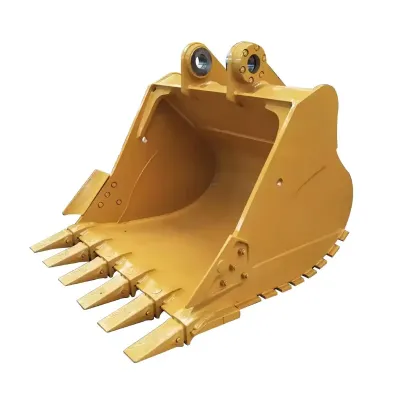
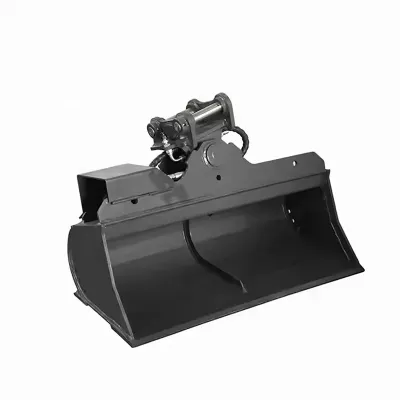
The standard digging bucket is the most common skid steer attachment, built for general excavation, loading, and material transport. Its design is straightforward: an open-top shell with a curved bottom and a replaceable cutting edge along the front lip. Available widths range from 48 to 84 inches, with capacities from 0.3 to 1.5 cubic yards. Heavy-duty versions use thicker steel plate and reinforced edges to handle rocky or abrasive materials. This bucket works well for digging footings, loading trucks, and moving soil, sand, and gravel on typical construction sites.
4-in-1 Multi-Purpose Bucket
The 4-in-1 skid steer bucket packs four functions into one attachment: digging, grading/dozing, loading, and clamping/grabbing. A hydraulically operated clamshell bottom opens, closes, and clamps using dual cylinders. In closed mode, it acts as a standard bucket for excavation and hauling. With the bottom open, its flat cutting edge levels and spreads material like a dozer. When clamped, it grips rocks, logs, and debris securely. This bucket is a favorite among general contractors, landscapers, and rental fleets because it reduces the need for multiple tool changes on the job.
Concrete Mixer Bucket
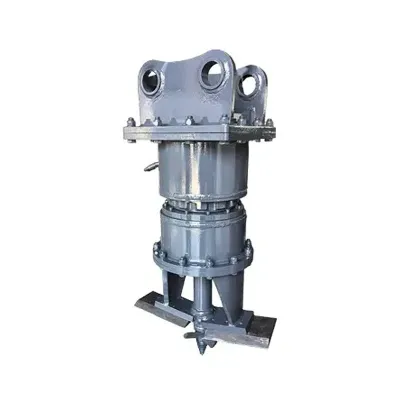
The concrete mixer bucket turns your skid steer into a mobile mixing station for small-to-medium pours. An internal hydraulic auger blends cement, sand, aggregate, and water directly inside the bucket. Operators load dry materials, add water, mix on site, and discharge through a controllable bottom gate. Capacities range from 250 to 550 liters, making it ideal for fence posts, footings, slabs, patch repairs, and remote jobs where ready-mix trucks can't reach. It cuts out the cost and delay of ordering ready-mix for smaller volumes.
Grapple Bucket
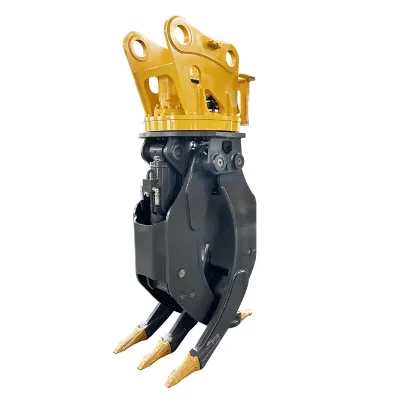
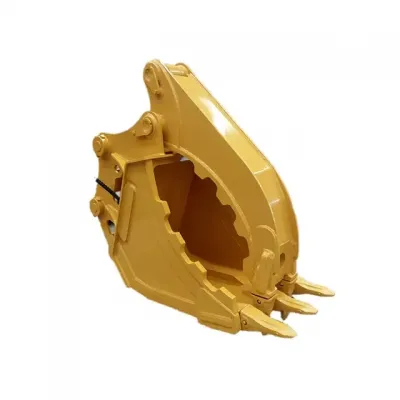
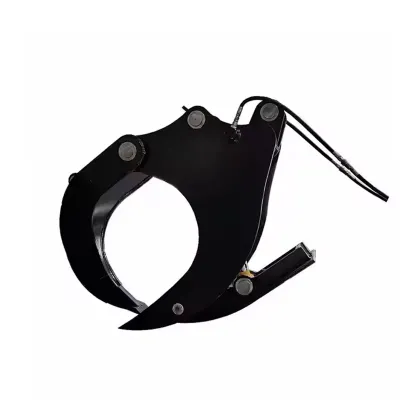
The grapple bucket combines a solid steel bottom with an upper hydraulic clamshell that grips bulky, irregular loads. Unlike open-tine grapples, the solid bottom retains smaller material during transport while the clamshell secures oversized items. Dual hydraulic cylinders provide consistent clamping force, and a check valve holds pressure even when the operator releases the control. Widths run from 63 to 85 inches. This bucket excels at land clearing (brush, limbs, roots), demolition cleanup (concrete chunks, wood, metal), recycling yard work, agricultural material handling, and moving rocks or boulders. It's the go-to choice when standard buckets can't keep the load contained.
Stump Bucket Grapple
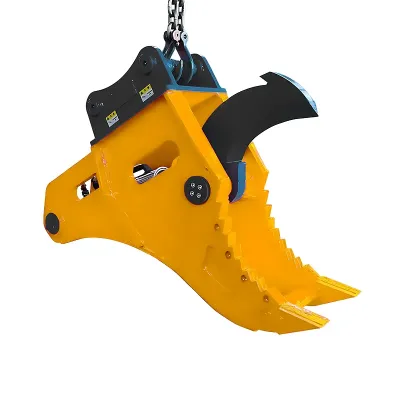
The stump bucket grapple is a specialty tool designed specifically for stump removal and root extraction. Its narrow, pointed bucket has three heavy-duty teeth that dig into the soil around a stump. A hydraulic upper grapple with serrated edges then grips and lifts the stump once it's loosened. The operator digs around the stump with the teeth, severs roots with the cutting edge, and closes the grapple to pull the stump out. At roughly 48 inches wide, this attachment fits into tight residential yards without disturbing too much surrounding soil. It's ideal for residential stump work, commercial land clearing, site prep, and agricultural land conversion.
Rotating Screening Bucket
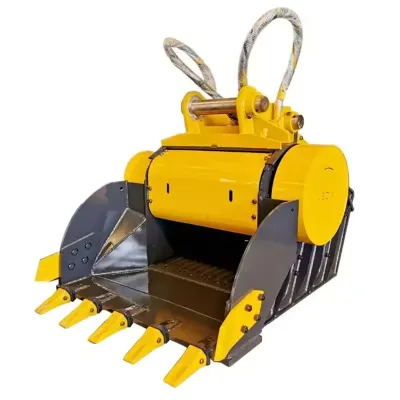
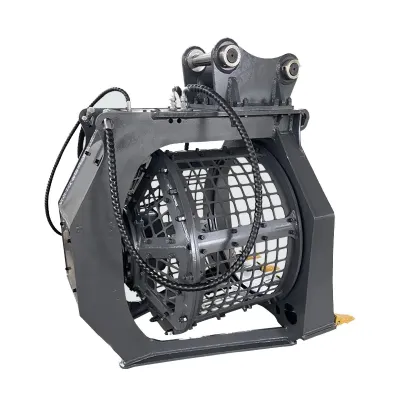
The rotating screening bucket separates material by size using a perforated trommel drum that rotates on its axis. Load material into the bucket, spin the drum, and fines fall through the screen while oversize rocks and debris stay inside for later disposal. This on-site screening eliminates the need to haul unscreened material away and then bring screened material back, saving trucking costs and shortening project timelines. Volumes range from 0.30 to 0.80 cubic meters, with drum diameters from 700 to 1100 mm. Common applications include topsoil screening, rock and debris separation, recycling yard sorting, construction debris processing, agricultural soil prep, and landscaping material separation. Screen perforation size is chosen based on the desired output.
How to Choose the Right Bucket Type
Selecting the best skid steer bucket depends on your primary application, the material you handle most, your machine's capabilities, and your budget. Keep these factors in mind:
-
Primary task: Start with the single most frequent job you need to do. If it's mostly digging and loading loose material, a standard bucket is enough. If you need multiple functions, the 4-in-1 covers more ground. For bulky debris, a grapple bucket is essential.
-
Material characteristics: Think about size, weight, and abrasiveness. Fine, loose materials work fine with standard buckets. Bulky, irregular loads need a grapple. Concrete requires a mixer bucket. Soil with rocks and debris benefits from screening.
-
Machine compatibility: Check that your skid steer's rated operating capacity (ROC), auxiliary hydraulic flow, and pressure meet the requirements of the attachment. Hydraulic buckets (4-in-1, grapple, mixer, screening) all need auxiliary flow — verify your machine's specs against the attachment's requirements.
-
Job site conditions: Consider space, terrain, and access. A narrow stump bucket works in tight residential yards. Wider buckets (up to 85 inches) are more efficient in open areas. Mixer buckets are a lifesaver on remote sites without ready-mix access.
-
Budget and utilization: For occasional use, renting or buying used may make sense. For daily work, invest in a heavy-duty model with thicker steel and replaceable wear parts. A multi-purpose 4-in-1 can reduce the total number of attachments you need to buy.
For more detailed advice on sizing and capacity, see our skid steer bucket size and capacity guide. To explore specific models, browse the full TGEC skid steer bucket range.