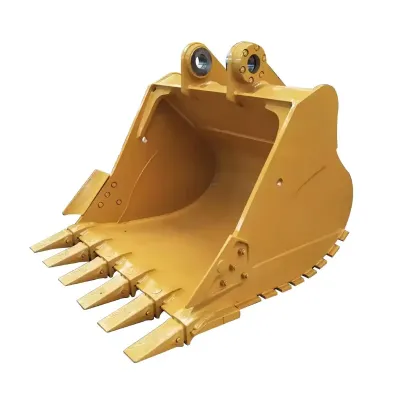
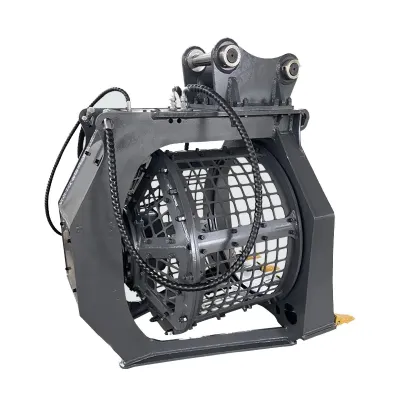
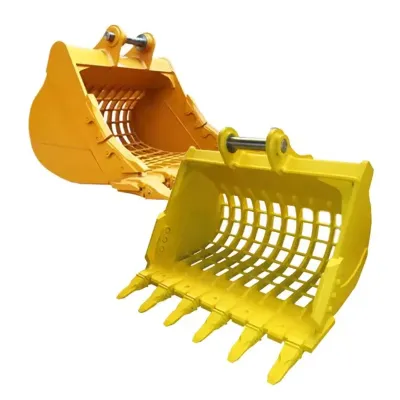
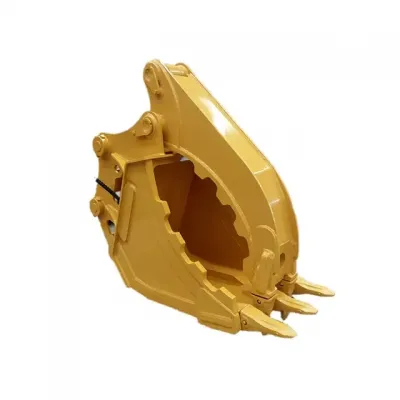
Picking the correct skid steer bucket size has a direct impact on productivity, machine stability, and safety. A bucket that's too large overloads the machine and reduces maneuverability, while one that's too small wastes time and fuel. This guide covers bucket width, dimensions, capacity in cubic yards and cubic meters, attachment weight, and how to match bucket size to your skid steer's rated operating capacity.
Bucket Width: Finding the Right Size
Bucket width is the most visible sizing parameter and directly influences how much material the bucket moves per pass. Standard skid steer bucket widths start at 48 inches (1220 mm) for compact machines and go up to 84 inches (2130 mm) for large-frame skid steers. The most common widths are 62 inches (1580 mm), 66 inches (1680 mm), 72 inches (1830 mm), and 78 inches (1980 mm).
When selecting width, consider three things: the machine's tire or track width, space constraints at the job site, and the material you handle most. Ideally, bucket width should match or slightly exceed tire/track width so you don't leave material along the sides. For tight spaces—indoor demolition, backyard work, or narrow aisles—a narrower bucket (48–60 inches) makes maneuvering easier. In open areas with high-volume handling, a wider bucket (72–84 inches) boosts productivity per pass. But remember: wider buckets shift the load center forward, which reduces effective lift capacity. Always confirm that your machine can handle the wider bucket at full load.
Bucket Dimensions: Width, Depth and Height
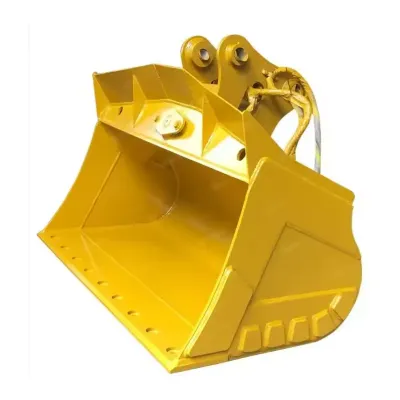
Bucket dimensions include width (front opening), depth (from cutting edge to the back of the bucket), and height (from bottom to the top of the side panels). These three measurements determine the bucket's volumetric capacity. For instance, a typical 72-inch standard bucket might measure 72 inches wide × 32 inches deep × 28 inches high, giving roughly 0.75 cubic yards (0.57 cubic meters) of capacity.
Depth affects how far the bucket penetrates into material piles and how cleanly it dumps. Deeper buckets hold more material but may struggle with sticky materials like clay, which cling to the inside. Height influences how much material can be piled above the rim (heaped capacity) and how prone the load is to spilling during transport. Lower-profile buckets make loading tall trucks easier, while higher-sided buckets retain more material on the move.
Bucket Capacity: Cubic Yards and Cubic Meters
Bucket capacity is expressed in cubic yards (yd³) in the US and cubic meters (m³) elsewhere. One cubic yard equals 0.765 cubic meters, and one cubic meter equals 1.31 cubic yards. Capacities typically range from 0.3 cubic yards (0.23 m³) for compact machines to 1.5 cubic yards (1.15 m³) for large skid steers.
Two capacity ratings exist: struck capacity (material level with the bucket rim) and heaped capacity (material piled above the rim at a 2:1 angle). Heaped capacity is usually 15–30% higher than struck and better reflects what the bucket can actually carry. For example, a bucket with 0.75 cubic yards struck capacity may have 0.95 cubic yards heaped capacity. When estimating truck loading cycles, use the heaped figure for realistic results. Always check the manufacturer's specific rating, as dimensions alone don't account for the bucket's curved bottom shape.
How Many Cubic Yards Does a Skid Steer Bucket Hold?
The number of cubic yards a skid steer bucket holds depends on its size. Here are typical capacities by bucket width for standard digging buckets:
-
48-inch bucket: 0.35–0.45 cubic yards (0.27–0.34 m³)
-
60-inch bucket: 0.50–0.65 cubic yards (0.38–0.50 m³)
-
66-inch bucket: 0.60–0.75 cubic yards (0.46–0.57 m³)
-
72-inch bucket: 0.70–0.90 cubic yards (0.54–0.69 m³)
-
78-inch bucket: 0.80–1.05 cubic yards (0.61–0.80 m³)
-
84-inch bucket: 0.95–1.25 cubic yards (0.73–0.96 m³)
These are general estimates; actual capacity varies with bucket depth, height, and manufacturer design. Specialty buckets have different rating systems. A 4-in-1 bucket might be rated at 0.62–0.72 m³, while a concrete mixer bucket is measured in liters (250–550 L). Always refer to the manufacturer's spec sheet for exact numbers.
Bucket Weight: Matching to Machine Capacity
Bucket weight is often overlooked but critical. The attachment itself adds weight to the lift arms, reducing the effective payload capacity. Standard bucket weights range from about 200 kg (440 lb) for a 48-inch light-duty model to 600 kg (1320 lb) or more for an 84-inch heavy-duty version. Specialty buckets are heavier: a grapple bucket might weigh 413–483 kg, a stump bucket grapple weighs 244 kg, and a rotating screening bucket can be 450–1280 kg depending on size.
To figure out the total load the skid steer must lift, add the bucket weight to the material weight. For instance, a 72-inch bucket weighing 350 kg carrying 0.80 cubic yards of soil (roughly 960 kg at 1.2 t/m³) totals 1310 kg. The machine's rated operating capacity (ROC) must exceed this total at the bucket's load center. A machine with insufficient ROC will tip forward, lose traction, or damage hydraulic components. Always verify both empty and loaded weights against your ROC specification.
Matching Bucket Size to Skid Steer ROC
Rated operating capacity (ROC) is the maximum weight a skid steer can safely lift at 50% of tipping load, per SAE standards. It's the primary spec for determining the right bucket size. Here's a general guideline for matching standard bucket capacity to machine ROC:
-
ROC 500–700 kg (1100–1540 lb): 48–60 inch bucket, 0.35–0.55 yd³ capacity
-
ROC 700–900 kg (1540–1980 lb): 60–66 inch bucket, 0.50–0.70 yd³ capacity
-
ROC 900–1100 kg (1980–2420 lb): 66–72 inch bucket, 0.60–0.85 yd³ capacity
-
ROC 1100–1400 kg (2420–3080 lb): 72–78 inch bucket, 0.75–1.00 yd³ capacity
-
ROC 1400+ kg (3080+ lb): 78–84 inch bucket, 0.90–1.25 yd³ capacity
These are starting points—actual matching depends on bucket weight, material density, and site conditions. For heavy or dense materials (rock, wet clay, concrete), step down one size. For light materials (mulch, snow, dry soil), you may be able to go larger. Always calculate actual loaded weight (bucket + material) and make sure it's below the machine's ROC at the attachment's load center. When in doubt, choose the smaller bucket for safety and stability.
Sizing for Specialty Buckets
Specialty buckets have their own sizing considerations beyond standard width and capacity:
-
4-in-1 buckets: Available in 62-inch (1580 mm) and 72-inch (1830 mm) widths with 0.62–0.72 m³ capacity. The clamshell mechanism adds weight (318–348 kg), so check ROC carefully. Requires 60 L/min auxiliary hydraulic flow.
-
Concrete mixer buckets: Sized by liter capacity (250–550 L rated, 200–450 L max). Concrete is heavy (2.4 t/m³)—a 250 L bucket holds 600 kg of concrete. Requires 80 L/min auxiliary flow and enough ROC to handle the attachment (324–502 kg) plus the concrete.
-
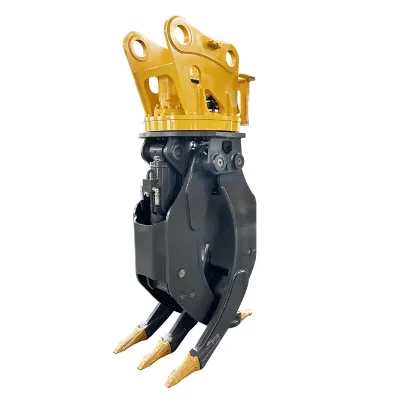
Grapple buckets: Available in 63–85 inch widths. The clamshell adds weight (413–483 kg), and bulky materials can have uneven load distribution. Verify ROC for the heaviest expected load, including items that may extend beyond the bucket width.
-
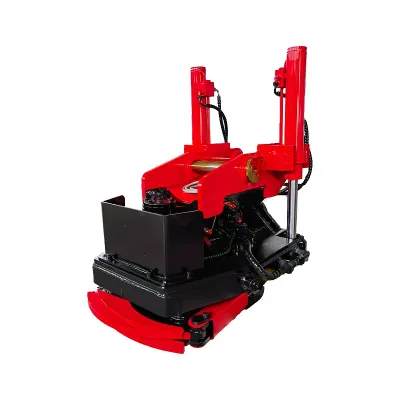
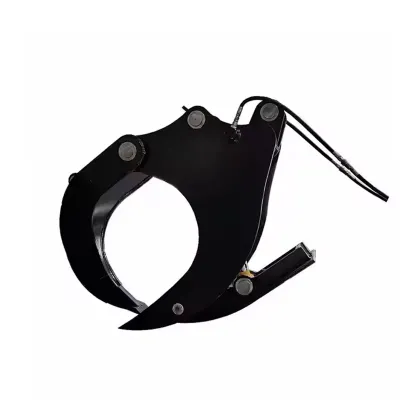
Stump bucket grapples: Narrow design (1220 mm / 48 inches) for digging around stumps. Weighs 244 kg and works with machines in the 530–1150 kg ROC range. The narrow width limits capacity but gives focused penetration for stump work.
-
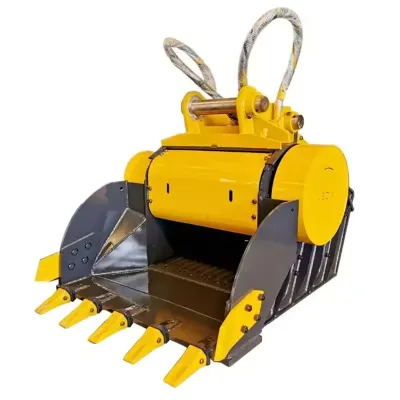
Rotating screening buckets: Sized by volume (0.30–0.80 m³) and drum diameter (700–1100 mm). Weighs 450–1280 kg depending on model. The drum and material weight demand high ROC. The largest model (0.80 m³, 1280 kg) is only suitable for large skid steers with 2000+ kg ROC.
For more on bucket types and applications, see our skid steer bucket types guide. For detailed specs and sizing on specific models, browse the full TGEC skid steer bucket range.