Welcome to the Official Website of TianGe Attachments.

Skid Steer 4-in-1 Bucket

Skid Steer 4-in-1 Bucket

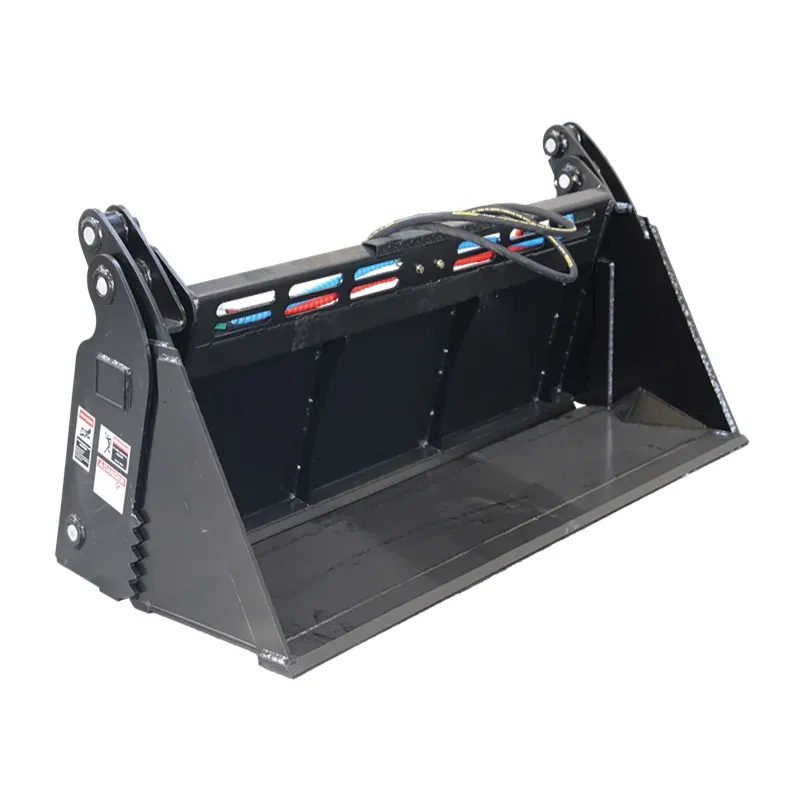
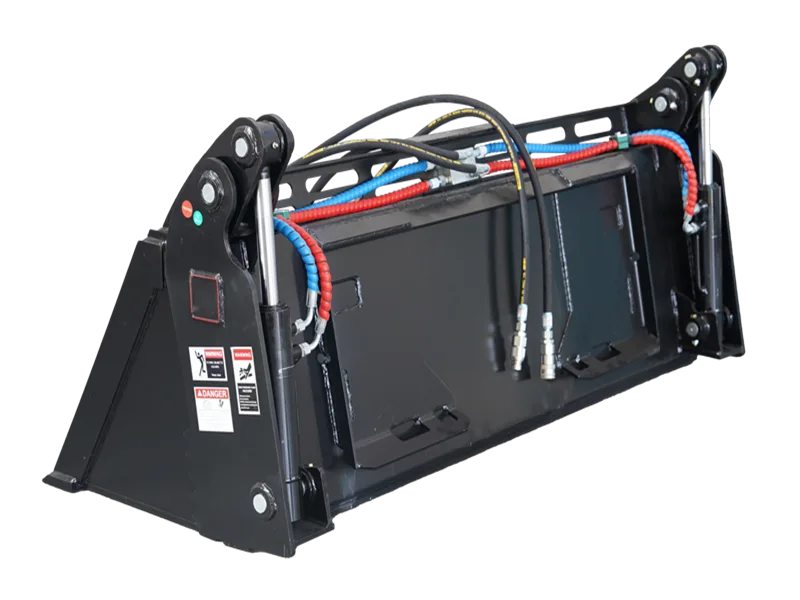
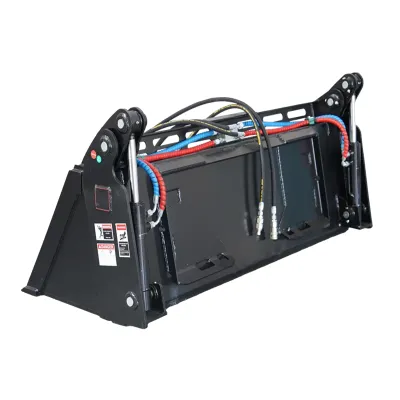
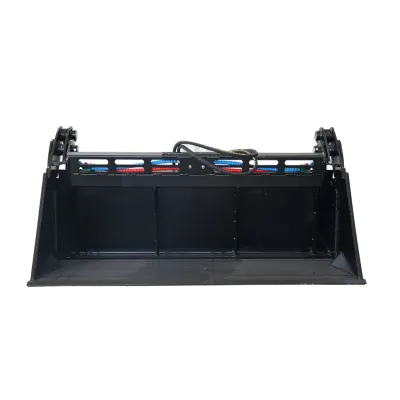
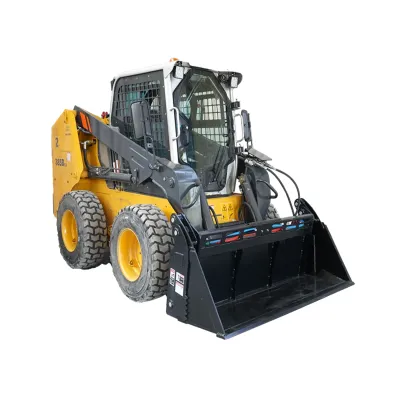
Hydraulic dual-cylinder 4-in-1 bucket for skid steers, combining digging, grading, loading and clamping with a universal quick-attach and replaceable bolt-on cutting edge.
Product Name: 4-in-1 bucket / Multi-purpose bucket / Combination bucket / Clamshell bucket
Type: Buckets
After-sales Service: Provided
Warranty: 1 Year
Customization: Available
Shipping Cost: Negotiate with us about shipping cost and estimated delivery time.
Get a quote
Overview
FAQ

Product Overview

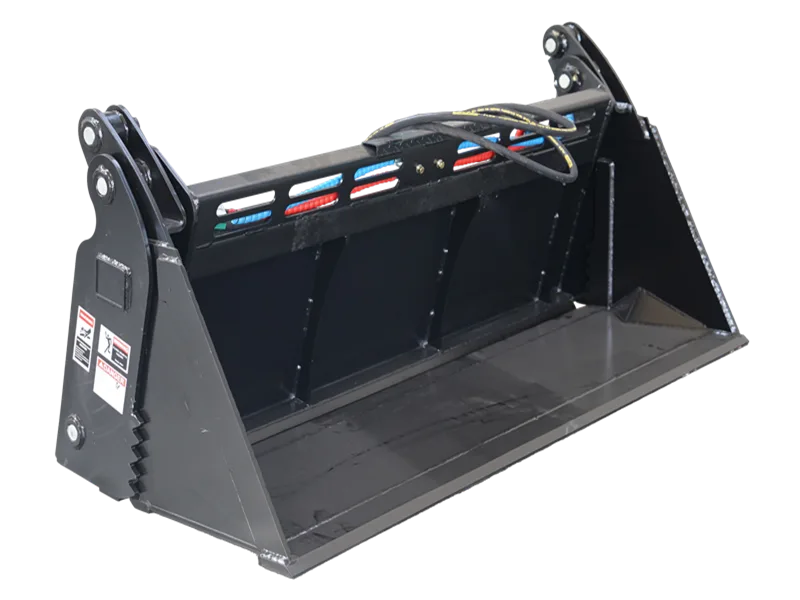
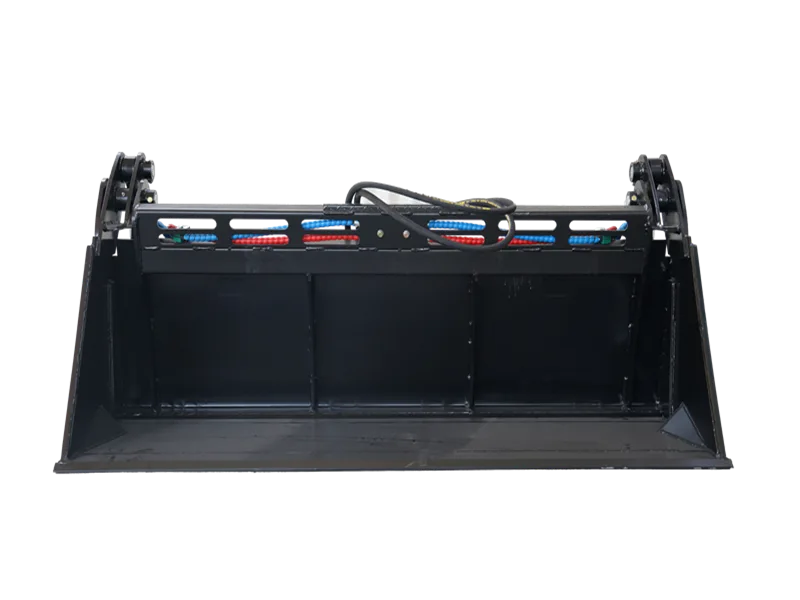
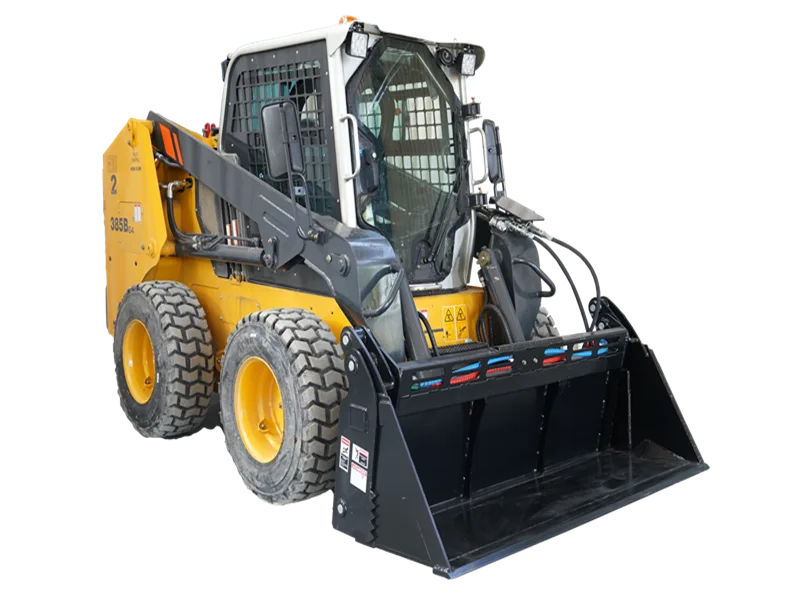
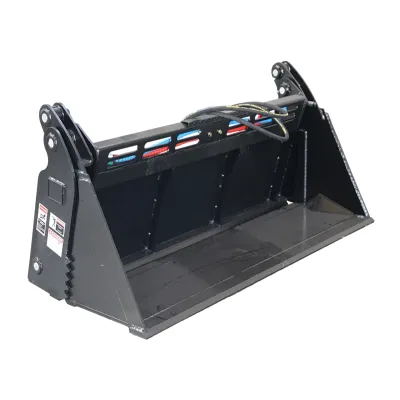
The TGEC skid steer 4-in-1 bucket is a multi-function clamshell attachment that combines four operations in one tool: digging, dozing/grading, loading and clamping/grabbing. The bucket opens hydraulically to form a clamshell for grading and spreading, closes to act as a standard digging bucket, and clamps to grip bulky materials like rocks, logs and debris. Each unit features dual hydraulic cylinders, a replaceable bolt-on high-carbon steel cutting edge, and 12 mm main plate thickness for heavy-duty use.

Available in 62-inch (1580 mm) and 72-inch (1830 mm) widths with capacities of 0.62 m³ and 0.72 m³ respectively, the 4-in-1 bucket mounts via the MP1140 universal quick-attach interface and requires 60 L/min auxiliary hydraulic flow at 16 MPa operating pressure. Weights range from 318 kg to 348 kg depending on width. The 4-in-1 design can reduce the need to switch between multiple attachments for common job site tasks, making it suitable for general contractors, landscapers and rental fleets.

Specifications

ParameterTG-4IN1B1580 (62")TG-4IN1B1830 (72")
Working Width1580 mm / 62"1830 mm / 72"
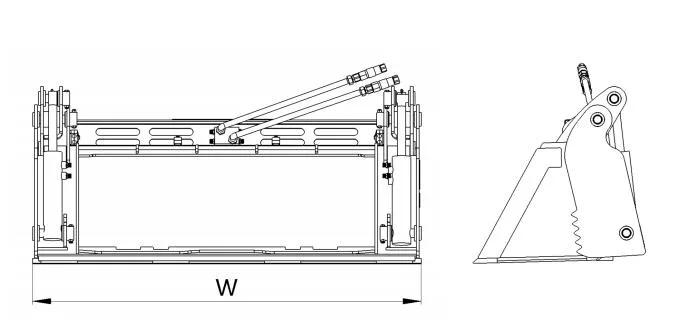
Overall Dimensions (W×D×H)1580 × 732 × 783 mm / 62 × 28.8 × 30.8"1830 × 732 × 783 mm / 72 × 28.8 × 30.8"
Main Plate Thickness12 mm / 0.47"12 mm / 0.47"
Bucket Capacity0.62 m³ / 21.9 ft³0.72 m³ / 25.4 ft³
Clamshell OperationHydraulic, dual-cylinderHydraulic, dual-cylinder
Cutting EdgeReplaceable, bolt-on high-carbon steelReplaceable, bolt-on high-carbon steel
Mounting TypeMP1140 Universal Quick-AttachMP1140 Universal Quick-Attach
Operating Pressure16 MPa / 2320 psi16 MPa / 2320 psi
Hydraulic Flow Required60 L/min / 15.9 gpm60 L/min / 15.9 gpm
Product Weight318 kg / 701 lb348 kg / 767 lb

TGEC Skid Steer 4-in-1 Bucket – Multi-Purpose Clamshell

Applications

  • Digging and excavation: Standard bucket mode for digging footings, trenches and general excavation in soil and loose material.

  • Grading and dozing: Open clamshell mode for grading surfaces, spreading gravel and backfilling trenches with a flat cutting edge.

  • Loading and carrying: Closed bucket mode for loading trucks, moving soil and transporting bulk materials across job sites.

  • Clamping and grabbing: Clamshell clamp mode for gripping rocks, logs, brush, debris and bulky materials that are difficult to secure with standard buckets.

  • Landscaping: Grading lawns, spreading topsoil, moving boulders and preparing planting beds with one attachment.

  • General construction: Multi-task tool for contractors who need to switch between digging, grading and material handling without changing attachments.

OEM & Bulk Supply

TGEC supplies 4-in-1 buckets to equipment dealers, rental fleets and contractors globally, with volume pricing for bulk orders. Standard units ship with universal quick-attach frames, hydraulic hose kits and replaceable cutting edges. Mixed orders combining 4-in-1 buckets with other TGEC skid steer attachments simplify international shipping and consolidate sourcing.

Custom configurations are available on qualified production orders, including modified mounting frames, custom bucket widths, adjusted hydraulic settings and private-label branding. Contact TGEC with your target configurations, estimated annual volume and technical specifications to discuss supply terms.

62" or 72" — Which 4-in-1 Bucket Width Fits Your Skid Steer?

We'll need your machine model, hydraulic specs, and the main tasks you tackle — digging, grading, clamping, or all three. From there, we can determine the suitable width and confirm fitment, then return a quote with estimated delivery.
Frequently Asked Questions

What is a 4-in-1 skid steer bucket used for?+

A 4-in-1 skid steer bucket combines four functions: digging, grading/dozing, loading and clamping/grabbing. It opens hydraulically to form a clamshell for grading and spreading, closes to act as a standard digging bucket, and clamps to grip bulky materials like rocks, logs and debris. This multi-function design can reduce the need to switch between multiple attachments for common job site tasks.

How does a 4-in-1 bucket differ from a standard skid steer bucket?+

A standard skid steer bucket is a fixed open-top container for digging and loading only. A 4-in-1 bucket has a hydraulically operated clamshell bottom that opens, closes and clamps, adding grading, dozing and material-grabbing capabilities. The 4-in-1 bucket uses dual hydraulic cylinders to control the clamshell, while a standard bucket has no moving parts beyond the skid steer's own lift and tilt functions.

What skid steer sizes can use a 4-in-1 bucket?+

TGEC 4-in-1 buckets are designed for full-size skid steer loaders and compact track loaders with the universal quick-attach interface. The 62-inch model weighs 318 kg and the 72-inch model weighs 348 kg, so the skid steer should have sufficient rated operating capacity to handle the attachment weight plus material load. Selection should be based on the machine's rated operating capacity, attachment weight and required auxiliary hydraulic flow.

How should bucket width be matched to the skid steer?+

Bucket width should match the skid steer's tire or track width for efficient grading and loading, while also considering the machine's lift capacity. A 62-inch (1580 mm) bucket suits compact and mid-size skid steers, while a 72-inch (1830 mm) bucket is better for larger machines with higher lift capacity. Wider buckets hold more material but increase weight and may reduce maneuverability in tight spaces. Verify your machine's rated operating capacity and auxiliary hydraulic flow before selecting a width.

Can a 4-in-1 bucket be used for grading?+

Yes. Grading is one of the four primary functions of a 4-in-1 bucket. With the clamshell partially or fully open, the flat cutting edge creates a smooth grading surface for leveling soil, spreading gravel, backfilling trenches and finishing surfaces. The operator controls the clamshell angle and bucket position through the skid steer's auxiliary hydraulic functions to achieve the desired grading depth and finish.

Can a 4-in-1 bucket handle loose material?+

Yes. In closed-bucket mode, the 4-in-1 bucket functions like a standard bucket for digging, loading and carrying loose materials including soil, sand, gravel, mulch and agricultural products. The 0.62-0.72 m³ capacity allows efficient loading of trucks and wheelbarrows. For very fine or wet materials, the clamshell must be fully closed to prevent spillage, and the replaceable cutting edge helps with clean excavation.

Can the bucket be used for clamping and grabbing material?+

Yes. Clamping is the fourth function of a 4-in-1 bucket. The clamshell closes around bulky, irregular materials like rocks, logs, brush, concrete chunks and demolition debris, gripping them securely for lifting and transport. The dual hydraulic cylinders operate the clamshell for clamping and grabbing tasks. While not a dedicated grapple, the 4-in-1 bucket's clamping capability is useful for general material handling where a specialized grapple attachment is not available.

What hydraulic requirements should be checked before installation?+

Before installing a 4-in-1 bucket, verify that your skid steer has auxiliary hydraulic flow of at least 60 L/min (15.9 gpm) and operating pressure up to 16 MPa (2320 psi). Check that the auxiliary hydraulic couplers are clean and compatible with the bucket's hose kit fittings. Ensure the hydraulic fluid level is adequate for continuous clamshell operation. Also verify that the skid steer's auxiliary control circuit can provide continuous flow for holding the clamshell in position during clamping and grading operations.

What mounting system is used for a 4-in-1 skid steer bucket?+

TGEC 4-in-1 buckets use the MP1140 universal quick-attach mounting interface. Compatibility depends on the machine's quick-attach interface, rated operating capacity and auxiliary hydraulic requirements. The universal quick-attach system allows the operator to mount and dismount the bucket quickly using the skid steer's built-in locking levers. Custom mounting frames for non-standard interfaces are available on qualified production orders.

What materials are commonly handled with a 4-in-1 bucket?+

A 4-in-1 bucket handles a wide range of materials across its four operating modes. In digging and loading mode: soil, sand, gravel, mulch, compost, agricultural products and construction debris. In grading mode: topsoil, gravel, crushed stone, sand and fill material. In clamping mode: rocks, boulders, logs, brush, tree roots, concrete chunks, demolition debris and bulky landscape materials. The replaceable high-carbon steel cutting edge is designed for abrasive materials, while the clamshell design provides versatility for both loose and bulky materials.

Which components require regular inspection?+

Regular inspection of a 4-in-1 bucket should cover: hydraulic hoses for cuts, abrasion, cracks or leaks; hydraulic cylinder rods for scratches, dents or corrosion; clamshell pivot pins and bushings for wear and proper lubrication; the cutting edge for wear and bolt tightness; the bucket shell and welds for cracks or deformation; the quick-attach mounting frame for wear and proper locking; and hydraulic hose connections for leaks. Inspect the attachment before each use and perform detailed inspections according to operating conditions and the manufacturer's maintenance guidance.

How can wear on the cutting edge and bucket structure be managed?+

Manage cutting edge wear by inspecting regularly and replacing the bolt-on high-carbon steel edge when it becomes worn down or damaged, rather than allowing wear to reach the bucket shell. Manage bucket structure wear by avoiding overloading beyond rated capacity, minimizing impact with hard surfaces, and repairing any cracks or dents promptly. Lubricate all pivot points according to the maintenance schedule. Keep the bucket clean to prevent corrosion, and store indoors or under cover when not in use for extended periods.
Please make sure to include your phone number with the country code (e.g., 86 for China, 1 for USA).