Welcome to the Official Website of TianGe Attachments.

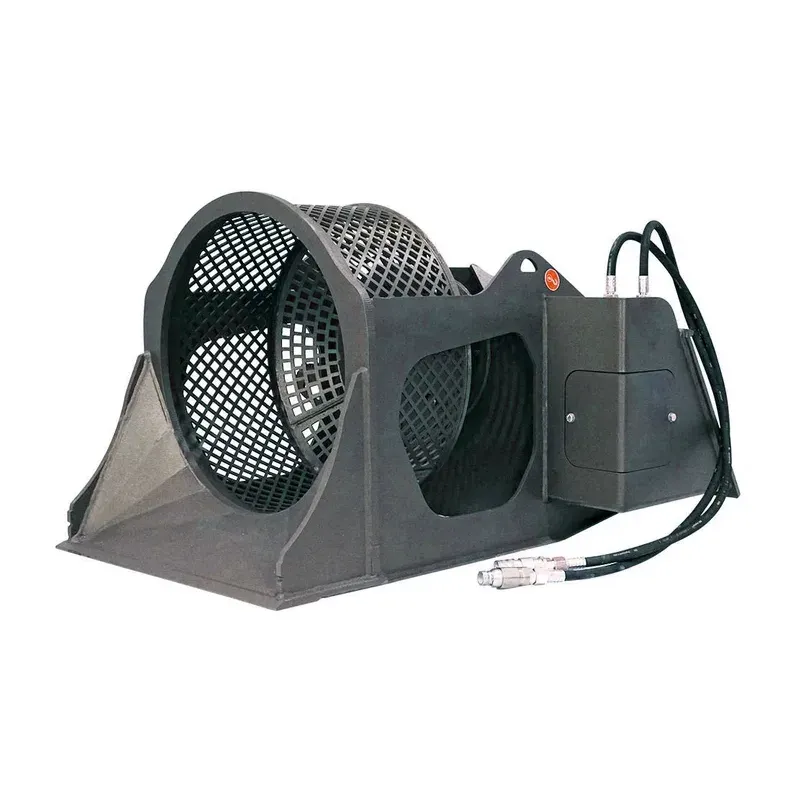
Skid Steer Rotating Screening Bucket

Skid Steer Rotating Screening Bucket

TGEC skid steer rotating screening bucket with 0.30-0.80 m³ volume, 700-1100 mm drum diameter, 810-2250 kg SWL, universal quick-attach for screening soil, rock, debris and recyclable materials on job sites.
Product Name: Rotary screening bucket / Trommel screen bucket / Screening bucket / Rotating sieve bucket / Soil screener
Type: Buckets
After-sales Service: Provided
Warranty: 1 Year
Customization: Available
Shipping Cost: Negotiate with us about shipping cost and estimated delivery time.
Get a quote
Overview
FAQ

Product Overview

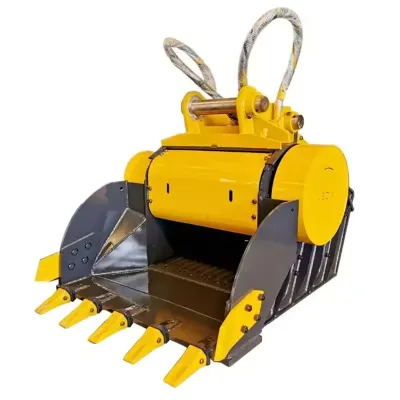
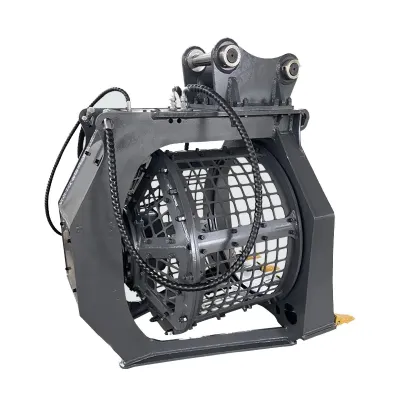
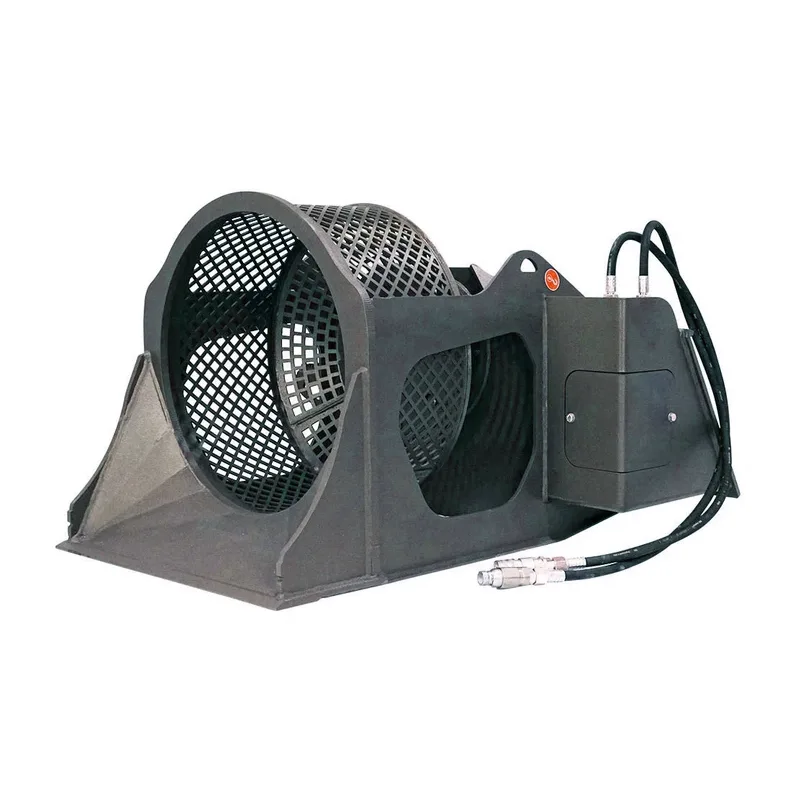
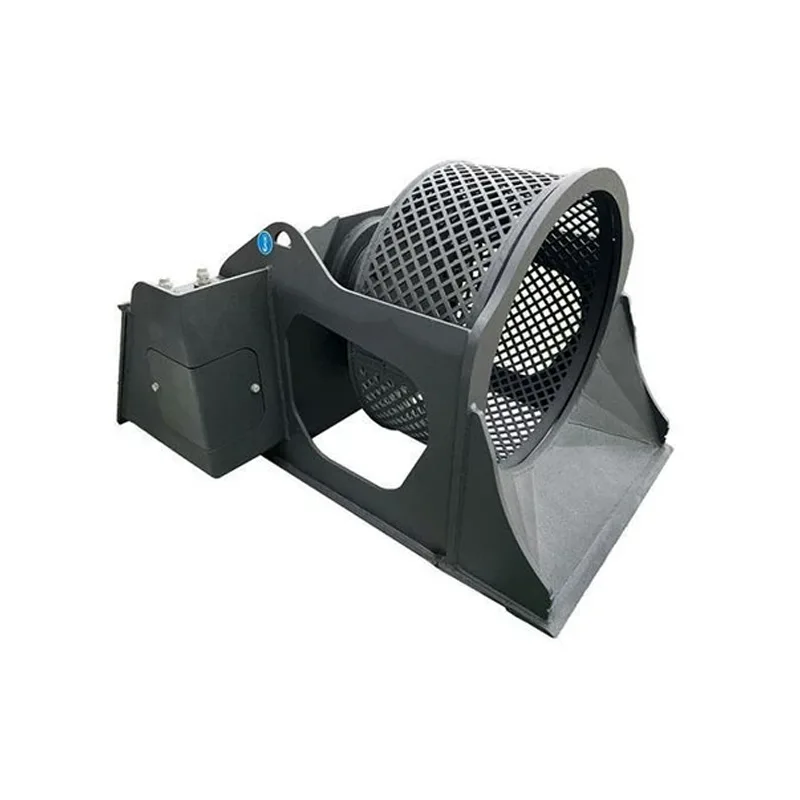
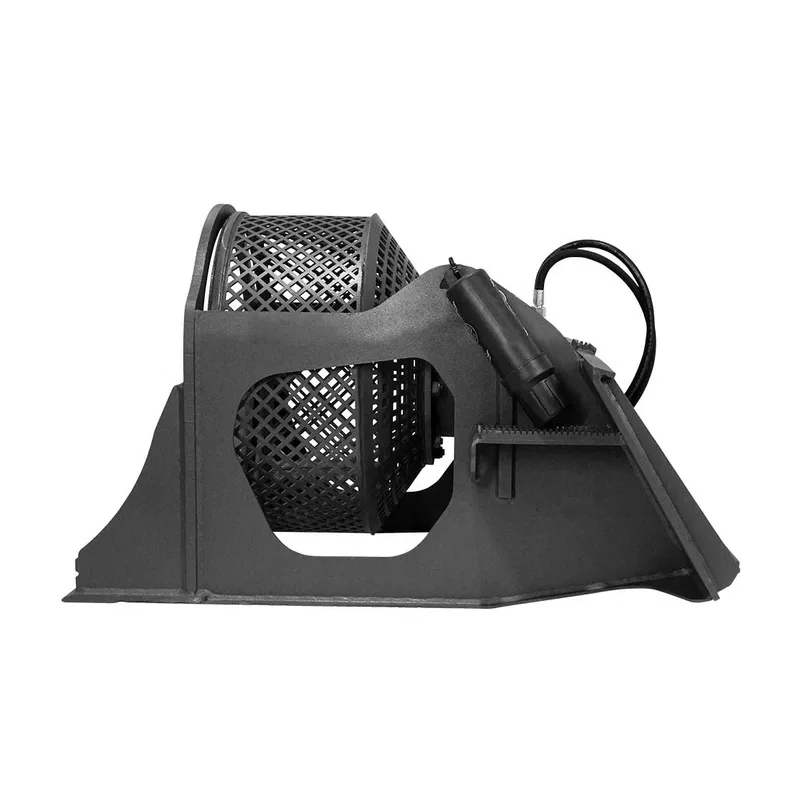
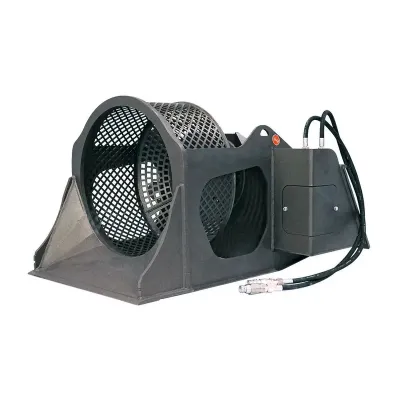
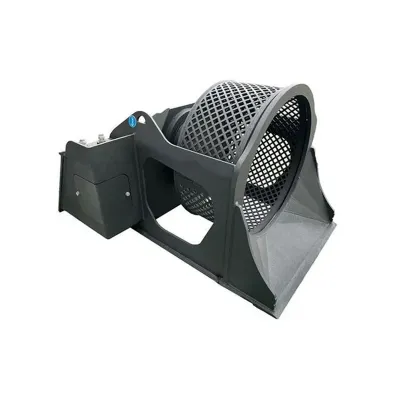
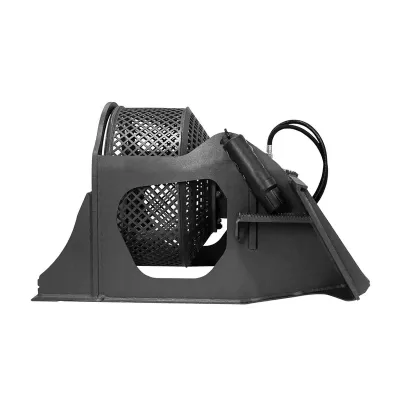
The TGEC skid steer rotating screening bucket is a trommel-style screening attachment that separates material by size using a rotating drum with perforated screens. Mounted via the universal quick-attach interface and powered by the skid steer's auxiliary hydraulic circuit, the screening bucket allows operators to load material into the bucket, rotate the drum to sift fine material through the screen, and retain oversized material for separate disposal. This on-site screening capability eliminates the need to haul unscreened material off-site and bring in screened material, reducing trucking costs and project timelines.

Available in three models with volumes from 0.30 m³ to 0.80 m³, drum diameters from 700 mm to 1100 mm, and safe working loads (SWL) from 810 kg to 2250 kg, the rotating screening bucket handles a wide range of screening applications. Unit weights range from 450 kg to 1280 kg depending on model. All models mount via the MP1140 universal quick-attach interface and are compatible with most standard skid steer loaders and compact track loaders. The screening bucket is ideal for topsoil screening, rock and debris separation, recycling yard sorting, construction debris processing, agricultural soil preparation and landscaping material separation.

Specifications

TypeSWL / kgDimension (L×W×H) / mmDrum Diameter / mmVolume / m³Weight / kg
TG-SRF05-MP1140810 kg / 1786 lb1380 × 1420 × 850 mm / 54.3 × 55.9 × 33.5"700 mm / 27.6"0.30 m³ / 10.6 ft³450 kg / 992 lb
TG-SRF07-MP11401500 kg / 3307 lb1625 × 1600 × 1060 mm / 64.0 × 63.0 × 41.7"900 mm / 35.4"0.50 m³ / 17.7 ft³900 kg / 1984 lb
TG-SRF10-MP11402250 kg / 4960 lb1850 × 1800 × 1230 mm / 72.8 × 70.9 × 48.4"1100 mm / 43.3"0.80 m³ / 28.3 ft³1280 kg / 2822 lb

Applications

  • Topsoil screening: Separating rocks, roots and debris from topsoil for landscaping, gardening and agricultural use, producing fine screened soil on-site.

  • Rock and debris separation: Sifting soil to remove rocks, concrete chunks and construction debris for site preparation and land clearing.

  • Recycling and waste management: Sorting construction debris, green waste, scrap metal and recyclable materials in recycling yards and transfer stations by size.

  • Construction debris processing: Screening demolition waste to separate reusable fill material from oversized debris requiring disposal, reducing landfill volume.

  • Agricultural soil preparation: Screening soil for planting beds, nurseries and agricultural fields, removing clods, rocks and organic debris.

  • Landscaping and hardscape: Producing screened soil for lawns, gardens and planting areas, and separating gravel from soil for hardscape projects.

OEM & Bulk Supply

TGEC supplies rotating screening buckets to equipment dealers, rental fleets, contractors, recycling operations and landscaping companies globally, with volume pricing for bulk orders. Standard units ship with universal quick-attach frames, hydraulic hose kits and screening drums with standard perforation sizes. Mixed orders combining screening buckets with other TGEC skid steer attachments simplify international shipping and consolidate sourcing for dealers carrying multiple product lines.

Custom configurations are available on qualified production orders, including modified mounting frames for non-standard quick-attach interfaces, custom screen perforation sizes for specific material separation, custom drum designs, adjusted hydraulic settings for specific carrier models, and private-label branding with paint color, nameplates and packaging. Custom jobs are subject to engineering review and production feasibility. Contact the OEM sales team with your target configurations, estimated annual volume and technical specifications to discuss supply terms.

Topsoil, Compost, or Demolition Debris — What Are You Screening?

Give us the details: your skid steer model and ROC, hydraulic flow, and the material you process most. Also mention the screen size you need and the volume per batch (0.30, 0.50, or 0.80 m³). We'll match you with the right TG-SRF model, confirm fitment, and respond with a quote and estimated availability.
Frequently Asked Questions

What is a rotating screening bucket?+

A rotating screening bucket is a skid steer attachment that separates material by size using a rotating trommel drum with perforated screens. Mounted via the universal quick-attach interface and powered by the auxiliary hydraulic circuit, it lets operators sift material on-site instead of hauling unscreened material off-site and importing screened material. See the Applications section for detailed use cases.

What materials can a screening bucket process?+

It processes soil, topsoil, sand, gravel, construction debris, green waste, demolition material, agricultural soil and recyclables. The screen perforation determines the separation threshold — smaller holes produce finer output but process more slowly. Wet or clay-heavy material may clog the screen and require adjusted processing.

What skid steer size and ROC is required?+

Match the bucket to your skid steer's rated operating capacity (ROC) by totaling the empty attachment weight plus the material weight at full volume. The TG-SRF05 weighs 450 kg empty (0.30 m³, 810 kg SWL); the TG-SRF10 weighs 1280 kg empty (0.80 m³, 2250 kg SWL). Choose the model whose total load (attachment plus material at your expected density) stays within your machine's ROC. Also verify auxiliary hydraulic flow for drum rotation and cooling capacity for continuous operation.

How does the rotating drum work?+

A hydraulic motor rotates a cylindrical trommel drum with perforated screens. Material is loaded into the bucket, and as the drum rotates, fine particles fall through the screen while oversized material remains inside. The operator then tilts the bucket to discharge the oversized material into a separate pile or truck. Rotation speed is controlled via the auxiliary hydraulic flow.

What hydraulic requirements should I check?+

Verify your skid steer has an auxiliary hydraulic circuit with sufficient flow and pressure for the drum motor. Confirm couplers are clean and compatible with the bucket's hose kit. Check that hydraulic fluid level and cooling capacity handle continuous drum rotation without overheating, especially in warm weather. Ensure the auxiliary control (foot pedal or hand lever) provides variable flow for speed control, and inspect all hoses for cuts, abrasion or leaks before use.

How does material moisture affect screening?+

Dry, loose material screens efficiently. Wet material clumps together, reducing throughput and producing coarser output. Clay-heavy material can coat and clog screen perforations. To improve moist-material screening: reduce batch load, increase rotation time, use larger perforations, or let material dry partially before screening.

How do I choose the right screen size?+

Select perforation size based on desired output. For fine topsoil, use smaller perforations; for general landscaping and planting beds, use medium perforations; for construction fill and rough grading, use larger perforations. The perforation size sets the maximum particle size in screened output — oversize material stays in the drum and is discharged separately. Custom perforation sizes are available on qualified production orders.

What wears out and how do I maintain the bucket?+

Wear components include the perforated screens (continuous abrasion from tumbling material), drum support rollers or bearings, hydraulic motor, bucket shell and side plates, cutting edge, and hydraulic hoses. Inspect the drum, hoses, motor and quick-attach frame before each use. After each job, discharge remaining material and wash the drum interior, especially the screens. Replace screens when perforations enlarge beyond spec or develop holes, replace bearings when they show excessive play or unusual noise, and replace hoses when damage or leaks appear. Keep a maintenance log and use genuine replacement parts.
Please make sure to include your phone number with the country code (e.g., 86 for China, 1 for USA).