The right skid steer dozer blade comes down to your primary work type, machine size, and whether you need basic pushing or precision grading control. The two main options are standard angle blades for general pushing and backfilling, and hydraulic tilting 6-way blades for finish grading and contour work. Within each type, blade width, hydraulic demands, cutting edge design, and mounting compatibility all affect performance and productivity on the job.
Blade Type: Standard Angle vs 6-Way Hydraulic Tilting
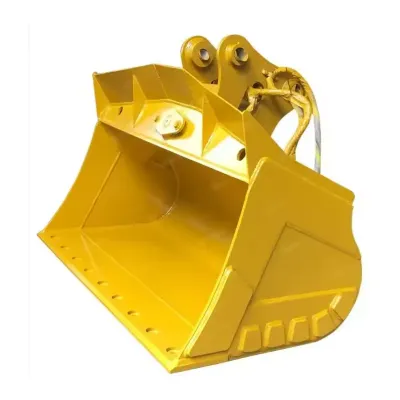
The first choice is between a standard angle blade and a 6-way hydraulic tilting blade. A standard angle blade offers 30-degree left and right hydraulic angle control, suited for general pushing, backfilling, rough grading, and snow removal. It is simpler, lighter, and less expensive than a 6-way blade, and runs on a single auxiliary hydraulic circuit. A 6-way hydraulic tilting blade adds independent ±10 degree tilt control to the ±30 degree angle function, enabling precision finish grading, V-ditch construction, slope maintenance, and contour shaping. It requires two independent hydraulic circuits, weighs more (583 kg for the TGEC 84 inch model), and costs more, but delivers grading capability close to a dedicated motor grader for many tasks.
For contractors who mainly do backfilling, rough grading, snow pushing, and general material movement, a standard angle blade offers practical, cost-effective performance. For those who need precision finish grading, road and driveway work, ditching, or contour grading, the 6-way blade's tilt function justifies the added investment. Many operations keep both types—the standard blade for heavy pushing and the 6-way blade for precision grading.
Blade Width
Blade width determines coverage per pass and how much material the blade can handle. Standard angle blades are commonly available in 72 inch and 84 inch widths, while 6-way blades are typically 84 inches for stability with the tilt mechanism. The 72 inch blade (215 kg for the TGEC model) suits compact and mid-size skid steers, offers better maneuverability in tight spaces, and demands less machine power. The 84 inch blade (258 kg for the standard model, 583 kg for the 6-way model) covers more ground per pass, making it more efficient for large open areas, but needs a larger skid steer with greater operating weight and lift capacity for stable operation.
When choosing width, think about typical site conditions: tight residential lots and confined spaces favor a narrower blade, while large construction sites, agricultural lanes, and open grading work favor a wider blade. Keep in mind that when angled 30 degrees, effective width reduces (the TGEC 84 inch 6-way blade measures 1845 mm at 30 degrees), so an 84 inch blade angled for grading contacts material similarly to a 72 inch blade.
Hydraulic Requirements
Hydraulic compatibility is essential for dozer blade performance. A standard angle blade needs one auxiliary hydraulic circuit with adequate flow and pressure to run the angle cylinders. TGEC standard dozer blades require 60 L/min flow and 20 MPa operating pressure, matching standard-flow hydraulics on most mid-size and full-size skid steers. A 6-way hydraulic tilting blade needs two independent auxiliary circuits to control angle and tilt separately, with operating pressure in the 16 to 21 MPa range. Before buying, confirm that your skid steer has the required number of circuits and that flow and pressure ratings fall within the attachment's recommended range.
Also consider cab hydraulic controls. Proportional controls allow variable speed for fine adjustments, which is especially valuable for precision grading with a 6-way blade. On/off controls are simpler but less precise. If your skid steer has only one auxiliary circuit and you want a 6-way blade, you may need to add a second circuit or opt for a standard angle blade instead.
Cutting Edge and Construction
The cutting edge is the primary wear component and directly affects grading performance and maintenance costs. TGEC dozer blades feature an 8 mm reversible bolt-on cutting edge that can be flipped to use the opposite edge when one side wears, effectively doubling service life before replacement. Bolt-on edges are easier to replace than welded edges and don't require welding equipment. For heavy-duty or rocky applications, consider a thicker cutting edge or a carbide-tipped edge for extended wear life, though these add cost.
Blade body construction also matters. The TGEC 72 inch standard blade has a 3 mm blade body, while the 84 inch model has a 4 mm body for added rigidity. The 6-way blade features heavy-duty construction to handle the extra forces of multi-way hydraulic positioning. When comparing blades, look for reinforced mounting frames, greasable pivot points, and quality hydraulic cylinders with chrome-plated rods for durability. The universal quick-attach mounting system (MP1220) ensures compatibility with most standard skid steers and compact track loaders.
Machine Compatibility and Size
Your skid steer's size and capacity determine which dozer blade will work safely and effectively. A general rule is that the skid steer's operating weight should be at least 3 to 4 times the attachment weight for stable pushing, especially when the blade is fully loaded. The 72 inch standard blade (215 kg) works well with compact and mid-size skid steers, while the 84 inch standard blade (258 kg) and 6-way blade (583 kg) require larger mid-size or full-size machines with more horsepower, operating weight, and lift capacity. Also verify that the skid steer's rated operating capacity (ROC) can handle the attachment weight plus the expected material load, and that the wheelbase and track length provide sufficient stability for pushing heavy loads.
For mini skid steers or compact utility loaders, a narrower, lighter dozer blade specifically designed for mini machines may be necessary to maintain stability and safe operation. Always consult the skid steer manufacturer's attachment compatibility guidelines and the attachment manufacturer's specifications to confirm a safe match before purchasing.
Making Your Selection
To pick the right skid steer dozer blade, start with your primary application: general pushing and backfilling point toward a standard angle blade, while precision grading and contour work point toward a 6-way hydraulic tilting blade. Then match blade width to your typical site conditions and skid steer size, verify hydraulic compatibility (flow, pressure, and circuit count), and consider cutting edge type and blade construction for durability. The TGEC lineup includes 72 inch and 84 inch standard angle blades and an 84 inch 6-way hydraulic tilting blade, all with universal quick-attach mounting and factory-direct pricing.
For more information on the skid steer dozer blade and its specifications, visit the product page. To compare standard and 6-way configurations, read our guide on skid steer dozer blade vs 6-way blade. For the full blade lineup and category information, visit the skid steer blades hub. For precision grading with tilt capability, see the hydraulic tilting dozer blade product page.