Welcome to the Official Website of TianGe Attachments.

Skid Steer Dozer Blade

Skid Steer Dozer Blade

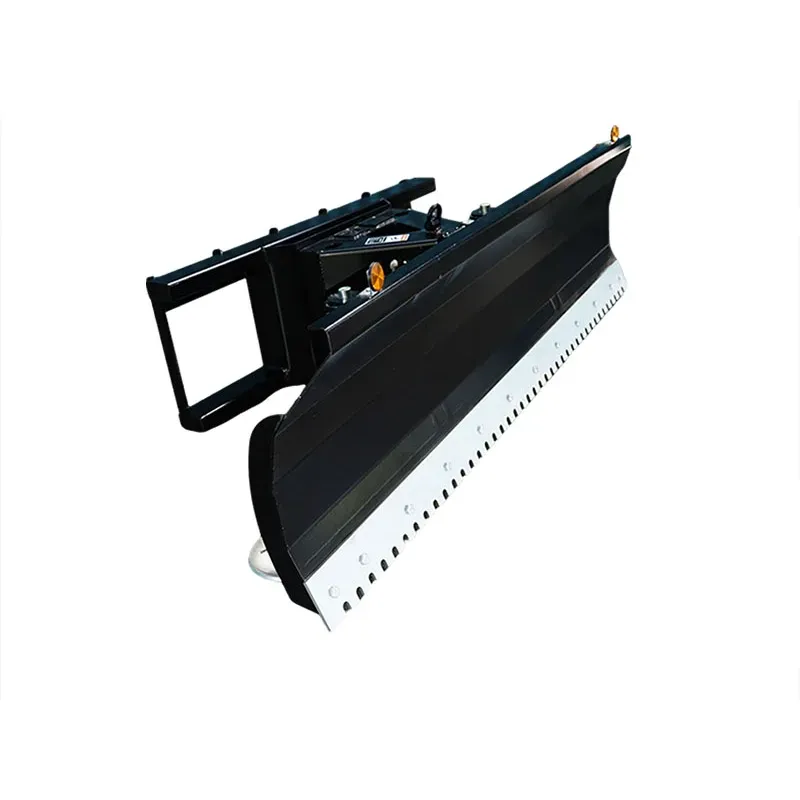
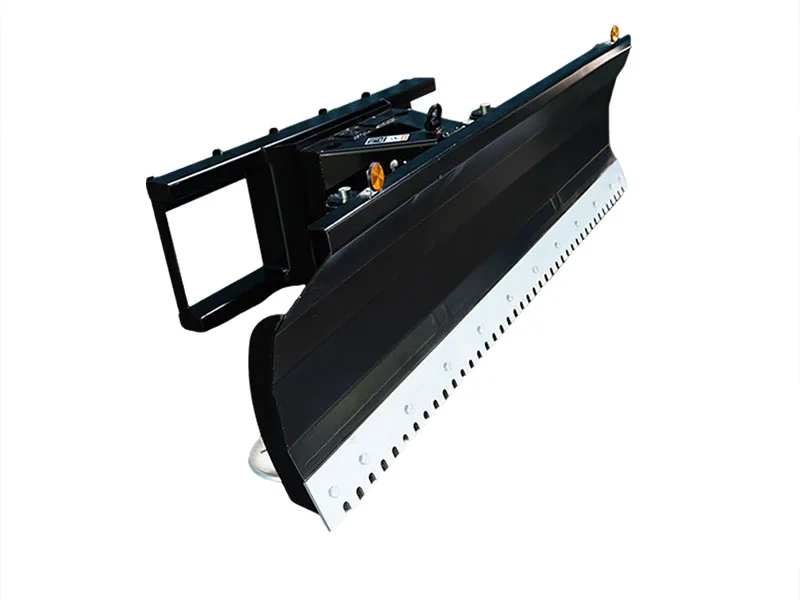
TGEC skid steer dozer blade in 72 and 84 inch widths with 30-degree hydraulic angle control, reversible bolt-on cutting edge, and universal quick-attach mounting. For pushing, grading, backfilling, and snow removal on construction and landscaping sites.
Product Name: Bulldozer blade / Angle blade / Straight blade / Push blade / Backfill blade
Type: Blades
After-sales Service: Provided
Warranty: 1 Year
Customization: Available
Shipping Cost: Negotiate with us about shipping cost and estimated delivery time.
Get a quote
Overview
FAQ

Product Overview

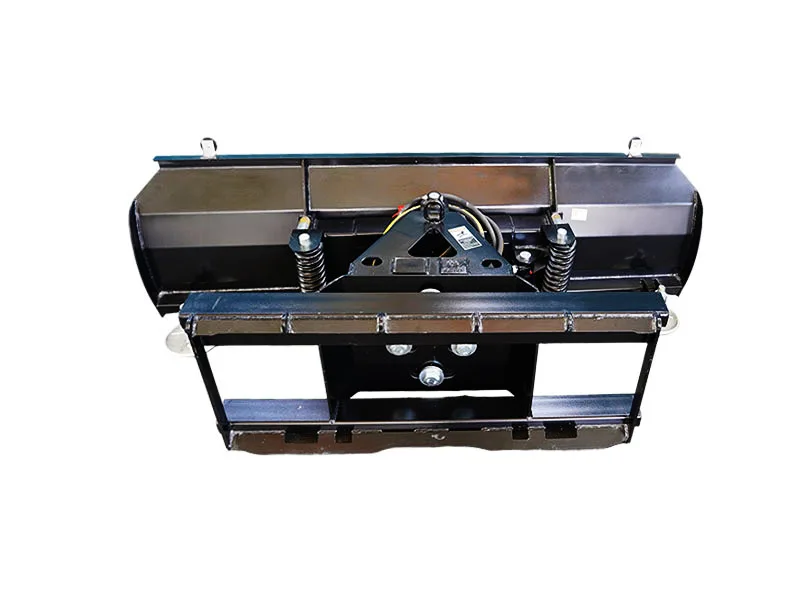
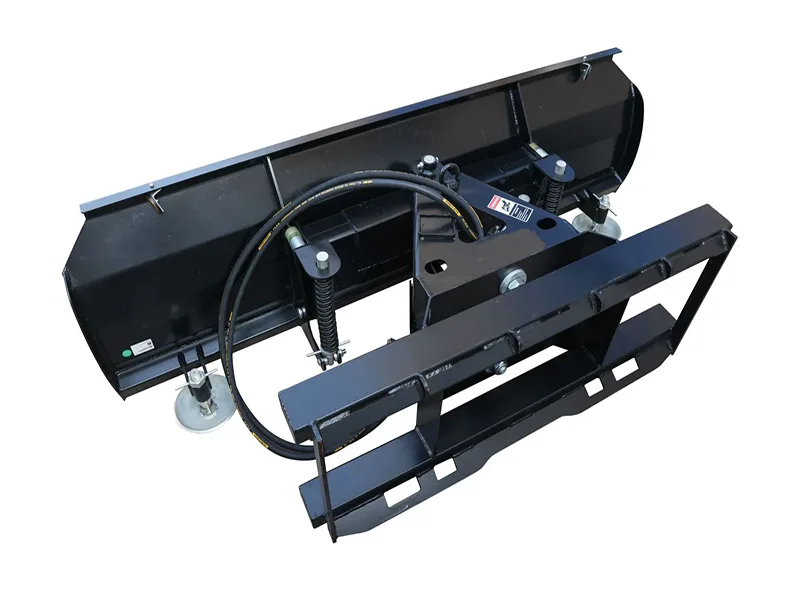
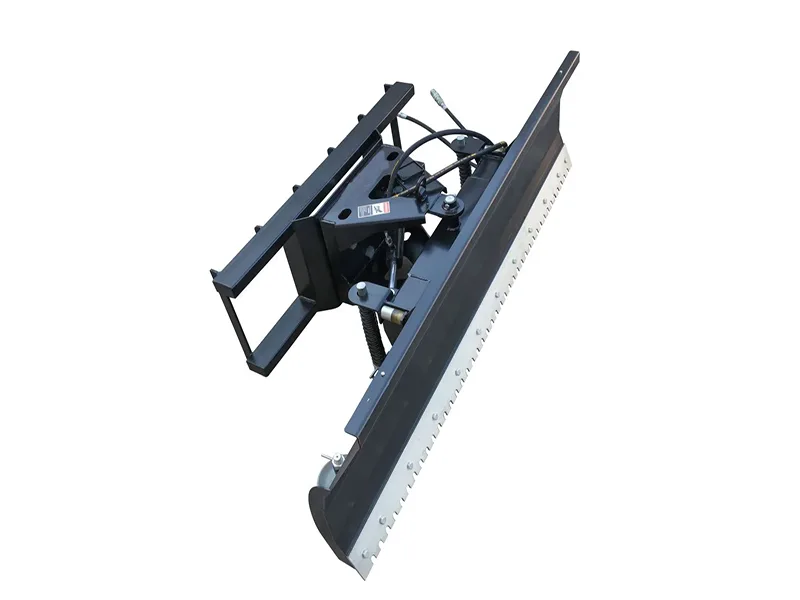
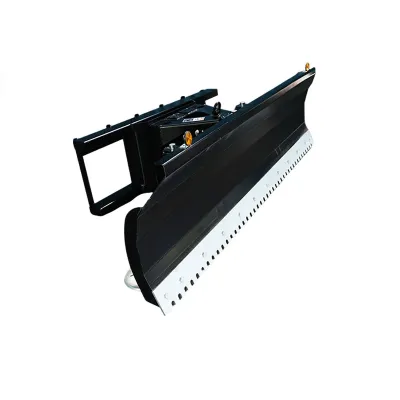
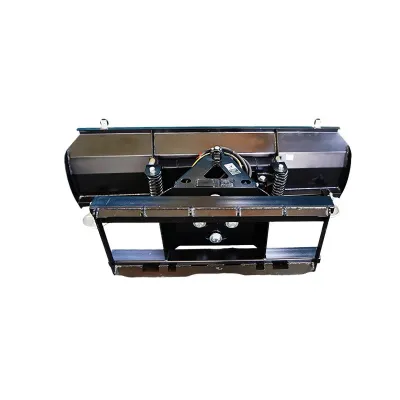
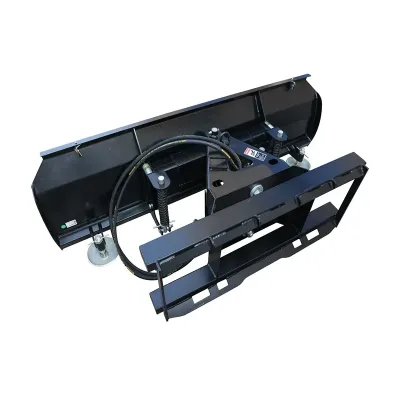
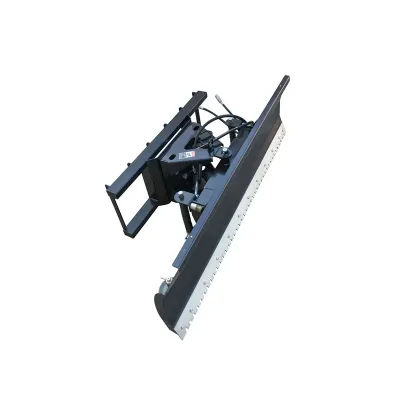
The TGEC skid steer dozer blade is a hydraulic angle blade mounting to the universal quick-attach plate on skid steers and compact track loaders, adding pushing, grading, and backfilling capability. Available in 72 inch (TG-SBE1830) and 84 inch (TG-SBE2130) widths, each features 30-degree left and right hydraulic angle control, an 8 mm reversible bolt-on cutting edge, and a heavy-duty blade body for construction, landscaping, and site prep.

The 72 inch model weighs 215 kg with a 3 mm blade body, while the 84 inch model weighs 258 kg with a 4 mm blade body for rigidity. Both require 60 L/min auxiliary hydraulic flow and 20 MPa operating pressure, designed for hydraulic systems with a 60 L/min flow rating. The universal quick-attach frame (MP1220) allows fast changes, and the reversible cutting edge doubles service life by flipping to the opposite edge. As a direct manufacturer, TGEC supplies these dozer blades to dealers and contractors worldwide with factory-direct pricing.
TGEC Skid Steer Hydraulic Angle Dozer Blade – 72 inch and 84 inch models

Technical Specifications

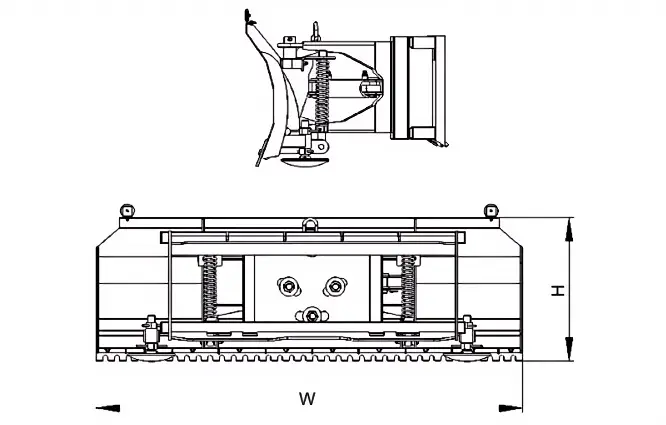
Specification ItemTG-SBE1830(72IN)-MP1220TG-SBE2130(84IN)-MP1220
Working Width1830 mm / 72"2130 mm / 84"
Angle Adjustment30° Left / 30° Right30° Left / 30° Right
Blade Body Thickness3 mm (0.12 in)4 mm (0.16 in)
Cutting Edge Thickness8 mm (0.31 in), reversible, bolt-on8 mm (0.31 in), reversible, bolt-on
Mounting TypeMP1220 Universal Quick-AttachMP1220 Universal Quick-Attach
Operating Pressure20 MPa (2900 psi)20 MPa (2900 psi)
Hydraulic Flow Required60 L/min (15.9 gpm)60 L/min (15.9 gpm)
Product Weight215 kg (474 lb)258 kg (569 lb)

Specifications are subject to change without notice. Contact TGEC for the latest technical data and custom configuration options.

How It Works

The dozer blade connects to the skid steer auxiliary hydraulic circuit through quick-disconnect couplers. Hydraulic flow powers angle cylinders, pivoting the blade 30 degrees left or right from the cab. The loader arms control blade height and tilt for grading and cutting depth. When angled, material is pushed to the side rather than straight ahead, effective for backfilling, windrowing, and contour grading. The reversible bolt-on cutting edge flips to the opposite edge when worn, doubling service life.

Installation & Mounting

Align the quick-attach plate on the dozer blade with the skid steer's attachment interface, lower the loader arms to engage the mounting pins, and secure the latch. Connect the auxiliary hydraulic hoses to the quick-disconnect couplers, ensuring flow and return lines match the attachment's port configuration. Cycle the angle controls slowly to purge air and verify smooth 30-degree left and right movement before work. Mounting takes a few minutes and requires no tools, allowing fast changes.

Application Scenarios

  • Backfilling trenches and foundations with controlled pushing and angle.

  • Site prep and rough grading for residential and commercial construction.

  • Snow pushing and light plowing in winter with angled blade for windrowing.

  • Agricultural work including lane maintenance, feedlot cleaning, and manure pushing.

  • Material spreading and stockpile management for soil, gravel, sand, and aggregate.

  • Landscaping grading and contour shaping with angle blade for slopes.

Wear & Service

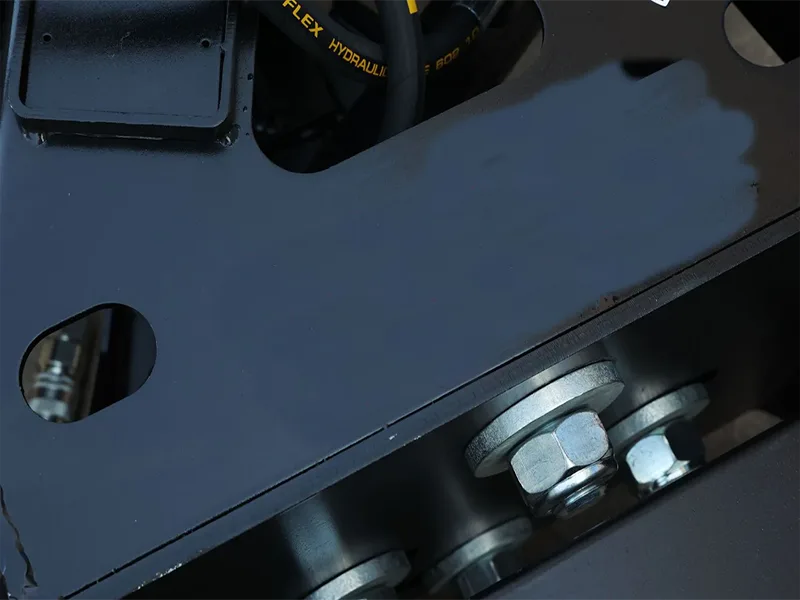
Regular inspection extends dozer blade life. The 8 mm reversible cutting edge is the primary wear item; when one edge wears, flip the blade to use the opposite edge, and replace when both are worn. Angle cylinder pins and bushings should be greased regularly and checked for play. Hydraulic hoses and fittings should be inspected for cracks, abrasion, and leaks and replaced if damaged. The blade body should be checked for cracks or bending, particularly at the mounting frame and angle pivots. The reversible cutting edge is bolt-on for easy replacement without welding.

Dealer & Bulk Orders

TGEC supplies skid steer dozer blades to equipment dealers, rental companies, and distributors worldwide with volume pricing and mixed-order consolidation. OEM and private-label programs are available for qualified partners, including custom paint colors, nameplates, packaging, and configuration modifications. Custom jobs are subject to engineering review and production feasibility. Contact the OEM sales team with your branding specifications, target configurations, and estimated annual volume to discuss supply terms. Visit the skid steer blades hub for the full lineup. Consider the 6-way hydraulic tilting dozer blade for precision grading. Read skid steer dozer blade vs 6-way blade to compare configurations. See how to choose a skid steer dozer blade for selection guidance.

Request a Quote

Let us know your skid steer model and its auxiliary flow rating, the kind of material you'll be pushing or grading, and whether you need the 72" or 84" width. Also tell us about your typical job site—backfilling trenches, snow clearing, or land grading. We'll match the blade configuration to your machine and work conditions, then return a quote with price and delivery time based on your needs.
Frequently Asked Questions

What is a skid steer dozer blade used for?+

A skid steer dozer blade is used for pushing, grading, backfilling, and leveling material on construction, landscaping, and agricultural job sites. It mounts to the universal quick-attach plate and uses the skid steer's auxiliary hydraulics to angle the blade 30 degrees left or right. Common applications include backfilling trenches, rough grading building pads, pushing snow, maintaining agricultural lanes, spreading stockpiled material, and contour shaping for landscaping. The angle capability allows material to be moved to the side as well as forward.

What is the difference between a straight blade and an angle blade?+

A straight blade is fixed in a perpendicular position and can only push material straight ahead, making it suitable for simple pushing and light grading. An angle blade, like the TGEC dozer blade, can pivot 30 degrees left or right hydraulically, allowing the operator to push material to the side, windrow material, grade along contours, and backfill more efficiently. The angle capability adds significant versatility for tasks such as trench backfilling, snow windrowing, and sloped grading. TGEC dozer blades are angle blades with 30-degree left and right capability as standard.

Can a skid steer dozer blade be used for backfilling?+

Yes. A skid steer dozer blade is well suited for backfilling trenches and foundations. The 30-degree angle capability allows the operator to push material from the side into the trench, providing better control over material placement and distribution than pushing straight ahead. The angled blade helps the operator work along the trench without driving directly over it. For backfilling, operators typically angle the blade and make parallel passes along the trench, gradually pushing material in from both sides. The blade's cutting edge helps spread and level the backfill material as it is placed.

What type of material can a skid steer dozer blade move?+

A skid steer dozer blade can move a wide range of materials including soil, sand, gravel, aggregate, snow, mulch, manure, and loose fill material. It is most effective with loose to moderately compacted material that can be pushed without excessive resistance. For hard-packed or frozen ground, the blade may struggle to penetrate, and a scarifier or ripper attachment may be needed first to loosen the material. The 8 mm reversible cutting edge provides durability for general-purpose pushing and grading, but for rocky or abrasive material, the cutting edge will wear faster and may require more frequent replacement or flipping.

How does blade angle affect grading work?+

Blade angle determines how material flows across the blade. When straight, material is pushed ahead, effective for rough grading and moving large volumes. When angled, material flows across the face and exits to the side, allowing spreading, windrowing, slope grading, and precise material placement. For finish grading, a slight angle can help create a smooth surface by letting excess material flow off the edge. The optimal angle depends on material type, desired grade, and job requirements.

What skid steer size is suitable for a dozer blade?+

The appropriate skid steer size depends on blade width and work type. The 72 inch TG-SBE1830 weighs 215 kg and suits compact and mid-size skid steers with at least 60 L/min auxiliary flow and sufficient operating weight for stable pushing. The 84 inch TG-SBE2130 weighs 258 kg and needs a larger mid-size or full-size skid steer with more lift capacity to handle the wider blade and increased load.

Can a dozer blade be used for leveling and grading?+

Yes. A dozer blade handles both rough grading and finish leveling. For rough grading, it moves large volumes and shapes the general contour. For finish grading, the operator uses loader arms to control cutting depth and makes multiple passes at shallower depths to create a smooth, level surface. The 30-degree angle helps spread material evenly and create uniform grades. For precision finish grading with tight tolerances, a laser-guided system or dedicated land plane/box blade may provide more consistent results, but a dozer blade handles most general grading and leveling tasks for residential and light commercial work.

What is the difference between a dozer blade and a standard bucket?+

A dozer blade and standard bucket serve different purposes. A dozer blade is a wide, flat blade for pushing, grading, and spreading material across a broad surface, with angle capability for contour grading. A standard bucket is designed for digging, loading, and carrying, with a curved bottom and cutting teeth for penetrating and scooping. While a bucket can do light pushing by dragging its bottom edge, it is less efficient because its curved shape and narrower width create uneven surfaces and require more passes. The dozer blade's wide, flat surface and angle are suited to grading, backfilling, and spreading.

How should the cutting edge of a dozer blade be maintained?+

The cutting edge is the primary wear component and should be inspected regularly. The TGEC dozer blade features an 8 mm reversible bolt-on cutting edge that can be flipped to use the opposite edge when one side wears, doubling service life. To flip or replace, remove the mounting bolts, rotate or replace the edge, and reinstall with bolts torqued to specification. Replace when both edges are worn to the point that grading efficiency drops or the blade body contacts the ground. Keeping the cutting edge in good condition maintains performance and protects the blade body.

When should a skid steer dozer blade be replaced or serviced?+

A dozer blade should be serviced when maintenance indicates worn or damaged components, and replaced when the blade body is structurally compromised. Key service indicators include: cutting edge worn beyond usable thickness (flip or replace), excessive play in angle cylinder pins and bushings (grease or replace), hydraulic hose leaks or cracks (replace), blade body cracks or bending (weld or replace), and angle cylinder drift or slow movement (service cylinders). Replace if the blade body is severely bent or cracked beyond repair, or if the mounting frame is damaged. With proper maintenance, the blade's service life can be extended.
Please make sure to include your phone number with the country code (e.g., 86 for China, 1 for USA).