Picking the right pallet forks for a skid steer isn't just about finding a set that fits the quick-attach plate. Fork length, rated capacity, frame construction, hydraulic features, and duty class all affect performance, safety, and service life. A mismatched fork set can lead to overloading, premature wear, inefficient operation, and even tip-over hazards. This guide walks through the key decision factors to help you choose pallet forks that match your machine, your loads, and your working environment.
Whether you're outfitting a rental fleet, a construction yard, a warehouse, or a farm, the principles below apply. The goal is a fork attachment that handles your typical loads safely, fits your machine's capacity, and delivers the features you need without paying for ones you don't.
Start with Machine Compatibility
Before evaluating fork features, confirm that your skid steer can safely operate the attachment. Check the machine's rated operating capacity (ROC) and ensure that the fork attachment weight plus your typical load stays within the ROC at the actual load center. Also verify that the machine has a universal quick-attach mounting plate and, if you're considering hydraulic side-shift forks, an auxiliary hydraulic circuit with sufficient flow and pressure.
A common mistake is choosing a fork set rated for 2500 kg (5500 lb) when the skid steer only has a 1000 kg (2200 lb) ROC. The fork's structural rating is irrelevant if the machine can't lift that much. Always match the fork capacity to the machine's effective lifting capacity, not the other way around. For a detailed breakdown of how attachment weight and load center reduce capacity, see our guide on skid steer lift capacity with forks.
Fork Length: Match to Load Size
Fork length should be chosen based on the standard pallet or load size you handle most often. The most common length is 1200 mm (48 in), which fits standard GMA and EUR pallets with a small margin. Shorter forks, such as 1070 mm (42 in), are more maneuverable and preserve more lifting capacity by keeping the load closer to the machine. Longer forks, 1500 mm (60 in) or more, handle oversized pallets, lumber bundles, or precast panels but reduce effective capacity and visibility.
As a general rule, choose the shortest fork length that safely supports at least 75 percent of your standard load's depth. Forks that are too long increase the load center, reduce capacity, and make the machine harder to maneuver in tight spaces. If you occasionally need longer reach, fork extensions are a more cost-effective option than permanently long forks, provided you account for the reduced capacity when using them.
Rated Capacity and Load Center
Pallet forks are rated at a specific load center, typically 500 mm (20 in) or 600 mm (24 in). The rated capacity applies only at that load center. If your loads extend beyond the rated load center, the effective capacity of the fork attachment decreases, just as it does for the machine. Always check both the fork rating and the machine's effective capacity at your actual load center, and use the lower of the two as your safe working limit.
For example, a fork set rated at 2000 kg (4409 lb) at a 500 mm (20 in) load center might only be rated for 1600 kg (3527 lb) at a 600 mm (24 in) load center. If your standard pallets have a 600 mm load center, you must use the derated value, not the headline 2000 kg rating. Reputable manufacturers publish capacity ratings at multiple load centers in their specification sheets.
Frame Type: Fixed vs. Hydraulic Side-Shift
Fixed fork frames are simpler, lighter, and less expensive. The tines mount to a fixed carriage, and the operator must reposition the entire machine to align forks with a load. Hydraulic side-shift frames, such as the TGEC hydraulic pallet forks, allow the fork carriage to slide left or right from the cab, enabling precise alignment without machine movement. This is a significant advantage in tight trailers, warehouse aisles, and loading docks where repositioning the skid steer is slow or impractical.
Side-shift frames add weight and require an auxiliary hydraulic circuit, so they're best suited for operations where frequent precise positioning is needed. If your work is primarily in open yards with plenty of maneuvering room, a fixed frame may be sufficient and more cost-effective. Consider the trade-off between the added productivity of side-shift and the increased attachment weight and complexity.
Duty Class: Standard vs. Heavy Duty
Duty class refers to the structural strength of the fork frame and tines. Standard-duty forks are adequate for general warehouse, agricultural, and light construction use with occasional peak loads. Heavy-duty forks use thicker tines, reinforced carriages, and stronger welds to withstand abusive applications such as scrap handling, rocky terrain, or high-cycle rental fleet use where operators may be less careful.
Heavy-duty forks cost more and weigh more, reducing effective machine capacity. Choose heavy-duty only if your application genuinely involves impact loading, high-cycle use, or abusive conditions. For typical pallet handling, standard-duty forks with proper tine cross-section — such as 100 × 40 mm (3.9 × 1.6 in) — provide adequate strength without unnecessary weight. Extreme-duty frames are available for specialized demolition and scrap applications but are overkill for most users.
Quick-Attach Mounting
Nearly all modern skid steer pallet forks use the universal quick-attach mounting system, which fits most major brands including Bobcat, Caterpillar, John Deere, Case, New Holland, and Kubota. Confirm that the attachment's mounting plate matches your machine's quick-attach interface. Some older machines or specialty models may require an adapter plate. The quick-attach system allows fast attachment changes without tools, which is essential for fleets that use multiple attachments.
When evaluating mounting, check that the quick-attach plate is made from adequate thickness steel and that the latch mechanism is robust. A worn or damaged quick-attach plate can cause the attachment to disconnect unexpectedly. Inspect the plate and latches regularly, and replace any components showing cracks or excessive wear.
Tine Quality and Replaceability
Fork tines are the primary wear item. Look for tines made from high-strength alloy steel with a proper heat treatment for wear resistance and toughness. Tines should be replaceable without replacing the entire frame, as they will eventually wear or bend. Check that replacement tines are readily available and reasonably priced, as this affects long-term operating cost.
Inspect tines regularly for bending, cracking, or excessive wear at the heel — the point where the tine meets the carriage, where stress concentrates. A bent tine should be replaced rather than straightened, as straightening can weaken the steel and lead to catastrophic failure under load. Genuine replacement tines from the manufacturer ensure proper fit and strength.
Additional Features to Consider
Several optional features can improve functionality depending on your application. Adjustable tine spacing allows the operator to set fork width for different pallet sizes, which is useful if you handle both standard and wide pallets. A load backrest prevents loads from shifting backward toward the cab and is recommended for high-lift operations. Some frames offer a combination bracket that allows the forks to be used with a bucket or other attachment, though these add complexity and weight.
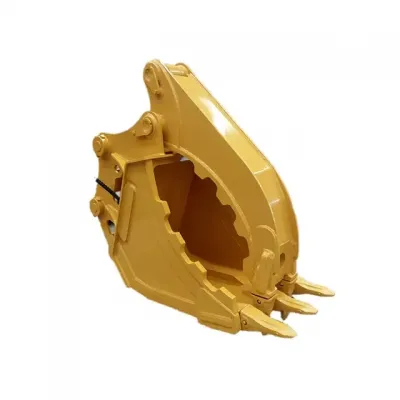
For operations that handle both palletized and irregular loads, a grapple fork attachment may be more versatile than standard pallet forks. However, grapple forks are heavier and reduce machine capacity, so evaluate whether the added versatility justifies the trade-off. For most dedicated pallet handling, standard or hydraulic side-shift pallet forks remain the most efficient choice.
Final Selection Checklist
Before purchasing, verify the following: your machine's ROC can handle the attachment weight plus typical load at the actual load center; fork length matches your standard pallet size; rated capacity is sufficient at your load center; frame type (fixed or side-shift) matches your positioning needs; duty class suits your application; mounting plate is compatible; and replacement tines are available. Taking the time to match these factors ensures a fork attachment that operates safely, lasts longer, and delivers the productivity you expect. For a broader comparison of fork types across the full skid steer forks category, including grapple forks and manure forks, refer to our general fork selection guide.