One of the most common questions among skid steer operators is how much weight their machine can actually lift when using fork attachments. The answer isn't simply the rated operating capacity printed on the spec sheet. Several factors — attachment weight, fork length, load center distance, and boom position — reduce the real-world lifting capacity below the advertised number. Understanding these factors helps operators avoid overloading, tip-over risks, and premature component wear.
This guide breaks down the key variables that determine how much a skid steer can lift with forks, and provides a practical framework for matching fork attachments to machine capacity. Whether you're using hydraulic pallet forks for warehouse work or a grapple fork for debris handling, the same capacity principles apply.
Rated Operating Capacity: The Starting Point
A skid steer's rated operating capacity (ROC) is the maximum load the machine can safely lift at a specified load center, typically 500 mm (20 in) ahead of the bucket pin, while maintaining stability. ROC is measured with the machine on level ground, the boom at full height, and standard counterweights in place. It represents 50 percent of the machine's tipping load — the point at which the rear wheels begin to lift off the ground.
Manufacturers publish ROC for each machine model, often in multiple configurations depending on tire type, counterweight options, and whether the machine is a wheeled skid steer or compact track loader. A typical mid-frame skid steer might have an ROC of 900 to 1400 kg (2000 to 3000 lb), while large-frame models can reach 1800 kg (4000 lb) or more. The ROC is the baseline, but it's not the number you use when calculating fork lift capacity.
Why Attachment Weight Matters
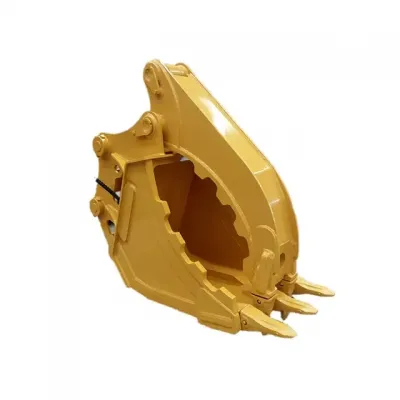
The rated operating capacity accounts for a standard bucket, not a fork attachment. When you swap the bucket for forks, the attachment's own weight counts against the machine's capacity. A set of hydraulic pallet forks might weigh 128 kg (282 lb), while a heavy grapple fork can weigh 498 kg (1099 lb) or more. This weight is added to the load before the machine even picks anything up.
To calculate the remaining capacity for the actual load, subtract the attachment weight from the machine's ROC. For example, a skid steer with a 1200 kg (2646 lb) ROC using 128 kg (282 lb) pallet forks has approximately 1072 kg (2364 lb) of remaining capacity for the pallet itself. This is before accounting for load center changes, which further reduce effective capacity.
Load Center: The Hidden Capacity Reducer
Load center is the horizontal distance from the fork carriage pin to the center of gravity of the load. The standard ROC measurement uses a 500 mm (20 in) load center. When you use longer forks or carry loads that extend further forward, the load center increases, and the machine's effective lifting capacity decreases proportionally.
The relationship is straightforward: effective capacity equals ROC multiplied by the standard load center divided by the actual load center. If the actual load center is 750 mm (30 in) instead of 500 mm (20 in), the effective capacity drops to two-thirds of the rated value. This is why 1500 mm (60 in) or longer fork extensions significantly reduce how much weight the machine can safely lift, even though the forks themselves may be rated higher.
Fork Length and Configuration Effects
Fork length directly affects load center. Standard 1200 mm (48 in) forks place the center of a typical pallet at approximately 600 mm (24 in) from the carriage, already beyond the standard 500 mm (20 in) test point. Longer forks — 1500 mm (60 in) or more — push the load center even further forward. Shorter forks, such as 1070 mm (42 in) models, keep the load closer to the machine and preserve more capacity.
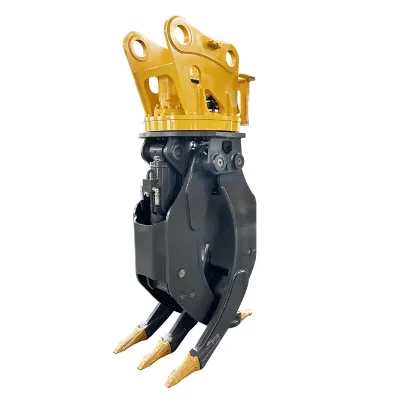
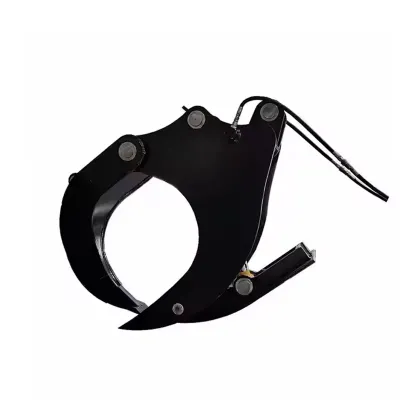
Fork configuration also matters. A side-shifting fork carriage adds weight and may shift the load center slightly off-center during side-shift operation. Grapple forks add the weight of the grapple arm and cylinder above the load, raising the overall center of gravity and reducing stability. Always use the shortest fork length that safely supports your standard load size, and avoid side-shifting at maximum lift height with heavy loads.
Boom Position and Ground Conditions
Rated operating capacity is measured with the boom at full height on level ground. In real operation, capacity changes as the boom moves through its arc. At ground level, the machine can typically lift more than the rated capacity because the load is closer to the machine. As the boom rises and extends forward, the effective load center increases and capacity decreases. The lowest capacity point is usually at full reach and maximum height.
Ground conditions also affect real-world capacity. Slopes, soft ground, uneven terrain, and tire or track condition all reduce stability. Operating on a side slope significantly increases tip-over risk, even with loads within the rated capacity. Always operate on level ground when lifting near capacity, and account for terrain when planning lifts.
Practical Capacity Calculation
To estimate how much your skid steer can lift with forks in a real scenario, follow these steps. First, find your machine's ROC from the spec sheet. Second, subtract the fork attachment weight. Third, determine the actual load center based on fork length and load dimensions. Fourth, apply the load center ratio: remaining capacity times standard load center divided by actual load center. Fifth, derate further for boom position, ground slope, and any non-standard counterweights or tires.
As a conservative rule, operators often target loads at 70 to 80 percent of the calculated effective capacity to leave a safety margin for unexpected shifts, uneven ground, or operator error. This margin is especially important when using skid steer fork attachments in agricultural or construction settings where load weights are approximate and conditions change frequently.
Common Capacity Mistakes
The most frequent mistake is using the machine's advertised ROC as the fork lift capacity without subtracting attachment weight or adjusting for load center. This can lead to overloading by 20 to 40 percent. Another common error is assuming that the fork's rated capacity — such as 2000 kg (4409 lb) for a set of pallet forks — means the machine can lift that much. The fork rating is the structural limit of the attachment, not the machine's lifting capability. The lower of the two ratings always governs.
Operators also sometimes ignore the effect of long forks or fork extensions on load center, assuming that longer forks simply carry more material. In reality, longer forks reduce effective machine capacity and increase tip-over risk. Always verify that both the attachment and the machine can handle the intended load at the actual operating configuration.
Final Recommendations
Matching forks to a skid steer requires more than comparing advertised capacities. Always calculate effective lift capacity by subtracting attachment weight, adjusting for actual load center, and derating for operating conditions. Use the shortest fork length that handles your standard loads, avoid side-shifting at maximum height with heavy loads, and maintain a safety margin of 20 to 30 percent below calculated capacity. For help selecting the right fork configuration for your machine, see our pallet fork selection guide, which covers fork length, frame type, and capacity matching in detail.