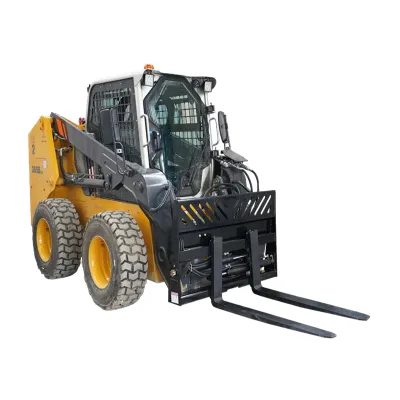
Welcome to the Official Website of TianGe Attachments.

Skid Steer Hydraulic Pallet Forks

Skid Steer Hydraulic Pallet Forks

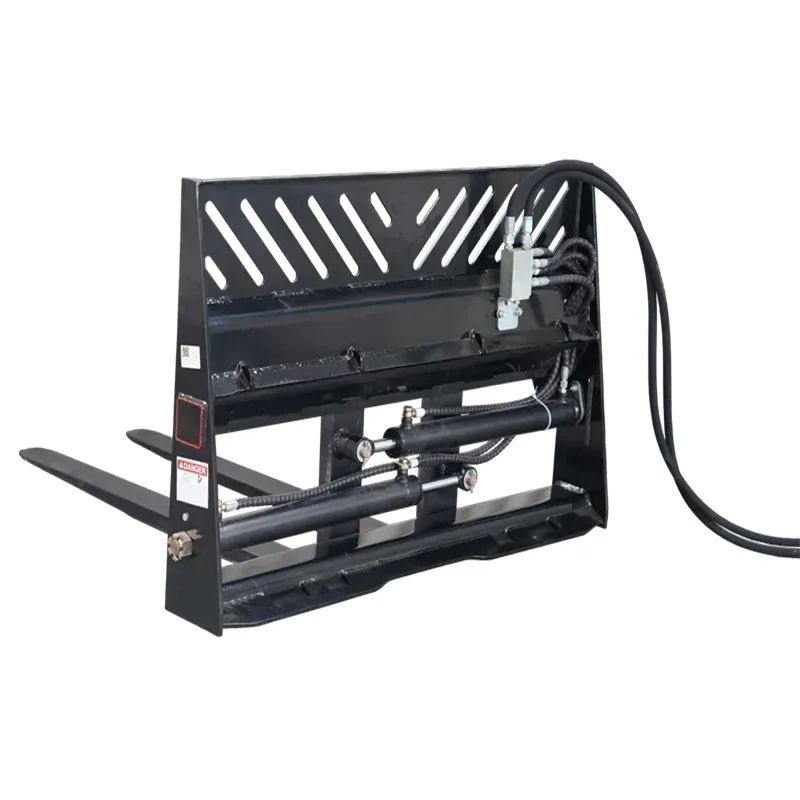
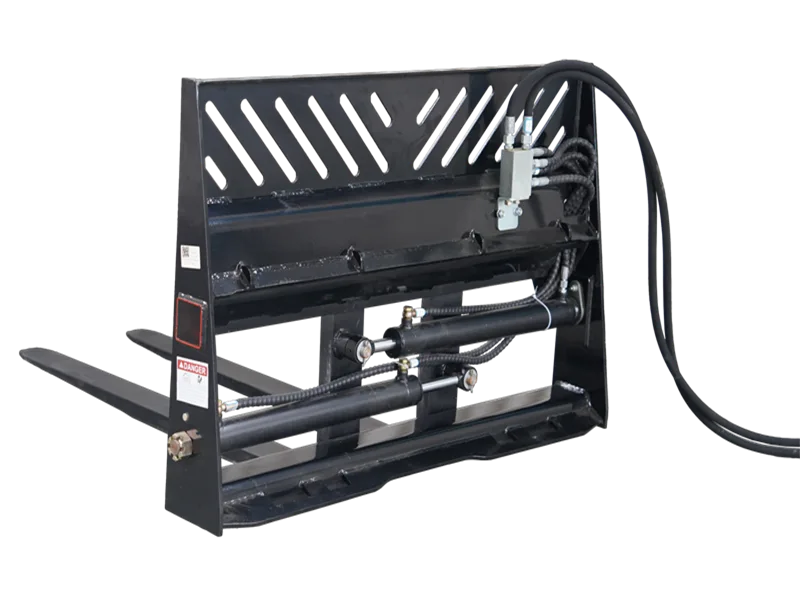
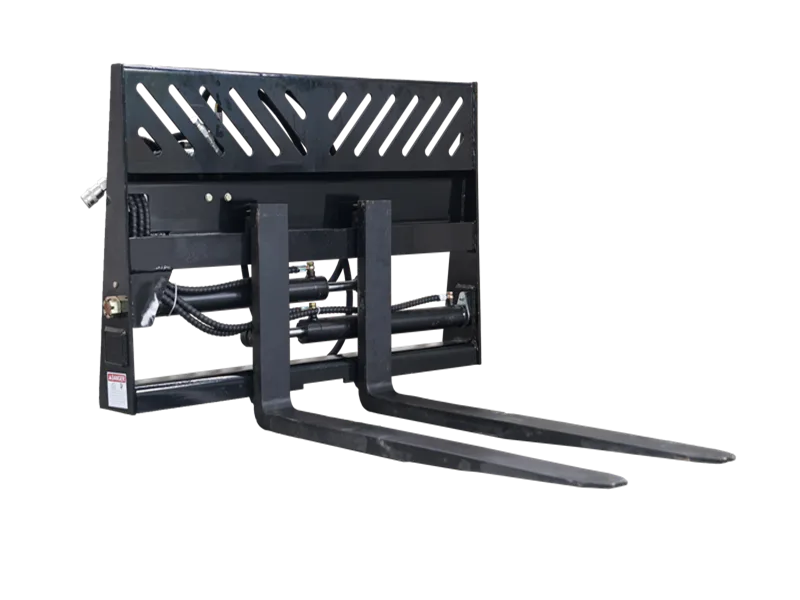
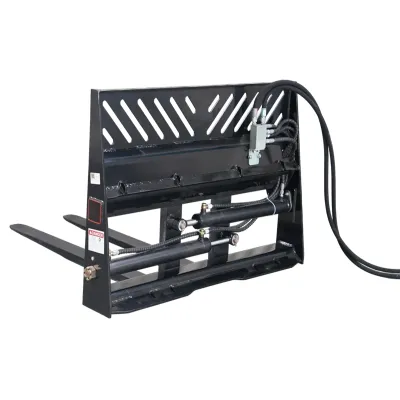
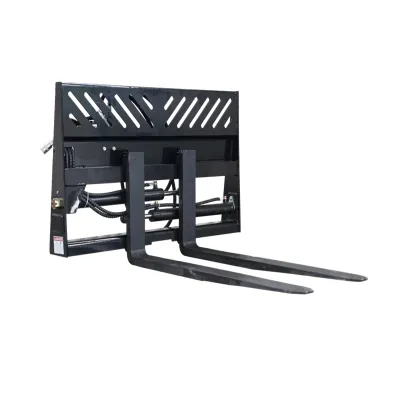
TGEC TG-PF2000 skid steer hydraulic pallet forks feature hydraulic side-shift positioning, 2000 kg lift capacity, 1200 mm tines, and MP1140 universal quick-attach mounting. 60 L/min flow, 20 MPa pressure, 128 kg weight for pallet handling and construction material movement.
Product Name: Hydraulic pallet fork / Side-shift pallet forks / Pallet fork attachment / Skid steer forks
Type: Forks
After-sales Service: Provided
Warranty: 1 Year
Customization: Available
Shipping Cost: Negotiate with us about shipping cost and estimated delivery time.
Get a quote
Overview
FAQ

Product Overview

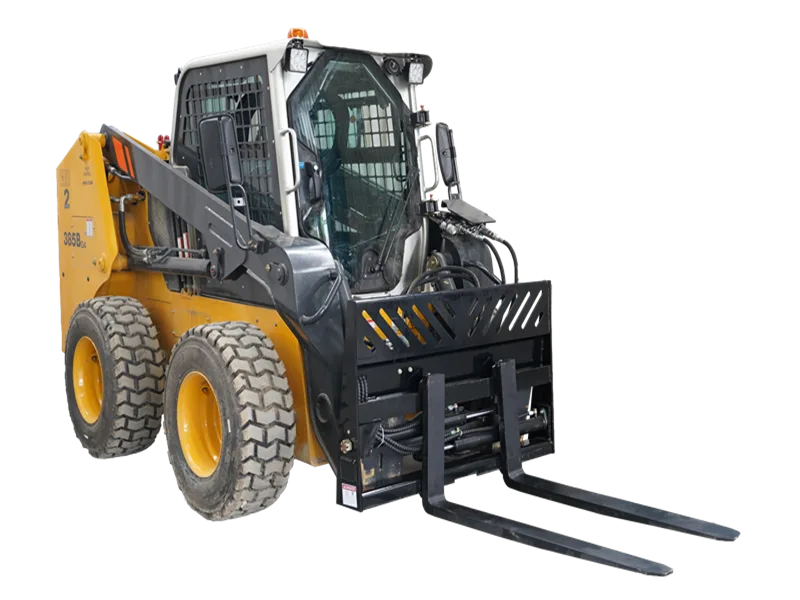
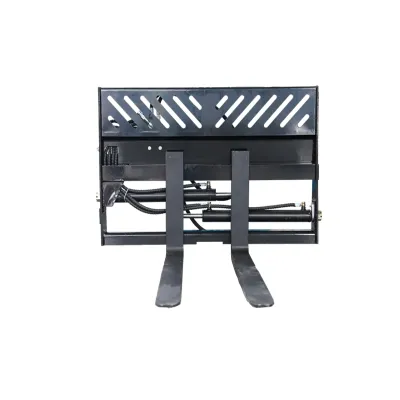
The TGEC TG-PF2000 hydraulic pallet fork attachment brings hydraulic side-shift positioning to standard skid steer fork operations. Unlike fixed fork frames, the hydraulic carriage slides the fork assembly left or right from the cab, allowing the operator to align tines with pallets and loads without repositioning the entire machine. This improves efficiency in tight spaces, trailers, and warehouse aisles where maneuvering room is limited. The attachment is built for daily commercial use in construction, warehousing, agriculture, and rental fleets.

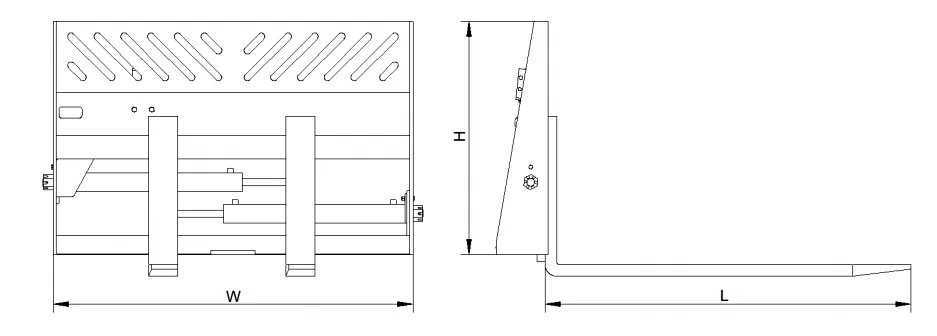
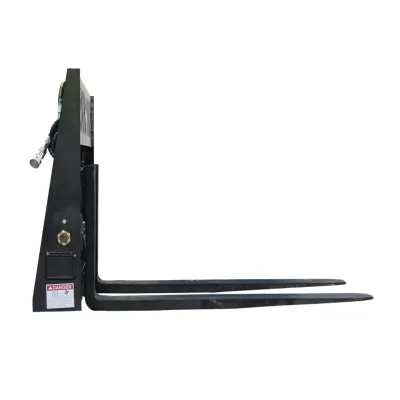
The TG-PF2000 is rated for 2000 kg (4409 lb) lift capacity with 1200 mm (48 in) fork tines and a 1240 mm (48.8 in) carriage frame. It mounts to the MP1140 universal skid steer quick-attach system and requires 60 L/min (15.9 GPM) auxiliary hydraulic flow at 20 MPa (2900 psi) working pressure. As the primary pallet-handling configuration in the skid steer forks line, it pairs with grapple forks for operators who also handle irregular loads. For guidance on matching fork capacity to machine limits, see our article on skid steer lift capacity with forks, and our pallet fork selection guide for configuration advice.

Technical Specifications

ParameterValue
ModelTG-PF2000
Rated Lift Capacity2000 kg (4409 lb)
Carriage Frame Width1240 mm (48.8 in)
Fork Tine Dimension100 × 40 mm (3.9 × 1.6 in)
Fork Tine Length1200 mm (48 in)
Attachment Operating Weight128 kg (282 lb)
Required Auxiliary Oil Flow60 L/min (15.9 GPM)
Working Pressure20 MPa (2900 psi)
Mounting InterfaceMP1140 universal skid steer quick-attach

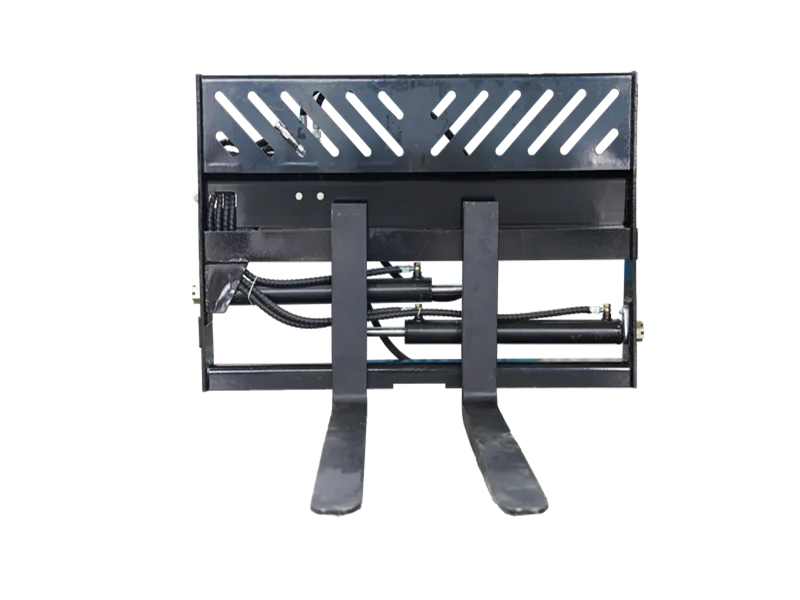
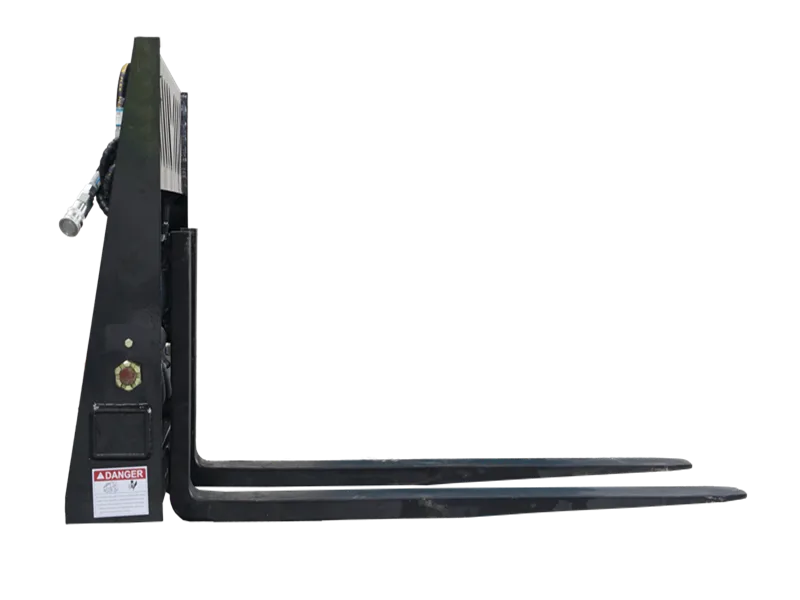
TGEC Hydraulic Pallet Forks for Skid Steer with adjustable fork frame and hydraulic side-shift carriage

Table data is for reference only. Actual specifications may vary based on the final configuration. Please contact the TianGe technical team for details.

How It Works

The hydraulic pallet fork uses the skid steer auxiliary circuit to power a side-shift cylinder that moves the fork carriage horizontally. When the operator activates the control, pressurized fluid extends or retracts the cylinder, sliding the fork assembly left or right while the machine stays stationary. The tines remain fixed to the sliding carriage and lift with the boom. This allows precise alignment with pallets, trailers, and racking in confined spaces.

Application Scenarios

  • Warehouse and yard pallet handling: Load and unload pallets from trucks, trailers, and racking with precise side-shift alignment.

  • Construction material transport: Move lumber, concrete blocks, pipe, precast components, and bulk bags around job sites and staging yards.

  • Tight-space loading: Position forks in narrow trailers, containers, and warehouse aisles without repositioning the skid steer.

  • Agricultural feed and supply handling: Move palletized feed, seed, fertilizer, and farm supplies in barns, silos, and feed lots.

  • Manufacturing and industrial logistics: Transport raw materials, finished goods, and equipment within factory yards and production floors.

  • Rental fleet operations: Serve as a versatile, high-utilization attachment for rental customers handling mixed palletized loads.

Installation & Mounting

The TG-PF2000 mounts to the MP1140 universal skid steer quick-attach plate. The operator aligns the receiver, locks the levers, and connects the auxiliary hydraulic hoses for side-shift. Before operation, confirm the auxiliary circuit delivers at least 60 L/min (15.9 GPM) at 20 MPa (2900 psi), and verify the machine's rated operating capacity accounts for the 128 kg (282 lb) attachment plus load. Cycle the side-shift cylinder several times to remove air and check for leaks.

Wear & Service

Primary wear items include the fork tines, side-shift cylinder, carriage wear pads, hydraulic hoses, and quick-attach latch. Inspect tines for bending or cracking at the heel and tips. Check the cylinder rod for pitting or scoring, and inspect wear pads for uneven wear causing binding. Replace hoses showing abrasion or leaks, and grease all pivot and slide points per the schedule. Genuine replacement tines, seals, and wear pads are available.

OEM & Bulk Supply

TGEC supplies hydraulic pallet fork attachments to equipment dealers, rental fleets, and OEM partners under factory-direct terms. Volume pricing and private-label branding are available for qualified orders, and custom configurations — including modified fork lengths, alternative mounting plates, and adjusted frame widths — can be reviewed for production runs. Dealers can combine pallet fork orders with other TGEC skid steer attachments to consolidate sourcing and international shipping.

Standard 48" or Need Longer Tines — What Fits Your Pallets?

We're looking for three things to get you the right fork: your skid steer model, your ROC, and the pallet size you handle most. Send those over, we'll confirm compatibility, and reply with a quote and estimated shipping date. If you're between fork lengths, we'll note which option gives you the most flexibility for your usual loads.
Frequently Asked Questions

What are skid steer hydraulic pallet forks used for?+

Skid steer hydraulic pallet forks are used to lift, carry, and position palletized loads and construction materials. The hydraulic side-shift feature allows the fork carriage to move left or right without repositioning the skid steer, making the attachment ideal for loading trailers, warehouse work, tight-space material handling, and construction site logistics. Common loads include pallets of building materials, lumber, concrete blocks, feed, seed, and industrial supplies.

What skid steer models can use hydraulic pallet forks?+

Hydraulic pallet forks fit skid steers and compact track loaders equipped with a universal quick-attach mounting plate and an auxiliary hydraulic circuit. The TG-PF2000 requires 60 L/min (15.9 GPM) auxiliary flow at 20 MPa (2900 psi) and suits mid-to-large frame machines with sufficient rated operating capacity. Compatible brands include Bobcat, Caterpillar, John Deere, Case, New Holland, and Kubota, subject to each machine's hydraulic output and mounting interface. Provide your machine model for a precise compatibility check.

How do hydraulic pallet forks differ from standard pallet forks?+

Standard pallet forks have a fixed carriage that only moves with the skid steer boom — the operator must reposition the entire machine to align tines with a load. Hydraulic pallet forks add a side-shift cylinder that slides the fork carriage horizontally from the cab, enabling precise alignment without machine movement. This saves time in tight spaces, trailers, and warehouse aisles. The trade-off is a slightly higher attachment weight and the need for an auxiliary hydraulic circuit.

What hydraulic flow and pressure should be checked?+

The TG-PF2000 requires a minimum auxiliary hydraulic flow of 60 L/min (15.9 GPM) and a working pressure of 20 MPa (2900 psi). Insufficient flow causes slow or weak side-shift response, while excessive pressure can damage cylinder seals. Check your machine's auxiliary circuit specifications in the operator manual or on the hydraulic identification plate. If your machine offers variable flow, set it to match the attachment requirement for optimal performance and component life.

How does hydraulic side-shifting improve fork positioning?+

Hydraulic side-shifting allows the operator to slide the entire fork carriage left or right using a cab control, rather than repositioning the skid steer. This is especially valuable when aligning forks with pallets in tight trailers, narrow warehouse aisles, or against racking where machine movement is restricted. It reduces cycle time, minimizes tire wear and fuel use from repeated repositioning, and improves precision when placing loads in confined spaces. The operator can fine-tune fork position while the boom remains at the working height.

What fork length is suitable for a skid steer?+

Fork length should match the typical load dimensions. The TG-PF2000 comes with 1200 mm (48 in) tines, which is the most common length for standard pallets and general material handling. Shorter forks (around 1070 mm / 42 in) are more maneuverable but may not fully support longer pallets. Longer forks (1500 mm / 60 in or more) handle oversized loads but reduce visibility and increase stress on the carriage. Choose the shortest length that safely supports your standard pallet size.

How should fork capacity be matched to machine capacity?+

The attachment's rated lift capacity and the machine's rated operating capacity (ROC) must both be considered. The load weight plus the attachment weight must not exceed the machine's ROC at the corresponding load center. The TG-PF2000 is rated for 2000 kg (4409 lb), but the actual safe lift depends on the skid steer's ROC, boom position, and load center distance. Always verify that the combined weight of attachment and load stays within the machine's rated operating capacity, and account for load center — longer forks increase the effective load center and reduce safe lifting capacity.

Can hydraulic pallet forks be used with a universal quick-attach system?+

Yes. The TG-PF2000 uses the MP1140 universal skid steer quick-attach mounting interface, which is compatible with most skid steers and compact track loaders from major brands. The operator drives the quick-attach plate into the receiver, locks the levers, and connects the auxiliary hydraulic hoses for the side-shift function. Always confirm that the quick-attach locks are fully engaged and that hydraulic connections are secure before operating. Some older or specialty machines may require an adapter plate.

What fork class or frame configuration should be selected?+

Fork class refers to the tine cross-section and carriage capacity rating. The TG-PF2000 uses 100 × 40 mm (3.9 × 1.6 in) tines on a 1240 mm (48.8 in) hydraulic side-shift carriage, suitable for general commercial and construction use. Heavy-duty or extreme-duty frames use thicker tines and reinforced carriages for abusive applications like scrap handling or rocky terrain. For standard pallet and construction material handling, the standard TG-PF2000 configuration is appropriate. Upgrade to a heavier frame only if your application involves frequent high-capacity or impact loading.

When are fork extensions useful?+

Fork extensions are useful when you occasionally need to handle longer loads — such as oversized pallets, lumber bundles, or precast panels — without investing in a dedicated longer-fork attachment. They slide over existing tines and extend reach by 600 to 1200 mm (24 to 48 in). However, extensions reduce rated capacity by increasing the load center distance, and they should only be used for loads within the derated capacity. They are not intended for permanent use or for high-cycle operations. Always follow the extension manufacturer's load rating and installation instructions.

How should hydraulic pallet forks be installed and removed?+

To install, align the skid steer quick-attach plate with the fork attachment's receiver, tilt the plate forward, and drive in until the locks engage. Lower the attachment to the ground, release pressure from the auxiliary circuit, and connect the hydraulic hoses for side-shift. To remove, place the forks on a stable surface, relieve hydraulic pressure, disconnect the hoses with caps ready, and release the quick-attach locks before backing the machine away. Always shut off the engine and engage the parking brake when making or breaking hydraulic connections.

What wear parts and maintenance checks are required?+

Key wear parts include the fork tines, side-shift cylinder and seals, carriage wear pads, hydraulic hoses, and quick-attach latch components. Inspect tines for bending, cracks, and heel wear before each shift. Check the side-shift cylinder rod for pitting or scoring, and inspect wear pads for uneven wear that causes binding. Replace hoses showing abrasion, cracks, or leaks. Grease all slide and pivot points per the maintenance schedule, and periodically retorque mounting bolts. Genuine replacement parts are available for the TG-PF2000.
Please make sure to include your phone number with the country code (e.g., 86 for China, 1 for USA).