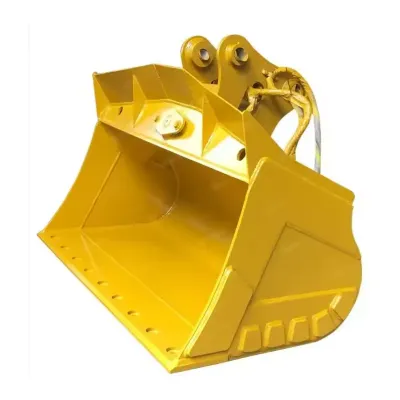
Picking the right land leveler for your skid steer comes down to three things: your machine's size, the surfaces you grade most often, and how precise the finish needs to be. An attachment that's too wide for a compact machine will leave uneven strips, while one that's too narrow slows you down on large driveways and parking lots. This guide walks through each factor so you can match the configuration to your actual work.
Match the Leveler to Your Skid Steer Size
Start with your skid steer's quick-attach interface and rated operating capacity. Most full-size skid steers and compact track loaders use a universal plate with a 910 mm inner width; mini skid steers and compact utility loaders use a narrower 600 mm plate. Getting the right mounting frame ensures the attachment locks solidly and sits level. Since a land leveler has no hydraulic motor, auxiliary flow isn't a factor, but machine weight and down force do affect how deep the cutting edge bites into hard-packed surfaces.
A good rule of thumb: the leveler's working width shouldn't exceed your machine's tire or track width by much. An overly wide attachment on a light machine creates uneven cutting pressure, with the center digging deeper than the edges. For mini skid steers, 1120 mm (44 in) is typically the practical maximum; full-size machines can handle wider options. Always double-check your quick-attach dimensions before ordering.
Choose the Right Working Width
Working width affects both coverage per pass and maneuverability in tight spots. The 1120 mm (44 in) width is the most common choice for residential and light commercial work — it covers standard driveways, farm lanes, and landscape beds efficiently while staying agile around obstacles. Wider attachments reduce passes on large parking lots and access roads but need more down force and are less nimble in confined areas. Narrower attachments excel in tight beds and between structures, but they require more passes to cover the same area.
Think about your most frequent job type when picking width. If you mainly do residential driveways and landscape grading, 1120 mm gives the best balance. If you're grading large gravel parking lots or farm lanes most of the time, a wider configuration may boost productivity. Measure your typical work areas and compare them against the attachment's working width to estimate how many passes you'll need.
Evaluate Your Surface and Material Type
Different surfaces put different demands on a leveler. Loose gravel and fresh topsoil grade easily with a standard cutting edge — light down force and a couple of finishing passes do the job. Hard-packed gravel driveways and compacted clay often need a scarifier to break up the material before the leveler can smooth it out. Sand and mulch grade quickly but may require a shallower cut to avoid removing too much. Frozen ground and rock are beyond what a standard land leveler can handle; use a different attachment or wait for thaw.
If your work mixes loose and compacted surfaces, a land leveler with scarifier lets you loosen hard material and level it in one pass. For operators who work exclusively on loose gravel or fresh soil, a standard leveler without scarifier is more economical and sufficient. Assess the compaction level of your typical surfaces before deciding whether the scarifier option is worth the extra cost.
Determine Your Grading Precision Requirements
How precise your grading needs to be influences both attachment choice and technique. Basic driveway maintenance and farm lane upkeep typically need only visual leveling with a consistent crown, which a standard land leveler handles easily. Finish grading for building pads, lawn prep, and paving sub-base may require tighter tolerances, where a rigid frame and a sharp, well-maintained cutting edge make the difference. Jobs that demand exact slope or grade control may need laser or GPS guidance in addition to the leveler.
A stiff, well-built frame is key to consistent results. If the frame flexes under down force, you'll get uneven cuts — the center of the blade cuts differently than the edges. Look for a leveler with a reinforced cutting edge and a frame made from thick steel plate, especially at the mounting plate-to-frame junction, where stress is highest. A quality attachment holds its geometry over years of use, delivering consistent results job after job.
Consider Mounting and Compatibility
Before you finalize your choice, confirm that the leveler's mounting system matches your skid steer. Most standard skid steers use the universal quick-attach interface, but some compact utility loaders and mini skid steers use proprietary or narrower plates. Measure the inner width of your machine's quick-attach plate and compare it to the attachment's mounting frame specs. If you run multiple machines with different interfaces, check whether the leveler can be ordered with the right plate for each, or if an adapter is needed.
Also consider whether you'll use a quick coupler or direct mount. Most land levelers are designed for direct quick-attach mounting, which is the simplest and most secure option. If your machine has a hydraulic quick coupler, confirm that the leveler's mounting plate is compatible with its dimensions and locking mechanism. When in doubt, provide your skid steer make, model, and quick-attach dimensions to the manufacturer or dealer for a compatibility check before you buy.
Final Selection Recommendations
For most contractors and rental fleets, a 1120 mm (44 in) land leveler with a standard universal quick-attach plate offers the best blend of coverage, maneuverability, and compatibility. Choose the MP910 frame for full-size skid steers and compact track loaders, or the MP600 frame for mini skid steers and compact utility loaders. Add a scarifier configuration if your work regularly involves hard-packed gravel or compacted soil. Invest in a rigid, well-built frame with a reinforced cutting edge, and replace the cutting edge when it wears out. For a detailed look at available configurations and specs, visit the skid steer land leveler product page and the full skid steer land leveler attachments range.