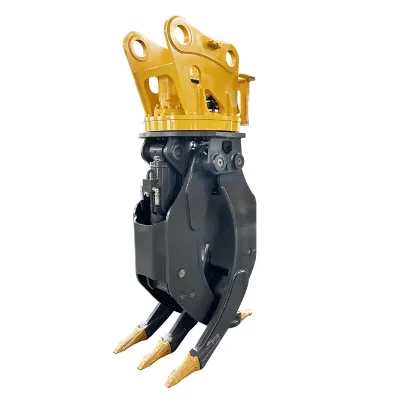
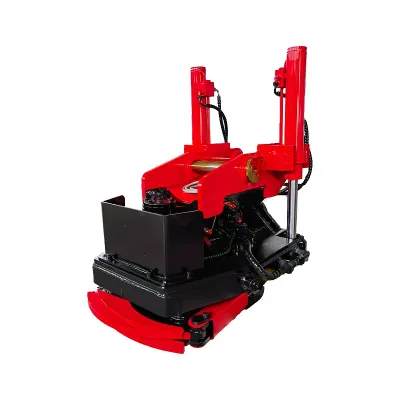
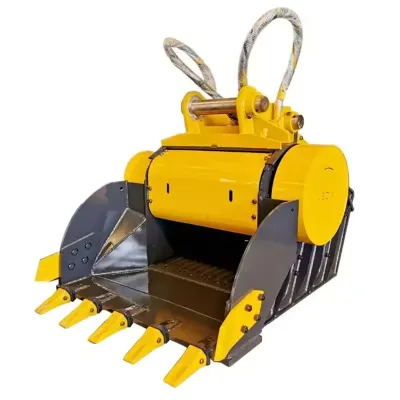
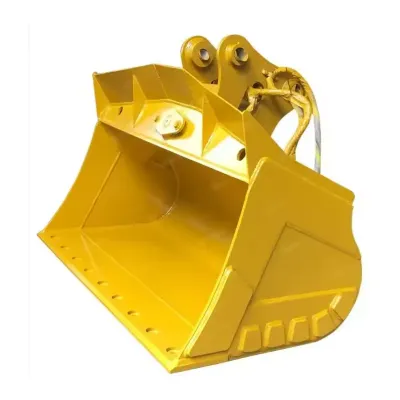
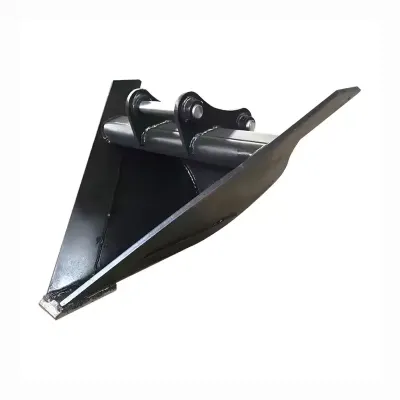
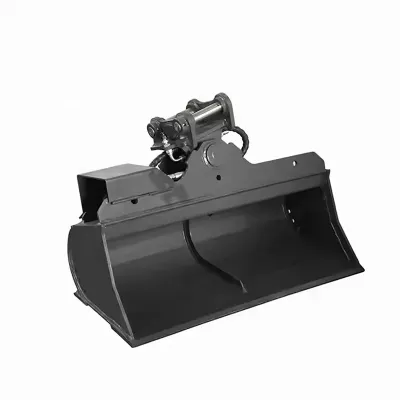
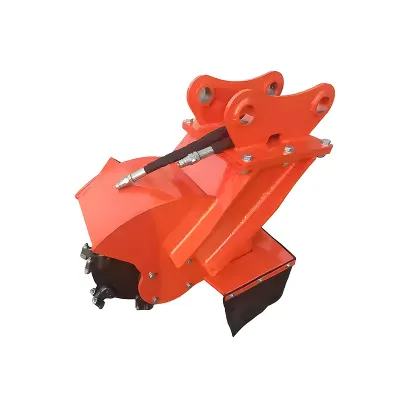
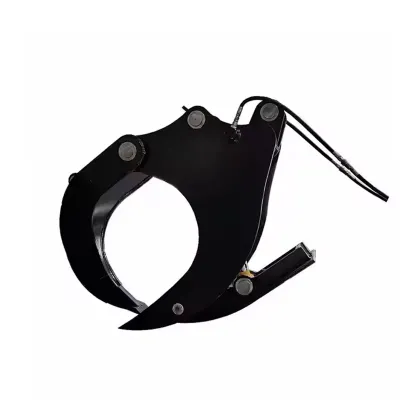
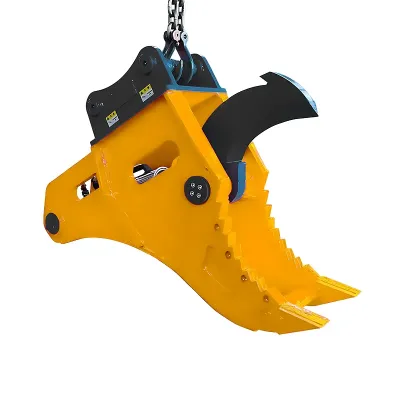
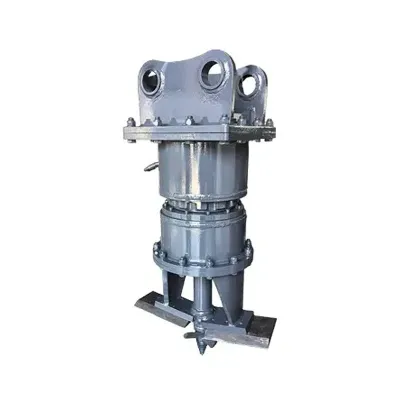
A skid steer tree shear is one of the most versatile attachments in the vegetation management toolkit, capable of handling a wide range of tree and brush cutting tasks that would otherwise require chainsaws, manual labor, or specialized forestry equipment. Mounted on a skid steer, the tree shear provides the operator with a safe, enclosed cab position from which to cut standing trees, remove limbs, clear brush, and manage vegetation across diverse job sites. The attachment's hydraulic cutting force, combined with the skid steer's mobility and lift capability, makes it suitable for everything from small residential property maintenance to large-scale commercial land clearing.
This article explores the practical applications of a skid steer tree shear, from common land clearing and right-of-way work to specialized uses such as storm cleanup, orchard removal, and fence line maintenance. We also cover attachment configurations that expand the tree shear's versatility, including combination with grapple attachments and the value of hydraulic rotation for accessing difficult cutting positions. For product specifications and configuration details, see our Skid Steer Tree Shear product page, or browse the Skid Steer Tree Shears category for manufacturer and supply information.
Land Clearing and Site Preparation
Land clearing is the most common and demanding application for a skid steer tree shear. Whether preparing a residential lot for construction, clearing acreage for a new commercial development, or opening land for agricultural use, the tree shear efficiently cuts trees and brush at ground level, producing clean cuts that minimize stump height and reduce subsequent grinding or removal work. The operator drives the skid steer to each tree, positions the cutter at the base of the trunk, and engages the blade to shear through the tree in seconds. The felled tree can then be pushed into piles, loaded onto trucks, or stacked for burning or mulching, all using the same skid steer with a bucket or grapple attachment.
The tree shear's productivity advantage over manual chainsaw clearing is substantial. A single operator with a skid steer tree shear can cut and stack trees that would require a crew of several chainsaw operators working for the same period. The enclosed cab protects the operator from falling debris, branches, and sawdust, eliminating the most common safety hazards of chainsaw work. The clean, square cuts produced by the shear reduce splintering and make the felled trees easier to handle, stack, and process. For large clearing projects, contractors often use a tree shear for the initial cutting pass, followed by a grapple or bucket for stacking and loading, creating an efficient one-machine workflow that minimizes equipment and labor costs.
Right-of-Way and Utility Maintenance
Right-of-way maintenance for power lines, pipelines, roadways, and communication corridors is a high-value application for skid steer tree shears. These corridors require regular vegetation management to prevent trees and brush from growing into utility lines, obstructing access roads, or creating fire hazards. The tree shear's ability to cut standing trees and remove overhanging limbs makes it ideal for maintaining clear corridors, while the skid steer's compact size allows it to work within the right-of-way without damaging the ground or existing infrastructure. The ±90° hydraulic rotation is particularly valuable in right-of-way work, as trees and limbs grow at every angle along the corridor, and the operator can rotate the cutter head to align with leaning trees, overhead branches, and vegetation growing along fence lines or utility poles.
Utility and pipeline companies, as well as municipal public works departments, use skid steer tree shears for routine corridor maintenance, emergency storm response, and initial right-of-way clearing for new infrastructure projects. The tree shear's ability to selectively remove specific trees while leaving desired vegetation intact makes it suitable for environmental-sensitive corridors where clear-cutting is not permitted. The operator can position the cutter precisely around utility poles, guy wires, and pipeline markers, removing only the vegetation that poses a hazard. For overhead limb removal, the operator raises the skid steer's lift arms and uses the rotating cutter head to reach limbs at various heights and angles, eliminating the need for bucket trucks or aerial lifts in many situations. This reduces equipment costs and allows a single operator to handle both ground-level and overhead vegetation management from one machine.
Vegetation Management and Property Maintenance
For property managers, park departments, golf courses, and large landowners, a skid steer tree shear is a valuable tool for ongoing vegetation management. The attachment can remove invasive tree species, thin overgrown wooded areas, clear sightlines for security or aesthetics, and maintain fence lines and property boundaries. Unlike land clearing, which removes all vegetation, vegetation management often requires selective cutting—removing specific trees or limbs while preserving desired landscape features. The tree shear's precise cutting capability and the operator's ability to position the cutter with skid steer controls make selective removal efficient and controlled. The clean cuts also promote healthier regrowth for trees that are being pruned rather than removed.
Park and recreation departments use tree shears to maintain trails, clear picnic areas, and remove hazard trees that pose a risk to visitors. Golf courses use them to remove trees that interfere with play lines or grow into cart paths, and to manage wooded rough areas. Property management companies use them for routine tree and brush removal on commercial and residential properties, reducing the need for subcontracting tree services. For these applications, the tree shear's relatively low noise compared to chainsaws is an advantage in residential and recreational areas, and the enclosed cab reduces operator exposure to insects, pollen, and weather. The ability to quickly switch between the tree shear and a bucket or fork attachment also makes the skid steer a multi-purpose machine that can handle debris cleanup, mulch spreading, and other property maintenance tasks in the same work session.
Storm Damage and Emergency Cleanup
After severe weather events such as hurricanes, tornadoes, ice storms, or high wind events, fallen and damaged trees create hazards that must be cleared quickly to restore access, remove threats to structures, and begin recovery. A skid steer tree shear is a critical tool in storm cleanup, capable of cutting fallen trees into manageable sections, removing hanging and broken limbs, and clearing blocked roads and driveways. The attachment's ability to cut trees in any position—horizontal, leaning, or entangled—makes it far more versatile than a chainsaw for storm debris, where trees are often broken, twisted, and piled in complex arrangements. The operator can use the skid steer's lift arms and the rotating cutter head to reach into debris piles, cut sections free, and pull them clear with the cutter or a bucket attachment.
Municipal emergency response teams, utility companies, and private contractors deploy skid steer tree shears for immediate post-storm response. The attachment's mobility allows it to access areas that larger forestry equipment cannot reach, such as residential neighborhoods with narrow streets, backyard areas, and parks with restricted access. The enclosed cab protects the operator from falling debris, broken limbs, and other hazards common in storm-damaged areas. After cutting fallen trees into sections, the operator can use the skid steer with a grapple or bucket to load the debris onto trucks or stack it for curbside pickup or chipping. This one-machine capability reduces the number of vehicles and personnel needed for storm response, accelerating the recovery process. For utility companies, the tree shear is also used to remove trees that have fallen on power lines or utility poles, working in coordination with line crews to safely clear vegetation before power restoration.
Orchard and Vineyard Removal
Orchard and vineyard renovation often requires removing old or unproductive trees and vines to make way for new plantings. A skid steer tree shear is ideal for this application, as it can quickly cut orchard trees at ground level, producing clean cuts that minimize stump height and reduce subsequent grinding. The skid steer's compact size allows it to maneuver between orchard rows, even in densely planted areas, and the tree shear's precise cutting prevents damage to adjacent trees that are being retained. For vineyard removal, the tree shear can cut grapevine trunks and posts, clearing the vineyard efficiently for replanting or conversion to other uses.
Orchard removal contractors and farm operations use tree shears to remove aging apple, citrus, stone fruit, and nut orchards at the end of their productive life. The clean cuts produced by the shear make the felled trees easier to handle, chip, or burn, and the low stump height reduces the amount of grinding needed before replanting. For operations that are removing only selected trees for thinning or replanting, the tree shear's precision allows the operator to cut specific trees without damaging neighboring trees or irrigation infrastructure. The attachment's relatively low ground pressure, especially when mounted on a compact track loader, minimizes soil compaction in orchard soils, preserving the root zone for subsequent replanting. After cutting, the operator can use the same skid steer with a grapple or fork attachment to stack and remove the felled trees, creating an efficient orchard removal workflow with a single machine and operator.
Fence Line and Boundary Clearing
Fence lines and property boundaries require regular vegetation management to prevent trees and brush from growing into fences, damaging fence posts, and obstructing access. A skid steer tree shear is well suited for fence line clearing, as the operator can drive along the fence line and cut trees and brush growing on or near the fence without damaging the fence itself. The tree shear's precise cutting and the operator's ability to position the cutter close to fence posts and wires allow selective removal of problem vegetation while preserving the fence structure. The ±90° rotation is valuable for cutting trees growing at angles along the fence line, and the skid steer's mobility allows it to work along long stretches of fence efficiently.
Farmers, ranchers, and property managers use tree shears for routine fence line maintenance, clearing vegetation that would otherwise damage fences, provide cover for predators, or obstruct boundary visibility. The attachment is also used for initial fence line clearing when installing new fencing, removing trees and brush to create a clear path for fence construction. After cutting, the operator can use a bucket or grapple to remove the cut vegetation from the fence line, reducing fire hazard and improving access for fence inspection and repair. For large properties with miles of fence line, a skid steer tree shear significantly reduces the labor and time required for vegetation management compared to manual cutting with chainsaws or brush hooks.
Tree Shear with Grapple Configurations
While a tree shear cuts trees efficiently, handling the felled trees—pushing, stacking, loading, or hauling—often requires a separate attachment such as a grapple or bucket. Some operations use a combination approach, switching between the tree shear and a grapple attachment as needed. Other operators use a tree shear with an integrated or companion grapple that allows cutting and handling in a single attachment configuration, though these are less common than standalone tree shears. The most common and cost-effective approach is to use a standalone tree shear for cutting and a separate grapple or root rake for handling, switching attachments between tasks or using two skid steers in tandem for large projects.
For operations that frequently need to both cut and handle trees, investing in both a tree shear and a grapple attachment for the same skid steer provides maximum versatility. The operator cuts trees with the shear, then switches to the grapple to stack, load, or haul the felled material. Quick-attach mounting systems allow attachment changes in minutes, minimizing downtime. For very large clearing projects, using two skid steers—one with a tree shear for cutting and one with a grapple for loading—creates a continuous production flow that maximizes productivity. Some operators also use a tree shear in combination with a bucket for pushing felled trees into piles, then switching to a grapple for loading onto trucks. The key is to match the attachment configuration to the specific workflow of each job site, using the tree shear for what it does best—clean, fast, safe cutting—and leveraging other attachments for material handling.
Application Summary and Recommendations
A skid steer tree shear is a versatile attachment that handles a broad range of vegetation management tasks, from large-scale land clearing to precise selective tree removal. Its primary applications include land clearing and site preparation, right-of-way and utility maintenance, vegetation management for parks and properties, storm damage emergency cleanup, orchard and vineyard removal, and fence line and boundary clearing. In each application, the tree shear's advantages are consistent: faster cutting than manual chainsaw work, safer operation from an enclosed cab, clean cuts that simplify material handling, and the ability to combine with other skid steer attachments for a complete vegetation management workflow.
When evaluating whether a tree shear is right for your operation, consider the typical tree sizes and species on your job sites, the volume of cutting work, the available skid steer's hydraulic capacity and lift capability, and whether the ±90° rotation function is needed for your applications. For contractors who perform vegetation management regularly, a tree shear is one of the highest-return attachments available, reducing labor costs, increasing productivity, and improving safety compared to manual cutting methods. For occasional users, renting a tree shear or subcontracting tree work may be more cost-effective, but for operations with ongoing vegetation management needs, owning a tree shear quickly pays for itself in reduced labor and increased throughput. Match the attachment to your machine and applications, maintain the blade and hydraulic system properly, and a quality tree shear will deliver years of productive service across diverse job sites.