Welcome to the Official Website of TianGe Attachments.

Skid Steer Hydraulic Breaker

Skid Steer Hydraulic Breaker

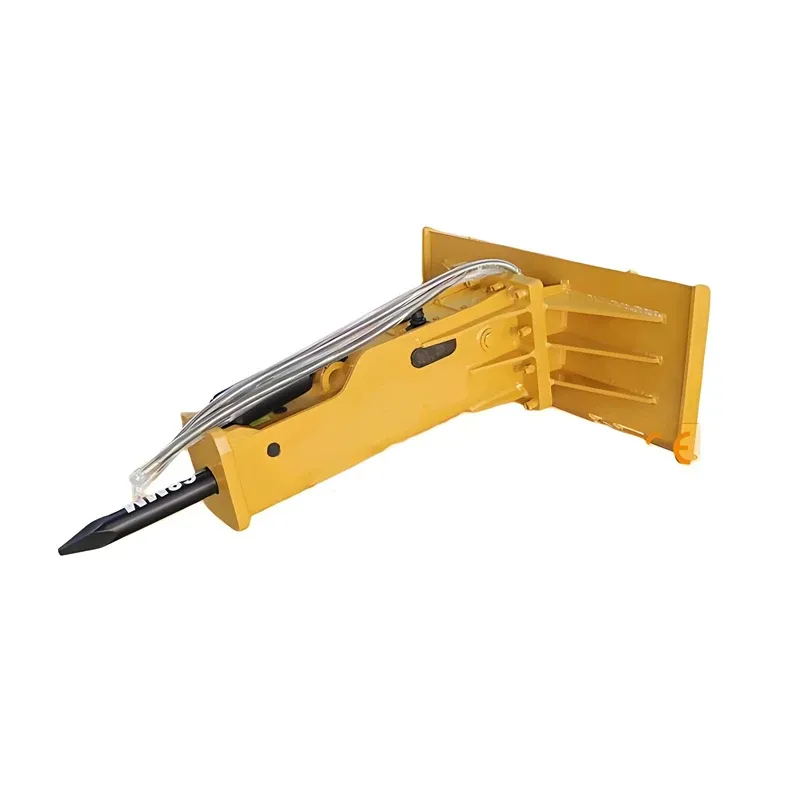
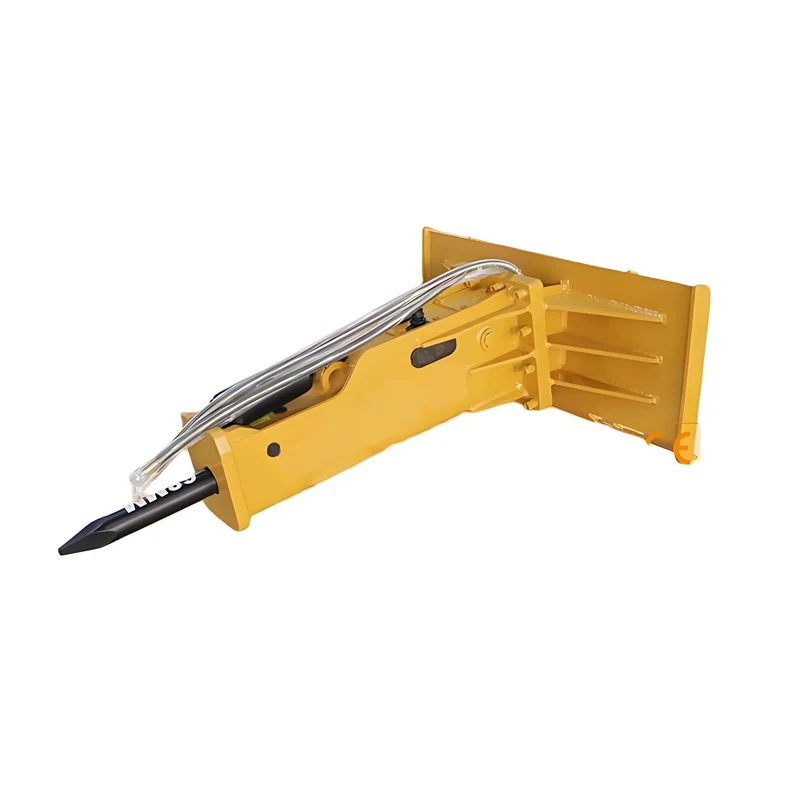
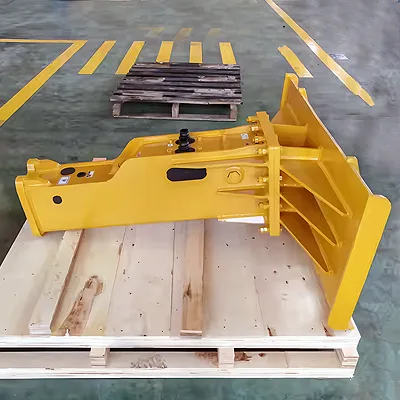
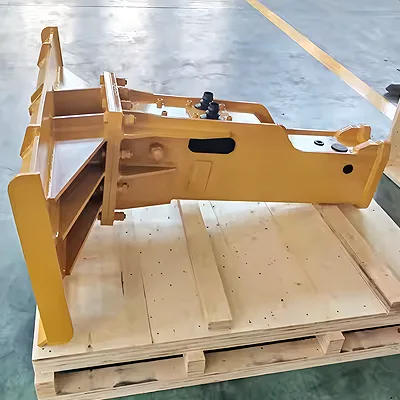
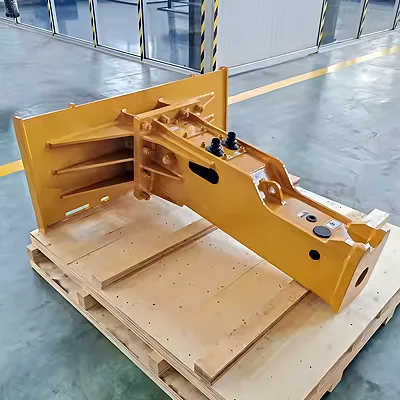
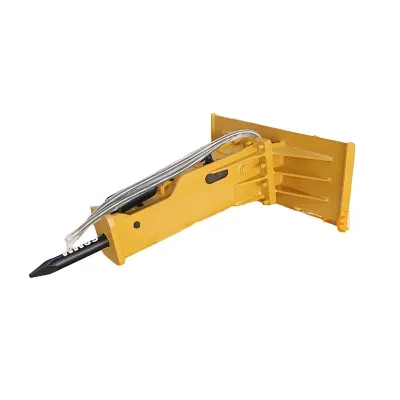
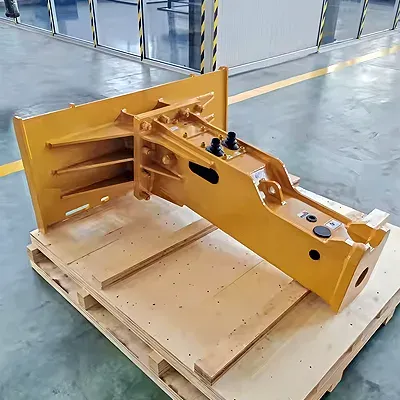
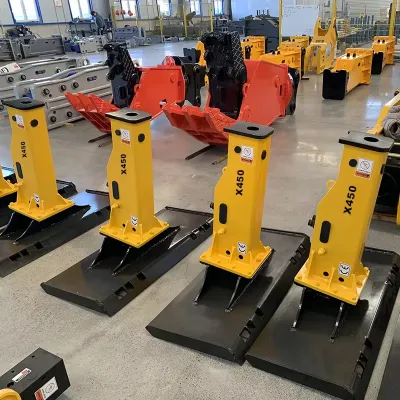
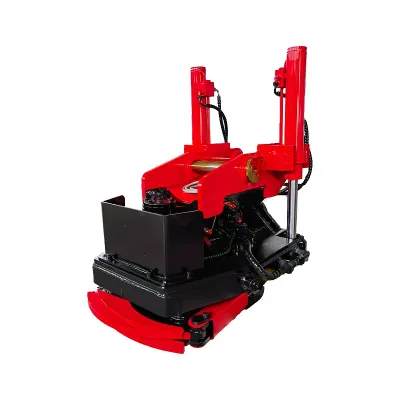
TGEC skid steer hydraulic breaker with five models from TG-SB280 to TG-SB980 for mini and full-size skid steers, 150–1000+ J impact energy, and universal quick-attach mounting. For concrete demolition, rock breaking, and construction site prep.
Product Name: Hydraulic hammer / Rock breaker / Demolition breaker / Concrete breaker / Breaker hammer
Type: Breakers
After-sales Service: Provided
Warranty: 1 Year
Customization: Available
Shipping Cost: Negotiate with us about shipping cost and estimated delivery time.
Get a quote
Overview
FAQ

Product Overview

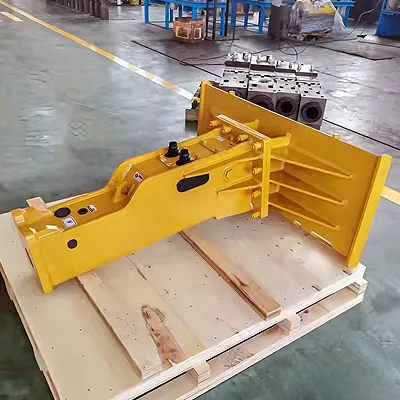
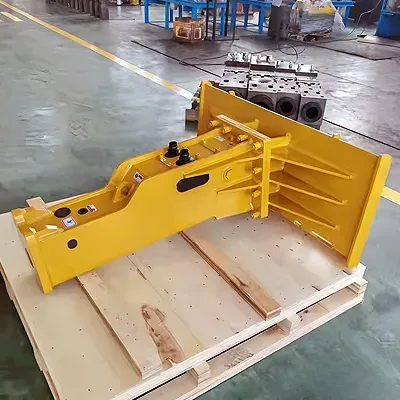
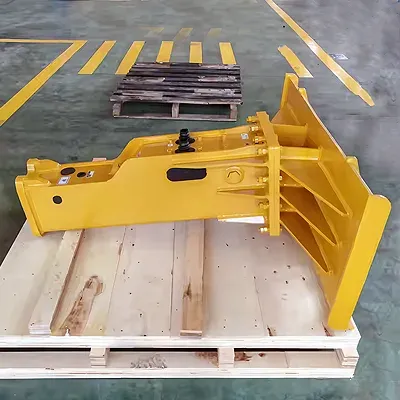
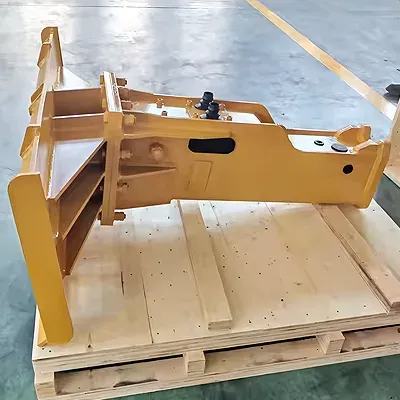
The TGEC skid steer hydraulic breaker is a hydraulic impact attachment that mounts via the universal quick-attach plate and uses auxiliary hydraulic flow to deliver high-frequency blows for breaking concrete, rock, and hard materials. Five breaker models cover skid steers from 800 to 5000+ kg, with impact energy ranging from 150 to 1000+ joules to match light demolition through heavy concrete breaking.

Each breaker features a box-type housing for reduced noise and vibration, an automatic grease lubrication system, and a nitrogen-charged impact mechanism for consistent blow energy. The hydraulic breaker is suitable for concrete demolition, rock breaking, construction site prep, road work, and hardscaping. TGEC supplies equipment dealers, rental houses, demolition contractors, and OEM partners with factory-direct pricing, custom mounting, and private-label options.

Technical Specifications

ParameterTG-SB280TG-SB380TG-SB680TG-SB880TG-SB980
Skid Steer Weight800-1500 kg / 1760-3300 lb1500-2500 kg / 3300-5500 lb2500-3500 kg / 5500-7700 lb3500-4500 kg / 7700-9900 lb4500-5000+ kg / 9900-11000+ lb
Impact Energy150 J / 111 ft-lb250 J / 184 ft-lb500 J / 369 ft-lb750 J / 553 ft-lb1000+ J / 738+ ft-lb
Impact Rate1300-1500 bpm1100-1400 bpm1000-1200 bpm1000-1100 bpm900-1000 bpm
Required Hydraulic Flow20-30 L/min / 5.3-7.9 gpm30-50 L/min / 7.9-13.2 gpm45-75 L/min / 11.9-19.8 gpm60-90 L/min / 15.9-23.8 gpm70-100 L/min / 18.5-26.4 gpm
Operating Pressure90-110 bar / 1305-1595 psi100-120 bar / 1450-1740 psi120-140 bar / 1740-2030 psi130-150 bar / 1885-2175 psi140-160 bar / 2030-2320 psi
Tool Diameter40 mm / 1.57 in45 mm / 1.77 in60 mm / 2.36 in68 mm / 2.68 in75 mm / 2.95 in
Breaker Weight~120 kg / ~265 lb~180 kg / ~397 lb~270 kg / ~595 lb~360 kg / ~794 lb~450 kg / ~992 lb
Suggested MachinesS70, SR130S450, SR160S550, 242D3, SR210S650, SV280S770, 272D3, SV340

Application Scenarios

  • Concrete demolition: Breaks reinforced concrete slabs, foundations, walls, and driveways during demolition and renovation projects.

  • Rock breaking: Fractures hard rock, boulders, and bedrock for site prep, road construction, and landscaping projects.

  • Construction site prep: Clears concrete footings, old foundations, and hardscaping obstacles before new construction begins.

  • Road and highway work: Breaks concrete pavement, curbs, and bridge decks for repair and replacement projects.

  • Landscape and hardscape: Shapes rock features, removes unwanted concrete, and prepares ground for hardscape installation.

  • Mini skid steer work: Lightweight breaker models designed for mini skid steers used in indoor demolition, backyard-access jobs, and confined-space breaking.
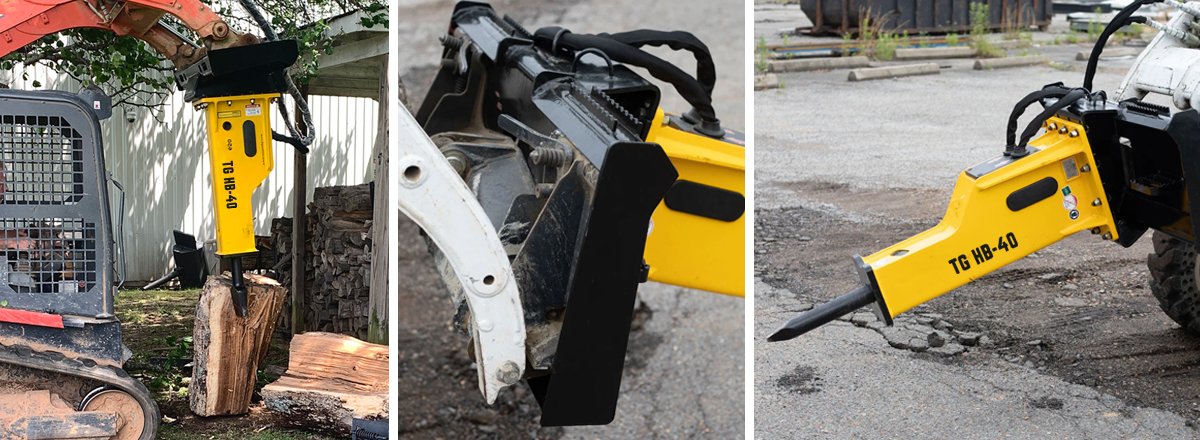
Industrial skid steer with hydraulic breaker attachment breaking concrete

OEM & Bulk Supply

TGEC supplies skid steer hydraulic breakers to equipment dealers, rental companies, and distributors worldwide with volume pricing and mixed-order consolidation. OEM and private-label programs are available for qualified partners, including custom paint colors, nameplates, packaging, and configuration modifications. Custom jobs are subject to engineering review and production feasibility. Contact the OEM sales team with your branding specifications, target configurations, and estimated annual volume to discuss supply terms. Visit the skid steer hydraulic breakers hub for the full lineup. Read how to choose the best skid steer breaker for selection guidance, or skid steer breaker models for configuration details.

Which Breaker Model Fits Your Skid Steer and Material?

Give us your skid steer model and weight, hydraulic flow and pressure, and what you're breaking (concrete, rock, asphalt, or reinforced slabs). Also let us know if you need a moil point, chisel, or blunt tool, and whether custom mounting or private labeling is required. We'll recommend the right TG-SB series model, confirm hydraulic fit, and send pricing with production lead time.
Frequently Asked Questions

What is a skid steer hydraulic breaker used for?+

A skid steer hydraulic breaker is a hydraulic impact attachment used for breaking concrete, rock, and hard materials. It mounts via the universal quick-attach plate and uses auxiliary hydraulic flow to deliver high-frequency blows through a chisel or tool bit. Common applications include concrete demolition, rock breaking, construction site prep, road work, hardscaping, and indoor demolition with mini skid steer models.

What materials can a skid steer hydraulic breaker break?+

A skid steer hydraulic breaker can break reinforced and unreinforced concrete, slabs, foundations, asphalt, brick, block walls, hard rock, boulders, bedrock, and hardened construction materials. Light-duty models (TG-SB280, TG-SB380) handle thin concrete, asphalt, and soft rock. Medium-duty models (TG-SB680, TG-SB880) handle reinforced concrete and medium-hard rock. Heavy-duty models (TG-SB980) handle thick reinforced concrete and hard rock. Match impact energy to material hardness and thickness.

How do I match a hydraulic breaker to my skid steer?+

Matching a breaker to your skid steer requires checking four factors. First, verify operating weight and rated capacity, as the breaker must match the carrier class (800 to 5000+ kg). Second, check auxiliary hydraulic flow and pressure against breaker requirements (20-100 L/min, 90-160 bar). Third, ensure universal quick-attach mounting compatibility. Fourth, consider application and material type to select impact energy and tool diameter. TGEC offers five models with suggested matches for Bobcat, Caterpillar, and Case machines. TGEC can confirm the appropriate model based on your machine specifications.

What hydraulic flow and pressure should be checked before installation?+

Before installing a breaker, verify your skid steer's auxiliary hydraulic flow and pressure against the model's requirements. Flow ranges from 20-30 L/min (TG-SB280) to 70-100 L/min (TG-SB980). Pressure ranges from 90-110 bar (TG-SB280) to 140-160 bar (TG-SB980). Ensure the auxiliary circuit provides adequate flow and pressure. Check that hoses and couplers are in good condition and properly rated. Adequate hydraulic cooling is important for continuous operation, as high-frequency impact generates significant heat.

Can a hydraulic breaker be used on a mini skid steer?+

Yes. TGEC offers lightweight breaker models designed for mini skid steers and compact loaders. The TG-SB280 fits carriers weighing 800-1500 kg, including the Bobcat S70 and Case SR130. The TG-SB380 fits 1500-2500 kg carriers, including the Bobcat S450 and Case SR160. These models require lower hydraulic flow (20-50 L/min) and are suitable for indoor demolition, backyard-access jobs, confined-space breaking, and light concrete and asphalt work. Always verify hydraulic flow, pressure, and mounting compatibility before selecting a model.

What mounting interface is required for a skid steer breaker?+

TGEC skid steer hydraulic breakers use the universal quick-attach mounting interface, the standard system on most skid steer and compact track loader models. The universal quick-attach plate allows fast, tool-free attachment changes by aligning the breaker's plate with the skid steer's brackets and engaging the locking mechanism. The breaker also requires connection to the auxiliary hydraulic circuit via quick-connect couplers. For non-standard interfaces, TGEC can assess custom mounting frame adaptations on qualified orders. Always ensure mounting is fully secured and hoses are leak-free before operation.

How is a hydraulic breaker installed on a skid steer?+

Installing a breaker involves several steps. First, align the universal quick-attach plate with the skid steer's brackets and engage the locking mechanism. Second, connect hydraulic hoses to the auxiliary circuit using quick-connect couplers, ensuring proper flow direction. Third, check all connections for tightness and leaks. Fourth, verify flow and pressure settings match the breaker's requirements, adjusting if necessary. Fifth, perform a test operation at low impact to verify function, checking for unusual noise or vibration. Finally, ensure the operator is familiar with controls before beginning work. Follow manufacturer instructions and wear appropriate PPE.

What affects breaker impact performance?+

Several factors affect breaker impact performance. Hydraulic flow and pressure must match requirements, as insufficient flow reduces blow frequency and inadequate pressure reduces impact energy. The model's impact energy rating (150-1000+ J) determines breaking capacity for different materials. Tool type and condition affect performance, with moil points for general breaking, chisels for concrete, and blunt tools for rock, all requiring regular maintenance. Proper operating technique including consistent downward pressure, avoiding blank firing, and correct angle improves efficiency. Nitrogen gas charge must be at correct pressure for consistent blow energy.

Which breaker tool is suitable for different materials?+

Different breaker tools suit different materials. A moil point (conical tip) is the most versatile general-purpose tool for concrete demolition, rock breaking, and general construction. A chisel or flat tool is designed for concrete breaking, cutting slabs and foundations, and precision demolition. A blunt or wedge tool is used for rock breaking, fracturing boulders and bedrock. A pyramidal or cross-cut tool provides aggressive breaking for hard rock and reinforced concrete. Tool diameter ranges from 40 mm (TG-SB280) to 75 mm (TG-SB980), matched to the breaker model. Inspect tools regularly for wear, cracks, or mushrooming.

What breaker components require regular inspection?+

Several breaker components require regular inspection. The tool or chisel should be checked for wear, cracks, or mushrooming before each use. The tool bushing and retainer pins should be checked for wear on a regular maintenance schedule. Hydraulic hoses and fittings should be inspected for leaks or abrasion before each use. The nitrogen gas charge should be checked periodically. The grease system should be inspected on a regular maintenance schedule. The mounting frame should be checked for cracks or loose hardware. Regular inspection extends breaker service life and prevents breakdowns.

Which wear parts should operators monitor?+

Operators should monitor several key wear parts. The breaker tool or chisel is the primary wear part, requiring replacement when tip wear becomes significant relative to the original diameter. The tool bushing wears from tool movement and impact, requiring replacement when excessive play develops. Retainer pins wear from repeated tool changes and should be inspected for proper retention. Hydraulic hoses and fittings wear from abrasion and pressure cycling, requiring periodic replacement based on operating conditions. The nitrogen gas seal may degrade over time, causing pressure loss. Grease fittings may become clogged, requiring cleaning. Always use genuine replacement parts matched to the breaker model.

What operating practices help extend breaker service life?+

Several operating practices extend breaker service life. First, avoid blank firing, as this causes excessive stress on internal components. Second, maintain consistent downward pressure, but avoid excessive force that can cause tool binding. Third, work at the correct angle, keeping the tool perpendicular to the material surface. Fourth, limit continuous breaking time to prevent overheating, allowing the system to cool periodically. Fifth, use the correct tool type and size for the material. Sixth, perform regular maintenance including greasing, hydraulic checks, nitrogen verification, and wear part inspection. Following these practices maximizes service life and reduces downtime.
Please make sure to include your phone number with the country code (e.g., 86 for China, 1 for USA).