Welcome to the Official Website of TianGe Attachments.

Skid Steer Rotary Rock Picker

Skid Steer Rotary Rock Picker

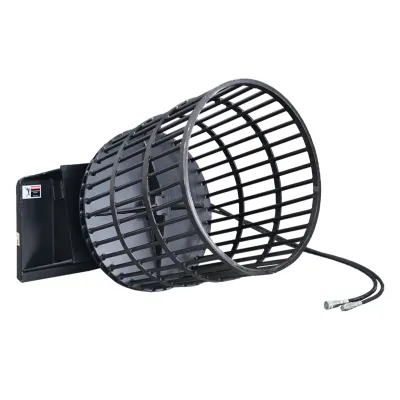
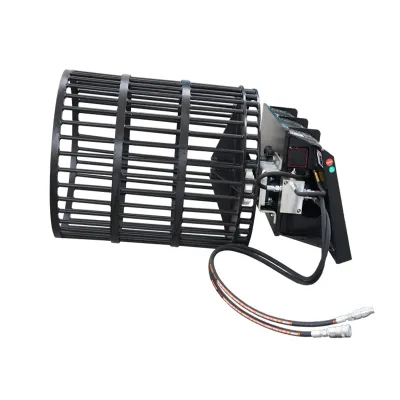
TG-RP200-MP1140 and TG-RP300-MP1140 rotary drum skid steer rock pickers with replaceable screen panels, 80 L/min hydraulic flow, 14 MPa operating pressure, and lift-and-tilt dumping for continuous soil and rock separation in agricultural and land-clearing applications.
Product Name: Rotary Rock Picker / Rock Picker / Stone Picker / Rotary Stone Picker / Land Clearing Rock Picker / Soil Screener / Rock Removal Attachment
Type: Rock Pickers
After-sales Service: Provided
Warranty: 1 Year
Customization: Available
Shipping Cost: Negotiate with us about shipping cost and estimated delivery time.
Get a quote
Overview
FAQ

Product Overview

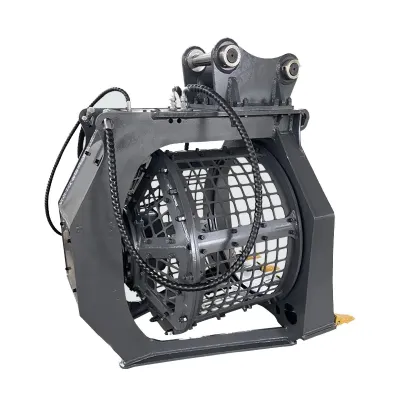
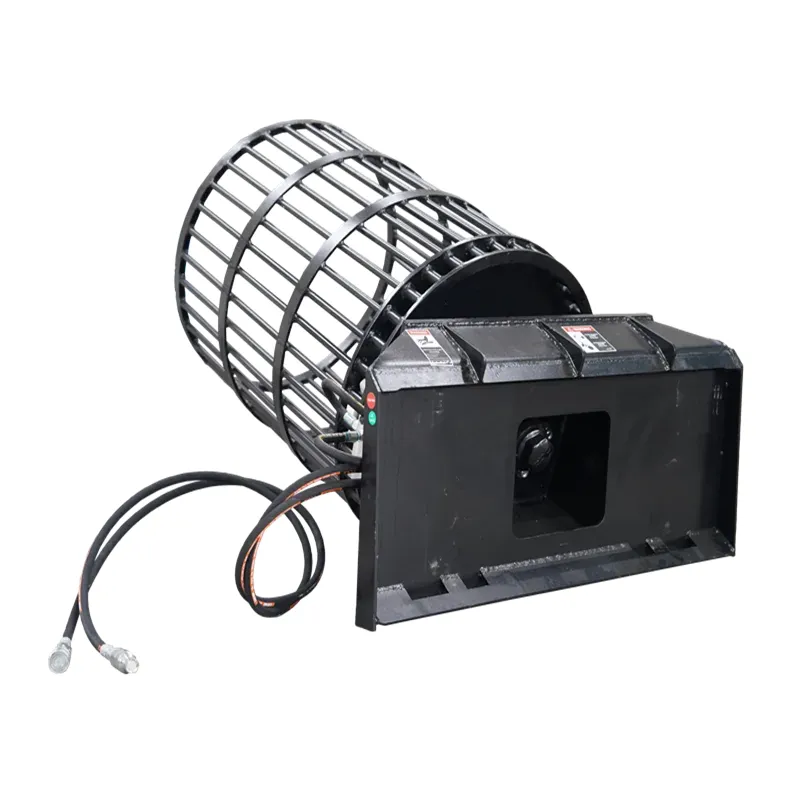
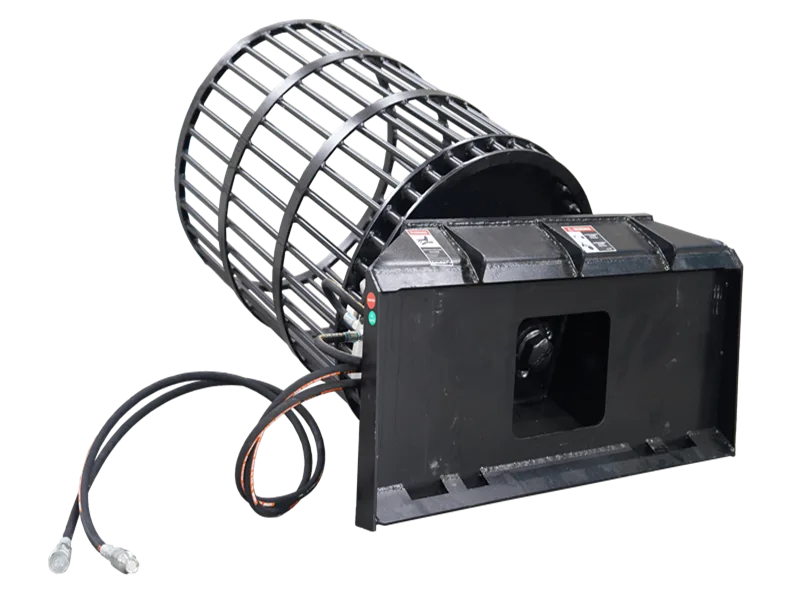
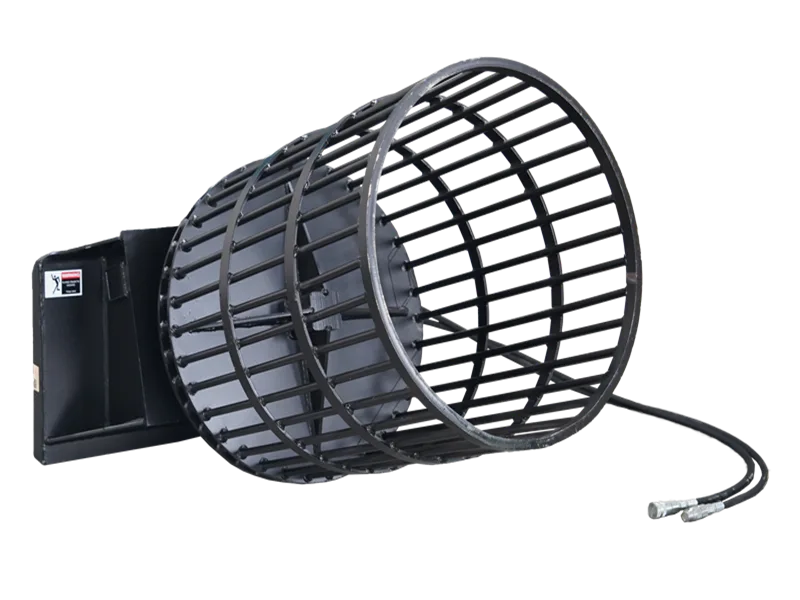
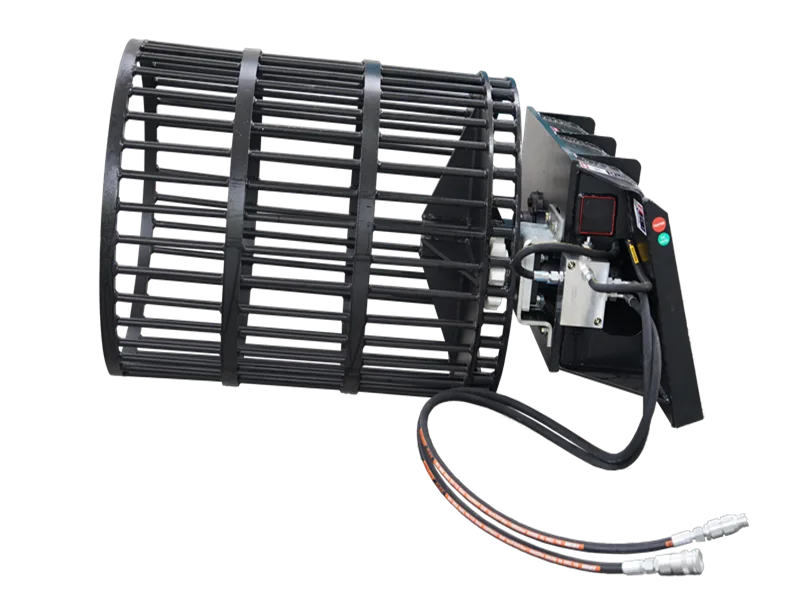
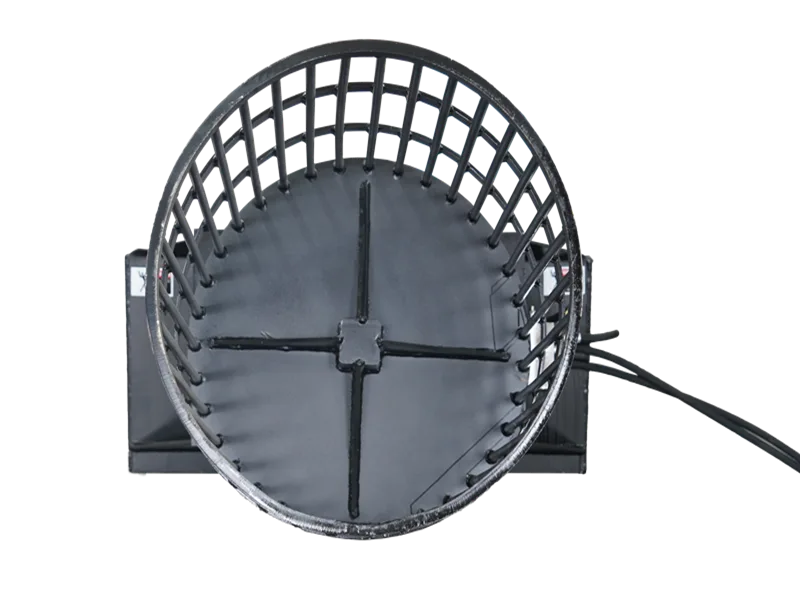
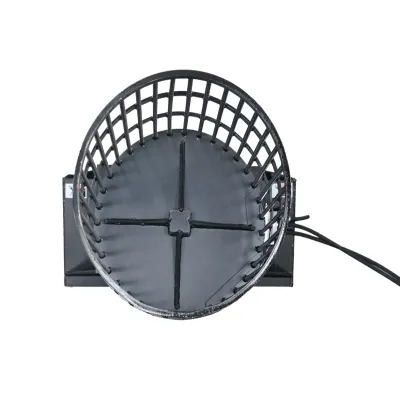
A rotary rock picker works differently than a hopper-style collector. Instead of tines lifting rocks into a box, this attachment uses a rotating cylindrical drum to screen soil from rock as you drive. Fine material falls back to the ground; rocks stay inside and discharge to the rear. That makes it a strong choice for jobs where you want to keep topsoil in place and only remove the rocks, not the earth around them.

TGEC offers two sizes: the compact TG-RP200-MP1140 with a 977 mm drum and 408 kg safe working load, and the larger TG-RP300-MP1140 with a 1,220 mm drum and 907 kg capacity. Both run on 80 L/min at 14 MPa and fit the MP1140 universal quick-attach system. For a closer look at how the drum screening works, read our article on how rotary rock pickers work. The full rock picker lineup includes this rotary design alongside the hopper-style box-style rock picker for bulk haul-away jobs.

Technical Specifications

ParameterTG-RP200-MP1140TG-RP300-MP1140
ModelTG-RP200-MP1140TG-RP300-MP1140
Safe Working Load (SWL)408 kg (899 lb)907 kg (2000 lb)
Dimensions (L × W × H)1403 × 1240 × 766 mm (55.2 × 48.8 × 30.2 in)1644 × 1240 × 898 mm (64.7 × 48.8 × 35.4 in)
Screen Drum Length977 mm (38.5 in)1220 mm (48.0 in)
Operating Pressure14 MPa14 MPa
Hydraulic Flow Required80 L/min80 L/min
Product Weight348 kg (767 lb)435 kg (959 lb)
Mounting TypeMP1140 Universal Quick-AttachMP1140 Universal Quick-Attach
Screen TypeRotary drum, replaceable panelsRotary drum, replaceable panels
Dumping MechanismLift and tilt (skid steer arms)Lift and tilt (skid steer arms)

Table data is for reference only. Actual specifications may vary based on the final configuration. Please contact the TianGe technical team for details.
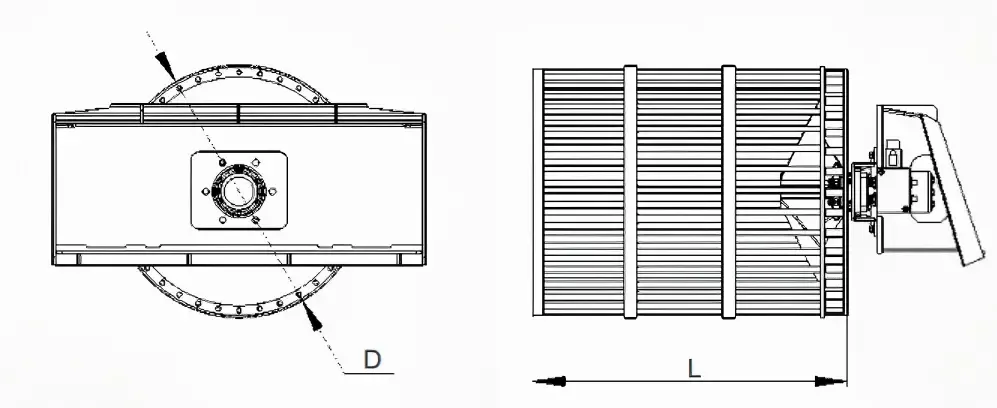
TGEC Skid Steer Rotary Rock Picker – Durable Land Clearing Attachment

How It Works

Auxiliary hydraulic flow spins the drum around its horizontal axis. As the machine moves forward, the drum's leading edge scoops up soil and rocks into the rotating cylinder. Inside, centrifugal force and constant tumbling press material against the perforated screen panels. Soil, sand, and fine particles smaller than the apertures fall through and return to the ground. Rocks and debris too large to pass stay inside, tumble toward the rear, and collect in the hopper area. When that fills, raise the skid steer arms and tilt the attachment to dump the rocks out the back—no separate dump cylinder needed.

Application Scenarios

  • Continuous field rock removal with soil retention

  • Agricultural land preparation where topsoil must remain on site

  • Construction lot clearing with separation of reusable fill material

  • Pasture renovation and rangeland improvement

  • Post-clearing site finishing and soil conditioning

  • Orchard and vineyard floor rock separation

  • Landscape site prep where screened soil is reused for grading

Installation & Mounting

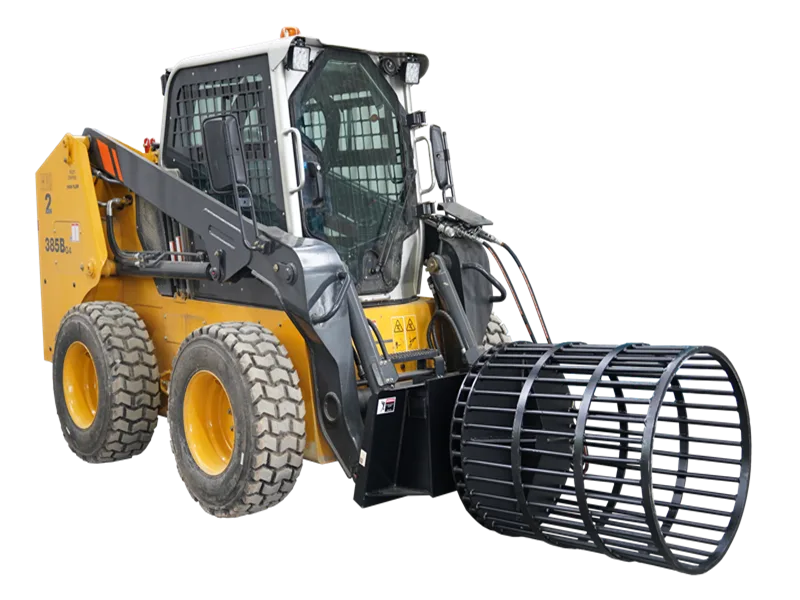
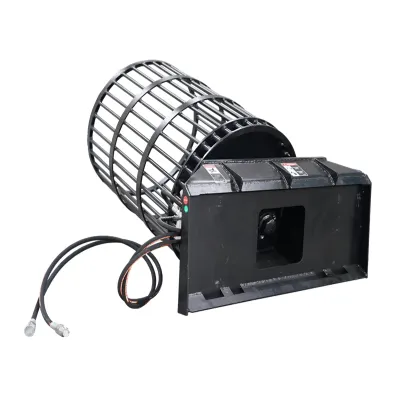
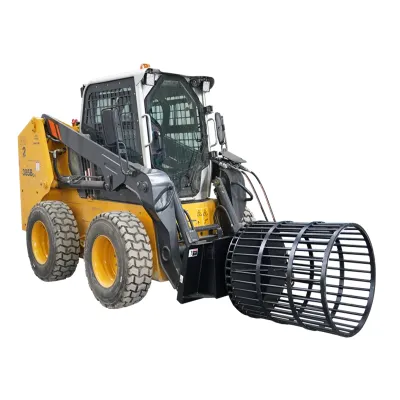
Both rotary pickers attach to the MP1140 universal quick-attach plate found on most standard skid steers. Connect the auxiliary hydraulic couplers to the drum drive motor, verify the machine delivers 80 L/min at 14 MPa, and run the drum at low speed for a few minutes to confirm smooth rotation and proper screen panel seating. Check that your skid steer's rated operating capacity can handle the attachment weight (348 kg or 435 kg) plus a full rock load. High-flow machines should use a flow limiter to avoid overspeeding the drum, which can throw rocks out of the screening chamber.

Wear & Service

The main wear parts are the replaceable screen panels, the drum bearings and drive motor, and the leading edge of the drum. Inspect panels before each shift—look for enlarged openings, cracks, or loose fasteners—and replace individual panels as needed rather than the whole drum. Grease the bearings daily and inspect hydraulic hoses for abrasion where they route across the frame. Check the drum's leading edge for bending or cracking after hitting large rocks, and listen for unusual motor noise during operation. Keep spare panels and hydraulic seals on hand for field swaps.

OEM & Bulk Supply

TianGe manufactures these rotary pickers in standard configurations and supports OEM customization—private-label branding, custom screen aperture sizes, alternative mounting plates, and modified drum lengths. Dealers and distributors benefit from consolidated container shipping, volume pricing, and pre-shipment testing that includes drum rotation verification, hydraulic pressure checks, and panel fit inspection. Custom screen sizes are available for operations that need specific rock-separation thresholds.

Which Rotary Rock Picker Fits Your Skid Steer and Field Work?

What's your main rock-picking job—clearing pasture, prepping crop ground, or cleaning up construction sites? And what's your skid steer's auxiliary flow rating? Give us your machine model, flow rate, and whether you're considering the TG-RP200 or TG-RP300. We'll confirm compatibility, recommend the right model for your operation, and reply with pricing and estimated ship date for your destination.
Frequently Asked Questions

What is the difference between the TG-RP200 and TG-RP300 rotary rock pickers?+

The TG-RP200 is the compact model with a 977 mm (38.5 in) screen drum, 408 kg (899 lb) safe working load, and 348 kg (767 lb) unit weight. The TG-RP300 is the larger model with a 1,220 mm (48.0 in) drum, 907 kg (2,000 lb) SWL, and 435 kg (959 lb) weight. Both share the same hydraulic requirements (80 L/min, 14 MPa), mounting system, and screen type. The TG-RP300 covers more area per pass and holds a larger rock load, while the TG-RP200 is suited for smaller skid steers and tighter working spaces.

What hydraulic flow is required for the rotary rock picker?+

Both the TG-RP200 and TG-RP300 require 80 L/min of auxiliary hydraulic flow. Standard-flow skid steers typically meet this requirement, while high-flow machines should use a flow limiter or in-cab flow adjustment to prevent the drum from rotating too quickly. Excessive drum speed can throw rocks out of the screening chamber and accelerate wear on the drive motor and bearings.

What operating pressure does the rotary rock picker require?+

The rotary rock picker operates at 14 MPa system pressure. This is within the range of most standard skid steer auxiliary circuits. Operators should verify their machine's pressure setting before connecting, as pressure above 14 MPa can damage the hydraulic motor and drum drive components, while insufficient pressure reduces drum torque and causes the drum to stall under heavy rock loads.

How does the rotary drum separate rocks from soil?+

The rotating drum gathers material at its leading edge and tumbles it inside the cylindrical chamber. As the drum rotates, centrifugal force presses material against the screen panel walls. Fine soil, sand, and organic particles smaller than the screen aperture pass through the panels and fall back to the ground, while rocks and debris larger than the opening are retained. The tumbling action also helps break up soil clods, improving separation efficiency. Retained rocks are carried to the rear of the drum and discharged into the collection area as the rotation continues.

What are replaceable screen panels used for?+

Replaceable screen panels form the perforated surface of the rotary drum and determine the separation size threshold. Because the screen surface is subject to constant abrasion from rocks and soil, individual panels can be removed and replaced when worn or damaged, without replacing the entire drum. This design also allows operators to swap panels with different aperture sizes to match specific job requirements, such as finer screening for topsoil retention or larger openings for faster coarse rock removal.

What are the screen drum lengths of the TG-RP200 and TG-RP300?+

The TG-RP200 has a screen drum length of 977 mm (38.5 in), and the TG-RP300 has a drum length of 1,220 mm (48.0 in). The longer drum on the TG-RP300 provides a larger screening surface area, which increases throughput and allows more material to be processed per pass. The shorter drum on the TG-RP200 reduces overall attachment length, making it more maneuverable in confined areas and compatible with smaller skid steers.

How does the lift-and-tilt dumping system work?+

The rotary rock picker does not have a separate hydraulic dump cylinder. Instead, it uses the skid steer's lift arms and bucket tilt function to empty the collected rocks. When the drum and collection area are full, the operator raises the skid steer arms to lift the attachment off the ground, then tilts the attachment forward or rearward using the skid steer's tilt circuit. This tilting motion causes the retained rocks to slide out of the rear opening. The system is simple and reliable, with no additional hydraulic components to maintain, and it works with skid steers that have suitable lift and tilt functions.

What mounting system is used on the rotary rock picker?+

Both models use the MP1140 universal quick-attach mounting system, which is compatible with many standard skid steer loaders. No adapter plate is required for standard machines. The quick-attach design allows the operator to mount and dismount the attachment without leaving the cab, and the locking pins provide a secure connection during operation. For skid steers with non-standard mounting interfaces, TianGe can supply custom adapter plates through its OEM program.

What skid steer specifications should be checked before installation?+

Before installing a rotary rock picker, verify the skid steer's auxiliary hydraulic flow (target 80 L/min), system operating pressure (target 14 MPa), and rated operating capacity. The attachment weighs 348 kg (TG-RP200) or 435 kg (TG-RP300), and the safe working load adds up to 907 kg of retained rock, so the machine must handle the combined weight at full lift height. Confirm that the quick-attach plate is undamaged and that the locking mechanism engages fully. Check hydraulic coupler condition and ensure the machine has both lift and tilt functions for the dumping system. After installation, run the drum at low speed to verify rotation direction and smooth operation before entering the field.

How should the rotary drum and screen panels be inspected?+

Inspect the rotary drum and screen panels before each shift and again after any impact with large rocks or immovable objects. Check each screen panel for enlarged or elongated openings, cracks, bent edges, or loose or missing fasteners. Run your hand along the inside of the drum (with the engine off and hydraulic pressure released) to feel for sharp edges or protruding panel edges that could catch material. Inspect the drum's leading edge for bending or cracking, and check the end plates and bearing housings for signs of movement or leakage. Rotate the drum by hand to confirm it turns freely without binding. Any panel with openings enlarged beyond the specified aperture should be replaced immediately, as oversize panels allow larger rocks to pass through and reduce separation efficiency.

What operating conditions can reduce rotary rock-picking efficiency?+

Several conditions can reduce efficiency. Wet or clay-heavy soil tends to stick to screen panels and clog the openings, preventing fine material from passing through and reducing the effective screening area. Very dry, powdery soil can pass through too quickly, carrying small rocks with it before they can be retained. Ground speed that is too fast does not give the drum enough time to process material, resulting in incomplete separation and rocks being pushed ahead of the attachment rather than entering the drum. Drum speed that is too high throws material against the panels with excessive force, causing wear and potentially ejecting rocks, while speed that is too low fails to generate enough centrifugal force for effective screening. Rocky soil with a high percentage of large boulders can overload the drum and cause the drive motor to stall. For optimal results, match ground speed and drum speed to soil conditions and rock density, and clear the screen panels periodically when working in sticky soil.

When should screen panels or other wear components be replaced?+

Screen panels should be replaced when they show signs of excessive wear—such as noticeably enlarged openings, cracks extending across more than one panel section, or fastener holes elongated to the point that panels cannot be secured tightly. Panels with bent or curled edges that catch material should also be replaced. The drum drive motor should be replaced if it shows persistent external leakage, makes abnormal grinding or knocking noises, or fails to maintain drum speed under load. Drum bearings should be replaced if they exhibit roughness when rotated by hand, show excessive play, or develop grease leakage around the seals. The leading edge of the drum should be repaired or replaced if obvious bending or deformation from its original profile is observed, or if cracks are visible at the weld joints. Hydraulic hoses should be replaced at the first sign of abrasion, bulging, or leakage. In heavy-use agricultural operations, inspect screen panels more frequently given soil abrasiveness and rock size, and replace them when excessive wear, cracking, deformation, or leakage is observed. Keep a spare set of panels and common wear parts on hand to minimize downtime.
Please make sure to include your phone number with the country code (e.g., 86 for China, 1 for USA).