Product Overview
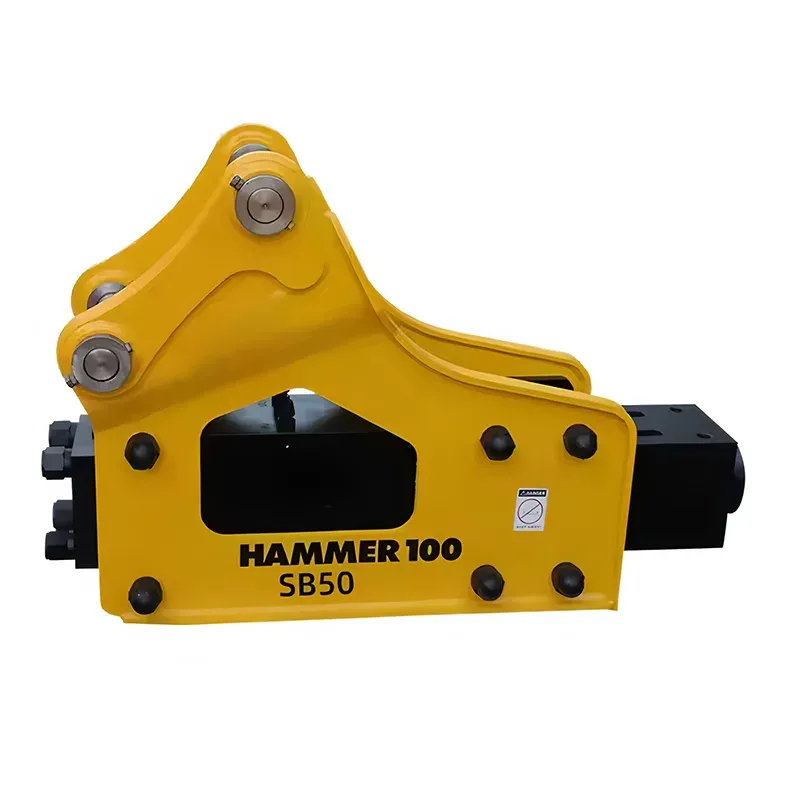
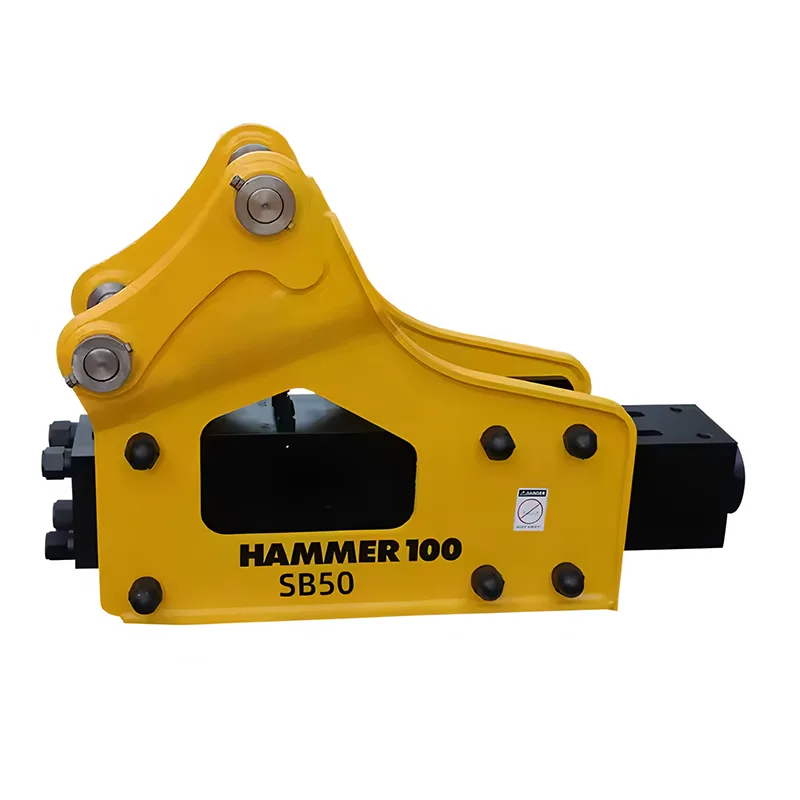
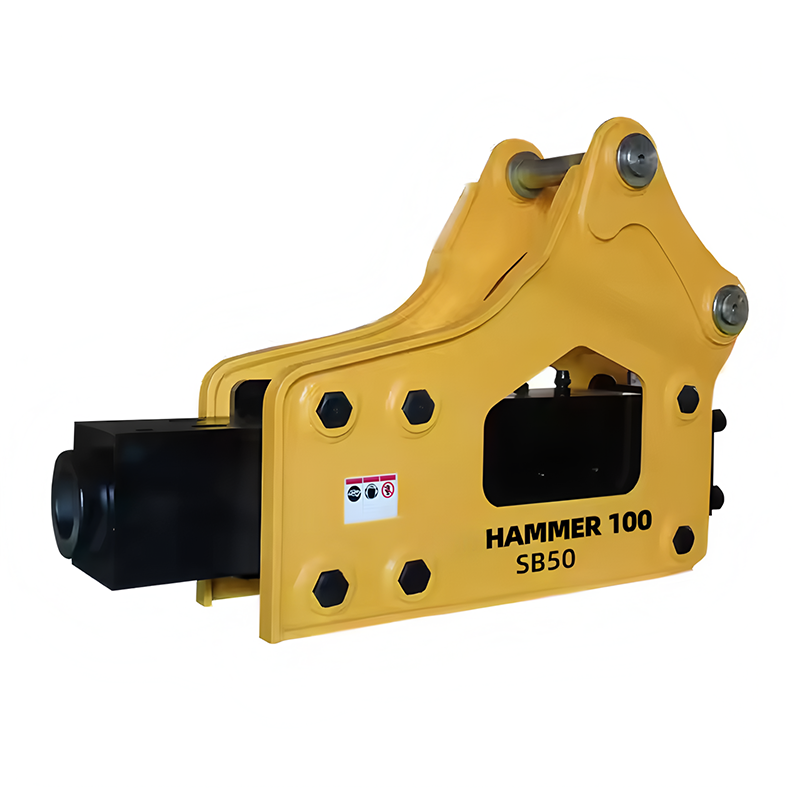
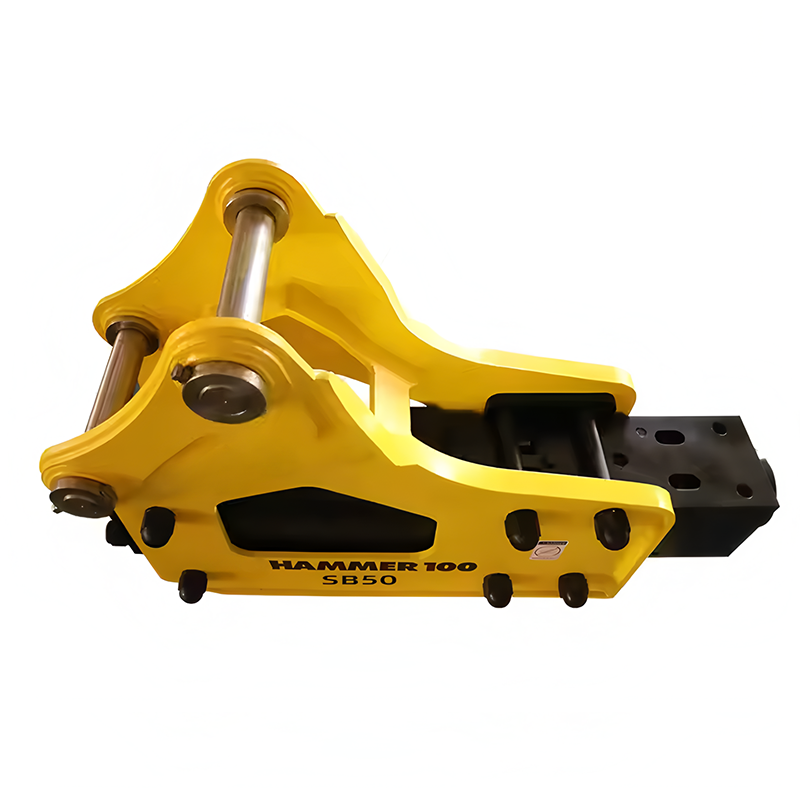
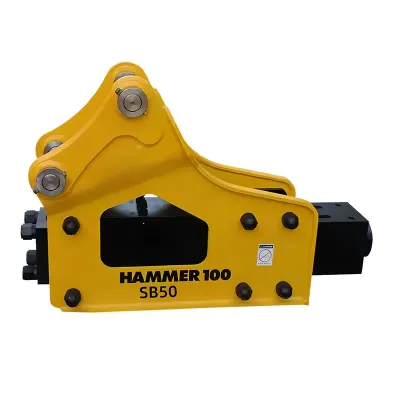
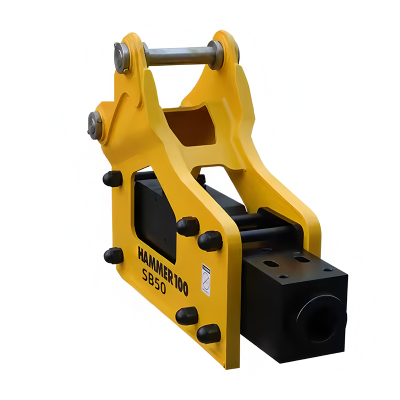
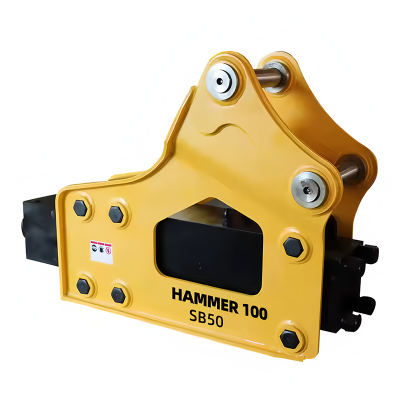
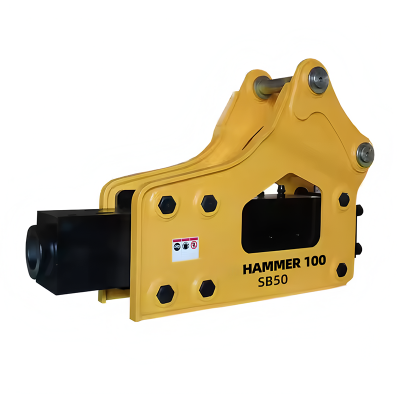
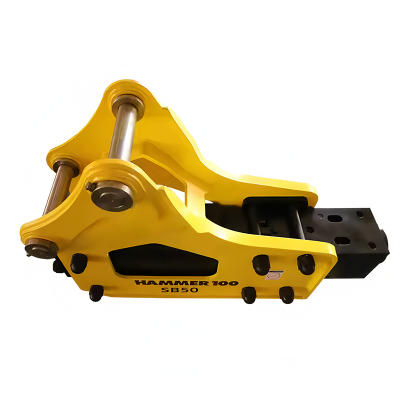
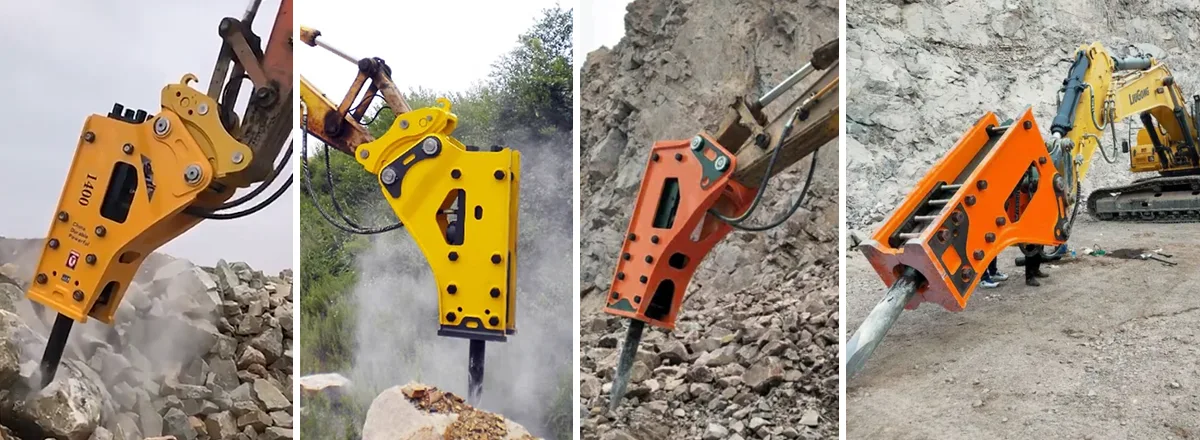
The side-type breaker is the standard-issue workhorse for construction, demolition, road work, and utility jobs. Its side-mount layout tucks the accumulator and valve alongside the power cell in a compact frame, giving you straight-shot access to everything for routine service. It runs on a nitrogen gas-assisted hydraulic system – the accumulator stores energy on the power stroke and helps kick the piston back up on the return. The side-type is a widely used configuration, and for good reason: it's straightforward to maintain, features a durable design, and is well suited to confined work areas. Part of the TGEC excavator hydraulic breakers lineup.
Twenty-two models span carriers from 0.5 to 160 tons, with operating weights from 80 to 12000 kg and tool diameters from 40 to 255 mm. Impact rates run from 70 to 1400 bpm depending on the model and flow, with operating pressure from 90 to 270 bar and oil flow from 15 to 580 L/min. The side-type is a versatile breaker – equally at home on a mini excavator doing utility work or on a 160‑ton rig in a quarry. For quieter urban work, check the silenced box-type breaker; for strong cooling in nonstop quarry duty, the top-type open-body breaker is worth a look.

Side-Mount Design and Performance
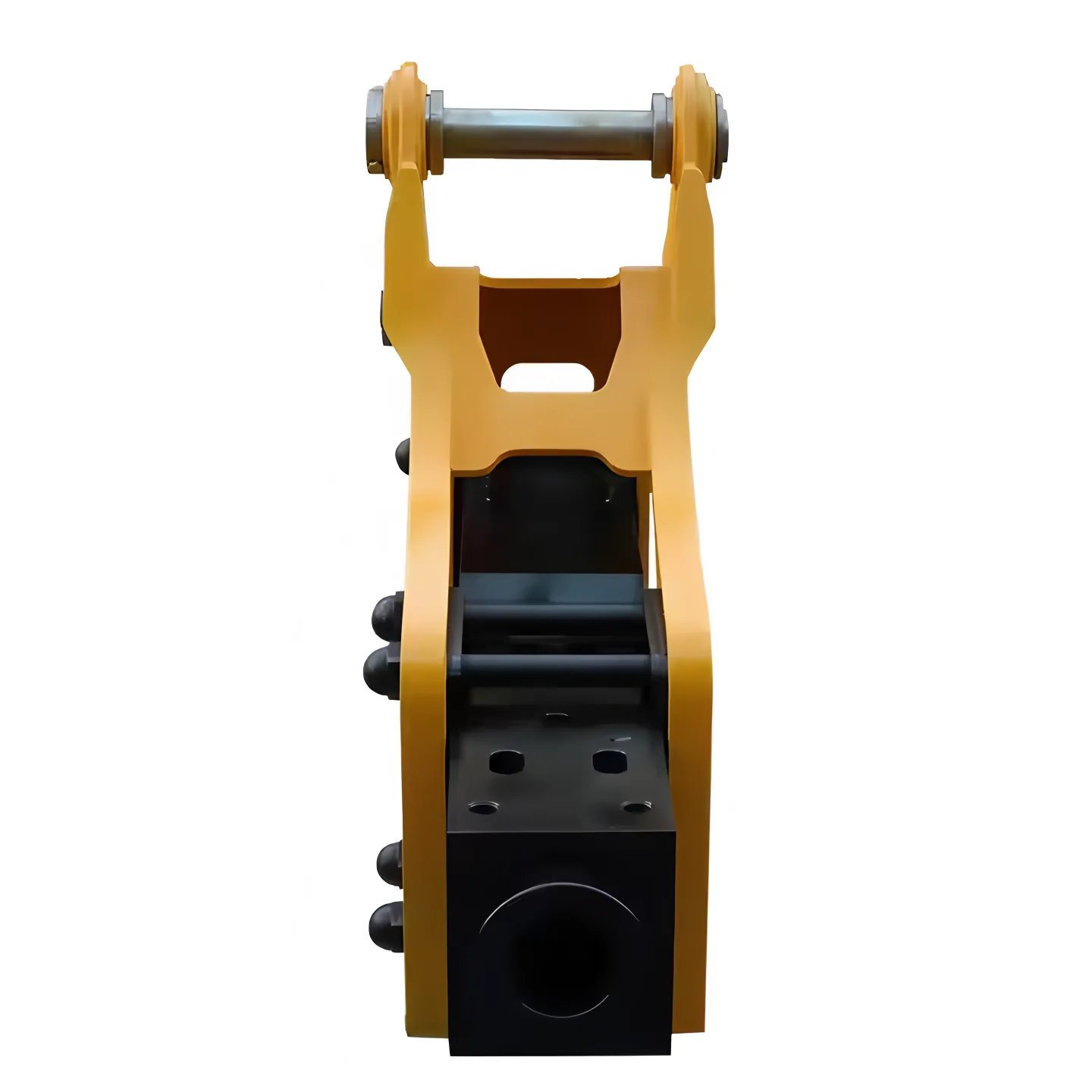
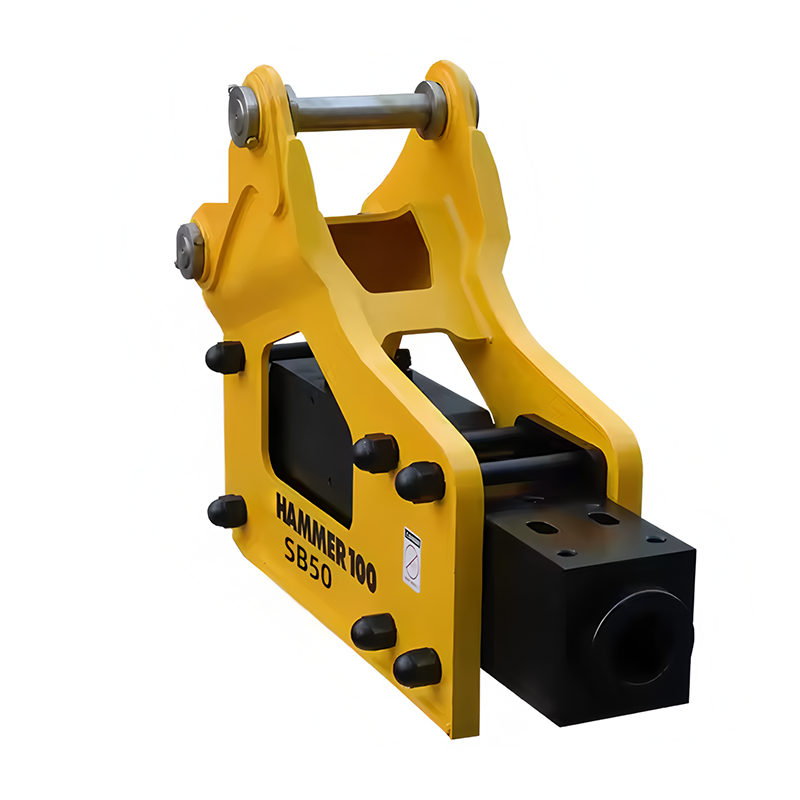
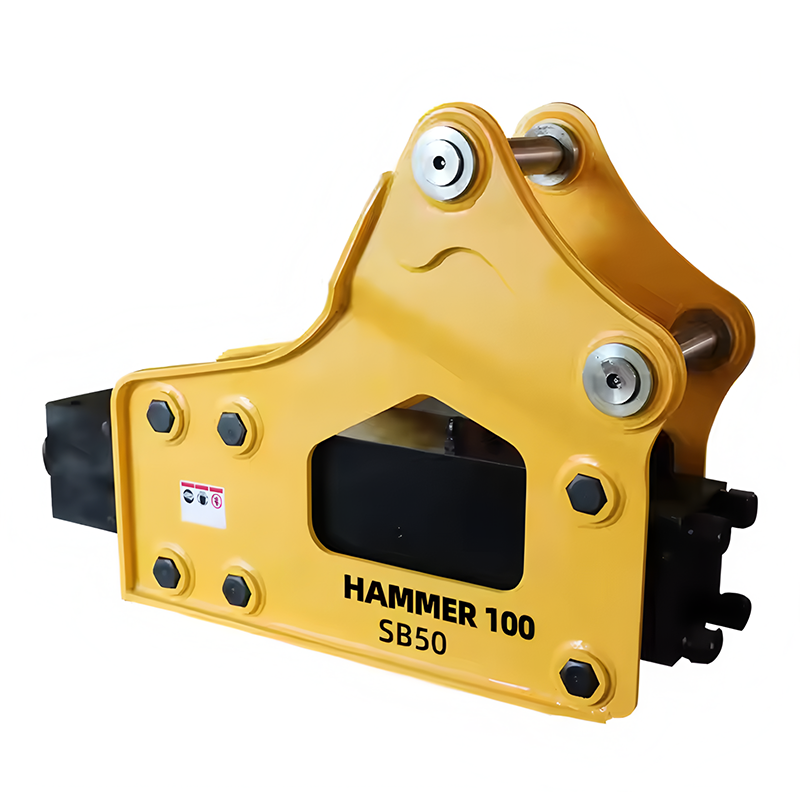
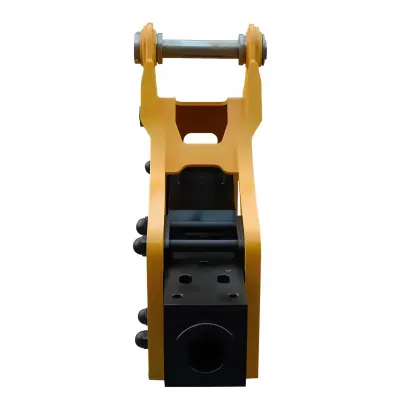
The side-type packs a nitrogen gas-assisted impact system with the accumulator and valve mounted right alongside the power cell. Hydraulic pressure shoves the piston down to deliver the blow, while nitrogen in the accumulator banks energy during the power stroke and helps push the piston back up. The side-mount layout keeps the whole package slim, so it fits into tight spots – trenches, interior demo, cramped construction sites – where taller designs won't go. And since everything's out in the open, you can get at the accumulator, seals, and hoses without wrestling with housing panels.
What makes the side-type so popular? The compact profile slides into tight spaces where top-mount breakers can't go. The exposed layout makes maintenance and field repairs fast and simple. The side-mounted accumulator stays clear of ground-level crud but is still right there when you need to check or charge the nitrogen. Rubber isolation mounts between the power cell and housing cut down vibration, so the operator stays comfortable and stress on the excavator boom and stick is reduced. The flip side? No noise reduction – so if you're in a residential neighborhood, you'll want a silenced box-type. And the open frame doesn't offer the same debris protection as a fully enclosed design.
Models and Specifications
Twenty-two models cover excavators from 0.5 to 160 tons. All specs include both metric and imperial units.
| Model | Weight | Oil Flow | Operating Pressure | Impact Rate | Tool Diameter | Carrier Class |
|---|---|---|---|---|---|---|
| TG-S40 | 80 kg (176 lb) | 15–30 L/min (4–8 GPM) | 90–120 bar (1305–1740 psi) | 800–1400 bpm | 40 mm (1.57 in) | 0.5–1.2 t (0.55–1.3 ton) |
| TG-S45 | 105 kg (231 lb) | 20–40 L/min (5.3–10.6 GPM) | 90–120 bar (1305–1740 psi) | 700–1200 bpm | 45 mm (1.77 in) | 0.8–1.5 t (0.9–1.65 ton) |
| TG-S53 | 161 kg (355 lb) | 20–50 L/min (5.3–13.2 GPM) | 90–120 bar (1305–1740 psi) | 600–1100 bpm | 53 mm (2.09 in) | 1.5–3.5 t (1.65–3.85 ton) |
| TG-S68 | 285 kg (628 lb) | 40–70 L/min (10.6–18.5 GPM) | 90–140 bar (1305–2030 psi) | 700–900 bpm | 68 mm (2.68 in) | 2.5–6 t (2.75–6.6 ton) |
| TG-S75 | 390 kg (860 lb) | 50–90 L/min (13.2–23.8 GPM) | 120–150 bar (1740–2175 psi) | 400–800 bpm | 75 mm (2.95 in) | 6–8.5 t (6.6–9.4 ton) |
| TG-S85 | 560 kg (1235 lb) | 60–100 L/min (15.9–26.4 GPM) | 130–160 bar (1885–2320 psi) | 400–800 bpm | 85 mm (3.35 in) | 7–11 t (7.7–12.1 ton) |
| TG-S100 | 835 kg (1841 lb) | 80–110 L/min (21.1–29.1 GPM) | 150–170 bar (2175–2465 psi) | 350–700 bpm | 100 mm (3.94 in) | 10–14 t (11–15.4 ton) |
| TG-S125 | 1366 kg (3011 lb) | 90–120 L/min (23.8–31.7 GPM) | 150–170 bar (2175–2465 psi) | 350–650 bpm | 125 mm (4.92 in) | 14–18 t (15.4–19.8 ton) |
| TG-S135 | 1671 kg (3684 lb) | 100–150 L/min (26.4–39.6 GPM) | 160–180 bar (2320–2610 psi) | 350–500 bpm | 135 mm (5.31 in) | 18–22 t (19.8–24.3 ton) |
| TG-S140 | 1855 kg (4090 lb) | 120–180 L/min (31.7–47.6 GPM) | 160–180 bar (2320–2610 psi) | 300–500 bpm | 140 mm (5.51 in) | 20–24 t (22–26.5 ton) |
| TG-S150 | 2448 kg (5397 lb) | 130–190 L/min (34.3–50.2 GPM) | 180–200 bar (2610–2900 psi) | 200–300 bpm | 150 mm (5.91 in) | 24–27 t (26.5–29.8 ton) |
| TG-S155 | 2741 kg (6043 lb) | 180–240 L/min (47.6–63.4 GPM) | 200–220 bar (2900–3190 psi) | 200–300 bpm | 155 mm (6.10 in) | 27–33 t (29.8–36.4 ton) |
| TG-S165 | 3301 kg (7277 lb) | 200–260 L/min (52.8–68.7 GPM) | 200–220 bar (2900–3190 psi) | 150–300 bpm | 165 mm (6.50 in) | 33–38 t (36.4–41.9 ton) |
| TG-S175 | 4287 kg (9451 lb) | 220–270 L/min (58.1–71.3 GPM) | 200–230 bar (2900–3335 psi) | 130–200 bpm | 175 mm (6.89 in) | 40–50 t (44–55 ton) |
| TG-S190 | 5240 kg (11552 lb) | 240–280 L/min (63.4–74.0 GPM) | 230–250 bar (3335–3625 psi) | 140–200 bpm | 190 mm (7.48 in) | 45–55 t (49.5–60.6 ton) |
| TG-S195 | 5360 kg (11817 lb) | 260–300 L/min (68.7–79.3 GPM) | 230–250 bar (3335–3625 psi) | 140–180 bpm | 195 mm (7.68 in) | 45–55 t (49.5–60.6 ton) |
| TG-S200 | 5520 kg (12170 lb) | 280–350 L/min (74.0–92.5 GPM) | 240–260 bar (3480–3770 psi) | 130–160 bpm | 200 mm (7.87 in) | 50–65 t (55–71.6 ton) |
| TG-S205 | 7050 kg (15543 lb) | 320–410 L/min (84.5–108.3 GPM) | 250–270 bar (3625–3915 psi) | 100–130 bpm | 205 mm (8.07 in) | 50–65 t (55–71.6 ton) |
| TG-S210 | 7900 kg (17417 lb) | 350–450 L/min (92.5–118.9 GPM) | 250–270 bar (3625–3915 psi) | 90–120 bpm | 210 mm (8.27 in) | 65–105 t (71.6–115.7 ton) |
| TG-S230 | 10255 kg (22608 lb) | 420–530 L/min (111.0–140.0 GPM) | 250–270 bar (3625–3915 psi) | 70–100 bpm | 230 mm (9.06 in) | 85–120 t (93.7–132.3 ton) |
| TG-S255 | 12000 kg (26455 lb) | 430–580 L/min (113.6–153.2 GPM) | 250–270 bar (3625–3915 psi) | 70–100 bpm | 255 mm (10.04 in) | 100–160 t (110–176.4 ton) |
Table data for reference only. Final specs depend on configuration – contact TianGe for details.
Application Scenarios
General building demolition: Bust slabs, foundations, walls, and structural elements in commercial and residential work. The slim side-mount profile handles tight spaces with ease.
Road and bridge work: Tear up asphalt, concrete pavements, and bridge decks for repairs. Easy maintenance access is a plus on remote road jobs.
Utility and trenching: Break rock, hardpan, and concrete in narrow trenches, pipeline work, and foundation digging. The compact footprint fits where others don't.
Quarry secondary breaking: Knock down boulders and oversized rock in quarry operations. The exposed design sheds heat well during long runs.
Hydraulic Requirements and Carrier Matching
Getting the hydraulics right is key to side-type performance. Flow requirements range from 15 to 580 L/min, with operating pressure from 90 to 270 bar. The auxiliary circuit needs a properly sized relief valve set to the breaker's max pressure, a shut-off valve, and hoses rated for the pressure. A case drain is recommended for larger models. Keep an eye on the nitrogen charge in the accumulator – it needs periodic checking. The hydraulic cooling system on your excavator should be up to the extra load, especially if you're running long hours in hot weather.
When picking a model, verify that your excavator's weight falls within the carrier range, that your auxiliary flow is within the breaker's spec, and that your circuit can deliver the required pressure. Also check lift capacity at working reach – especially for the big models in the 40‑160 ton range. Mounting brackets are custom-built for each make and model; quick coupler compatibility is available. When ordering, provide the excavator make and model, operating weight, auxiliary flow and pressure, pin-to-pin spacing, pin diameter, stick width, and coupler type if applicable.
Maintenance
Daily: grease the tool bushing every two to four hours with good breaker grease, and inspect the working tool and retaining pins for wear or damage. Check the nitrogen charge in the side-mounted accumulator periodically. Inspect the front head bushing weekly and replace it when clearance exceeds the limit. Keep an eye on hydraulic hoses for leaks or chafing, and check through-bolt torque. The side-mount layout gives you easy access to the accumulator, valve, and hoses – service is quicker than on enclosed designs.
Full service – seals, piston, valve, accumulator, and bushings – is recommended every 500‑1000 hours depending on conditions. More frequent if you're in abrasive rock or running heavy cycles. TGEC stocks a full range of spare parts for all side-type models: seal kits, pistons, front heads, valve assemblies, accumulators, through-bolts, bushings, retaining pins, and hoses. TGEC offers four standard hydraulic breaker chisel types for the side-type: moil point, blunt tool, flat wedge, and conical point, available in tool diameters from 40 to 255 mm.
Request a Quote — Side-Type Hydraulic Breaker
Tell us your excavator make and model, operating weight, auxiliary flow and pressure, primary application (general demolition, road work, utility, or quarry), preferred model or tool diameter, mounting or coupler type, chisel type, and quantity. Our team will confirm the right side-type model for your machine, verify hydraulic compatibility, supply the correct bracket and chisel, and send you a detailed quote. Dealers, contractors, and OEM customers welcome for volume orders, private-label branding, and custom configurations.