Product Overview
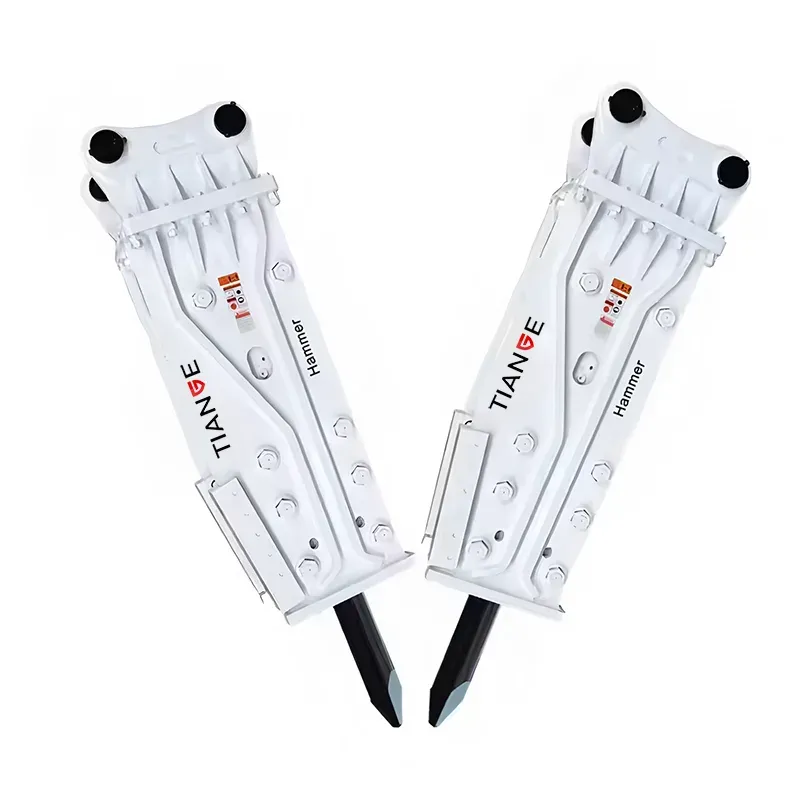
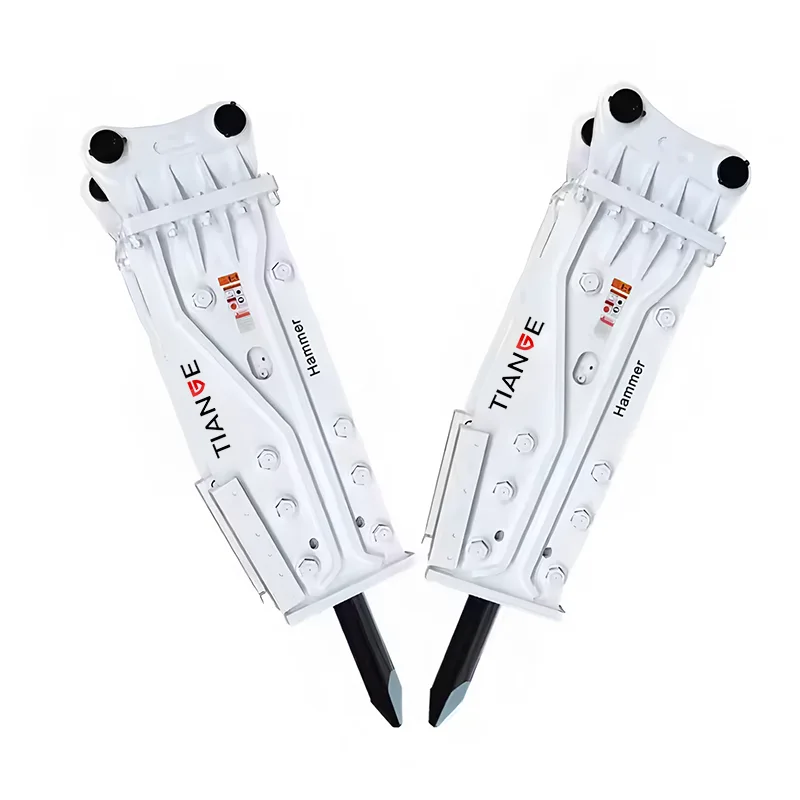
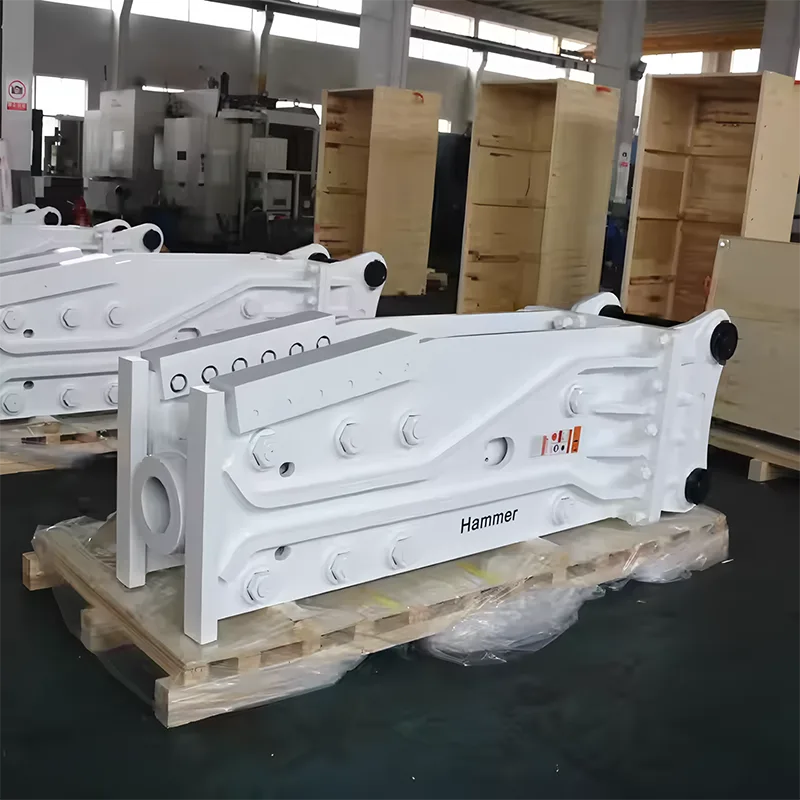
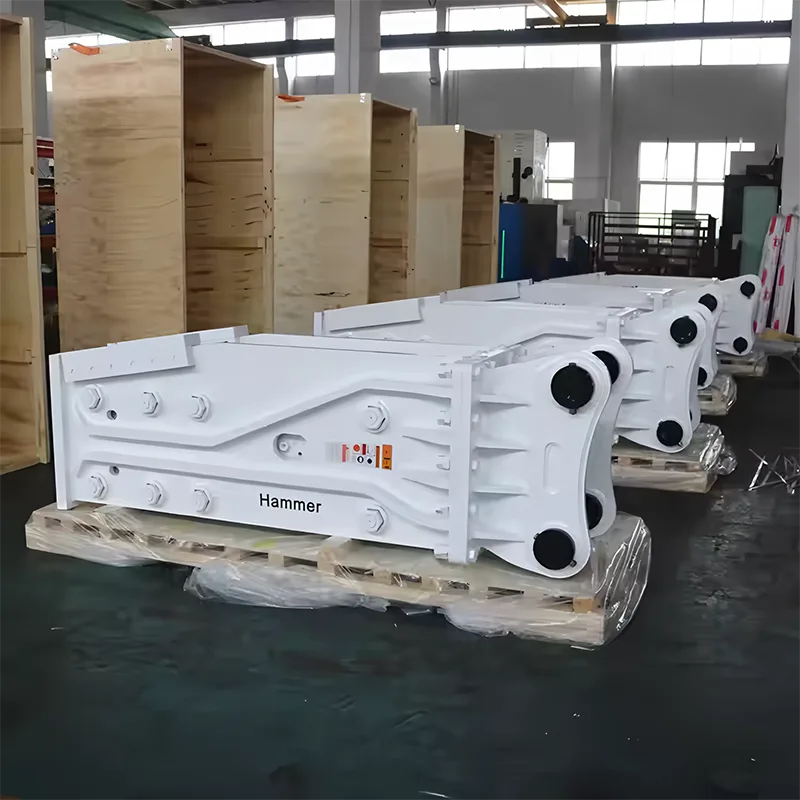
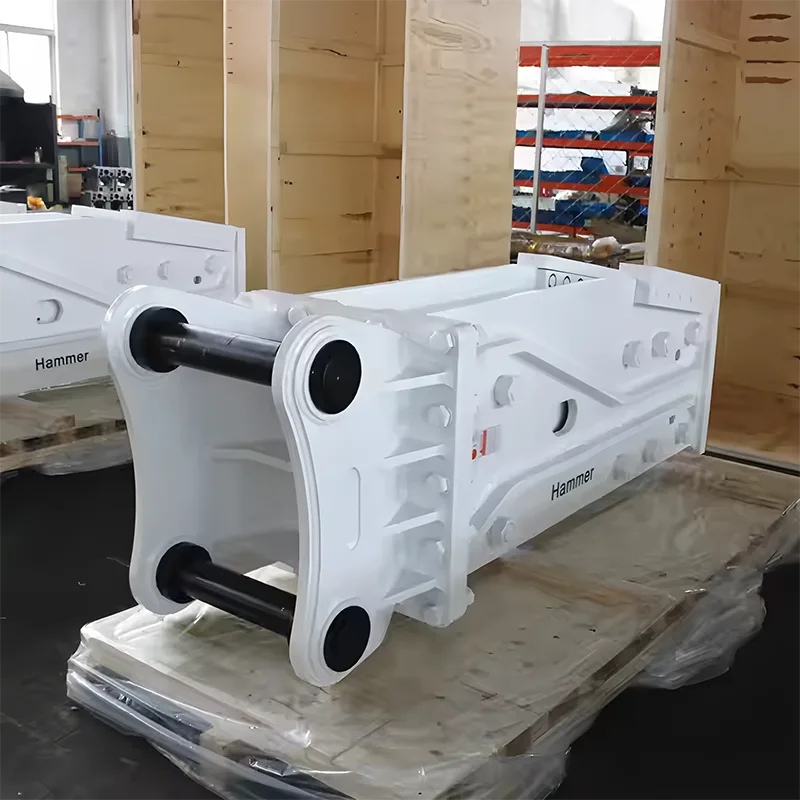
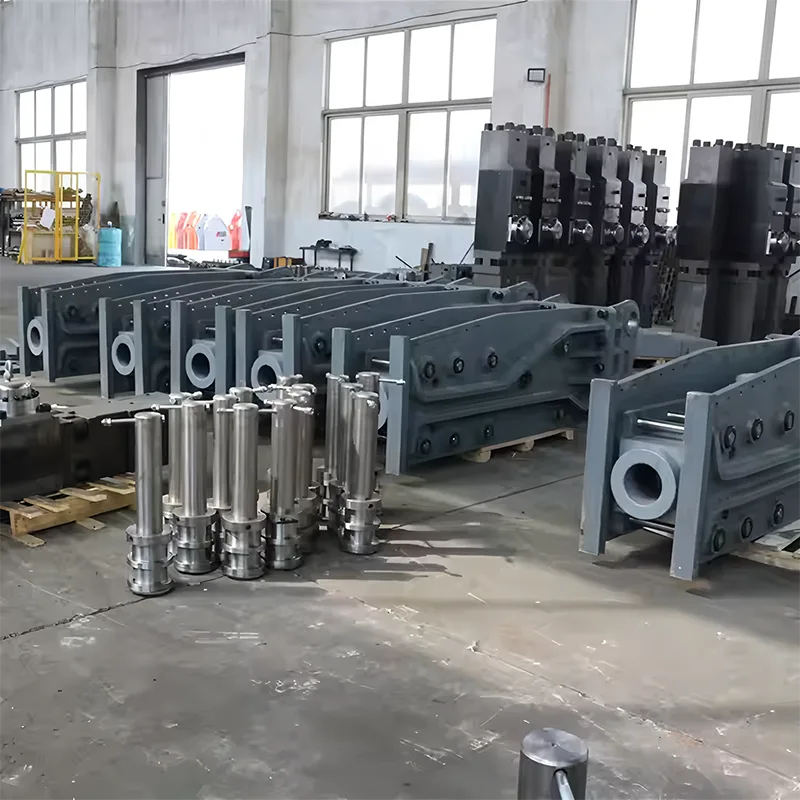
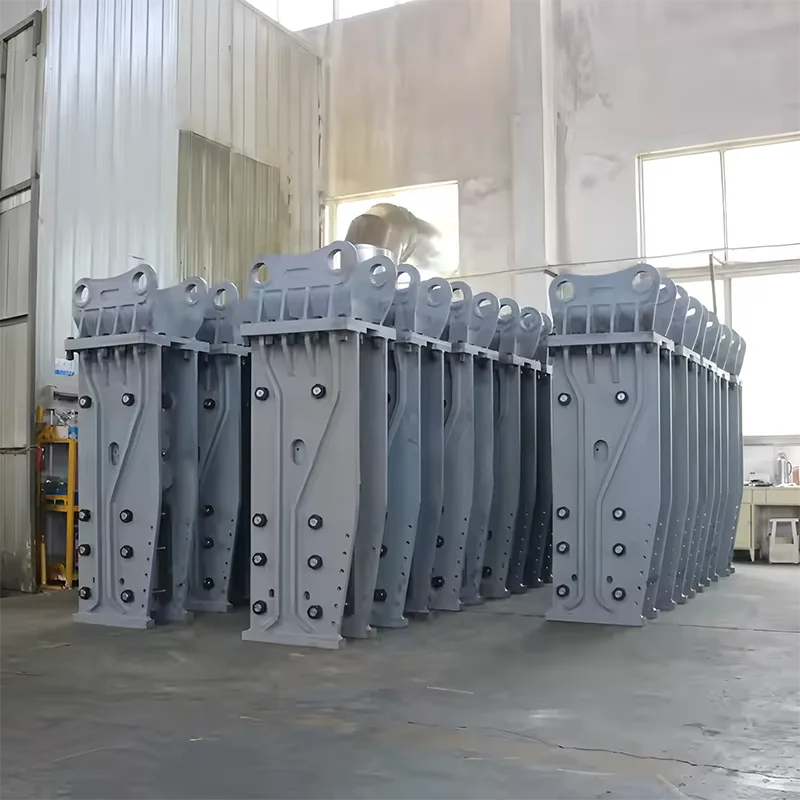
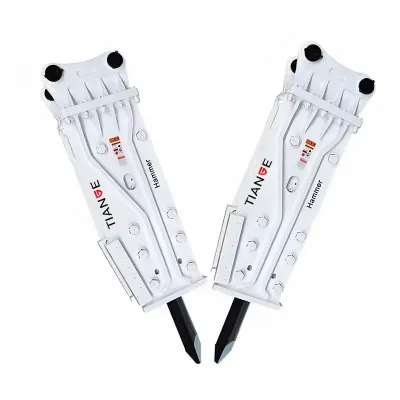
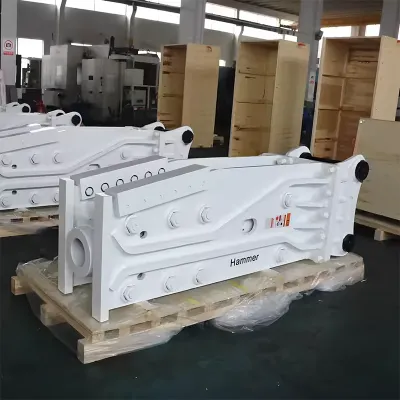
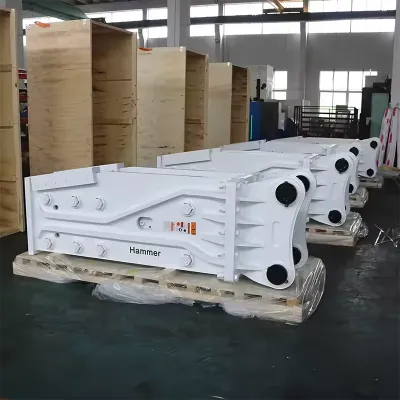
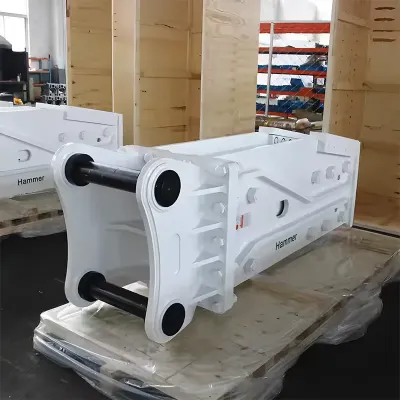
The top-type open-body breaker is built for quarry work, heavy demolition, and general construction jobs where service access, heat dissipation, and tool visibility are critical. The open frame leaves the power cell, accumulator, and valve assembly fully exposed – no housing panels to remove for servicing. The top-mounted layout puts the accumulator and valve above the power cell, which keeps heat moving away during long runs and gives you easy access for nitrogen charging and pressure adjustments. Part of the TGEC excavator hydraulic breakers lineup.
Twenty-two models span carriers from 0.5 to 160 tons, with operating weights from 90 to 14026 kg and tool diameters from 40 to 255 mm. These are nitrogen gas-assisted breakers, delivering impact rates from 70 to 1400 bpm depending on the model and flow, with operating pressure from 90 to 270 bar and oil flow from 15 to 580 L/min. The open-body design is especially popular with quarry operators and heavy demolition crews who run breakers all day and need fast, straightforward access for field maintenance. For comparison, the side-type breaker gives you a compact side-mounted housing, while the silenced box-type breaker wraps the power cell in a noise-dampening enclosure for urban work.
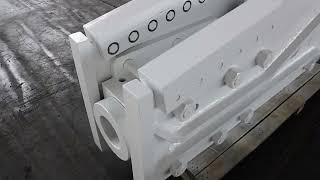
Open-Body Design and Performance
The top-type open-body breaker is driven by a nitrogen gas-assisted hydraulic impact system, with the accumulator and valve assembly sitting on top of the power cell. Hydraulic pressure drives the piston down to deliver the blow, while nitrogen gas in the accumulator stores energy during the power stroke and helps push the piston back up. The top-mounted setup puts the accumulator right where you can get to it – easy nitrogen charging, easy pressure checks, and it sheds heat efficiently during continuous operation. The open frame leaves everything visible and accessible – hoses, seals, the accumulator, the valve assembly – so you can inspect and service without wasting time pulling off housing panels.
The open-body design has some real advantages for quarry and heavy demolition work. The exposed power cell helps dissipate heat during extended operation. The open frame gives you a clear sightline to the working tool and the material you're breaking – better precision when you need it. The top-mounted accumulator and valve are up out of the way of ground-level debris and impacts, but still easy to reach when you need to service them. Rubber isolation mounts between the power cell and the mounting frame cut down vibration to the excavator, making the operator's day a little more comfortable and reducing stress on the boom and stick.
Models and Specifications
Twenty-two models cover excavators from 0.5 to 160 tons. All specs include both metric and imperial units.
| Model | Weight | Oil Flow | Operating Pressure | Impact Rate | Tool Diameter | Carrier Class |
|---|---|---|---|---|---|---|
| TG-T40 | 90 kg (198 lb) | 15–30 L/min (4–8 GPM) | 90–120 bar (1305–1740 psi) | 800–1400 bpm | 40 mm (1.57 in) | 0.5–1.2 t (0.55–1.3 ton) |
| TG-T45 | 118 kg (260 lb) | 20–40 L/min (5.3–10.6 GPM) | 90–120 bar (1305–1740 psi) | 700–1200 bpm | 45 mm (1.77 in) | 0.8–1.5 t (0.9–1.65 ton) |
| TG-T53 | 173 kg (381 lb) | 20–50 L/min (5.3–13.2 GPM) | 90–120 bar (1305–1740 psi) | 600–1100 bpm | 53 mm (2.09 in) | 1.5–3 t (1.65–3.3 ton) |
| TG-T68 | 296 kg (653 lb) | 40–70 L/min (10.6–18.5 GPM) | 100–140 bar (1450–2030 psi) | 500–900 bpm | 68 mm (2.68 in) | 2.5–4.5 t (2.75–5 ton) |
| TG-T75 | 396 kg (873 lb) | 50–90 L/min (13.2–23.8 GPM) | 120–150 bar (1740–2175 psi) | 400–800 bpm | 75 mm (2.95 in) | 4.5–6 t (5–6.6 ton) |
| TG-T85 | 625 kg (1378 lb) | 60–100 L/min (15.9–26.4 GPM) | 130–160 bar (1885–2320 psi) | 400–800 bpm | 85 mm (3.35 in) | 6.8–8.5 t (7.5–9.4 ton) |
| TG-T100 | 942 kg (2077 lb) | 80–110 L/min (21.1–29.1 GPM) | 150–170 bar (2175–2465 psi) | 350–700 bpm | 100 mm (3.94 in) | 7–11 t (7.7–12.1 ton) |
| TG-T125 | 1535 kg (3384 lb) | 90–120 L/min (23.8–31.7 GPM) | 150–170 bar (2175–2465 psi) | 350–650 bpm | 125 mm (4.92 in) | 10–14 t (11–15.4 ton) |
| TG-T135 | 1893 kg (4173 lb) | 100–150 L/min (26.4–39.6 GPM) | 160–180 bar (2320–2610 psi) | 350–500 bpm | 135 mm (5.31 in) | 12–18 t (13.2–19.8 ton) |
| TG-T140 | 2134 kg (4705 lb) | 120–180 L/min (31.7–47.6 GPM) | 180–200 bar (2610–2900 psi) | 300–500 bpm | 140 mm (5.51 in) | 20–24 t (22–26.5 ton) |
| TG-T150 | 2637 kg (5814 lb) | 130–190 L/min (34.3–50.2 GPM) | 180–200 bar (2610–2900 psi) | 200–300 bpm | 150 mm (5.91 in) | 24–27 t (26.5–29.8 ton) |
| TG-T155 | 2995 kg (6603 lb) | 180–240 L/min (47.6–63.4 GPM) | 200–220 bar (2900–3190 psi) | 200–300 bpm | 155 mm (6.10 in) | 27–33 t (29.8–36.4 ton) |
| TG-T165 | 3621 kg (7983 lb) | 200–260 L/min (52.8–68.7 GPM) | 200–220 bar (2900–3190 psi) | 150–300 bpm | 165 mm (6.50 in) | 33–38 t (36.4–41.9 ton) |
| TG-T175 | 4617 kg (10179 lb) | 220–270 L/min (58.1–71.3 GPM) | 200–230 bar (2900–3335 psi) | 130–200 bpm | 175 mm (6.89 in) | 40–50 t (44–55 ton) |
| TG-T190 | 6122 kg (13497 lb) | 240–280 L/min (63.4–74.0 GPM) | 230–250 bar (3335–3625 psi) | 100–140 bpm | 190 mm (7.48 in) | 45–55 t (49.5–60.6 ton) |
| TG-T195 | 6242 kg (13761 lb) | 260–300 L/min (68.7–79.3 GPM) | 240–260 bar (3480–3770 psi) | 100–140 bpm | 195 mm (7.68 in) | 50–60 t (55–66 ton) |
| TG-T200 | 6402 kg (14114 lb) | 280–350 L/min (74.0–92.5 GPM) | 250–270 bar (3625–3915 psi) | 100–130 bpm | 200 mm (7.87 in) | 50–60 t (55–66 ton) |
| TG-T205 | — | 320–410 L/min (84.5–108.3 GPM) | 250–270 bar (3625–3915 psi) | 90–120 bpm | 205 mm (8.07 in) | 55–65 t (60.6–71.6 ton) |
| TG-T210 | — | 350–450 L/min (92.5–118.9 GPM) | 250–270 bar (3625–3915 psi) | 90–120 bpm | 210 mm (8.27 in) | 65–70 t (71.6–77 ton) |
| TG-T230 | 12000 kg (26455 lb) | 420–530 L/min (111.0–140.0 GPM) | 250–270 bar (3625–3915 psi) | 70–100 bpm | 230 mm (9.06 in) | 85–120 t (93.7–132.3 ton) |
| TG-T255 | 14026 kg (30922 lb) | 430–580 L/min (113.6–153.2 GPM) | 250–270 bar (3625–3915 psi) | 70–100 bpm | 255 mm (10.04 in) | 100–160 t (110–176.4 ton) |
Table data for reference only. Final specs depend on configuration – contact TianGe for details.
Application Scenarios
Quarry production and mining: Primary and secondary rock breaking, overburden removal, and boulder reduction in hard rock. The open-body design keeps things cool during long runs.
Heavy industrial demolition: Bust large concrete structures, bridge components, industrial plant foundations, and heavily reinforced concrete that needs serious impact energy.
General construction and site prep: Break rock, concrete, and hard ground in foundation excavation, site preparation, and utility trenching. The open frame gives you a clear view of the tool for precise work.
Road and infrastructure work: Tear up asphalt, concrete pavements, and bridge decks for repairs. The open-body design makes field maintenance fast and easy on remote job sites.
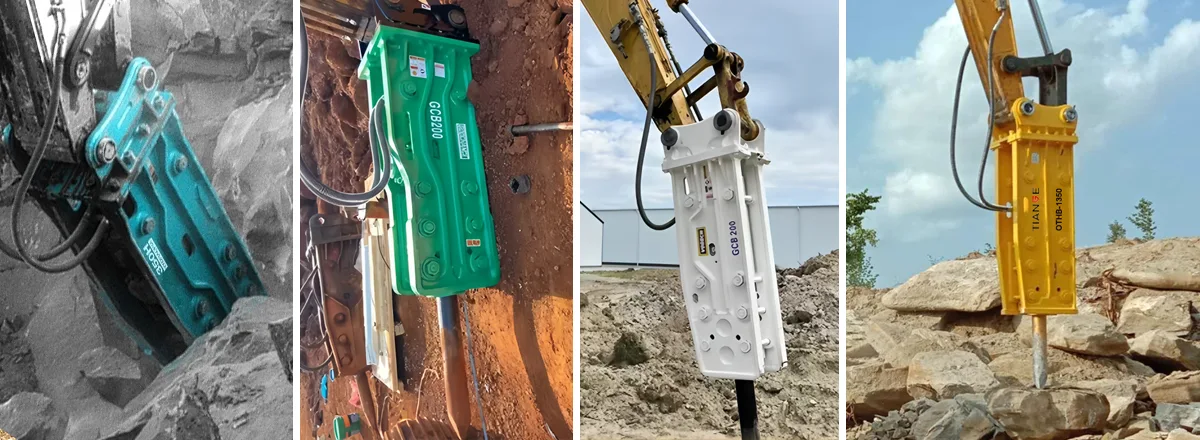
Hydraulic Requirements and Carrier Matching
Getting the hydraulics right is key to getting the most out of your top-type breaker. Each model has specific flow requirements from 15 to 580 L/min, with operating pressure from 90 to 270 bar. The auxiliary circuit needs a properly sized relief valve set to the breaker's max pressure, a shut-off valve to isolate it when not in use, and hoses rated for the pressure. A case drain is recommended for larger models to keep back pressure from damaging the valve assembly and seals. The nitrogen charge in the accumulator needs periodic checking – keep it at the manufacturer's spec for best performance. Also make sure your excavator's hydraulic cooling system can handle the extra load, especially if you're running hard in hot weather.
When picking a model, check that your excavator's weight falls within the carrier range, that your auxiliary flow is within the breaker's spec, and that your circuit can deliver the required pressure. Verify that your machine's lift capacity can handle the breaker's weight at the reach you'll be working at – especially important for the big models for 40‑ to 160‑ton excavators. Mounting brackets are custom-built for each excavator make and model – compatible with mechanical and hydraulic quick couplers when configured with the appropriate mounting bracket. When ordering, give us the excavator make and model, operating weight, auxiliary flow and pressure, pin-to-pin spacing, pin diameter, stick width, and coupler type if you're using one.
Maintenance
Daily maintenance for the top-type open-body breaker: grease the tool bushing every two to four hours with good breaker grease, and inspect the working tool and retaining pins for wear or damage. Check the nitrogen charge in the accumulator periodically and top it up if it's below spec. Inspect the front head bushing weekly and replace it when clearance exceeds the limit. Keep an eye on hydraulic hoses for leaks or chafing, and check through-bolt torque. The open-body design makes all these checks and services quick and easy – no panels to remove, no time wasted.
Full service – seal replacement, piston inspection, valve overhaul, accumulator service, and bushing replacement – is recommended every 500‑1000 hours depending on how hard you're running it. More frequent service for highly abrasive rock, heavy duty cycles, or extreme environments. TGEC stocks a full range of spare parts for all top-type models – seal kits, pistons, front heads, valve assemblies, accumulators, through-bolts, bushings, retaining pins, and hoses. TGEC offers four standard hydraulic breaker chisel types for the top-type: moil point, blunt tool, flat wedge, and conical point, available in tool diameters from 40 to 255 mm to match each model.
Request a Quote — Top-Type Open-Body Hydraulic Breaker
Tell us your excavator make and model, operating weight, auxiliary flow and pressure, primary application (quarry, heavy demolition, general construction, or road work), preferred model or tool diameter, mounting or coupler type, chisel type, and quantity. Our team will confirm the right top-type model for your machine, verify hydraulic compatibility, supply the correct bracket and chisel, and send you a detailed quote. Dealers, quarry operators, contractors, and OEM customers welcome for volume orders, private-label branding, and custom configurations.