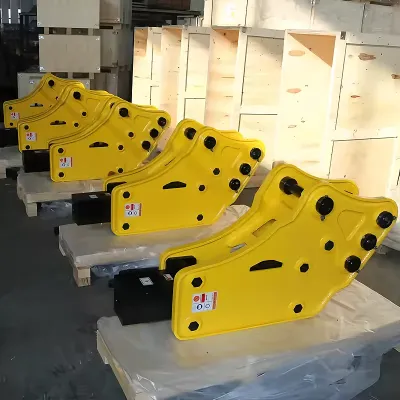
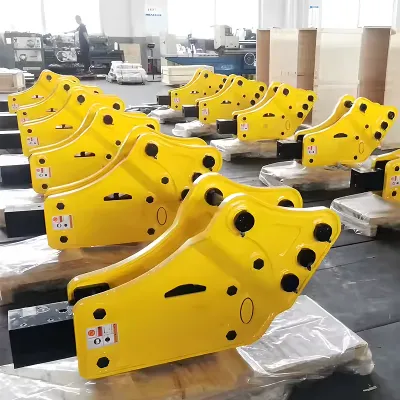
Product Overview
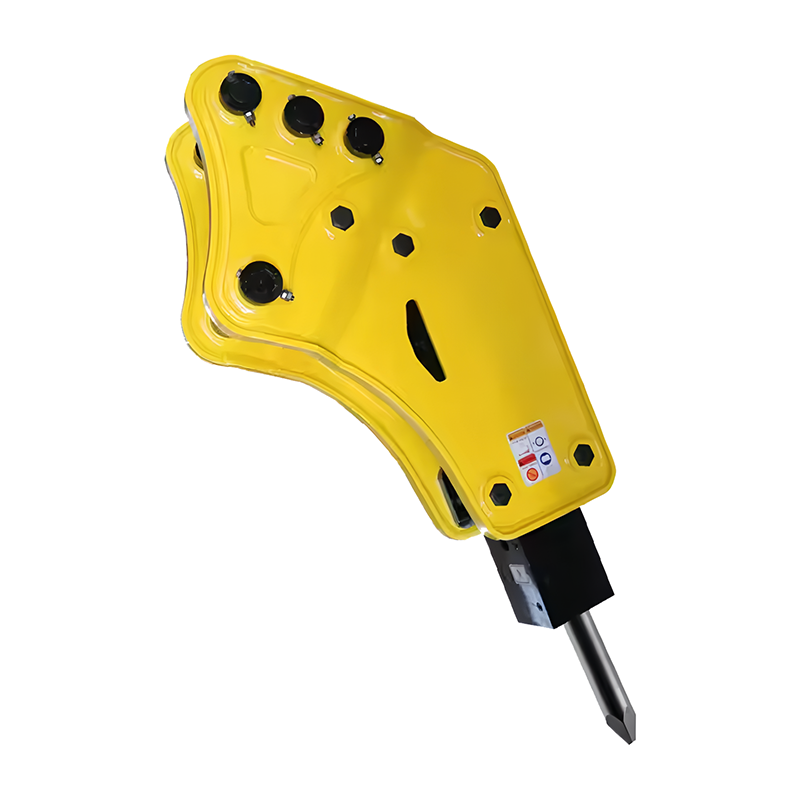
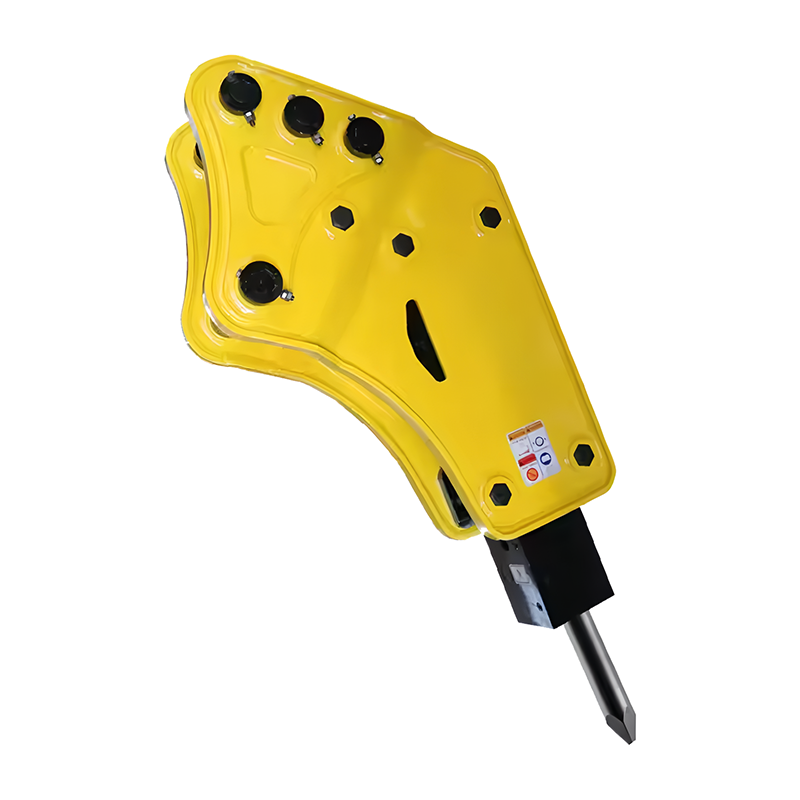
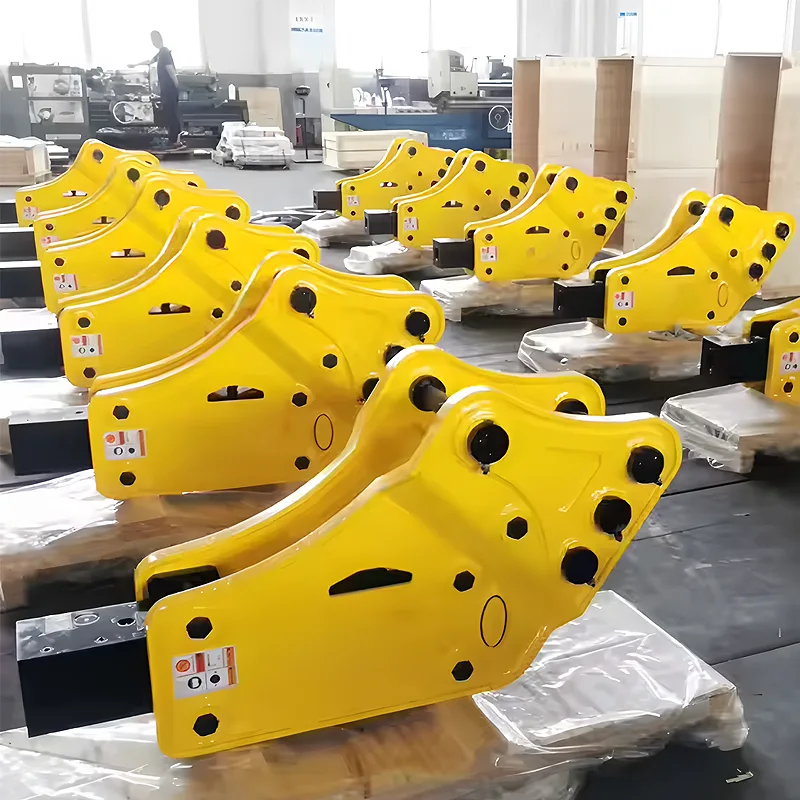
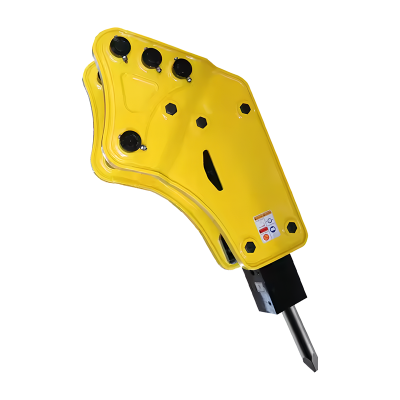
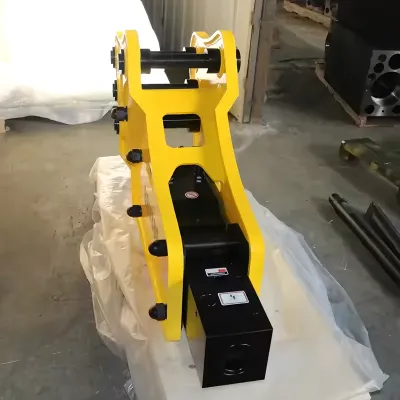
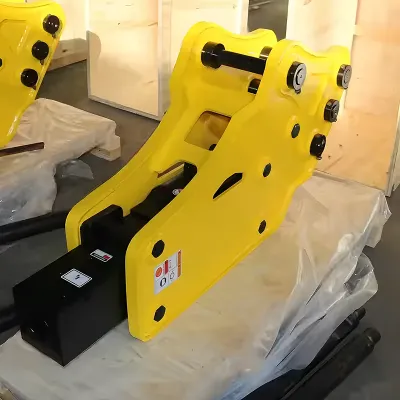
The BH-series backhoe hydraulic breaker is a heavy-duty demolition attachment built for concrete breaking, asphalt removal, rock excavation, and general construction work. Powered by the backhoe's auxiliary hydraulics, the breaker uses a nitrogen-charged piston to deliver rapid impact through a replaceable tool bit — making short work of hard materials that buckets and blades can't touch.
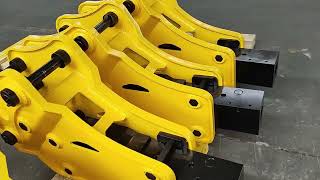
Five models cover carrier weights from 2.5 to 15 tons, with impact energy ranging from 400 to 1800 joules. Each model is engineered to match a specific hydraulic flow and pressure window, ensuring optimal performance without overstressing the backhoe arm. As part of our backhoe hydraulic breaker range, every unit is built with a heavy-duty housing, sealed accumulator, and replaceable wear components for long service life in demanding job site conditions.
Technical Specifications
| Parameter | TG-BH026T | TG-BH033T | TG-BH043T | TG-BH050T | TG-BH060T |
|---|---|---|---|---|---|
| Carrier Weight | 2.5 - 4 tons | 4 - 7 tons | 6 - 9 tons | 8 - 12 tons | 10 - 15 tons |
| Impact Energy | 400 - 600 J | 600 - 900 J | 900 - 1200 J | 1200 - 1500 J | 1500 - 1800 J |
| Impact Rate | 800 - 1400 bpm | 600 - 1200 bpm | 500 - 1000 bpm | 450 - 900 bpm | 400 - 850 bpm |
| Oil Flow Required | 35 - 65 L/min | 50 - 90 L/min | 70 - 110 L/min | 90 - 130 L/min | 110 - 150 L/min |
| Operating Pressure | 120 - 160 bar | 130 - 170 bar | 140 - 180 bar | 150 - 190 bar | 160 - 200 bar |
| Tool Diameter | 55 mm (2.17 in) | 68 mm (2.68 in) | 75 mm (2.95 in) | 80 mm (3.15 in) | 90 mm (3.54 in) |
| Breaker Weight | 180 - 220 kg (397 - 485 lb) | 280 - 320 kg (617 - 705 lb) | 350 - 400 kg (772 - 882 lb) | 400 - 480 kg (882 - 1058 lb) | 500 - 600 kg (1102 - 1323 lb) |
| Suggested Machines | 1CX, 2CX | 3CX | 4CX | 580N, 420F2 | 428F2, 4CX PRO |
Table data is for reference only. Actual specifications may vary based on the final configuration. Please contact the TianGe technical team for details.
How It Works
The breaker connects to the backhoe's auxiliary hydraulic circuit, which supplies pressurized oil to drive the piston. The piston cycles rapidly within the housing, striking the top of the tool bit to transfer impact energy to the material. A nitrogen-filled accumulator assists the piston on the return stroke, increasing blow frequency and reducing hydraulic demand. The operator controls the breaker from the cab using a dedicated auxiliary lever or foot pedal, varying flow to adjust blow rate and impact force. For guidance on matching breaker energy class to your specific backhoe loader, see our article on hydraulic hammer sizing for backhoe loaders.
Application Scenarios
-
Concrete demolition of slabs, foundations, and structures
-
Asphalt and pavement removal for road and driveway repair
-
Rock breaking and excavation in hard or rocky ground
-
Trenching through hard soil and rock for utility installation
-
Demolition of masonry walls, chimneys, and concrete features
-
Sidewalk and curb breaking for municipal repair work
-
Site preparation and land clearing in rocky terrain
Installation & Mounting
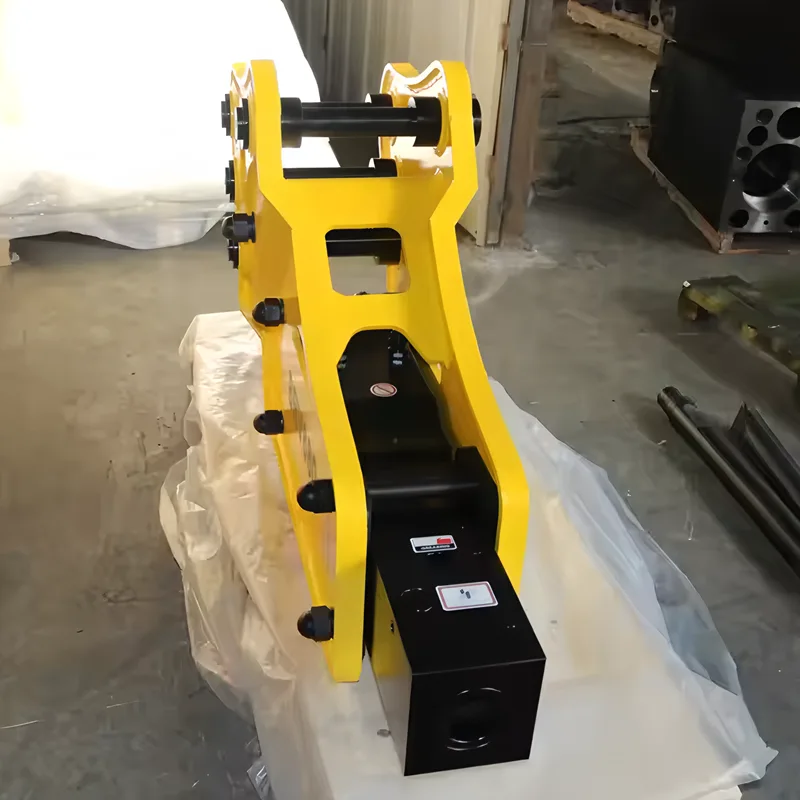
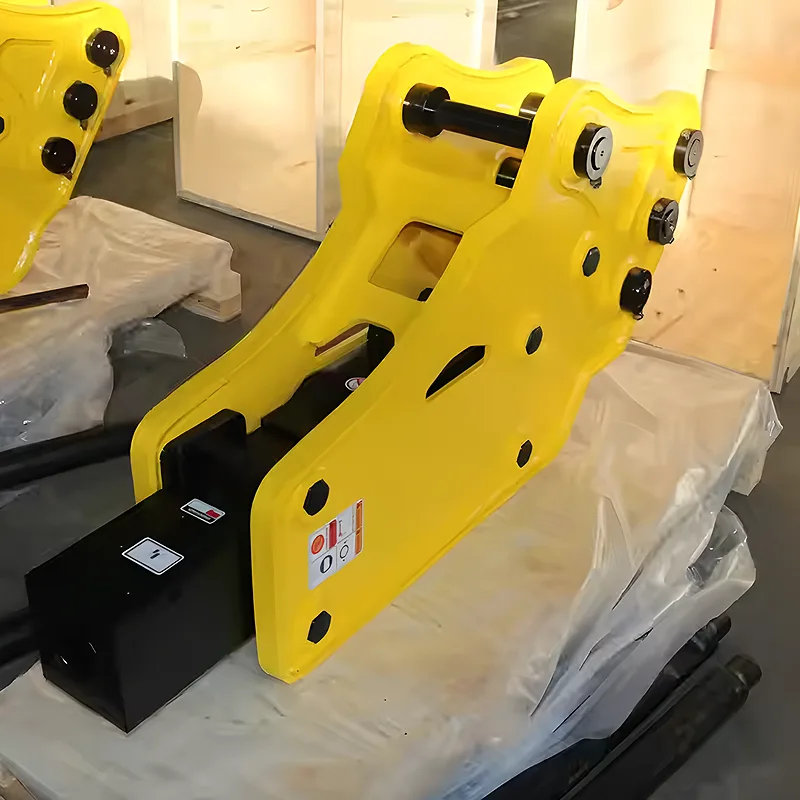
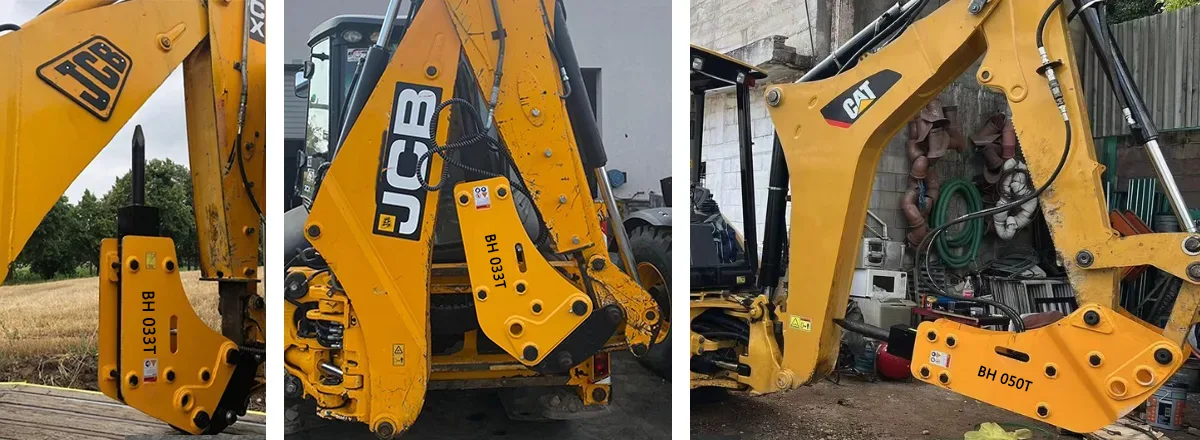
The breaker mounts to the backhoe loader's dipper arm using a pin-on or quick-coupler bracket. The bracket is specific to the backhoe model and dipper arm width, with pins that pass through the arm and breaker ears. Hydraulic hoses connect from the breaker's inlet and outlet ports to the backhoe's auxiliary couplers, with a pressure relief valve or flow regulator installed if the machine's output exceeds the breaker's maximum flow rating. Before operating, verify that all mounting pins are secured with retaining clips, hoses are routed to avoid pinching during arm movement, and auxiliary pressure is set within the breaker's operating range. A brief test at reduced flow confirms proper function before full-power use.
Wear & Service
The primary wear components on a backhoe breaker are the tool bit, tool bushings, piston seals, accumulator diaphragm, and front head. Inspect the tool bit daily for excessive wear, mushrooming, or cracking, and replace it when the working end is worn beyond the manufacturer's recommendation. Tool bushings wear gradually and should be checked periodically for excessive clearance, which can cause tool misalignment and accelerated piston wear. Hydraulic seals and the accumulator diaphragm should be inspected during scheduled service intervals and replaced if leaks or pressure loss are detected. The breaker housing should be checked for cracks or structural damage, especially around the mounting ears and front head. For a detailed breakdown of wear components and inspection intervals, refer to our backhoe breaker parts and maintenance guide.
OEM & Bulk Supply
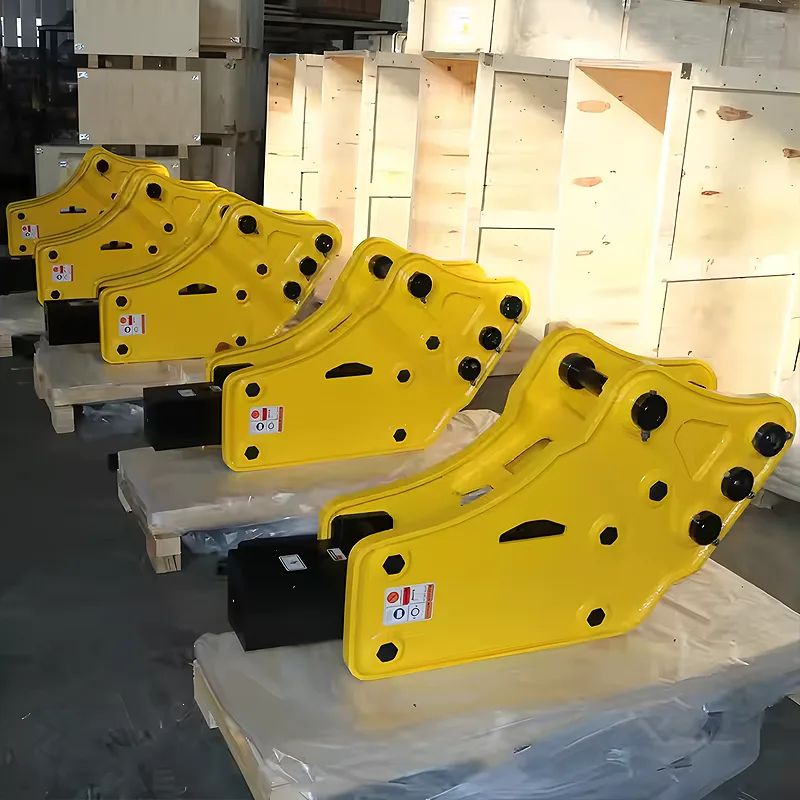
TianGe offers OEM and private-label programs for the BH-series backhoe breaker, including custom branding, alternative tool bit configurations, modified mounting brackets for specific backhoe models, and tailored packaging. Dealers and distributors can order in bulk with consolidated shipping and volume pricing across all five models. Contact our sales team to discuss your OEM or bulk supply requirements.
We can get you the right breaker for your backhoe — concrete, rock, or pavement.
Tell us your backhoe make and model, the BH model you're considering (BH026T through BH060T), and your preferred tool type — moil point, chisel, or blunt. We'll confirm hydraulic compatibility, check mounting fit, and send you a quote with specs and delivery timeline.