Picking the right stump grinder starts with your skid steer's hydraulic output and the size of stumps you grind most often. A unit that's undersized for your machine will grind slowly and frustrate your crew; one that's too large can overload the system and shorten component life. This guide covers the key factors that separate a reliable grinder from one that spends more time in the shop than on the job.
Whether you run a landscaping outfit, a tree service, a rental yard, or a municipal fleet, the selection process is the same: verify hydraulic compatibility, examine the cutting system, inspect the build, and factor in long-term maintenance. The best attachment is the one that fits your machine and your daily work — not necessarily the one with the flashiest spec sheet.
What Makes a Quality Skid Steer Stump Grinder
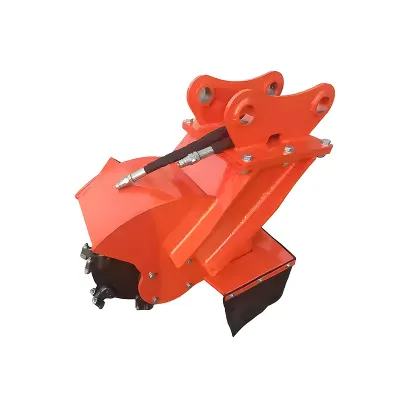
A well-built stump grinder starts with a reinforced steel frame that can handle the shock and vibration of grinding. Look for heavy-gauge steel, properly welded joints, and a mounting plate that conforms to the universal quick-attach standard. The frame should spread grinding forces across the skid steer's boom rather than concentrating stress at a single point.
The hydraulic motor is the attachment's core component. A high-torque, low-speed motor delivers steady cutting power under load, while a mismatched motor can stall or overheat. Quality units use name-brand hydraulic components with readily available seals and parts. The cutting wheel should be precision-balanced to reduce vibration and extend bearing life, and the carbide teeth should be individually replaceable — not welded permanently to the wheel.
Matching Hydraulic Flow to Your Machine
Hydraulic flow is the single most important compatibility factor. Every stump grinder has a rated flow range, usually given in liters per minute or gallons per minute. If your skid steer's auxiliary flow falls below the attachment's minimum, the cutting wheel will spin too slowly to grind effectively. If the flow exceeds the maximum rating, you risk damaging the motor, overheating the fluid, and causing premature seal failure.
Standard-flow skid steers typically deliver 50 to 80 L/min, while high-flow machines can produce 100 L/min or more. The standard vs. high flow stump grinder comparison explains how these configurations differ and which one suits your machine. Always check your skid steer's operator manual for the exact auxiliary flow rating, and select a grinder whose rated range covers that figure with some margin.
Cutting Width and Stump Size
The working width of the cutting wheel determines how much of the stump you can remove in a single pass. A 550 mm wheel works well for most residential and commercial stumps up to about 600 mm in diameter, allowing the operator to sweep across the stump in overlapping passes. Wider wheels reduce the number of passes for large stumps but require more hydraulic power and add weight to the attachment.
Also consider the maximum grinding depth. Quality stump grinders can reach 300 to 400 mm below ground level, which ensures the entire stump and root crown are removed. For applications that require grinding below grade for paving or construction, verify that the attachment's geometry allows sufficient depth without the mounting frame hitting the ground. Smaller stumps in tight spaces may benefit from a compact wheel design, while forestry and land-clearing operations typically need wider, more aggressive cutting systems.
Build Quality and Wear Components
Stump grinding is an abrasive job that punishes every part of the attachment. The carbide-tipped cutting teeth are the primary consumable, and their quality directly affects cutting performance and operating cost. Look for teeth with thick carbide tips, robust steel bodies, and a design that allows rotation or replacement without removing the entire wheel. Premium teeth cost more upfront but typically last two to three times longer than economy versions.
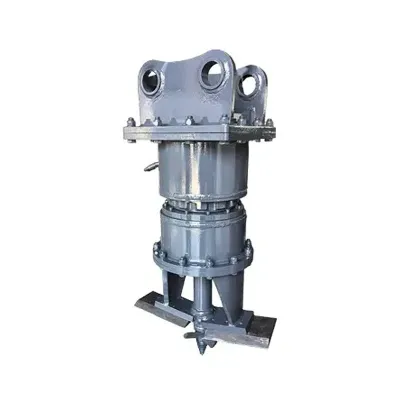
Beyond the teeth, inspect the bearing arrangement, shaft diameter, and seal design. A grinder with a large-diameter shaft and dual bearings handles side loads better than a lightweight unit with a single bearing. Seals should keep wood dust and debris out of the bearing cavity. Hydraulic hoses should be abrasion-resistant and routed away from the cutting area, with protective sleeves where contact with debris is likely. For a concrete example of a well-specified unit, the TGEC skid steer stump grinder lists its working width, flow requirement, pressure rating, and weight in a clear specification table.
Ease of Mounting and Maintenance
A stump grinder that's hard to mount or service will spend more time in the shop than on the job. Universal quick-attach mounting allows fast connection to most modern skid steers and compact track loaders without special adapters. Hydraulic hoses should route cleanly to the auxiliary couplers, with enough length to accommodate full boom articulation without pinching or stretching.
Maintenance access matters too. The cutting teeth should be reachable with standard tools, and the hydraulic motor should be serviceable without taking the whole frame apart. Grease fittings should be positioned for easy access, and the operator's manual should include a clear maintenance schedule. Attachments that require special tools or proprietary parts for routine service will increase your long-term operating cost and downtime.
Final Selection Recommendations
Start by confirming your skid steer's auxiliary hydraulic flow and pressure, and eliminate any stump grinder that falls outside those specs. Next, match the cutting width to your typical stump sizes, opting for a wider wheel if you regularly handle large-diameter hardwoods. Evaluate build quality by checking frame thickness, bearing arrangement, hydraulic motor brand, and tooth design. Finally, consider the total cost of ownership, including replacement tooth cost, seal kit availability, and expected service intervals.
For most standard-flow skid steers handling residential and commercial stump removal, a mid-size grinder with a 500 to 600 mm working width and individually replaceable carbide teeth offers the best balance of performance and value. High-flow machines in forestry or land-clearing applications may benefit from a wider, more aggressive configuration. When comparing suppliers, look for a manufacturer that provides detailed specifications, genuine replacement parts, and responsive technical support. The full skid steer stump grinder attachments product range from TGEC includes configurations suitable for standard-flow machines, with OEM and bulk-supply options for dealers and distributors.