Log splitters for skid steers come in four main mechanical configurations, and each one handles logs differently. Hydraulic wedge splitters use a cylinder to push a wedge through the wood; inverted splitters do the same but from above; cone and screw designs rotate into the log to split it. The right choice depends on your typical log size, wood species, how much you produce, and what your skid steer can deliver hydraulically. This guide compares each type so you can match the mechanism to your work.
All log splitters do the same basic job — turn rounds into firewood-sized pieces — but the way they do it affects cycle speed, log handling, and maintenance. Hydraulic wedge and inverted designs are the most common, offering high force for hardwoods. Cone and screw splitters trade some of that concentrated force for faster self-feeding action, which works well on big or gnarly logs. The best log splitter attachment for skid steer guide puts these types into a broader purchasing context.
Hydraulic Wedge Splitters
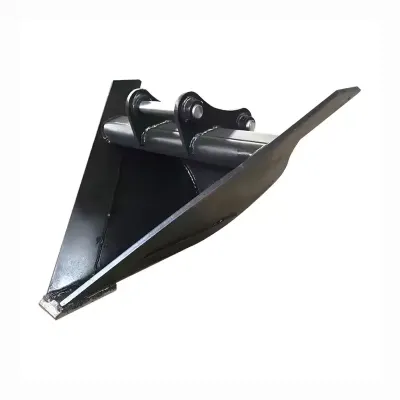
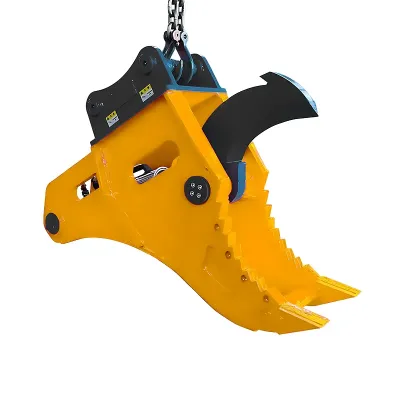
The hydraulic wedge splitter is the traditional design. A cylinder drives a steel wedge into the end of a log, splitting it along the grain. Wedges come in 2-way, 4-way, or 6-way configurations, which determine how many pieces each log breaks into per cycle. These splitters deliver high force — typically 20 to 40 tons — making them the go-to choice for dense hardwoods like oak, hickory, and maple.
What works well: high force, large-log capacity, and simple, straightforward maintenance. The wedge and cylinder are basic components with widely available replacement parts. What doesn't: slower cycle times compared to cone or screw designs, and you have to position each log manually or with a separate grapple. Flow requirements usually fall in the 40 to 80 L/min range, depending on the model. The TGEC skid steer log splitter is a 25-ton hydraulic wedge design in an inverted configuration.
Inverted Log Splitters
An inverted splitter is a variation of the hydraulic wedge design, but the cylinder and wedge sit above the log and push downward instead of horizontally. Gravity and the attachment's weight assist the splitting force. The big advantage: you stay in the cab for the whole cycle. The log stays on the ground or in a cradle while the wedge comes down from above, and you can see the splitting area clearly through the cab window.
Inverted splitters are popular in tree service and landscaping because logs are often already on the ground after a removal — no heavy lifting onto a horizontal beam. They typically deliver 20 to 30 tons of force. The tradeoffs: a higher center of gravity, which means you need good machine stability, and the attachment weight can be a factor on smaller skid steers. The full skid steer log splitter attachments range from TGEC includes inverted 25-ton models in two mounting widths.
Cone Log Splitters
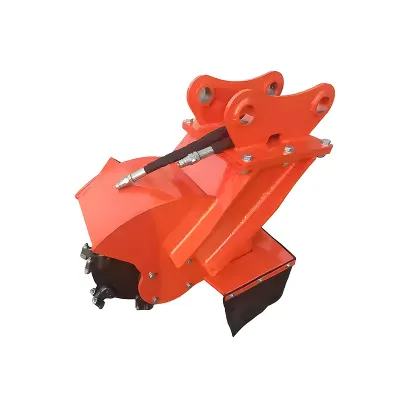
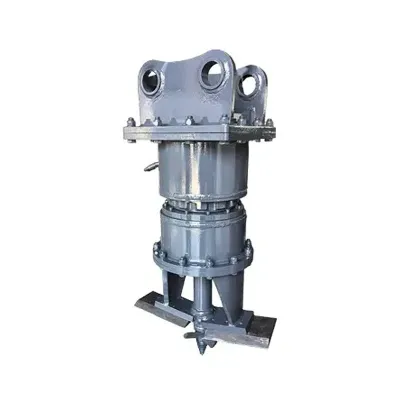
A cone splitter uses a rotating conical bit that bores into the log, driven by a hydraulic motor and feed force. As the cone turns and advances, its tapered shape forces the wood apart along the grain. These splitters are aggressive and handle large, irregular, or twisted logs that might stall a wedge design. They're particularly effective on hardwoods with interlocked grain patterns.
The upsides: fast cycle times, less need for precise log positioning (the cone self-feeds), and good performance on challenging logs. The downsides: higher hydraulic flow requirements (typically 60 to 100 L/min or more), faster wear on the cone bit and drive components, and a higher purchase price. Cone splitters also produce less uniform splits, which may not matter for bulk firewood but could be an issue if you're selling graded product. They're best for high-production land clearing and forestry where speed and log versatility take priority over uniform piece size.
Screw-Type Log Splitters
A screw-type splitter uses a large helical screw — think of an auger — that rotates and drives itself into the log. As the screw threads into the wood, it pulls itself forward and splits the log along the grain. It works on the same principle as a cone splitter but with a distinct helical profile. Screw splitters are known for aggressive self-feeding and the ability to handle large-diameter logs with minimal operator effort.
What's good: fast cycle times, reduced operator fatigue (the screw pulls itself in), and solid performance on a variety of log sizes and species. They're especially common on farms and ranches where log types vary from day to day. The tradeoffs: high hydraulic flow and torque demands, increased wear on the screw and drive train, and safety concerns — the rotating screw can catch clothing or debris if you're not careful. They require a high-flow skid steer with enough torque, and they're best used by experienced operators in production environments.
Selecting the Right Type for Your Application
Choosing a splitter type comes down to your primary work, your log characteristics, your machine, and your budget. For general firewood production with a mix of hardwoods and softwoods, a hydraulic wedge splitter — standard or inverted — gives you the best balance of force, versatility, and affordability. For tree service and landscaping where logs are already on the ground, an inverted splitter adds cab convenience and visibility. For high-production land clearing and forestry with large, irregular logs, a cone or screw splitter delivers faster cycles and more log tolerance.
Machine compatibility is non-negotiable: hydraulic wedge splitters typically need 40 to 80 L/min; cone and screw designs often require 80 to 120 L/min or more. Check your skid steer's auxiliary flow and pressure before you pick a type. Also look at maintenance costs — wedge splitters have relatively cheap wear parts, while cone and screw bits need periodic resurfacing or replacement and may have higher drive-component wear. For operators considering combined cutting and splitting setups, the skid steer log cutter and splitter guide explains when an integrated processing setup might make more sense than a standalone splitter.