Hydraulic flow is what makes a skid steer auger do its job. The drive converts your carrier's auxiliary flow into rotational torque, and if those numbers don't line up, you'll see it in the performance—slow drilling, stalling, or premature wear on the motor and seals. This guide breaks down how flow works, the difference between standard and high-flow systems, and how to pick the right auger drive for your specific machine.
How Hydraulic Flow Drives an Auger
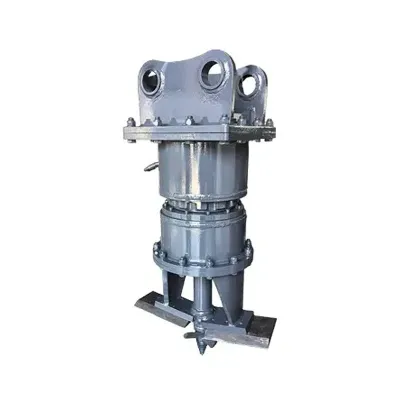
A skid steer auger drive pairs a hydraulic motor with a planetary gear reducer. Pressurized fluid from the carrier's auxiliary circuit hits the motor, spinning the shaft. That spin is usually too fast and too weak for drilling, so the gear reducer dials down the speed and cranks up the torque. That high-torque output is what turns the stem and bit through the soil. The flow rate—measured in L/min or GPM—determines how fast the motor spins, while system pressure determines how much torque is available to cut through the ground.
Flow and pressure are related but they do different jobs. Flow governs speed; pressure governs torque. So a high-flow system doesn't automatically mean more torque—it means the bit spins faster, which helps with small bits in soft ground but doesn't do much for big bits in hard material. To get more torque, you need higher pressure or a steeper gear reduction. When choosing a skid steer auger, you've got to look at both numbers together.
Standard Flow vs. High Flow
Skid steers come with either standard-flow or high-flow auxiliary hydraulics, and some models offer both. Standard-flow systems typically push 15 to 25 L/min (4 to 6.6 GPM) at pressures around 15 to 21 MPa (2175 to 3050 psi). That covers most compact and mid-size machines—think Bobcat, Caterpillar, John Deere, Case, New Holland, and Kubota in the 500 kg to 1500 kg operating weight range. TGEC's AG23 series hydraulic skid steer auger is rated for 15 L/min standard flow, putting it right in the wheelhouse of these popular carriers.
High-flow systems deliver 30 L/min (8 GPM) or more, sometimes pushing 50 L/min (13 GPM) on big, high-horsepower machines. High-flow is great for attachments that need speed—brush cutters, mulchers, cold planers—but for augers, the benefit is limited. You can run a standard-flow auger on a high-flow carrier, but you've got to dial the flow down to the drive's rating using the machine's flow control or a pressure-compensated valve. Run it unrestricted and you'll overspeed the motor, lose torque, and shorten the life of seals and bearings.
Flow, Pressure, and Torque Relationship
Here's the short version: flow controls bit speed, pressure controls maximum torque, and gear reduction multiplies torque while cutting speed. For a given drive, cranking up flow within the rated range spins the bit faster, which can speed up drilling in soft soil. But push past the rating and the motor overspeeds, internal parts wear faster, and torque actually drops because the motor can't turn excess flow into useful work.
Pressure is what limits torque. When the bit hits resistance, pressure builds until it hits the carrier's relief setting or the drive's max rating. If the torque needed exceeds what the pressure can deliver, the motor stalls. That's why larger bits—which demand more torque—can stall on a low-pressure system even if the flow number looks fine. When you're speccing a drive, check both the flow rating and the max pressure rating against your carrier's actual output.
How Gear Reduction Multiplies Torque
The planetary gear reducer is the secret sauce that lets a small hydraulic motor produce serious torque. Typical reduction ratios for skid steer auger drives range from 3:1 to 10:1—the motor spins three to ten times faster than the output shaft, and torque gets multiplied by roughly the same factor. A 6:1 reducer gives you about six times the motor's torque at one-sixth the speed. Higher reduction = more torque, less speed—great for big bits and hard ground. Lower reduction = more speed, less torque—better for small bits in soft soil.
Some drives offer a two-speed design that lets you switch between reduction ratios from the cab. High-speed mode uses a lower ratio for faster drilling with small bits in soft ground. High-torque mode kicks in a higher ratio for big bits or tough conditions. Two-speed drives cost more but offer real flexibility if you're working with a range of auger bit sizes and soil types.
Matching the Auger Drive to Your Carrier
First step: grab your skid steer's operator's manual and look up the auxiliary hydraulic specs. You need three numbers—maximum flow in L/min or GPM, maximum pressure in MPa or psi, and the quick-attach interface type (universal or proprietary). Then compare those to the auger drive's rated flow range, max pressure rating, and mounting setup. The drive's rated flow should fall within the carrier's output range, with some wiggle room—if your machine puts out 20 L/min and the drive is rated for 15 L/min, you'll need to regulate it down using the machine's flow control.
If you've got a high-flow machine, you've got two paths: buy a high-flow-rated auger drive, or run a standard-flow drive with the flow dialed back. High-flow auger drives exist but they're less common, usually bigger and heavier. For most fencing, landscaping, and light construction work, a standard-flow drive with flow regulation gets the job done for less money. If you're regularly running very large bits (460 mm or more) in hard ground, a high-flow drive with more torque might be worth the upgrade. Always check with the auger manufacturer's compatibility guide or talk to their tech team before buying—especially if your carrier has a non-standard hydraulic setup or a proprietary quick-attach.
Common Flow-Related Problems
The most frequent mistake? Running a standard-flow auger drive on unrestricted high flow. Symptoms include high-pitched motor noise, overheating, weak drilling torque, and seals that fail way too soon. Fix it by dialing the auxiliary flow down to the drive's rated flow, or install a pressure-compensated flow control valve in the circuit. Another common headache: using a drive with a flow rating that's higher than what your carrier can deliver. That gives you slow drilling, stalling, and a bit that never reaches its rated speed. This usually happens when a drive meant for high-flow machines gets bolted onto a standard-flow skid steer.
Pressure issues are also worth watching. If your carrier's pressure relief is set too low, the auger stalls before hitting its rated torque—especially with bigger bits or in hard ground. Set it too high and you risk damaging the motor or gear reducer when the bit stalls. Most skid steers let you adjust auxiliary pressure within a range; set it to match the auger drive's max pressure rating. And don't skip regular hose, coupler, and fitting inspections—leaks and restrictions rob you of effective flow and pressure at the drive.
Final Recommendations
Start with your skid steer's auxiliary flow, pressure, and quick-attach specs. Pick an auger drive with a flow rating that matches or sits slightly below your carrier's output, and make sure the pressure ratings are compatible. If you're on a high-flow machine, decide whether you truly need a high-flow drive based on your typical bit sizes and ground conditions—or whether a standard-flow drive with flow regulation will do the job. Consider a two-speed drive if you're constantly swapping between small and large bits or bouncing between soft and hard ground. And always make sure your carrier has the operating weight and lift capacity to handle the auger safely—especially with bigger bits or extension shafts for deeper holes.