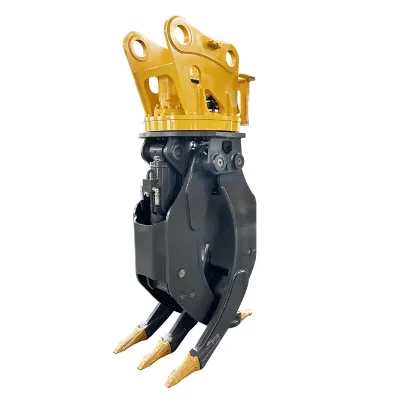
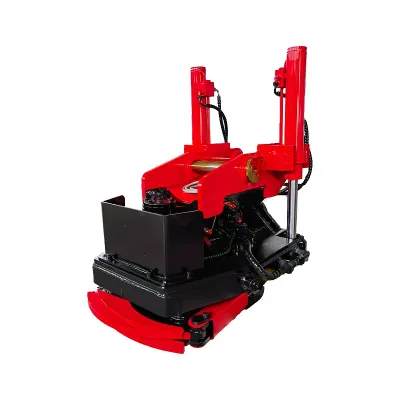
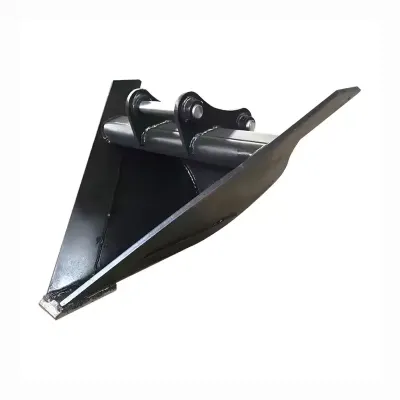
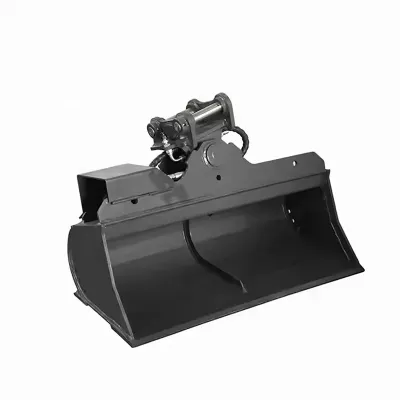
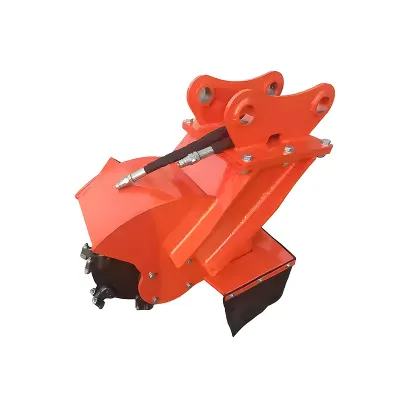
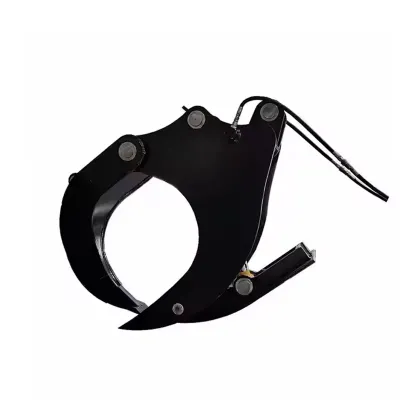
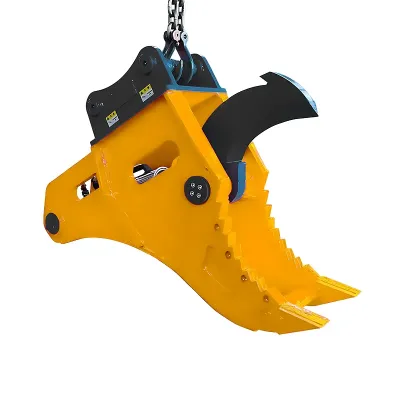
Choosing the right tree puller starts with matching the attachment to your carrier, the vegetation you're removing, and the ground conditions you work in. A puller that's too small will struggle with larger trees; one that's too heavy can strain a compact machine. This guide breaks down the key factors that determine which configuration delivers reliable extraction without overtaxing your equipment.
Start by identifying your primary use. Are you mainly clearing small trees and saplings on residential lots, or do you need to pull larger trees and heavy fence posts on commercial land-clearing jobs? The answer points to the jaw opening, frame width, and carrier capacity you should target. Once you know the job, you can match each specification against your skid steer's capabilities.
Understand the Tree and Post Sizes You Will Pull
The single most important factor is the maximum trunk or post diameter you expect to handle. Jaw opening sets the upper limit for what the attachment can fully encircle and grip. If you're primarily removing saplings and small trees under 200 mm, a standard 300 mm opening gives you comfortable margin. For larger trees or thicker wood posts, you may need a wider opening or a different approach altogether.
Jaw opening isn't the only limit, though. Even if the jaws fit around the trunk, your skid steer must have enough lift capacity to raise the tree plus its root ball and soil. A 250 mm tree in clay soil can weigh much more than the same tree in loose sand. Estimate the largest tree you'll realistically pull and build in a safety margin when selecting your attachment and carrier combination.
Match Jaw Opening to the Job
A 300 mm maximum jaw opening covers most small tree, shrub, and fence post applications. It's versatile enough for residential lot clearing, fence line maintenance, and farm vegetation management. The jaws need to close firmly so the hardened teeth bite into the trunk or post without slipping. If the opening is too large for small-diameter material, the teeth may not engage effectively, reducing grip strength.
If you regularly encounter trees near the 300 mm limit, consider whether a wider frame model offers better jaw geometry and leverage. A wider frame typically positions the jaw pivot points farther apart, which improves mechanical advantage when pulling larger material. However, wider frames add weight and may not suit compact carriers. Balance jaw opening against frame width and attachment weight to find the configuration that fits your typical workload.
Check Skid Steer Operating Capacity
The skid steer's rated operating capacity determines how much weight the machine can safely lift during extraction. The attachment itself weighs between 130 kg and 146 kg depending on the frame width, but the effective load during pulling includes the tree, root ball, and attached soil. A compact skid steer with a 700 kg rated operating capacity can handle small trees and posts with the 930 mm frame model. For larger trees or heavier extraction work, a mid-frame or larger skid steer with higher operating capacity is necessary.
Operating capacity isn't the only carrier consideration. The machine also needs enough lift height and breakout force to extract posts and trees set in compacted soil. Track loaders generally provide more stable lifting than wheeled skid steers on uneven or soft ground, which is an advantage during land clearing. If you'll use the puller frequently on heavy material, verify that your carrier's hydraulic lift system can handle sustained loads without overheating or losing performance.
Verify Auxiliary Hydraulic Requirements
Tree pullers rely on the skid steer's auxiliary hydraulic circuit to open and close the jaws. Standard-flow auxiliary circuits work for typical tree and post pulling, providing adequate clamping force for most small to medium material. High-flow systems deliver faster jaw operation and more consistent clamping force under heavy loads — helpful when pulling large trees or posts in compacted soil. Check that your machine's auxiliary flow and pressure ratings fall within the attachment's recommended range.
Also confirm that the auxiliary circuit has the right hose couplings and, if required, a case drain line. Some pullers need a case drain to protect hydraulic cylinder seals from backpressure. Inspect existing auxiliary hoses for wear or damage before connecting the attachment, since leaks during operation reduce clamping force and create safety hazards. If your skid steer lacks auxiliary hydraulics, you'll need them installed before using a hydraulic tree puller.
Consider Frame Width and Mounting Interface
Frame width affects both the attachment's working envelope and its fit with your carrier. The 930 mm frame model is compact and suits small to mid-frame skid steers, making it easier to maneuver in tight spaces like residential yards and fence rows. The 1240 mm frame model provides a wider working envelope and better leverage for larger material, but it requires a larger carrier to handle the extra weight and reach. Choose the frame width that matches your carrier size and the typical working space on your sites.
Most tree pullers use a universal quick-attach mounting plate that fits the majority of skid steer and compact track loader brands. Confirm that your machine uses the standard universal quick-attach interface — common across Bobcat, Caterpillar, John Deere, Case, New Holland, Kubota, and other major brands. If your carrier uses a proprietary mounting system, you may need an adapter plate. Check the mounting interface for wear and proper engagement before each use to prevent the attachment from disconnecting during operation.
Evaluate Soil Conditions and Application Frequency
Soil conditions have a big impact on pulling performance. Trees and posts in loose, sandy soil pull out relatively easily, while clay, compacted fill, or rocky ground require much more force. If you work primarily in hard or compacted soil, prioritize a larger carrier with higher operating capacity and consider loosening the soil around the base before pulling. In rocky ground, the root ball may snag on stones, requiring side-to-side movement during lifting to break it free.
Application frequency also matters. If you use a tree puller occasionally for small jobs, a compact 930 mm frame model on a standard skid steer is sufficient and cost-effective. For daily use in land clearing or fence removal, invest in a heavier-duty configuration with a wider frame and pair it with a high-flow carrier to maximize productivity and reduce wear. Frequent use accelerates wear on teeth, pins, and hoses, so factor in replacement part availability when selecting a brand and model.
Final Selection Recommendations
For compact skid steers and occasional use on small trees, saplings, and fence posts, the 930 mm frame model with a 300 mm jaw opening is the most practical choice. It's light enough for compact carriers, maneuverable in tight spaces, and capable of handling most residential and farm vegetation removal. For mid-frame to larger skid steers used in regular land clearing or commercial fence removal, the 1240 mm frame model provides additional leverage and working envelope for larger material. Pair either configuration with a carrier that has adequate operating capacity and auxiliary hydraulics, and you'll have a reliable tree and post extraction system.
When you're ready to evaluate specific configurations, explore the TGEC skid steer tree puller attachments category for manufacturer and supply information, or review the skid steer tree puller product page for detailed specifications and compatibility details. If you're considering a DIY approach instead of a manufactured attachment, read about the key factors in homemade skid steer tree puller design before starting a build.