Hydraulic flow is the single most critical factor in matching a mulcher to a skid steer. Too little flow, and the mulcher runs slow, stalls constantly, cuts poorly, and stresses the carrier's hydraulic system. Too much flow — beyond what the mulcher is rated for — can damage the hydraulic motor, seals, and hoses. Understanding the difference between standard and high flow, and knowing the specific GPM requirements for drum and disc mulchers, is essential before buying or running any mulching attachment.
This guide explains how flow affects mulcher performance, the flow requirements for different mulcher types and models, how to check your machine's actual output, and what happens when flow is mismatched. Whether you're shopping for a new mulcher or troubleshooting an existing one, these principles will help you match hydraulic output to mulcher requirements for better cutting performance and longer equipment life.
Standard Flow vs. High Flow
Skid steers fall into two hydraulic flow categories: standard flow and high flow. Standard-flow machines typically put out 60 to 90 L/min (16 to 24 GPM) through the auxiliary circuit. That's enough for buckets, forks, blades, augers, and trenchers — the everyday attachments. Standard flow is common on compact and mid-frame machines.
High-flow machines deliver 110 to 200 L/min (29 to 53 GPM) or more through an upgraded auxiliary circuit with a larger pump, bigger hoses, and extra cooling capacity. High flow is what you need for hydraulic-hungry attachments like mulchers, brush cutters, cold planers, and rock saws that demand continuous high-volume flow to work effectively. High-flow is usually an option on mid-to-large frame skid steers and compact track loaders; some machines have a two-speed auxiliary system that switches between standard and high flow depending on the attachment.
The key takeaway: commercial-grade skid steer mulchers — both drum and disc — require high-flow circuits. No full-size mulcher designed for forestry or land clearing works on a standard-flow machine. If your carrier doesn't have a high-flow package, you'll need to upgrade the machine or look at a much smaller, lighter mulcher designed for standard-flow operation — which will have significantly less cutting capacity.
Drum Mulcher Flow Requirements
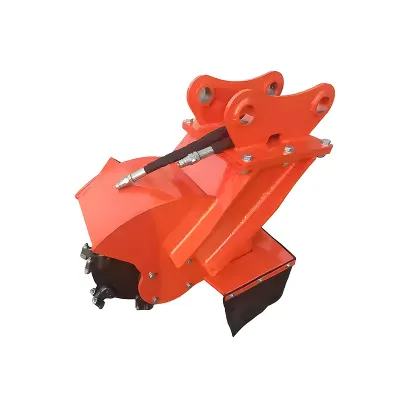
Drum-style forestry mulchers use hydraulic flow to spin the drum rotor through a motor. The TGEC skid steer forestry mulcher lineup has four models with flow requirements from 110 to 150 L/min (29 to 40 GPM). The TG-SM40I and TG-SM60I need 110 to 140 L/min (29 to 37 GPM); the larger TG-SM72I and TG-SM84I need 120 to 150 L/min (32 to 40 GPM). Operating pressure ranges from 21 to 25 MPa (3046 to 3626 psi), depending on the model.
Larger drums with more teeth need more flow to maintain cutting speed under load. The TG-SM40I has 25 teeth on a 1000 mm drum; the TG-SM84I has 56 teeth on a 2100 mm drum — more than double the teeth and more than double the width, requiring proportionally more hydraulic power. When matching a drum mulcher to your carrier, pick a model whose flow range falls comfortably within your machine's high-flow output. Running a large drum mulcher at the bottom of its flow range means slower drum speed, weaker cutting power, and more stalling in thick vegetation.
Disc Mulcher Flow Requirements
Disc mulchers generally need higher minimum flow than drum mulchers because the heavy disc has to spin up to speed and maintain that momentum through the flywheel effect. The TGEC skid steer disc mulcher (TG-DM1830) requires 130 to 200 L/min (34 to 53 GPM) at 25 MPa (3626 psi). The 130 L/min minimum is higher than the 110 L/min floor on the smallest drum mulcher, reflecting the disc's higher power demand for acceleration and sustained cutting momentum.
The 130 to 200 L/min range covers a variety of high-flow carriers, but the disc performs best at the upper end. At 130 L/min, the disc works, but it accelerates slowly and loses more speed in heavy material, cutting into the flywheel advantage that makes the disc mulcher so effective. At 170 to 200 L/min, the disc spins up quickly, holds speed through heavy cuts, and delivers the high-throughput performance disc mulchers are known for. If your high-flow machine only delivers 130 to 150 L/min, a drum mulcher may give you more consistent performance than a disc mulcher running at the bottom of its range.
How Flow Affects Cutting Performance
Hydraulic flow directly controls the rotational speed of the drum or disc. In a hydraulic motor, output speed is proportional to input flow — more flow means faster shaft speed, which means faster drum or disc rotation. Faster rotation gives you more cutting impacts per minute, higher tooth-tip speed, and better speed retention under load. A mulcher running at optimal flow cuts cleanly, quickly, and consistently, with minimal stalling and good mulch quality.
When flow is insufficient, the drum or disc slows down under load, cutting speed drops, and tooth impact energy falls off. The teeth start tearing at the vegetation instead of cutting cleanly, leaving ragged cuts and oversized, uneven mulch. The mulcher stalls more often, forcing the operator to back off and re-engage — a productivity killer. Insufficient flow also makes the hydraulic system work harder: the pump tries to maintain flow against the load, generating excess heat and accelerating wear on the pump, motor, hoses, and seals. Running a mulcher on insufficient flow over time can lead to premature hydraulic failure on both the attachment and the carrier.
Pressure Requirements
Flow determines rotational speed; pressure determines torque at the drum or disc shaft. Pressure is the force that pushes fluid through the motor against the cutting load. A mulcher needs adequate pressure to maintain torque when the teeth hit thick material — without it, the motor will slow or stall even with sufficient flow.
The TGEC mulcher line operates at 21 to 25 MPa (3046 to 3626 psi), depending on the model. Most high-flow skid steer auxiliary circuits run in the 20 to 28 MPa (2900 to 4060 psi) range, which covers these requirements. But some machines have lower auxiliary pressure, or pressure may drop significantly under high-flow conditions. Verify both flow and pressure — a machine with adequate flow but low pressure will still struggle to maintain cutting torque under heavy loads. The auxiliary circuit must deliver the required flow at the specified pressure simultaneously, not just one or the other.
Verifying Your Machine's Actual Output
Advertised high-flow numbers don't always match what you get on the job. Several factors affect real-world flow: engine RPM (flow ratings are measured at max RPM, which may not be sustainable during continuous mulching), hydraulic fluid temperature (flow drops as fluid thins at high temperatures), system wear (pump efficiency declines over time), and restrictions from hoses and couplers (small-diameter hoses or worn couplers create flow restrictions).
To verify your machine's actual high-flow output, check the operator manual or ID plate for the rated auxiliary flow and pressure at maximum engine RPM. If possible, have a hydraulic tech measure actual flow and pressure using a flow meter in the auxiliary circuit while the machine is at operating temperature and running at the RPM you use for mulching. That real-world measurement gives you the most accurate picture of what your machine can deliver. If your actual output is at the low end of a mulcher's required range, consider a smaller mulcher model that's better matched to your machine, rather than running a larger one in a degraded state.
Cooling Capacity
Mulching is a continuous, high-demand hydraulic application that generates a lot of heat. The pump works hard to maintain flow against the cutting load, and the motor converts that flow into mechanical work, with some energy lost as heat. If the carrier's cooling system isn't up to the task, the hydraulic fluid overheats, performance drops, wear increases, and seals and components can be damaged.
High-flow skid steers usually come with upgraded cooling — larger radiators, hydraulic oil coolers, sometimes reversible fans — to handle the heat from high-flow attachments. But not all high-flow machines are equal in cooling capacity, and some may struggle with continuous mulching in hot ambient temperatures. Signs of inadequate cooling include hydraulic fluid temperature warnings, reduced engine power (the machine may derate to protect the system), soft hydraulic response, and visible fluid degradation. If your machine runs hot while mulching, consider adding cooling, taking periodic cool-down breaks, or choosing a mulcher with lower hydraulic demand that generates less heat.
Matching Flow to Mulcher Model
The key to optimal performance is matching your machine's high-flow output to a mulcher whose required flow range centers on your actual output. If your machine delivers 110 to 120 L/min (29 to 32 GPM), the TG-SM40I or TG-SM60I drum mulcher — both requiring 110 to 140 L/min — are the best matches, with your output sitting comfortably in the lower-to-middle of the range. The disc mulcher's 130 L/min minimum would leave you below the minimum, resulting in poor disc performance.
If your machine delivers 130 to 150 L/min (34 to 40 GPM), you can run any of the TGEC drum mulchers effectively, including the larger TG-SM72I and TG-SM84I, and the disc mulcher will operate at its minimum-to-mid flow range. If your machine delivers 160 to 200 L/min (42 to 53 GPM) or more, the disc mulcher will perform optimally, and any drum mulcher will have plenty of flow. For a comprehensive guide to matching mulcher size and weight to your carrier beyond just hydraulic flow, see our skid steer mulcher sizing guide.
When in doubt, pick a mulcher model that your machine can power comfortably in the middle of its flow range, rather than one that pushes your machine to its maximum output continuously. A machine running at 90 percent of its hydraulic capacity during mulching will run hotter, wear faster, and deliver less consistent performance than one running at 70 percent capacity with a smaller, better-matched mulcher.
Common Flow-Related Problems
Several performance issues trace back to hydraulic flow mismatch. Frequent stalling in thick vegetation is the most common sign of insufficient flow — the drum or disc slows and stops because the motor can't deliver enough torque or speed to overcome the cutting load. Poor mulch quality, with ragged cuts and oversized chips, means the drum or disc isn't spinning fast enough to cut cleanly. Excessive hydraulic heat, fluid breakdown, and frequent hose failures can result from running a high-demand mulcher on a system that's working beyond its capacity.
On the other side, running a mulcher on significantly more flow than it's rated for can cause overspeed, leading to excessive tooth wear, vibration, bearing damage, and potential catastrophic failure of the rotor or disc. Always verify that your machine's maximum high-flow output doesn't exceed the mulcher's maximum flow rating. If your machine delivers more flow than the mulcher requires, a flow control valve or pressure-compensating circuit may be needed to limit flow to the safe operating range. Consult the manufacturer or a hydraulic tech to ensure proper flow regulation.
Final Recommendations
Hydraulic flow is the foundation of mulcher performance, and getting the match right determines whether your mulching operation is productive and profitable or frustrating and costly. Before buying any mulcher, verify your machine's actual high-flow output — not just the advertised number — and compare it against the specific mulcher model's required flow range. Select a model that your machine can power comfortably in the middle of its range, with adequate pressure and cooling capacity for continuous operation. Drum mulchers offer a wider range of flow options from 110 L/min upward, making them suitable for a broader range of high-flow carriers, while disc mulchers require a minimum of 130 L/min and perform best at 170 L/min or higher. By matching flow to mulcher, you ensure optimal cutting performance, minimal stalling, consistent mulch quality, and long equipment life for both the attachment and your carrier. The full skid steer mulchers product line from TGEC includes models to fit a range of high-flow carrier capacities.